News & Events

white plant

NEWS

O InPP participou no Fórum Nacional de Clubes Ciência Viva na Escola, que teve lugar no dia 27 de março, integrando a Mostra de Ciência e Tecnologia com um stand dedicado à proteção das plantas.

Neste espaço, foram apresentados diversos materiais demonstrativos, incluindo placas de Petri com fungos e bactérias, plantas, algas e exemplos de produtos formulados, com o objetivo de despertar o interesse e a curiosidade dos visitantes para a importância da saúde das plantas e da investigação científica nesta área.

Ao longo do dia, a Gestora de Comunicação, Inês Ferreira, e o Gestor de Inovação, Paulo Madeira, dinamizaram o contacto com o público visitante, explicando de que forma a investigação em proteção das plantas contribui para melhorar a proteção das culturas e promover uma agricultura mais resiliente e sustentável.

O Fórum Nacional de Clubes Ciência Viva na Escola decorreu no CNEMA, em Santarém, reunindo escolas, centros Ciência Viva, universidades, centros de investigação e diversas outras entidades, num encontro dedicado à ciência, tecnologia e inovação.

O InPP agradece a todos os visitantes que passaram pelo seu stand, destacando a importância destes momentos de partilha para promover o conhecimento científico junto da comunidade.

No dia 26 de março, o InPP participou numa sessão promovida pela Agência Nacional de Inovação (ANI), em Lisboa, que contou com a presença de uma comitiva da República Checa ligada ao setor das biotecnologias.

Em representação do InPP estiveram Cristina Azevedo, Diretora de Biosoluções, e Paulo Madeira, Gestor de Inovação, que apresentou a instituição e as suas principais áreas de atuação e competências.

A iniciativa teve como principal objetivo identificar oportunidades de cooperação entre entidades portuguesas e checas, nomeadamente nas áreas de transferência de tecnologia, codesenvolvimento, ensaios pré-clínicos e diagnósticos, coinvestimento e internacionalização da inovação.

A sessão contou com a participação de representantes de entidades relevantes da República Checa, incluindo Petra Kinzlova, CEO da Prague.bio, Katarina Psenakova, Head of Biology da PharmTheon, bem como representantes da Embaixada da República Checa e da Academia das Ciências da República Checa.

Este encontro contribuiu para reforçar o posicionamento do InPP na promoção de parcerias internacionais e no desenvolvimento de soluções inovadoras, evidenciando o compromisso contínuo da instituição em fortalecer redes de colaboração científica e tecnológica e em contribuir para o crescimento e internacionalização da inovação.

O InPP marcou presença no Encontro com orizicultores e técnicos(as) em Portugal, promovido pela EDAF, que decorreu no dia 5 de março, no Pólo de Inovação de Salvaterra de Magos, em Santarém.

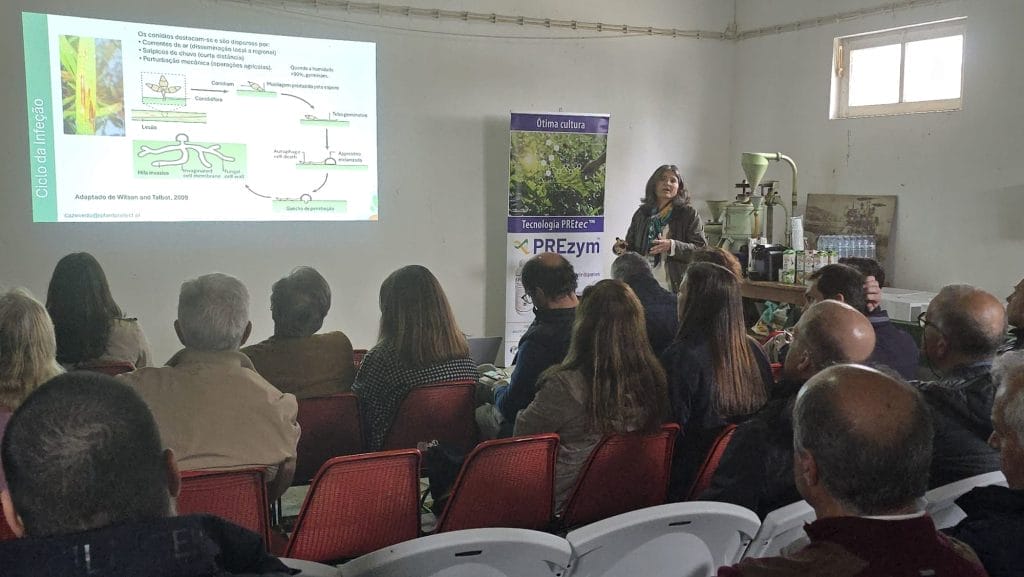
A Diretora de Biosoluções do InPP, Cristina Azevedo, integrou o painel de oradores convidados, tendo apresentado a comunicação intitulada “A problemática da Pyricularia na cultura do arroz”. A apresentação incidiu sobre os principais desafios fitossanitários associados a esta doença, que continua a constituir uma das maiores ameaças à produção de arroz a nível mundial e também em Portugal.

WhatsApp Image 2026 03 06 at 14.28.18

O encontro reuniu produtores, técnicos e especialistas da fileira do arroz, proporcionando um espaço de partilha de conhecimento e debate sobre soluções atuais e em desenvolvimento para o controlo da piriculariose. Foram igualmente abordados outros temas relevantes para a sustentabilidade e produtividade da cultura, nomeadamente a gestão da fertilização.

A participação do InPP neste tipo de iniciativas reforça o compromisso da instituição com a inovação, a transferência de conhecimento e o desenvolvimento de soluções sustentáveis para a agricultura nacional.

O InPP agradece à EDAF e ao COTArroz o convite e a organização deste importante encontro, esperando que esta colaboração continue a fortalecer-se no futuro.

EVENTS

Nature Plants highlights the advantages of new genome editing techniques but warns of three crucial aspects that still need to be addressed.

“The rapid development of plant biotechnologies is profoundly shaping crop improvement and catalyzing the next revolution in agriculture,” writes an editorial recently published by Nature Plants, entitled Next-generation crop engineering (Next-generation crop engineering).

Crop improvement no longer has to depend on naturally occurring mutations and artificially generated variations can be the raw material for further improvement, the text argues. “A much broader spectrum of phenotypic space is ready for exploration, allowing the development of ideal phenotypes adapted to the heterogeneous environments of Earth, or even Space,” argue the authors of the paper. article, He concluded that “a new agricultural revolution driven by biotechnology could be just around the corner”.

Image: Francesco Gallarotti/ Unsplash

The editorial refers to the promise and advantages of the new genome editing techniques, particularly compared to classical breeding, but not only. And it warns of three crucial factors that are still missing in order to achieve high levels of variation through gene editing: 1) a better understanding of the key regulators for genes that are important from an evolutionary or developmental point of view; 2) being able to dissect networks of genes that control phenotypes of interest and regulatory networks in cis that affect gene expression; 3) to establish stable and efficient transformation and regeneration procedures for most species.

Unless genetic editing in planta is developed quickly, breeding based on gene editing will be unable to benefit recalcitrant species. It is also recalled that there are alternative strategies for engineering new generation crops, such as the transfection of viral RNA in sprays, which allows for the temporary adjustment of agronomic characteristics without modifying the genetic material.

The DGAV has announced new requirements for citrus production and marketing, due to the African citrus psyllid plague.

The technical requirements for the production and marketing of citrus fruits and other rutaceous plants in a place free from Trioza erytreae, the insect vector of the disease citrus greening, were recently updated and published by the Directorate-General for Food and Veterinary (DGAV).

The rutaceae are a family of trees in which the genus Citrus is imperative from the point of view of economic value. O citrus greening, greening citrus greening, Huanglongbing disease or citrus greening is caused by the African citrus psyllid (Trioza erytreae), an insect vector that also causes direct damage to citrus fruits.

“In view of the detection of Trioza erytreae in some regions of the country and given the expansion that has already occurred in the area infested by this insect, we have tried to ensure a set of conditions to ensure the continuity of production and marketing of citrus propagating material in regions where the pest is present,” explain the DGAV officials in a press release. document. The update was motivated by “experience gained in the meantime” and by the new legislation in force: Annex VIII of Implementing Regulation (EU) 2019/2072 and Ordinance no. 142/2020.

A Trioza erytreae is a quarantine pest on national territory. 

In the T. erytreae, In addition to the obligatory declaration of mother or nursery plants, citrus and other rutaceous plants must be produced “in a place with complete physical protection against this insect” and have been subject to two official inspections in the last growing season without showing any symptoms of the pest.

For marketing, the plants must also be kept in a place with complete physical protection against this insect “and come from exempt areas (outside infested zones and buffer zones) or from nurseries located in demarcated zones”, among other requirements, which aim to guarantee that no infestation occurs.

InPP has a cooperation project with the DGAV to take part in the task force phytosanitary measures and to support the biological control plan with a view to controlling the Trioza erytreae.

Feature image: mac231/ Pixabay

Researchers at InPP are developing machine learning methods for predicting phenotypic traits from genetic information of key crops. The project is led by Manisha Sirsat, from the Data Management and Risk Analysis Department, which is headed by Ricardo Ramiro, in collaboration with the Protection of Specific Crops Department, headed by Paula Oblessuc.

Over the last decade, machine learning has become part of our everyday lives, when it suggests the next song you should listen to or the restaurant you should go to. This branch of artificial intelligence is focused on building models and applications that can learn from data, in order to predict a particular outcome. For this to be possible, large amounts of data are necessary which, until recently, would preclude its application in most fields of biology. However, in the last 20 years, biology has become a data-intensive discipline, due to the revolution brought by high-throughput systems for fields as disparate as genomics and microscopy. Thus, machine learning methods are now being applied to a wide range of biological questions.

At InPP, the team is taking advantage of the availability of high-throughput genomic and phenotypic data for key phenotypes of important crops (e.g. wheat genomes and yield) and using this data to develop machine learning models that can predict the phenotype from the genotype. This approach is termed Genomic Prediction. “The aim is to develop an advanced genomic prediction tool which uses genome-wide genetic markers to predict complex traits,” states Manisha Sirsat. “This will allow us to identify genetic markers that can increase agricultural productivity and that can accelerate plant breeding programs,” adds Ricardo Ramiro.

© 2021 InnovPlantProtect, All rights reserved