News & Events

white plant

NEWS

O InnovPlantProtect (InPP), Collaborative Laboratory specializing in biological and digital solutions for crop protection, aligned with the emerging challenges of agriculture, will launch its new institutional website on January 24th, on a symbolic date marking 7 years working in the agricultural sector.

This launch is part of a phase of institutional evolution and consolidation InPP, reinforcing its strategy of proximity to the sector, clarity in the communication of its competencies and affirmation as a strategic partner for companies, producers, associations and public bodies.

An even clearer, more up-to-date and sector-oriented platform

With a renewed structure and a more intuitive browsing experience, the new website features:

  • an area of Services and Products completely reorganized, which facilitates access to specialized services, laboratory capabilities and biological and digital solutions developed by InPP, as well as to a updated catalog of services and biosolutions;
  • more complete institutional content that reinforces transparency, scientific rigor and CoLAB's mission;
  • a clearer presentation of scientific skills and research areas, highlighting the impact of the work carried out by InPP's multidisciplinary teams.

New image, same mission - but reinforced

The launch of the website is accompanied by the implementation of InnovPlantProtect's new visual identity, This reflects the maturity of CoLAB and its future ambitions.

The new image - accompanied by the slogan “Innovate together. Protect better.” - reflects InPP's ongoing commitment to:

  • Developing new generation biological and digital solutions;
  • Promoting safer, more innovative and more productive agriculture;
  • Strengthen collaboration and partnership with the agricultural sector and the innovation ecosystem.

A new phase for InPP

The digital and visual renovation is part of a broader strategy of maturity and consolidation, Through this initiative, InPP aims to strengthen its role as a scientific and technological partner for the agricultural sector in applied research and the development of crop protection solutions.

According to António Saraiva, InPP's executive director: “This new website isn't just a digital revamp - it's a reflection of the ambition we have for our future and how we want to communicate with the sector. We want every visitor to understand the purpose that drives us: to create innovative solutions that protect crops, boost productivity and contribute to more sustainable agricultural systems. InPP is entering a new phase, with a clearer, more accessible identity aligned with the real needs of agriculture and a renewed commitment to real impact on the ground.”

Available from January 24th

The new InnovPlantProtect website will be available from January 24th at: https://iplantprotect.pt/
The start of a new year also marks a new cycle for InnovPlantProtect. In 2026, InPP enters a phase of evolution and consolidation, with several new features that reinforce its position as a strategic partner for the intelligent transformation of agriculture.

Over the next few months, initiatives, content and tools will be presented that reflect the work carried out by our teams in the areas of applied research, biological solutions, specialized services and digital innovation.

The first step in this new phase will be presented in the next January 24th, InnovPlantProtect is celebrating the date 7 years in business at the service of the agricultural sector.

Until then, we continue to prepare a range of new products that reflect our mission to promote safer, more innovative and more productive agriculture.

Stay tuned. What's coming is just the beginning.

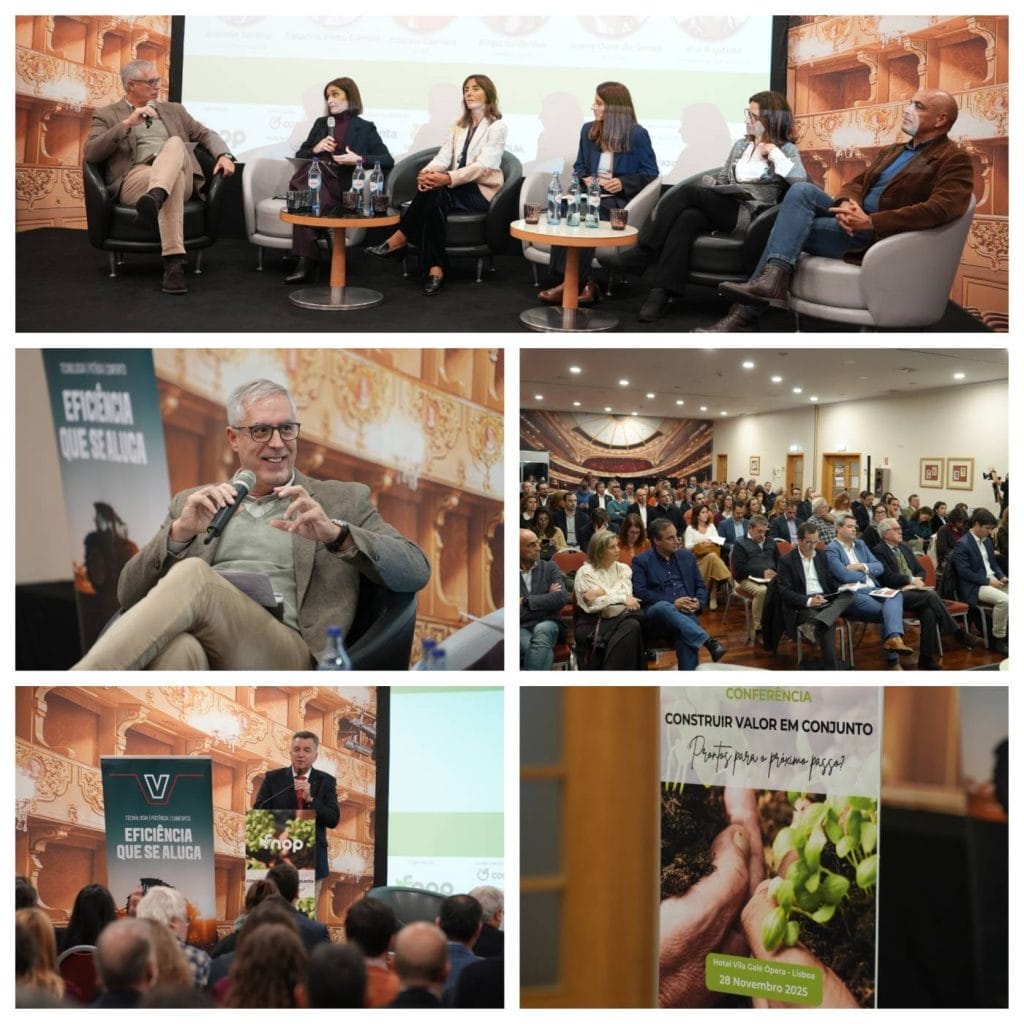
InnovPlantProtect (InPP) was present at the conference “Building value together”, organized by our associate FNOP - National Association of Fruit and Vegetable Producers' Organizations.

InPP's executive director, António Saraiva, moderated the panel “Sustainability that generates value: The role of ESG in the future of the sector”, which included interventions from Catarina Pinto Correia (VdA), Cristina Câmara (APED), Filipa Saldanha (Crédito Agrícola), Joana Oom de Sousa (Sovena) and Rui Veríssimo Baptista (Companhia das Lezírias).

The opening session was given by Domingos dos Santos, president of FNOP and a member of CoLAB's Board of Directors of our CoLAB.

The meeting brought together producer organizations, farmers, companies, experts and political decision-makers to discuss the current challenges and look to the future of the national fruit and vegetable sector.

With the participation of national and international experts, the conference was a privileged space for sharing experiences and strategic reflection, focusing on the organization of production and the role of public policies in promoting sustainable growth.

Congratulations to FNOP for the initiative and the ability to bring together a panel of excellent speakers, making this conference a relevant and topical milestone for the sector.

Image credits: Voz do Campo magazine

FNOP Event

EVENTS

Nature Plants highlights the advantages of new genome editing techniques but warns of three crucial aspects that still need to be addressed.

“The rapid development of plant biotechnologies is profoundly shaping crop improvement and catalyzing the next revolution in agriculture,” writes an editorial recently published by Nature Plants, entitled Next-generation crop engineering (Next-generation crop engineering).

Crop improvement no longer has to depend on naturally occurring mutations and artificially generated variations can be the raw material for further improvement, the text argues. “A much broader spectrum of phenotypic space is ready for exploration, allowing the development of ideal phenotypes adapted to the heterogeneous environments of Earth, or even Space,” argue the authors of the paper. article, He concluded that “a new agricultural revolution driven by biotechnology could be just around the corner”.

Image: Francesco Gallarotti/ Unsplash

The editorial refers to the promise and advantages of the new genome editing techniques, particularly compared to classical breeding, but not only. And it warns of three crucial factors that are still missing in order to achieve high levels of variation through gene editing: 1) a better understanding of the key regulators for genes that are important from an evolutionary or developmental point of view; 2) being able to dissect networks of genes that control phenotypes of interest and regulatory networks in cis that affect gene expression; 3) to establish stable and efficient transformation and regeneration procedures for most species.

Unless genetic editing in planta is developed quickly, breeding based on gene editing will be unable to benefit recalcitrant species. It is also recalled that there are alternative strategies for engineering new generation crops, such as the transfection of viral RNA in sprays, which allows for the temporary adjustment of agronomic characteristics without modifying the genetic material.

The DGAV has announced new requirements for citrus production and marketing, due to the African citrus psyllid plague.

The technical requirements for the production and marketing of citrus fruits and other rutaceous plants in a place free from Trioza erytreae, the insect vector of the disease citrus greening, were recently updated and published by the Directorate-General for Food and Veterinary (DGAV).

The rutaceae are a family of trees in which the genus Citrus is imperative from the point of view of economic value. O citrus greening, greening citrus greening, Huanglongbing disease or citrus greening is caused by the African citrus psyllid (Trioza erytreae), an insect vector that also causes direct damage to citrus fruits.

“In view of the detection of Trioza erytreae in some regions of the country and given the expansion that has already occurred in the area infested by this insect, we have tried to ensure a set of conditions to ensure the continuity of production and marketing of citrus propagating material in regions where the pest is present,” explain the DGAV officials in a press release. document. The update was motivated by “experience gained in the meantime” and by the new legislation in force: Annex VIII of Implementing Regulation (EU) 2019/2072 and Ordinance no. 142/2020.

A Trioza erytreae is a quarantine pest on national territory. 

In the T. erytreae, In addition to the obligatory declaration of mother or nursery plants, citrus and other rutaceous plants must be produced “in a place with complete physical protection against this insect” and have been subject to two official inspections in the last growing season without showing any symptoms of the pest.

For marketing, the plants must also be kept in a place with complete physical protection against this insect “and come from exempt areas (outside infested zones and buffer zones) or from nurseries located in demarcated zones”, among other requirements, which aim to guarantee that no infestation occurs.

InPP has a cooperation project with the DGAV to take part in the task force phytosanitary measures and to support the biological control plan with a view to controlling the Trioza erytreae.

Feature image: mac231/ Pixabay

Researchers at InPP are developing machine learning methods for predicting phenotypic traits from genetic information of key crops. The project is led by Manisha Sirsat, from the Data Management and Risk Analysis Department, which is headed by Ricardo Ramiro, in collaboration with the Protection of Specific Crops Department, headed by Paula Oblessuc.

Over the last decade, machine learning has become part of our everyday lives, when it suggests the next song you should listen to or the restaurant you should go to. This branch of artificial intelligence is focused on building models and applications that can learn from data, in order to predict a particular outcome. For this to be possible, large amounts of data are necessary which, until recently, would preclude its application in most fields of biology. However, in the last 20 years, biology has become a data-intensive discipline, due to the revolution brought by high-throughput systems for fields as disparate as genomics and microscopy. Thus, machine learning methods are now being applied to a wide range of biological questions.

At InPP, the team is taking advantage of the availability of high-throughput genomic and phenotypic data for key phenotypes of important crops (e.g. wheat genomes and yield) and using this data to develop machine learning models that can predict the phenotype from the genotype. This approach is termed Genomic Prediction. “The aim is to develop an advanced genomic prediction tool which uses genome-wide genetic markers to predict complex traits,” states Manisha Sirsat. “This will allow us to identify genetic markers that can increase agricultural productivity and that can accelerate plant breeding programs,” adds Ricardo Ramiro.

© 2021 InnovPlantProtect, All rights reserved

