News & Events

white plant

NEWS

O InPP participou no Fórum Nacional de Clubes Ciência Viva na Escola, que teve lugar no dia 27 de março, integrando a Mostra de Ciência e Tecnologia com um stand dedicado à proteção das plantas.

Neste espaço, foram apresentados diversos materiais demonstrativos, incluindo placas de Petri com fungos e bactérias, plantas, algas e exemplos de produtos formulados, com o objetivo de despertar o interesse e a curiosidade dos visitantes para a importância da saúde das plantas e da investigação científica nesta área.

Ao longo do dia, a Gestora de Comunicação, Inês Ferreira, e o Gestor de Inovação, Paulo Madeira, dinamizaram o contacto com o público visitante, explicando de que forma a investigação em proteção das plantas contribui para melhorar a proteção das culturas e promover uma agricultura mais resiliente e sustentável.

O Fórum Nacional de Clubes Ciência Viva na Escola decorreu no CNEMA, em Santarém, reunindo escolas, centros Ciência Viva, universidades, centros de investigação e diversas outras entidades, num encontro dedicado à ciência, tecnologia e inovação.

O InPP agradece a todos os visitantes que passaram pelo seu stand, destacando a importância destes momentos de partilha para promover o conhecimento científico junto da comunidade.

No dia 26 de março, o InPP participou numa sessão promovida pela Agência Nacional de Inovação (ANI), em Lisboa, que contou com a presença de uma comitiva da República Checa ligada ao setor das biotecnologias.

Em representação do InPP estiveram Cristina Azevedo, Diretora de Biosoluções, e Paulo Madeira, Gestor de Inovação, que apresentou a instituição e as suas principais áreas de atuação e competências.

A iniciativa teve como principal objetivo identificar oportunidades de cooperação entre entidades portuguesas e checas, nomeadamente nas áreas de transferência de tecnologia, codesenvolvimento, ensaios pré-clínicos e diagnósticos, coinvestimento e internacionalização da inovação.

A sessão contou com a participação de representantes de entidades relevantes da República Checa, incluindo Petra Kinzlova, CEO da Prague.bio, Katarina Psenakova, Head of Biology da PharmTheon, bem como representantes da Embaixada da República Checa e da Academia das Ciências da República Checa.

Este encontro contribuiu para reforçar o posicionamento do InPP na promoção de parcerias internacionais e no desenvolvimento de soluções inovadoras, evidenciando o compromisso contínuo da instituição em fortalecer redes de colaboração científica e tecnológica e em contribuir para o crescimento e internacionalização da inovação.

O InPP marcou presença no Encontro com orizicultores e técnicos(as) em Portugal, promovido pela EDAF, que decorreu no dia 5 de março, no Pólo de Inovação de Salvaterra de Magos, em Santarém.

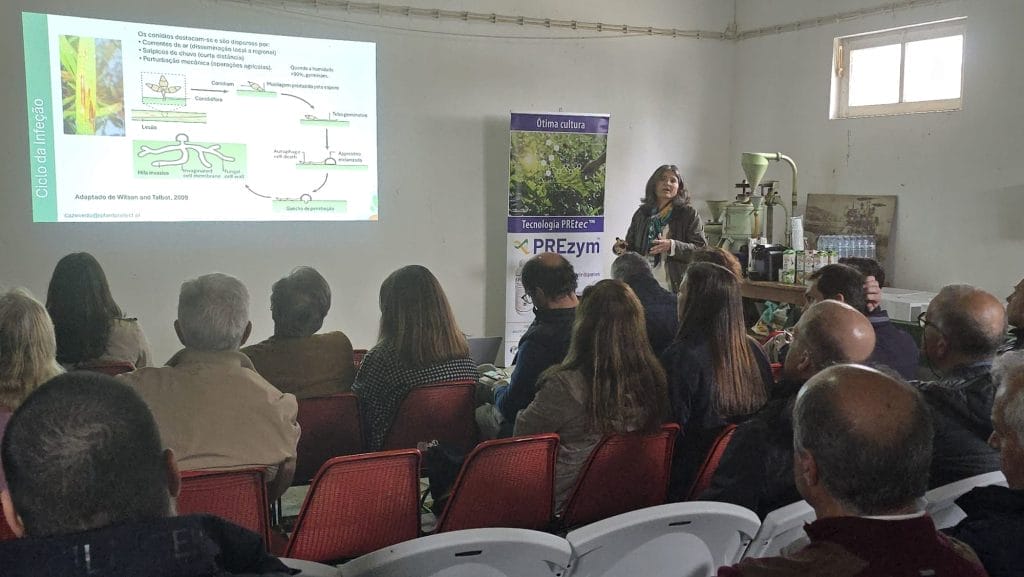
A Diretora de Biosoluções do InPP, Cristina Azevedo, integrou o painel de oradores convidados, tendo apresentado a comunicação intitulada “A problemática da Pyricularia na cultura do arroz”. A apresentação incidiu sobre os principais desafios fitossanitários associados a esta doença, que continua a constituir uma das maiores ameaças à produção de arroz a nível mundial e também em Portugal.

WhatsApp Image 2026 03 06 at 14.28.18

O encontro reuniu produtores, técnicos e especialistas da fileira do arroz, proporcionando um espaço de partilha de conhecimento e debate sobre soluções atuais e em desenvolvimento para o controlo da piriculariose. Foram igualmente abordados outros temas relevantes para a sustentabilidade e produtividade da cultura, nomeadamente a gestão da fertilização.

A participação do InPP neste tipo de iniciativas reforça o compromisso da instituição com a inovação, a transferência de conhecimento e o desenvolvimento de soluções sustentáveis para a agricultura nacional.

O InPP agradece à EDAF e ao COTArroz o convite e a organização deste importante encontro, esperando que esta colaboração continue a fortalecer-se no futuro.

EVENTS

1st InPP field trip - Fertiprado
First InPP / Fertiprado field trip, by the Guadiana River, southwest of Elvas

CoLab InPP and Fertiprado collected the first samples of Persian clover and the pathogen that attacks this plant, which is used in the Alentejo and Elvas to produce pasture to feed free-range cattle.

The InnovPlantProtect (InPP) collaborative laboratory will develop a technological solution, based on existing products on the market, to protect Persian clover meadows (Trifolium resupinatum) against root rot. The initiative is the result of a partnership signed on December 2, 2020 with Fertiprado, an InPP member company.

This forage legume is particularly adapted - especially Fertiprado's varieties - to pasture production in Portugal and countries with winters similar to the Portuguese one. In the Alentejo and Elvas, Persian clover is mainly used as feed for free-range cattle, “due to its high protein content and its ability to retain atmospheric nitrogen,” says Pedro Fevereiro, InPP's executive director.

The action aims to isolate and identify the causative agent of root rot. The need was recognized by Fertiprado, which over the years has seen an increase in the incidence of this disease in its meadows, particularly those used for seed production. In the second week of January, InPP phytopathologists carried out their first field trip, accompanied by Ana Barradas, Fertiprado's Director of Research and Development, to collect samples of Persian clover and the pathogen that attacks it.

The work is in its initial phase and the identification of the causal species/strain of the disease is expected between March and April 2021, says Pedro Fevereiro. In a second phase, the “sequencing of its genome and the molecular identification of the strain” will be carried out. The third phase will consist of “testing and identifying the best solution based on coating the seeds with a biopesticide”.

INIAV-National Institute for Agricultural and Veterinary Research is one of the founding members of InnovPlantProtec. In this interview with Oeiras Valley, Nuno Canadas lists the differentiating elements of the institution he chairs and emphasizes its position within the national scientific and technological system. See Part I and Part II of the interview.

The new era in genomics began 20 years ago with the publication of the first draft of the human genome. And now, which way forward? This is the question that two genomics experts will try to answer in a live online chat this Monday at 19:00.

Since the new era in genomics began 20 years ago, a lot has changed: DNA sequencing costs have fallen, gene therapy is back, ethical boundaries are being pushed to the limit by gene editing, new technologies such as single cell and transcriptomics are leading researchers towards genomic breakthroughs.

How far the field of genomics has advanced in the last 20 years is not in question. What is under discussion now is what will happen next. With the progress that has been made, what is the way forward? What path should be taken?

On the 14th, at 7pm, in an online meeting organized by the US publication Genetic Engineering & Biotechnology News, two genomics experts from The National Human Genome Research Institute (NHGRI) and the authors of the recently concluded 2020 strategic plan will look back at the past of genomics, analyzing its highs and lows, and try to figure out its future. For the authors of the 2020 strategic plan, “the vision of genomics has never been clearer” and the future, they say, lies in “responsible stewardship” and increasing diversity.

To take part, register here.