News & Events

white plant

NEWS

O InnovPlantProtect (InPP), Collaborative Laboratory specializing in biological and digital solutions for crop protection, aligned with the emerging challenges of agriculture, will launch its new institutional website on January 24th, on a symbolic date marking 7 years working in the agricultural sector.

This launch is part of a phase of institutional evolution and consolidation InPP, reinforcing its strategy of proximity to the sector, clarity in the communication of its competencies and affirmation as a strategic partner for companies, producers, associations and public bodies.

An even clearer, more up-to-date and sector-oriented platform

With a renewed structure and a more intuitive browsing experience, the new website features:

  • an area of Services and Products completely reorganized, which facilitates access to specialized services, laboratory capabilities and biological and digital solutions developed by InPP, as well as to a updated catalog of services and biosolutions;
  • more complete institutional content that reinforces transparency, scientific rigor and CoLAB's mission;
  • a clearer presentation of scientific skills and research areas, highlighting the impact of the work carried out by InPP's multidisciplinary teams.

New image, same mission - but reinforced

The launch of the website is accompanied by the implementation of InnovPlantProtect's new visual identity, This reflects the maturity of CoLAB and its future ambitions.

The new image - accompanied by the slogan “Innovate together. Protect better.” - reflects InPP's ongoing commitment to:

  • Developing new generation biological and digital solutions;
  • Promoting safer, more innovative and more productive agriculture;
  • Strengthen collaboration and partnership with the agricultural sector and the innovation ecosystem.

A new phase for InPP

The digital and visual renovation is part of a broader strategy of maturity and consolidation, Through this initiative, InPP aims to strengthen its role as a scientific and technological partner for the agricultural sector in applied research and the development of crop protection solutions.

According to António Saraiva, InPP's executive director: “This new website isn't just a digital revamp - it's a reflection of the ambition we have for our future and how we want to communicate with the sector. We want every visitor to understand the purpose that drives us: to create innovative solutions that protect crops, boost productivity and contribute to more sustainable agricultural systems. InPP is entering a new phase, with a clearer, more accessible identity aligned with the real needs of agriculture and a renewed commitment to real impact on the ground.”

Available from January 24th

The new InnovPlantProtect website will be available from January 24th at: https://iplantprotect.pt/
The start of a new year also marks a new cycle for InnovPlantProtect. In 2026, InPP enters a phase of evolution and consolidation, with several new features that reinforce its position as a strategic partner for the intelligent transformation of agriculture.

Over the next few months, initiatives, content and tools will be presented that reflect the work carried out by our teams in the areas of applied research, biological solutions, specialized services and digital innovation.

The first step in this new phase will be presented in the next January 24th, InnovPlantProtect is celebrating the date 7 years in business at the service of the agricultural sector.

Until then, we continue to prepare a range of new products that reflect our mission to promote safer, more innovative and more productive agriculture.

Stay tuned. What's coming is just the beginning.

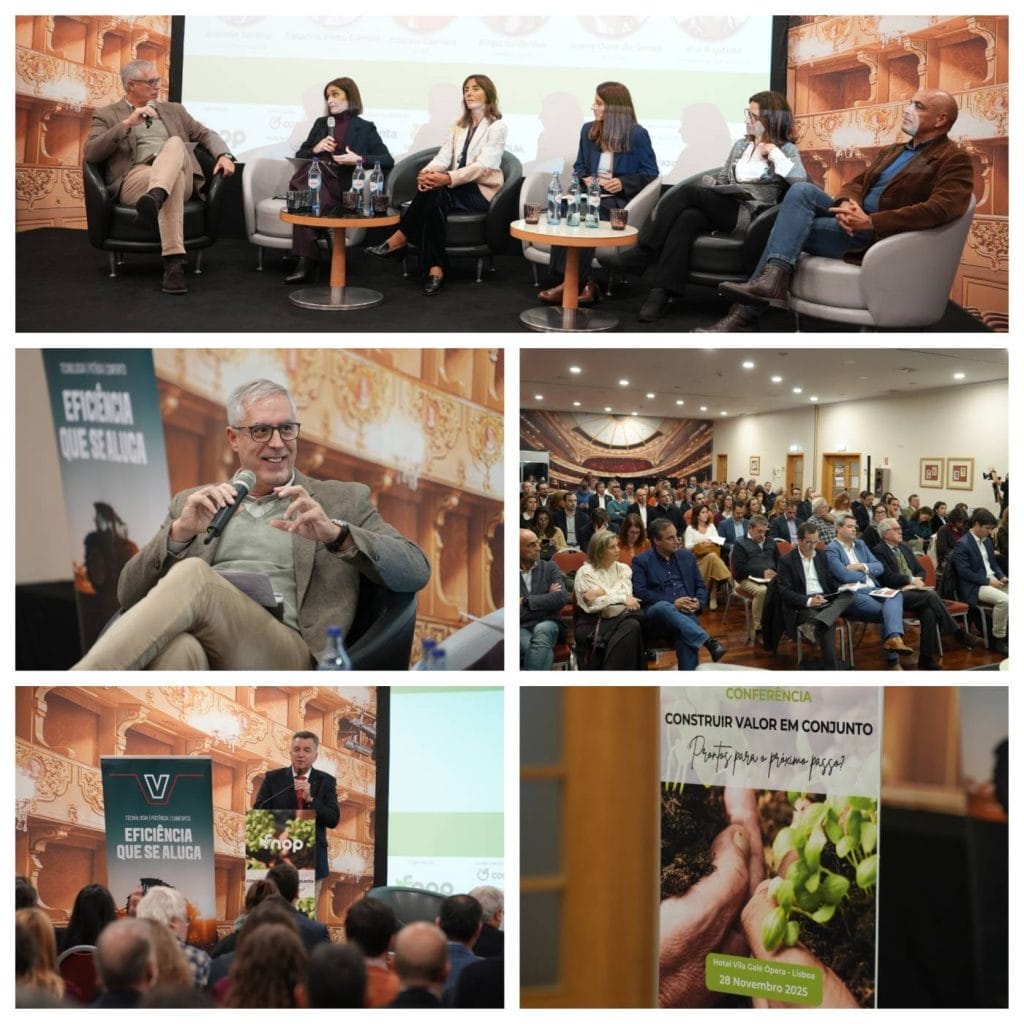
InnovPlantProtect (InPP) was present at the conference “Building value together”, organized by our associate FNOP - National Association of Fruit and Vegetable Producers' Organizations.

InPP's executive director, António Saraiva, moderated the panel “Sustainability that generates value: The role of ESG in the future of the sector”, which included interventions from Catarina Pinto Correia (VdA), Cristina Câmara (APED), Filipa Saldanha (Crédito Agrícola), Joana Oom de Sousa (Sovena) and Rui Veríssimo Baptista (Companhia das Lezírias).

The opening session was given by Domingos dos Santos, president of FNOP and a member of CoLAB's Board of Directors of our CoLAB.

The meeting brought together producer organizations, farmers, companies, experts and political decision-makers to discuss the current challenges and look to the future of the national fruit and vegetable sector.

With the participation of national and international experts, the conference was a privileged space for sharing experiences and strategic reflection, focusing on the organization of production and the role of public policies in promoting sustainable growth.

Congratulations to FNOP for the initiative and the ability to bring together a panel of excellent speakers, making this conference a relevant and topical milestone for the sector.

Image credits: Voz do Campo magazine

FNOP Event

EVENTS

1st InPP field trip - Fertiprado
First InPP / Fertiprado field trip, by the Guadiana River, southwest of Elvas

CoLab InPP and Fertiprado collected the first samples of Persian clover and the pathogen that attacks this plant, which is used in the Alentejo and Elvas to produce pasture to feed free-range cattle.

The InnovPlantProtect (InPP) collaborative laboratory will develop a technological solution, based on existing products on the market, to protect Persian clover meadows (Trifolium resupinatum) against root rot. The initiative is the result of a partnership signed on December 2, 2020 with Fertiprado, an InPP member company.

This forage legume is particularly adapted - especially Fertiprado's varieties - to pasture production in Portugal and countries with winters similar to the Portuguese one. In the Alentejo and Elvas, Persian clover is mainly used as feed for free-range cattle, “due to its high protein content and its ability to retain atmospheric nitrogen,” says Pedro Fevereiro, InPP's executive director.

The action aims to isolate and identify the causative agent of root rot. The need was recognized by Fertiprado, which over the years has seen an increase in the incidence of this disease in its meadows, particularly those used for seed production. In the second week of January, InPP phytopathologists carried out their first field trip, accompanied by Ana Barradas, Fertiprado's Director of Research and Development, to collect samples of Persian clover and the pathogen that attacks it.

The work is in its initial phase and the identification of the causal species/strain of the disease is expected between March and April 2021, says Pedro Fevereiro. In a second phase, the “sequencing of its genome and the molecular identification of the strain” will be carried out. The third phase will consist of “testing and identifying the best solution based on coating the seeds with a biopesticide”.

INIAV-National Institute for Agricultural and Veterinary Research is one of the founding members of InnovPlantProtec. In this interview with Oeiras Valley, Nuno Canadas lists the differentiating elements of the institution he chairs and emphasizes its position within the national scientific and technological system. See Part I and Part II of the interview.

The new era in genomics began 20 years ago with the publication of the first draft of the human genome. And now, which way forward? This is the question that two genomics experts will try to answer in a live online chat this Monday at 19:00.

Since the new era in genomics began 20 years ago, a lot has changed: DNA sequencing costs have fallen, gene therapy is back, ethical boundaries are being pushed to the limit by gene editing, new technologies such as single cell and transcriptomics are leading researchers towards genomic breakthroughs.

How far the field of genomics has advanced in the last 20 years is not in question. What is under discussion now is what will happen next. With the progress that has been made, what is the way forward? What path should be taken?

On the 14th, at 7pm, in an online meeting organized by the US publication Genetic Engineering & Biotechnology News, two genomics experts from The National Human Genome Research Institute (NHGRI) and the authors of the recently concluded 2020 strategic plan will look back at the past of genomics, analyzing its highs and lows, and try to figure out its future. For the authors of the 2020 strategic plan, “the vision of genomics has never been clearer” and the future, they say, lies in “responsible stewardship” and increasing diversity.

To take part, register here.

