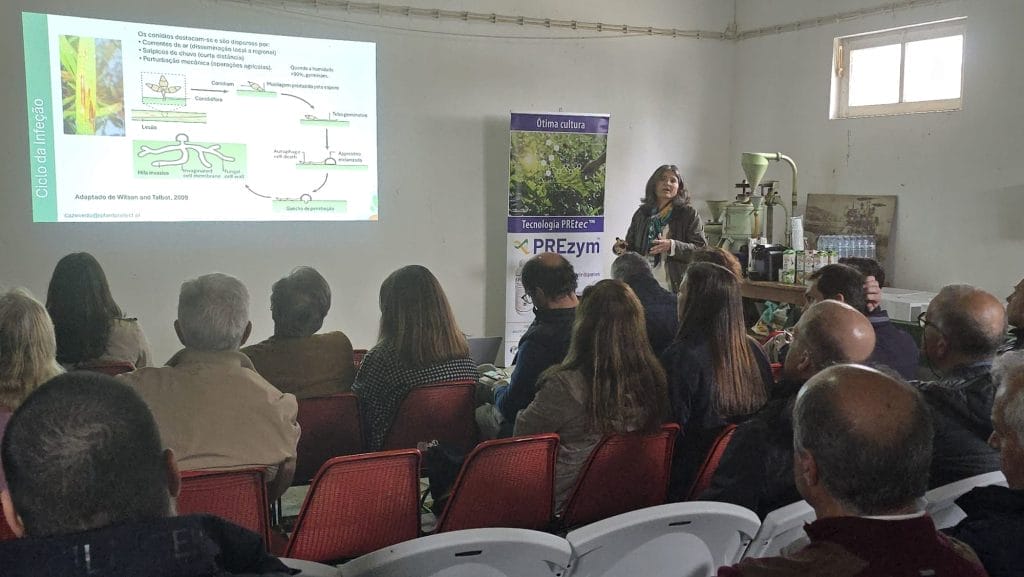
O InPP marcou presença no Encontro com orizicultores e técnicos(as) em Portugal, promovido pela EDAF, que decorreu no dia 5 de março, no Pólo de Inovação de Salvaterra de Magos, em Santarém.
A Diretora de Biosoluções do InPP, Cristina Azevedo, integrou o painel de oradores convidados, tendo apresentado a comunicação intitulada “A problemática da Pyricularia na cultura do arroz”. A apresentação incidiu sobre os principais desafios fitossanitários associados a esta doença, que continua a constituir uma das maiores ameaças à produção de arroz a nível mundial e também em Portugal.
O encontro reuniu produtores, técnicos e especialistas da fileira do arroz, proporcionando um espaço de partilha de conhecimento e debate sobre soluções atuais e em desenvolvimento para o controlo da piriculariose. Foram igualmente abordados outros temas relevantes para a sustentabilidade e produtividade da cultura, nomeadamente a gestão da fertilização.
A participação do InPP neste tipo de iniciativas reforça o compromisso da instituição com a inovação, a transferência de conhecimento e o desenvolvimento de soluções sustentáveis para a agricultura nacional.
O InPP agradece à EDAF e ao COTArroz o convite e a organização deste importante encontro, esperando que esta colaboração continue a fortalecer-se no futuro.
The project TomaBioTec started in January with the aim of developing and validating innovative solutions that contribute to a more sustainable and efficient production of tomatoes in the industry, in line with the current challenges of the agri-food sector, by integrating biotechnology and digital technologies.
The initiative aims to evaluate, under real field conditions, the effectiveness and efficiency of a biosolution with bioprotective and/or biostimulant properties, developed by InnovPlantProtect (InPP), This could help improve the quality and productivity of industrial tomato crops.
The rehearsals take place at Alentejo and Spanish Extremadura and combine traditional agronomic methods with advanced technologies, such as drones, multispectral sensors and artificial intelligence models. This approach allows detailed monitoring of the health of the crop, the presence of pests and diseases and the impact of the bioproduct throughout the production cycle.
The project “TomaBioTec: New biological and digital solutions for tomato crop protection and fertilization” is led by the InPP, in collaboration with the Centro Tecnológico Nacional Agroalimentario Extremadura (CTAEX) and Cordeiro Group, and was selected as one of the winners of the 7th edition of the Promove Program, The prize was awarded by the “la Caixa” Foundation, in partnership with Banco BPI and the Foundation for Science and Technology (FCT), in the category of innovative pilot projects.
This project reinforces the commitment to biological and digital solutions as drivers of more sustainable, competitive agriculture based on scientific evidence, with a direct impact on producers and industry.
InnovPlantProtect (InPP) was present at the XVI National Maize Congress, which also included the 2nd Meeting of Cereal Crops, organized by ANPROMIS, in collaboration with ANPOC and AOP. The event took place on February 11 and 12 at CNEMA in Santarém, bringing together national and international experts to discuss the sector's main challenges.
António Saraiva, Executive Director of InPP, took part in the panel “Cereal Production: What technical challenges are we facing?”, where he highlighted the decisive role of research in responding to the emerging challenges of cereal production, in a context of growing demographic, environmental and economic pressure.
“I'm proud that today, after seven years, we have 28 researchers working full-time on this topic, 12 of whom have PhDs, with experience in crops such as rice, which has been central to our work,” he said, emphasizing the multifunctional and international nature of InPP's teams.
He also pointed out that the work being done extends beyond rice to include maize, through ongoing projects and new operational groups focused on emerging crop problems. Among the initiatives in the spotlight is an application to Horizon Europe focused on developing improved and more resilient varieties.
For António Saraiva, anticipation is the key to success: “These challenges can't wait too long to be discussed or resolved. The sooner we anticipate the issues, the easier, more effective and more economical the solutions will be.”
In a debate that also marked the 40th anniversary of Portugal's integration into Europe and the role of the Common Agricultural Policy in the cohesion of the European Union, one message was clear across the board: “Climate change is the biggest threat we have.”
InPP thus reaffirms its commitment to innovation, science and the development of sustainable solutions for the future of cereal crops.
A sustentabilidade da agricultura não seria possível atualmente sem o contributo da biotecnologia. As novas tecnologias que permitem alterar o DNA das plantas têm um impacto enorme nas novas culturas agrícolas e um papel crucial para garantir a soberania alimentar. Estas são questões a debater na conferência “A Importância da Biotecnologia para a Sustentabilidade na Agricultura”, no dia 17 de outubro, às 10h00, no Centro Cultural de Belém (CCB), in Lisbon.
No evento, organizado pela Associação Portuguesa dos Industriais de Alimentos Compostos para Animais (IACA), em parceria com o InnovPlantProtect (InPP) e o Centro de Informação de Biotecnologia (CiB), e que conta com a colaboração do Jornal Público, participarão vários especialistas da área da biotecnologia e da agricultura, serão discutidos temas cruciais para o setor, visando promover práticas agrícolas mais sustentáveis e eficazes. Pedro February, diretor executivo do InPP, vai participar no primeiro painel intitulado “O impacto da biotecnologia nas novas culturas agrícolas”.
A sessão de encerramento estará a cargo de Maria do Céu Antunes, Ministra da Agricultura e da Alimentação.
A participação no evento necessita de inscrição prévia obrigatória. As inscrições podem ser efetuadas através do preenchimento do formulário disponível here.
Para mais informações e para consultar o programa detalhado do evento, aceda here.
Não perca esta oportunidade de participar nesta conferência sobre o futuro da agricultura e a sua interação com a biotecnologia!
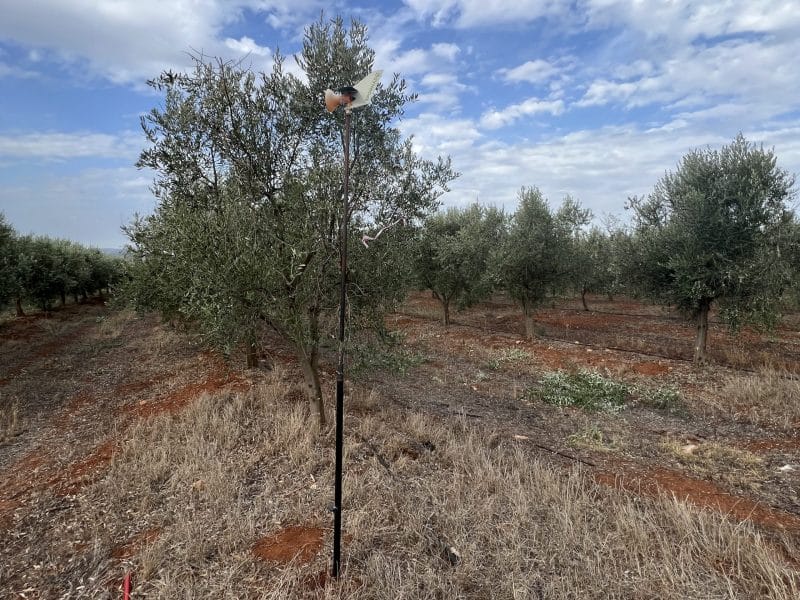
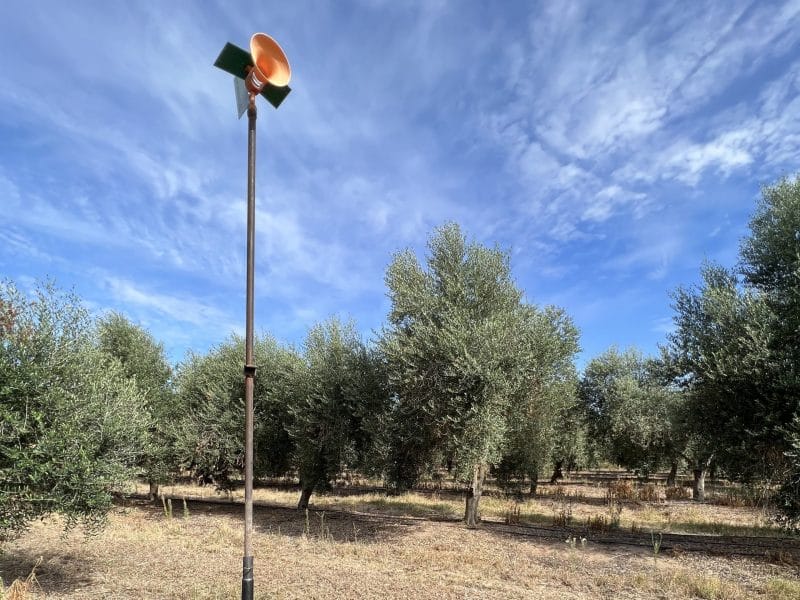
From September until November, the “AlViGen: Creation of a hub in the ALentejo for the GENomic VIgilance of diseases in agriculture” project team will be in the field to install spore traps, known as capta-esporos, in olive groves in Portalegre, Monforte, Elvas, Évora and Beja. The traps make it possible to capture spores from fungal species that circulate in the air and, in particular, from different strains of the fungus Colletotrichum, This is responsible for causing gafa disease in Olival.
The aim is to identify some important characteristics of this pathogen, such as virulence and resistance to fungicides or pesticides.
In total, the spore traps were installed in eight olive groves in the Alentejo (Alto, Central and Baixo), a region that is the main producer of this crop at a national level, and where the fungus Colletotrichum has had a particular impact.
The team will take samples every two weeks for three months a year during the olive tree's productive cycle. Regular monitoring of the diversity of fungal species circulating in the olive groves will also make it possible to detect the appearance of new pathogenic fungi.
AlViGen, coordinated by InnovPlantProtect (InPP) in partnership with the University of Évora (WOW), was one of the innovative pilot projects selected last October and funded by the La Caixa Foundation, BPI Bank and the Foundation for Science and Technology (FCT), as part of the 4th edition of the Promove Program. This project will enable InPP to create the capacity for early detection of multiple crop diseases, using molecular methods that allow the identification of important characteristics of pathogens, such as virulence, susceptible varieties and resistance to phytopharmaceuticals, benefiting producers and government authorities.
Find out more about the AlViGen project on the project website here.
O InnovPlantProtect (InPP), como membro da rede portuguesa de laboratórios de investigação sustentável, a GreenLabs Portugal, participou no primeiro “Green Labs Portugal Symposium: Promoting Sustainability in Research”, dedicado a promover práticas verdes na ciência para reduzir o impacto ambiental da investigação científica em Portugal, e que teve lugar esta sexta-feira, dia 22 de setembro, na Universidade de Coimbra.
O principal objetivo deste simpósio foi promover o debate e a discussão sobre como mitigar o impacto ambiental da investigação científica, reconhecendo ao mesmo tempo o papel fundamental da ciência e da inovação no progresso da sociedade. Em mais detalhe, a iniciativa abordou os diferentes aspetos do que são os Green Labs e o procedimento para obter certificação, a sustentabilidade na ciência e como as empresas estão a reinventar e a revolucionar os seus serviços para apoiar os laboratórios de investigação na adoção de práticas mais ecológicas, de forma a reduzir a pegada ecológica da investigação.
Cristina Azevedo, diretora do departamento de Novos Biopesticidas, participou na sessão 2 dedicada ao tema “Setting a green lab” com a apresentação “How to greenUP bio-based research labs”. A iniciativa contou ainda com palestras de especialistas na área, como Melina Kerou da Sustainable European Laboratory Network (SELs), e Martin Farley da Green Lab Associates.
O programa incluiu vários momentos interativos com os participantes, incluindo uma mesa redonda, um jogo “Ask the Green Teams” e uma sessão de posters. Alguns elementos da equipa de InPP Greeners do InPP, representada pelas investigadoras Cátia Patrício, Cláudia Silva e Leonor Martins participaram nesta última, na qual apresentaram o poster “InPPGreeners – Story of a colab built with sustainability as its cornerstone”.
Na sessão de encerramento teve lugar um momento especial em que foi plantada uma árvore no Jardim Botânico da Universidade de Coimbra.
O tempo para um futuro científico mais sustentável é agora, e todos somos responsáveis por fazer parte desta mudança!
Os InPP Greeners são a equipa de sustentabilidade do InPP, criada no final de 2021, com a missão de partilhar conhecimento e de promover boas práticas nas áreas da biotecnologia e da proteção de culturas agrícolas, que conduzam à criação de laboratórios e instituições mais sustentáveis, além da promoção da adoção de comportamentos mais sustentáveis por todos os cidadãos.
A GreenLabs Portugal é uma rede de laboratórios de investigação sustentável em Portugal que promove práticas sustentáveis para reduzir o impacto ambiental da investigação científica a nível nacional, e da qual o InPP faz parte.







 Português
  English