News & Events

white plant

NEWS

Every year, crop diseases cause devastating losses in agricultural production, threatening the food security and livelihoods of millions of farmers. In the heart of the Alentejo, an innovative project is using the power of genomics to help combat these invisible threats. The AlViGen Project, with the participation of InnovPlantProtect researchers Rute Rego and João Bilro, is paving the way for a new era of crop surveillance and protection.

The Problem and the Solution

“Yellow rust on wheat and gafa in olive groves are real scourges for farmers,” explains Rute Rego, a researcher at AlViGen. “These diseases can wipe out entire harvests, leading to severe economic losses and compromising food quality.”

But AlViGen isn't just observing the problem. The team is using cutting-edge technology to detect and identify the strains of fungi that cause these diseases, long before the symptoms become visible.

“We use traps to collect spores that circulate in the air,” continues Rute. “These traps allow us to monitor the presence of fungi in real time, which gives us an important advantage in preventing infections.”

But the magic happens in the laboratory, where the team extracts DNA from the spores and carries out advanced genomic analysis using powerful DNA sequencing technology based on the metabarcoding, The Nanopore portable sequencer is a state-of-the-art technology.

Rute Rego, InnovPlantProtect researcher, analyzes samples of the fungus that causes gafa, as part of the AlViGen project.

Unlocking the genetic code of fungi

To explain more about metabarcoding and its advantage for detecting the presence of species or strains of fungi that cause diseases in crops, the researcher gives the example of a bag full of different types of grain: rice, beans, corn, which is being analyzed by the reader. “Metabarcoding is like putting a unique label (a ‘barcode’) on each type of grain. You can then mix all the grains into a single sample and, by reading the labels, you can identify the amount of each type of grain present.”

In the case of AlViGen, this technique makes it possible to analyze multiple species of fungi at the same time (in multiple samples), each with its own genetic ‘barcode’ and “identify exactly which fungi are present, even in small quantities”, explains the researcher.

And what is the practical impact of this method for monitoring and predicting the disease? The researcher of the AlViGen project is able to identify, with high precision, the moment when the pathogen begins to appear in the field, which makes it possible to alert farmers in real time to the risk of the disease. Producers can adopt preventive measures and apply the necessary products to avoid infection, contributing to a rapid and effective response to disease prevention.

The Timeline of Fungal Evolution

AlViGen's research is not limited to identifying microorganisms that damage crops; it also seeks to understand their evolution and diversity. João Bilro, another researcher on the project, is studying the phylogeny of the fungus Colletotrichum, This is a microorganism responsible for causing gafa or anthracnose, a disease that affects olive groves in Portugal. This disease mainly affects the olives, which compromises the quality of the oil.

“Phylogeny is crucial to understanding how the different strains of Colletotrichum are related and how they have evolved over time,” explains João. “Just as a family tree traces the history of a family, showing how the members are related to each other, phylogenetic trees reveal the evolutionary relationships between the different strains of this fungus. Each branch of the tree represents an evolutionary lineage, and the nodes indicate common ancestors. By comparing the DNA sequences of these strains, we can reconstruct their evolutionary history, identifying which ones are closer or more genetically distant, and thus infer characteristics such as virulence or resistance to fungicides,” he reveals.

This knowledge allows researchers to identify patterns of spread and adaptation of the fungus, which is fundamental to developing more effective strategies to contain and/or reduce the damage this fungus causes to Portuguese olive groves.

“One of the challenges of our research is the great genetic diversity of the Colletotrichum,” admits João. “However, by uncovering their evolutionary secrets, we are paving the way for the development of more precise and targeted detection and control methods.”

Photo from left: João Bilro, InnovPlantProtect bioinformatician, studying the phylogeny of the fungus Colletotrichum as part of the AlViGen project; Photo right: Rute Rego and João Bilro discuss ideas about the AlViGen project

The Future of Agriculture Starts Here

The AlViGen Project aims to have a significant impact on the agricultural landscape, especially in the Alentejo, a region with a strong agricultural tradition. By providing farmers with early detection tools and accurate information on the microorganisms that cause crop diseases, the project aims to help with decision-making, enabling farmers to protect their crops and reduce production losses.

“Our ultimate goal is to empower farmers with the knowledge and tools they need to protect their crops sustainably,” says Rute. “We believe that genomic surveillance is a key tool for the future of crop protection.”

João Bilro agrees and adds: “Continuous research is essential to monitor the evolution of harmful microorganisms and develop new control strategies that are always effective. In the future, we hope to expand the scope of AlViGen to include other microorganisms and crops, and make genomic surveillance an accessible tool for all farmers.”

Science at the Service of Agriculture

The AlViGen Project, supported by the Promove Program of the “la Caixa” Foundation, in partnership with Banco BPI and the Foundation for Science and Technology (FCT), is an inspiring example of how science and technology can be applied to solve real problems and transform agriculture. By unlocking the genetic secrets of crop microorganisms, Rute Rego and João Bilro are paving the way for safer, more sustainable and resilient agriculture.

The fight against crop diseases continues, but with AlViGen, farmers can finally see the enemy before it becomes visible.

On May 13th, the project team AI4Leafhopper presented the new application iCountPests, an innovative solution that uses Artificial Intelligence (AI) to detect and count green leafhoppers in chromotropic traps - quickly, accurately and in real time.

Developed as an intuitive mobile application, the iCountPests was designed to facilitate the monitoring of various agricultural pests. With a simple and accessible interface, it allows users to record the evolution of pests in their crops by submitting photographs of the traps installed in the field.

The application uses advanced computer vision models to automatically detect and count insects, delivering results in around a minute - a much faster and more practical process than traditional manual counting.

In its first version, the app already has a model for detecting the green leafhopper (Jacobiasca lybica), achieving an average accuracy of approximately 90%. Functionalities will soon be added to identify other relevant pests, such as curl moth (Cryptoblabes gnidiella) and grape moth (Lobesia botrana).

In addition to automatic counting, the iCountPests makes it possible to monitor the evolution of pest populations over time, making it easier to identify trends and plan more effective interventions.

This project is the result of a multidisciplinary team combining skills in ecology, entomology, artificial intelligence, computer vision, remote sensing and software development, with the aim of making pest monitoring simpler, more accurate and more accessible.

During the presentation session, it was possible to hear the opinions and suggestions of future users of the application. These contributions are essential if we are to continue to improve the tool and ensure that it responds in a practical way to the real needs of farmers and technicians in the sector. We want to develop solutions that evolve with agriculture!

Innovation is at the heart of everything we do and our motto is clear:
“Innovate together, protect better.”

If you want to know more about iCountPests, contact us by email:
📩 apps@iplantprotect.pt

Image credits: InnovPlantProtect

The executive director of InnovPlantProtect (InPP), António Saraiva, took part in the conference “What are the challenges facing the national agroforestry sector over the next decade?”, which took place at the Escola Superior Agrária de Coimbra (ESAC) of the Polytechnic Institute of Coimbra last Tuesday, April 22.

The event, which brought together more than 150 participants and was organized by 17 national Competence Centres, discussed topics such as innovation, sustainability, soil conservation, monitoring cork oak forests and efficient agricultural management.

António Saraiva was part of the panel of commentators, whose speaker was Pedro Santos, Director General of CONSULAI, and moderated by Maria Custódia Correia, Coordinator of the AKIS Portugal Network. The opening session was attended by the Minister for Agriculture and Fisheries, José Manuel Fernandes, who announced the publication of the Ordinance of April 21 to open the Grant for Initiatives for the creation of Operational Groups (OG).

This initiative provides a total of 11 million euros for new GOs, with a maximum of 350,000 euros per project and eligible funding of 100%.

The GOs are considered crucial structures for transferring knowledge and strengthening the AKIS (Agricultural Knowledge and Innovation System).

Special thanks to the 17 Competence Centers for the opportunity to participate in this productive meeting!

Image credits: Rede Rural Nacional

EVENTS

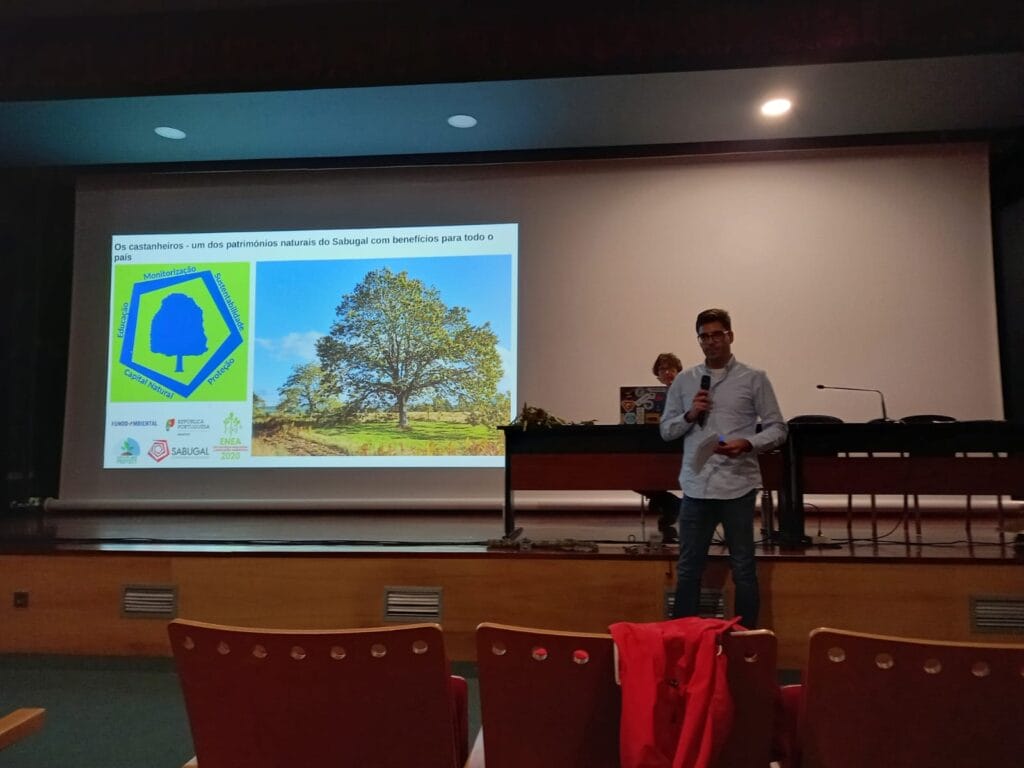
The project “Educating to know, protect and monitor chestnut trees through IoT technology”, The project, co-financed by the Environmental Fund, was presented last week to 12th grade students from the Sabugal School Group.

Around 50 Biology, Technology and Tourism students spent part of the morning and afternoon of November 4 with the InnovPlantProtect (InPP) team, in order to understand the importance of protecting trees, and in particular chestnut trees, a local natural heritage. The project, led by InPP, is directed by Sabugal Town Hall (CMS).

The day was an Education 4.0 experience, in which traditional subjects such as Biology and Ecology were integrated with a description and explanation of the application of “Internet of Things” (IoT) technology to tree monitoring. Incidentally, the presentation coincided with the COP 26 Climate Summit, which ties in perfectly with the main issues being discussed in Glasgow, Scotland.

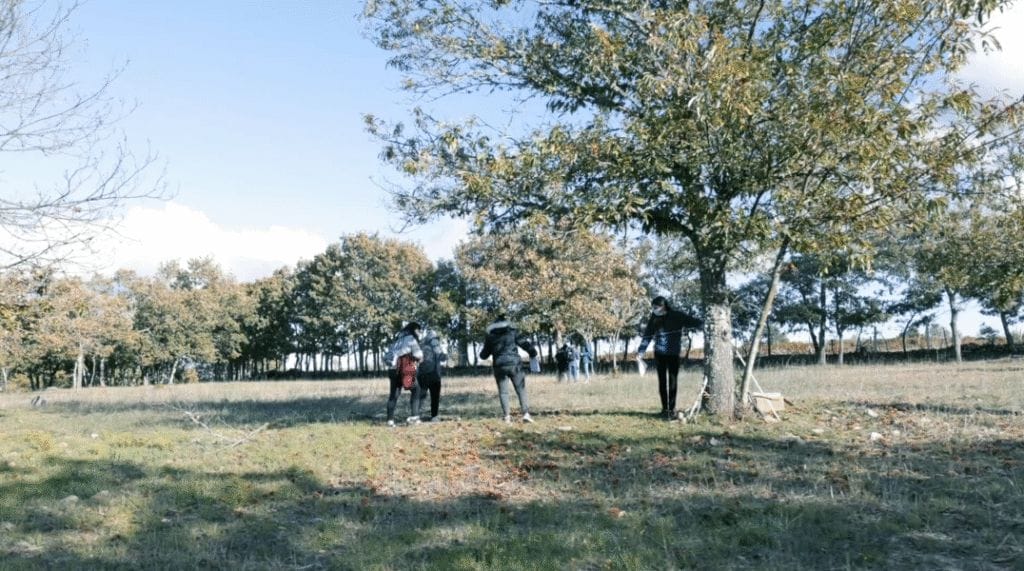
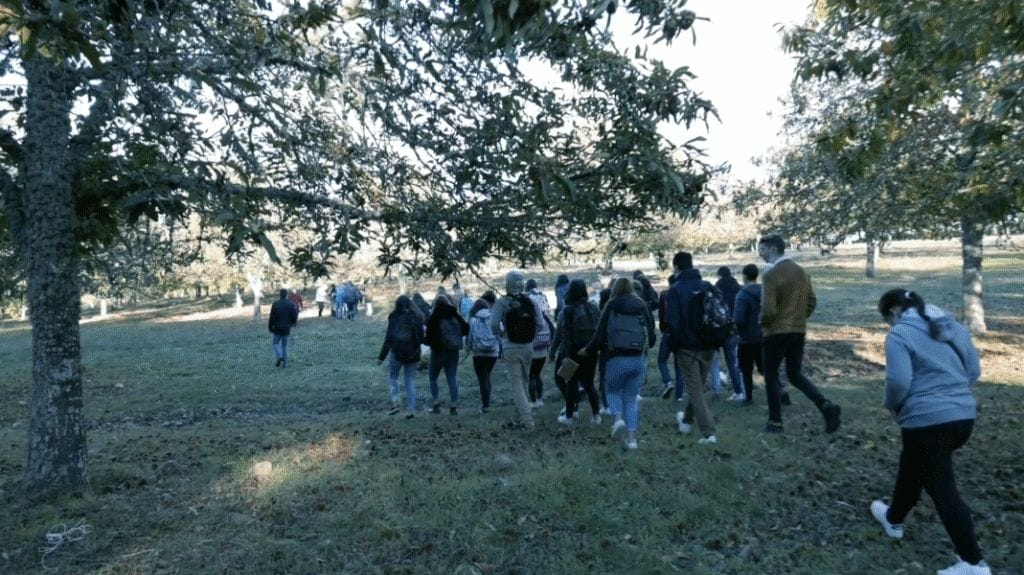
In the afternoon, the pupils were taken to a meadow used as a study area by the InPP and CMS team. It was there that they were able to see and understand first-hand how IoT sensors work. The visit to the grove was an opportunity for them to take part in practical exercises and learn how to measure some of the physical parameters of trees, such as height, diameter and crown width using traditional methods, while at the same time seeing more modern tools in action.

With in-depth knowledge of the strains and breeds that exist in the country, the Elvas CoLAB can thus devise more efficient and targeted combat strategies.

InnovPlantProtect (InPP) is analyzing yellow rust samples collected from wheat fields in Portugal. Identification at InPP is carried out using PCR techniques and analysis of DNA fragments using SeqStudio, which makes it possible to determine the lineage of the fungus by examining molecular markers.

The polymerase chain reaction, or PCR, is a technique that allows you to copy a specific region of DNA, in vitro. SeqStudio is a sequencing machine that also allows the length of fragments to be measured, from which it is possible to correlate the size of different molecular markers with a given lineage.

Yellow rust is a disease caused by the fungus Puccinia striiformis f. sp. tritici, This pathogen, which affects wheat and other cereals all over the world, jeopardizes the future and stability of cereal crops. This pathogen is biologically very dynamic, adapting quickly to climate change and to the resistant cereal varieties that are being introduced onto the market.


A. Yellow rust on wheat; B. Molecular markers amplified by PCR on an agarose gel; C. Fragment analysis to determine the size of the markers and establish the fungal lineage

So far, the PstS10 strain, the most prevalent in Europe, has been identified. PstS10 has proved to be very aggressive, affecting wheat varieties that were previously resistant to yellow rust. The race of this strain was determined by RustWatch in Denmark to be Benchmark. InPP sent samples to this European project to combat wheat rusts, which, among many other aspects, also involves genotyping and identifying the strains and races of the fungus that causes yellow rust.

With in-depth knowledge of the strains and races present in Portugal, the InPP can therefore devise more efficient and targeted combat strategies, by improving wheat varieties resistant to yellow rust and developing bioinspired control agents.

InnovPlantProtect's project to combat this disease was started in March 2020.

No product currently on the market is capable of eliminating Xylella fastidiosa, the Commission for the Regional Budget of Puglia, southern Italy. The bacterium continues to seriously affect olive groves in Italy's main olive oil producing region.

“The two products marketed in recent weeks as a treatment against the drying out of trees, and useful for bringing plants back to their original glory, are a mixture of natural soaps or adjuvants,” said the director of Puglia's phytosanitary observatory, Salvatore Infantino, at a public hearing, quoted by OliveOilTimes. The heads of the regional budget commission for this area of southern Italy, which forms the “heel” of the “boot”, guarantee that there are currently no products on the market capable of eliminating the bacteria Xylella fastidiosa of infected trees, particularly olive trees.

This bacterium is the most active pathogen affecting olive trees in Italy's main olive oil producing region. For Salvatore Infantino, the development of a product capable of combating it remains an important goal for many of those striving to reduce the devastation caused by the bacteria. Xylella fastidiosa.

Public authorities must not make the mistakes of the past by giving credence to unscientific theories that have already caused so much damage and wasted so much time.

Fabiano Amati, president of Puglia's regional budget committee

A Xylella fastidiosa was first detected in the European Union precisely in Puglia, in October 2013, and was responsible for an outbreak that, by 2015, had already infected one million olive trees in this Italian region alone. “Currently, good agricultural practices and eradication are the only weapons we have against the Xylella, It's a way of saving time while we wait for a truly effective treatment,” says Salvatore Infantino.

Olive groves infested with Xylella fastidiosa, Puglia, Italy, 2019.

Image: WIKI/ Sjor