News & Events

white plant

NEWS

Each year, crop diseases cause devastating losses in agricultural production, threatening food security and the livelihoods of millions of farmers. In the heart of Alentejo, an innovative project is harnessing the power of genomics to help combat these invisible threats. The AlViGen Project, with the participation of InnovPlantProtect researchers Rute Rego and João Bilro, is paving the way for a new era of crop surveillance and protection.

The Problem and the Solution

“Yellow rust in wheat and olive quick decline syndrome are real scourges for farmers,” explains Rute Rego, a researcher at AlViGen. “These diseases can decimate entire harvests, leading to severe economic losses and compromising food quality.”

But AlViGen is not limited to observing the problem. The team is using cutting-edge technology to detect and identify the strains of fungi that cause these diseases, long before the symptoms become visible.

“We use traps to collect spores circulating in the air,” Rute continues. “These traps allow us to monitor the presence of fungi in real-time, which gives us an important advantage in preventing infections.”

But the magic happens in the laboratory, where the team extracts the DNA from the spores and performs advanced genomic analyses, using powerful DNA sequencing technology based on the metabarcoding method, carried out with cutting-edge technology like the portable Nanopore sequencer.

Rute Rego, a researcher at InnovPlantProtect, analyzes samples of the fungus causing olive quick decline syndrome as part of the AlViGen project.

Unraveling the Genetic Code of Fungi

To better explain what metabarcoding is and its advantage in detecting the presence of species or strains of fungi that cause diseases in crops, the researcher gives the example of a bag full of different types of grains - rice, beans, corn - being analyzed by the reader. “Metabarcoding is like placing a unique label (a ‘barcode’) on each type of grain. Then, you can mix all the grains in a single sample, and by reading the labels, you can identify the quantity of each type of grain present.'”

In the case of AlViGen, this technique allows for the analysis of multiple fungal species simultaneously (in multiple samples), each with its own genetic ‘barcode,’ and to ‘identify exactly which fungi are present, even in small quantities,'” the researcher explains.

And what is the practical impact of this method for monitoring and predicting disease? The AlViGen project researcher can identify, with high precision, the moment when the pathogenic agent begins to appear in the field, which makes it possible to alert farmers in real-time about the risk of disease. Producers can adopt preventative measures and apply the necessary products to avoid infection, contributing to a rapid and effective response in disease prevention.

The Timeline of Fungal Evolution

AlViGen's research is not limited to identifying the microorganisms harmful to crops; it also seeks to understand their evolution and diversity. João Bilro, another researcher on the project, is dedicated to studying the phylogeny of the Colletotrichum fungus, a microorganism responsible for causing olive anthracnose or blight, a disease that affects olive groves in Portugal. This disease mainly affects the olives, which compromises the quality of the olive oil.

“Phylogeny is crucial for understanding how the different strains of Colletotrichum Just as a family tree traces the history of a family, showing how members are related to each other, phylogenetic trees reveal the evolutionary relationships between the different strains of this fungus. Each branch of the tree represents an evolutionary lineage, and the nodes indicate common ancestors. By comparing the DNA sequences of these strains, we can reconstruct their evolutionary history, identifying which are genetically closer or more distant, and thus infer characteristics such as virulence or resistance to fungicides,” he reveals.

This knowledge allows researchers to identify patterns of dissemination and adaptation of the fungus, which is fundamental for developing more effective strategies to contain and/or reduce the damage this fungus causes to Portuguese olive groves.

“One of the challenges of our research is the great genetic diversity of the Colletotrichum,” admits João. “However, by uncovering their evolutionary secrets, we are paving the way for the development of more precise and targeted detection and control methods.”

Left photo: João Bilro, a bioinformatician at InnovPlantProtect, studying the phylogeny of the Colletotrichum fungus within the scope of the AlViGen project; Right photo: Rute Rego and João Bilro discuss ideas about the AlViGen project.

The Future of Agriculture Starts Here

The AlViGen Project aims to have a significant impact on the agricultural landscape, especially in Alentejo, a region with a strong agricultural tradition. By providing farmers with early detection tools and precise information about the microorganisms that cause crop diseases, the project intends to aid in decision-making, allowing farmers to protect their crops and reduce production losses.

“Our ultimate goal is to empower farmers with the knowledge and tools they need to protect their crops sustainably,” states Rute. “We believe that genomic surveillance is a key tool for the future of crop protection.”

João Bilro agrees and adds, “Continuous research is fundamental to keep up with the evolution of harmful microorganisms and to develop new, consistently effective control strategies. In the future, we hope to expand the scope of AlViGen to include other microorganisms and crops, and to make genomic surveillance an accessible tool for all farmers.”

Science at the Service of Agriculture

The AlViGen Project, supported by the Promove Program of the “la Caixa” Foundation, in partnership with Banco BPI and the Foundation for Science and Technology (FCT), is an inspiring example of how science and technology can be applied to solve real-world problems and transform agriculture. By unraveling the genetic secrets of crop microorganisms, Rute Rego and João Bilro are paving the way for a safer, more sustainable, and resilient agriculture.

The fight against crop diseases continues, but with AlViGen, farmers can finally see the enemy before it becomes visible.

Every year, crop diseases cause devastating losses in agricultural production, threatening the food security and livelihoods of millions of farmers. In the heart of the Alentejo, an innovative project is using the power of genomics to help combat these invisible threats. The AlViGen Project, with the participation of InnovPlantProtect researchers Rute Rego and João Bilro, is paving the way for a new era of crop surveillance and protection.

The Problem and the Solution

“Yellow rust on wheat and gafa in olive groves are real scourges for farmers,” explains Rute Rego, a researcher at AlViGen. “These diseases can wipe out entire harvests, leading to severe economic losses and compromising food quality.”

But AlViGen isn't just observing the problem. The team is using cutting-edge technology to detect and identify the strains of fungi that cause these diseases, long before the symptoms become visible.

“We use traps to collect spores that circulate in the air,” continues Rute. “These traps allow us to monitor the presence of fungi in real time, which gives us an important advantage in preventing infections.”

But the magic happens in the laboratory, where the team extracts DNA from the spores and carries out advanced genomic analysis using powerful DNA sequencing technology based on the metabarcoding, The Nanopore portable sequencer is a state-of-the-art technology.

Rute Rego, InnovPlantProtect researcher, analyzes samples of the fungus that causes gafa, as part of the AlViGen project.

Unlocking the genetic code of fungi

To explain more about metabarcoding and its advantage for detecting the presence of species or strains of fungi that cause diseases in crops, the researcher gives the example of a bag full of different types of grain: rice, beans, corn, which is being analyzed by the reader. “Metabarcoding is like putting a unique label (a ‘barcode’) on each type of grain. You can then mix all the grains into a single sample and, by reading the labels, you can identify the amount of each type of grain present.”

In the case of AlViGen, this technique makes it possible to analyze multiple species of fungi at the same time (in multiple samples), each with its own genetic ‘barcode’ and “identify exactly which fungi are present, even in small quantities”, explains the researcher.

And what is the practical impact of this method for monitoring and predicting the disease? The researcher of the AlViGen project is able to identify, with high precision, the moment when the pathogen begins to appear in the field, which makes it possible to alert farmers in real time to the risk of the disease. Producers can adopt preventive measures and apply the necessary products to avoid infection, contributing to a rapid and effective response to disease prevention.

The Timeline of Fungal Evolution

AlViGen's research is not limited to identifying microorganisms that damage crops; it also seeks to understand their evolution and diversity. João Bilro, another researcher on the project, is studying the phylogeny of the fungus Colletotrichum, This is a microorganism responsible for causing gafa or anthracnose, a disease that affects olive groves in Portugal. This disease mainly affects the olives, which compromises the quality of the oil.

“Phylogeny is crucial to understanding how the different strains of Colletotrichum are related and how they have evolved over time,” explains João. “Just as a family tree traces the history of a family, showing how the members are related to each other, phylogenetic trees reveal the evolutionary relationships between the different strains of this fungus. Each branch of the tree represents an evolutionary lineage, and the nodes indicate common ancestors. By comparing the DNA sequences of these strains, we can reconstruct their evolutionary history, identifying which ones are closer or more genetically distant, and thus infer characteristics such as virulence or resistance to fungicides,” he reveals.

This knowledge allows researchers to identify patterns of spread and adaptation of the fungus, which is fundamental to developing more effective strategies to contain and/or reduce the damage this fungus causes to Portuguese olive groves.

“One of the challenges of our research is the great genetic diversity of the Colletotrichum,” admits João. “However, by uncovering their evolutionary secrets, we are paving the way for the development of more precise and targeted detection and control methods.”

Photo from left: João Bilro, InnovPlantProtect bioinformatician, studying the phylogeny of the fungus Colletotrichum as part of the AlViGen project; Photo right: Rute Rego and João Bilro discuss ideas about the AlViGen project

The Future of Agriculture Starts Here

The AlViGen Project aims to have a significant impact on the agricultural landscape, especially in the Alentejo, a region with a strong agricultural tradition. By providing farmers with early detection tools and accurate information on the microorganisms that cause crop diseases, the project aims to help with decision-making, enabling farmers to protect their crops and reduce production losses.

“Our ultimate goal is to empower farmers with the knowledge and tools they need to protect their crops sustainably,” says Rute. “We believe that genomic surveillance is a key tool for the future of crop protection.”

João Bilro agrees and adds: “Continuous research is essential to monitor the evolution of harmful microorganisms and develop new control strategies that are always effective. In the future, we hope to expand the scope of AlViGen to include other microorganisms and crops, and make genomic surveillance an accessible tool for all farmers.”

Science at the Service of Agriculture

The AlViGen Project, supported by the Promove Program of the “la Caixa” Foundation, in partnership with Banco BPI and the Foundation for Science and Technology (FCT), is an inspiring example of how science and technology can be applied to solve real problems and transform agriculture. By unlocking the genetic secrets of crop microorganisms, Rute Rego and João Bilro are paving the way for safer, more sustainable and resilient agriculture.

The fight against crop diseases continues, but with AlViGen, farmers can finally see the enemy before it becomes visible.

On May 13th, the project team AI4Leafhopper presented the new application iCountPests, an innovative solution that uses Artificial Intelligence (AI) to detect and count green leafhoppers in chromotropic traps - quickly, accurately and in real time.

Developed as an intuitive mobile application, the iCountPests was designed to facilitate the monitoring of various agricultural pests. With a simple and accessible interface, it allows users to record the evolution of pests in their crops by submitting photographs of the traps installed in the field.

The application uses advanced computer vision models to automatically detect and count insects, delivering results in around a minute - a much faster and more practical process than traditional manual counting.

In its first version, the app already has a model for detecting the green leafhopper (Jacobiasca lybica), achieving an average accuracy of approximately 90%. Functionalities will soon be added to identify other relevant pests, such as curl moth (Cryptoblabes gnidiella) and grape moth (Lobesia botrana).

In addition to automatic counting, the iCountPests makes it possible to monitor the evolution of pest populations over time, making it easier to identify trends and plan more effective interventions.

This project is the result of a multidisciplinary team combining skills in ecology, entomology, artificial intelligence, computer vision, remote sensing and software development, with the aim of making pest monitoring simpler, more accurate and more accessible.

During the presentation session, it was possible to hear the opinions and suggestions of future users of the application. These contributions are essential if we are to continue to improve the tool and ensure that it responds in a practical way to the real needs of farmers and technicians in the sector. We want to develop solutions that evolve with agriculture!

Innovation is at the heart of everything we do and our motto is clear:
“Innovate together, protect better.”

If you want to know more about iCountPests, contact us by email:
📩 apps@iplantprotect.pt

Image credits: InnovPlantProtect

EVENTS

A sustentabilidade da agricultura não seria possível atualmente sem o contributo da biotecnologia. As novas tecnologias que permitem alterar o DNA das plantas têm um impacto enorme nas novas culturas agrícolas e um papel crucial para garantir a soberania alimentar. Estas são questões a debater na conferência “A Importância da Biotecnologia para a Sustentabilidade na Agricultura”, no dia 17 de outubro, às 10h00, no Centro Cultural de Belém (CCB), in Lisbon.

No evento, organizado pela Associação Portuguesa dos Industriais de Alimentos Compostos para Animais (IACA), em parceria com o InnovPlantProtect (InPP) e o Centro de Informação de Biotecnologia (CiB), e que conta com a colaboração do Jornal Público, participarão vários especialistas da área da biotecnologia e da agricultura, serão discutidos temas cruciais para o setor, visando promover práticas agrícolas mais sustentáveis e eficazes. Pedro February, diretor executivo do InPP, vai participar no primeiro painel intitulado “O impacto da biotecnologia nas novas culturas agrícolas”.

A sessão de encerramento estará a cargo de Maria do Céu Antunes, Ministra da Agricultura e da Alimentação.

A participação no evento necessita de inscrição prévia obrigatória. As inscrições podem ser efetuadas através do preenchimento do formulário disponível here.

Para mais informações e para consultar o programa detalhado do evento, aceda here.

Não perca esta oportunidade de participar nesta conferência sobre o futuro da agricultura e a sua interação com a biotecnologia!

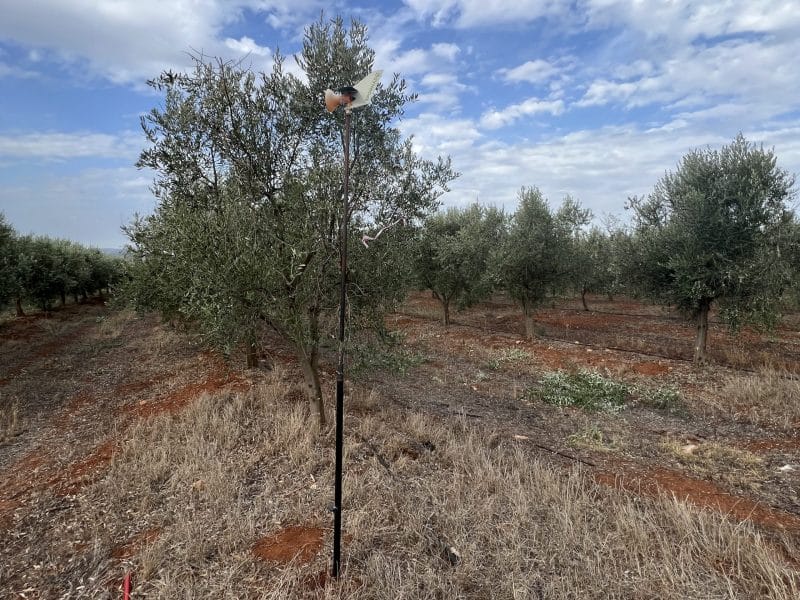
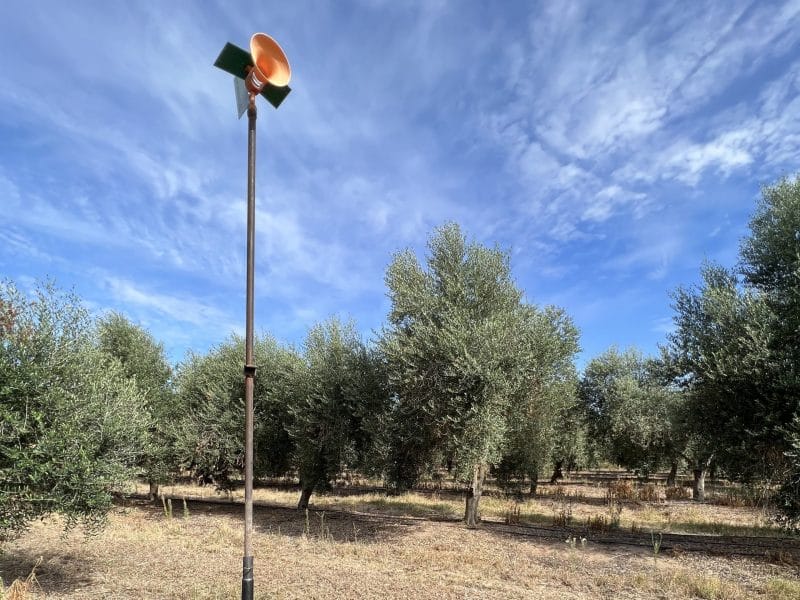
From September until November, the “AlViGen: Creation of a hub in the ALentejo for the GENomic VIgilance of diseases in agriculture” project team will be in the field to install spore traps, known as capta-esporos, in olive groves in Portalegre, Monforte, Elvas, Évora and Beja. The traps make it possible to capture spores from fungal species that circulate in the air and, in particular, from different strains of the fungus Colletotrichum, This is responsible for causing gafa disease in Olival.

The aim is to identify some important characteristics of this pathogen, such as virulence and resistance to fungicides or pesticides.

In total, the spore traps were installed in eight olive groves in the Alentejo (Alto, Central and Baixo), a region that is the main producer of this crop at a national level, and where the fungus Colletotrichum has had a particular impact.

The team will take samples every two weeks for three months a year during the olive tree's productive cycle. Regular monitoring of the diversity of fungal species circulating in the olive groves will also make it possible to detect the appearance of new pathogenic fungi.

AlViGen, coordinated by InnovPlantProtect (InPP) in partnership with the University of Évora (WOW), was one of the innovative pilot projects selected last October and funded by the La Caixa Foundation, BPI Bank and the Foundation for Science and Technology (FCT), as part of the 4th edition of the Promove Program. This project will enable InPP to create the capacity for early detection of multiple crop diseases, using molecular methods that allow the identification of important characteristics of pathogens, such as virulence, susceptible varieties and resistance to phytopharmaceuticals, benefiting producers and government authorities.

Find out more about the AlViGen project on the project website here.

FINANCING

O InnovPlantProtect (InPP), como membro da rede portuguesa de laboratórios de investigação sustentável, a GreenLabs Portugal, participou no primeiro “Green Labs Portugal Symposium: Promoting Sustainability in Research”, dedicado a promover práticas verdes na ciência para reduzir o impacto ambiental da investigação científica em Portugal, e que teve lugar esta sexta-feira, dia 22 de setembro, na Universidade de Coimbra.

O principal objetivo deste simpósio foi promover o debate e a discussão sobre como mitigar o impacto ambiental da investigação científica, reconhecendo ao mesmo tempo o papel fundamental da ciência e da inovação no progresso da sociedade. Em mais detalhe, a iniciativa abordou os diferentes aspetos do que são os Green Labs e o procedimento para obter certificação, a sustentabilidade na ciência e como as empresas estão a reinventar e a revolucionar os seus serviços para apoiar os laboratórios de investigação na adoção de práticas mais ecológicas, de forma a reduzir a pegada ecológica da investigação.

Cristina Azevedo, diretora do departamento de Novos Biopesticidas, participou na sessão 2 dedicada ao tema “Setting a green lab” com a apresentação “How to greenUP bio-based research labs”. A iniciativa contou ainda com palestras de especialistas na área, como Melina Kerou da Sustainable European Laboratory Network (SELs), e Martin Farley da Green Lab Associates.

O programa incluiu vários momentos interativos com os participantes, incluindo uma mesa redonda, um jogo “Ask the Green Teams” e uma sessão de posters. Alguns elementos da equipa de InPP Greeners do InPP, representada pelas investigadoras Cátia Patrício, Cláudia Silva e Leonor Martins participaram nesta última, na qual apresentaram o poster “InPPGreeners – Story of a colab built with sustainability as its cornerstone”.

Na sessão de encerramento teve lugar um momento especial em que foi plantada uma árvore no Jardim Botânico da Universidade de Coimbra.

O tempo para um futuro científico mais sustentável é agora, e todos somos responsáveis por fazer parte desta mudança!

Os InPP Greeners são a equipa de sustentabilidade do InPP, criada no final de 2021, com a missão de partilhar conhecimento e de promover boas práticas nas áreas da biotecnologia e da proteção de culturas agrícolas, que conduzam à criação de laboratórios e instituições mais sustentáveis, além da promoção da adoção de comportamentos mais sustentáveis por todos os cidadãos.

A GreenLabs Portugal é uma rede de laboratórios de investigação sustentável em Portugal que promove práticas sustentáveis para reduzir o impacto ambiental da investigação científica a nível nacional, e da qual o InPP faz parte.