News & Events

white plant

NEWS

Sessão Tree Talkers reúne produtores e técnicos para conhecer tecnologia de monitorização florestal

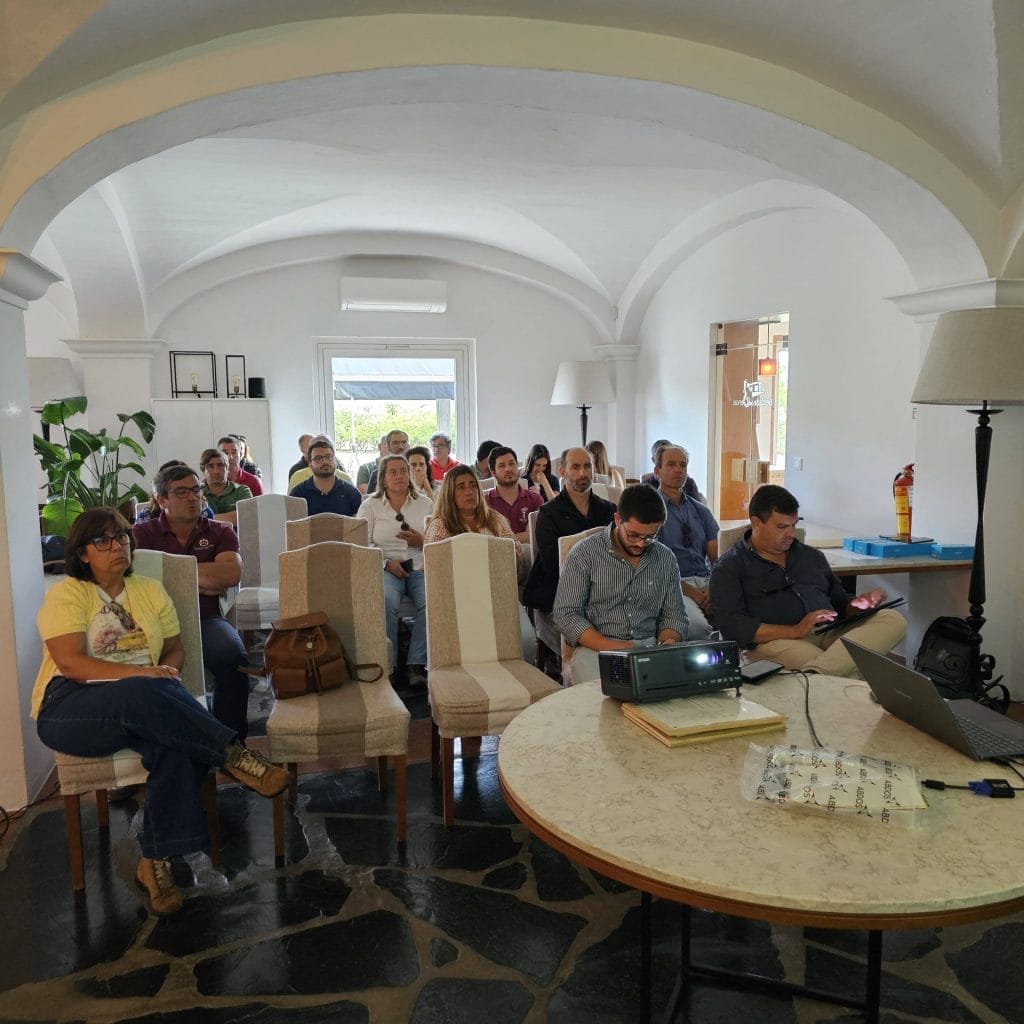
No passado dia 17 de junho, a Herdade de Rui Vaz, em Avis, recebeu a sessão prática “Tree Talkers: Sensores IoT que permitem compreender a fisiologia das árvores”, uma iniciativa promovida pelo InnovPlantProtect, no âmbito do projeto BioLivingLABs.

A ação reuniu produtores, académicos, técnicos e representantes de diferentes entidades interessados em conhecer uma tecnologia inovadora de monitorização florestal capaz de recolher e transmitir, em tempo real, informação detalhada sobre o estado fisiológico das árvores e as condições ambientais envolventes.

A sessão teve início com um conjunto de apresentações técnicas dedicadas à gestão sustentável do montado e da floresta mediterrânica, ao funcionamento dos sensores Tree Talkers e à interpretação dos dados recolhidos pela tecnologia.

Seguiu-se uma demonstração prática em campo, durante a qual os participantes puderam observar os sensores instalados numa área florestal, compreender os parâmetros monitorizados e visualizar exemplos de resultados obtidos em condições reais.

Os Tree Talkers permitem monitorizar indicadores como o crescimento das árvores, o fluxo de seiva, a disponibilidade hídrica e outras variáveis ambientais relevantes, contribuindo para uma melhor compreensão da resposta das árvores a diferentes fatores de stress e apoiando uma gestão florestal mais informada e sustentável.

A sessão ficou ainda marcada pela participação ativa dos presentes, que colocaram diversas questões sobre as potencialidades da tecnologia e as suas aplicações em contexto florestal.

O InnovPlantProtect agradece a todos os participantes pela sua presença e interesse, bem como à Herdade de Rui Vaz pela disponibilidade para acolher a iniciativa.

Sobre o projeto BioLivingLABs

A ação foi realizada no âmbito do projeto BioLivingLABS: Bioeconomy at the service of the sustainability of inland territories, cofinanciado pelo COMPETE 2030, que visa aproximar a ciência das empresas e dos produtores, transformando os resultados da investigação em soluções práticas e sustentáveis que tragam valor económico e ambiental aos territórios de baixa densidade das regiões Norte, Centro e Alentejo.

O consórcio integra cinco instituições de investigação e inovação – o Instituto Politécnico de Bragança, o Instituto Politécnico de Castelo Branco, o Laboratório Colaborativo Montanhas de Investigação (MORE), o Laboratório Colaborativo InnovPlantProtect e o Centro de Valorização e Transferência de Tecnologia da Água (AquaValor).

Demonstração da iCountPests reúne produtores e técnicos agrícolas em Estremoz

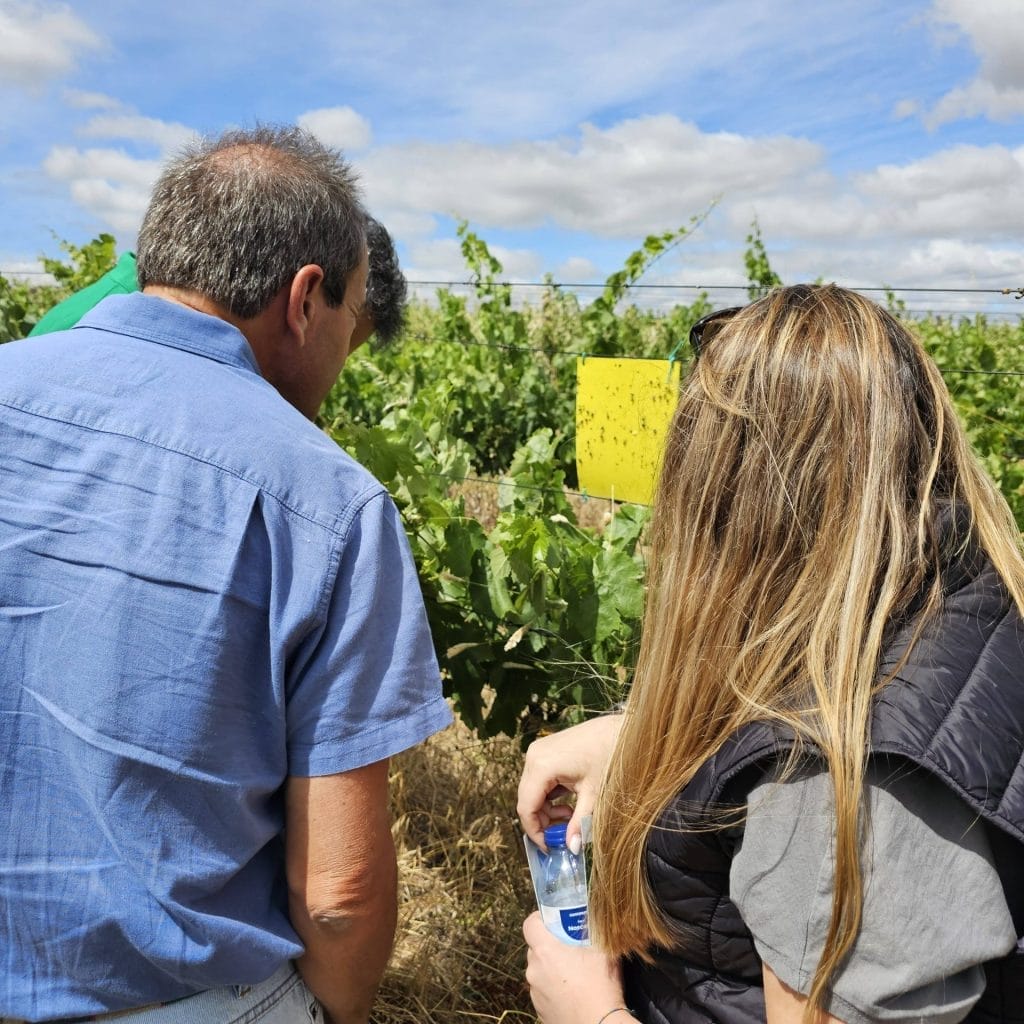
O InnovPlantProtect realizou, no passado dia 2 de junho, a ação “iCountPests em Campo: demonstração prática da app de monitorização de pragas agrícolas”, que decorreu na Herdade das Servas, em Estremoz.

A iniciativa contou com a participação de 23 produtores, técnicos agrícolas e outros profissionais do setor interessados em conhecer o potencial da tecnologia digital e da inteligência artificial aplicada à monitorização de pragas. Ao longo da manhã, os participantes tiveram oportunidade de assistir à apresentação da iCountPests e de acompanhar uma demonstração prática da aplicação em contexto real.

A demonstração prática permitiu mostrar o funcionamento da aplicação em contexto real, desde a captura das imagens até à obtenção dos resultados, evidenciando o potencial da tecnologia para simplificar processos de monitorização, reduzir o tempo dedicado às contagens manuais e apoiar a tomada de decisão no campo.

O momento de demonstração em vinha proporcionou ainda uma oportunidade de interação entre os participantes e a equipa de desenvolvimento, promovendo a troca de experiências e a discussão sobre os desafios atuais da monitorização de pragas e da digitalização da agricultura.

O que disseram os participantes

“A app é simples de utilizar e permite poupar tempo na monitorização.”, destacou Nuno Chegadinho, ATEVA – Associação Técnica dos Viticultores do Alentejo. Uma das funcionalidades da app que Nuno considera mais interessante é “conseguir manter um histórico das observações e acompanhar a evolução das populações ao longo do tempo.”

“É uma ferramenta com potencial para apoiar o trabalho diário dos técnicos no terreno.”, sublinhou Ricardo X, Herdade das Servas.

O InnovPlantProtect agradece a todos os participantes pela presença e interesse demonstrado nesta iniciativa.

Agradecemos igualmente à ATEVA – Associação Técnica dos Viticultores do Alentejo, pelo apoio na divulgação da ação junto dos seus associados e da comunidade vitivinícola, e à Herdade das Servas, pela disponibilidade e colaboração na realização da demonstração em contexto real.

A ação foi realizada no âmbito do projeto BioLivingLABS: Bioeconomy at the service of the sustainability of inland territories, cofinanciado pelo COMPETE 2030, que visa aproximar a ciência das empresas e dos produtores, transformando os resultados da investigação em soluções práticas e sustentáveis que tragam valor económico e ambiental aos territórios de baixa densidade das regiões Norte, Centro e Alentejo.

O consórcio integra cinco instituições de investigação e inovação – o Instituto Politécnico de Bragança, o Instituto Politécnico de Castelo Branco, o Laboratório Colaborativo Montanhas de Investigação (MORE), o Laboratório Colaborativo InnovPlantProtect e o Centro de Valorização e Transferência de Tecnologia da Água (AquaValor).
Saiba mais sobre a iCountPests here.

Tree Talkers: sensores IoT que permitem compreender a fisiologia das árvores

Como podemos compreender melhor o estado de saúde das árvores e antecipar situações de stress hídrico ou ambiental?

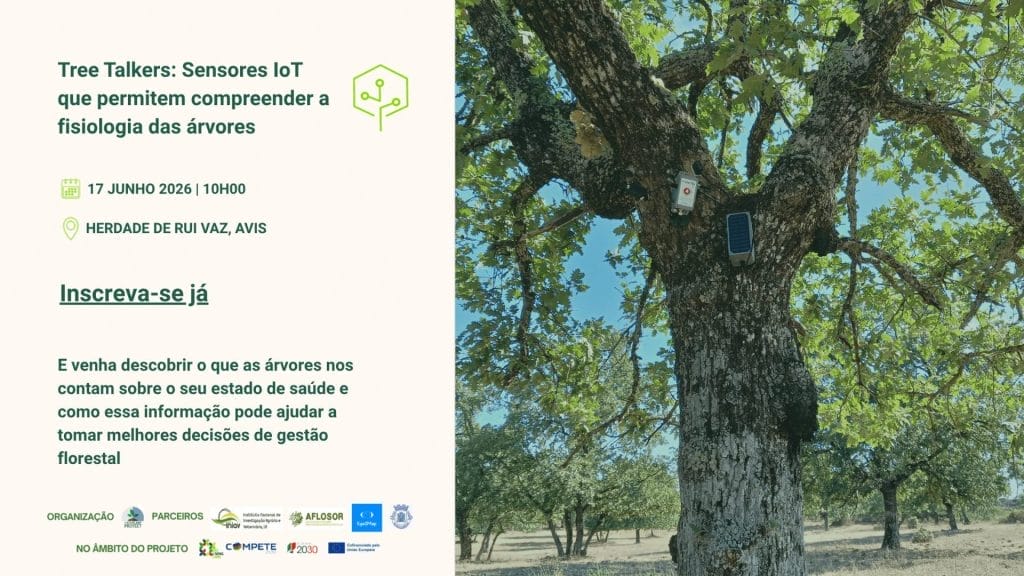
No próximo dia 17 de junho, o InnovPlantProtect promove a sessão prática “Tree Talkers: Sensores IoT que permitem compreender a fisiologia das árvores”, uma iniciativa que permitirá conhecer uma tecnologia inovadora para monitorização florestal em tempo real.

Os Tree Talkers são um sistema avançado de sensores IoT capaz de recolher continuamente diversos dados sobre a fisiologia das árvores, como crescimento radial, velocidade do fluxo da seiva, densidade da copa, estabilidade das árvores, bem como informação sobre as condições ambientais envolventes.

Esta tecnologia permite acompanhar o estado de saúde das árvores e compreender melhor o funcionamento dos ecossistemas florestais, apoiando uma gestão mais informada e sustentável.

Durante a sessão, os participantes terão oportunidade de

  • Conhecer a tecnologia TreeTalkers e as suas aplicações;
  • Visualizar exemplos de resultados obtidos através da monitorização contínua das árvores;
  • Compreender como os dados recolhidos podem apoiar a gestão florestal;
  • Assistir a uma demonstração prática em campo, numa floresta de sobreiros.

AcaoTreeTalkers BannerDivulgacao ReduceSize

Receção dos participantes| 09H30

Presentations | 10H00

Conter a desertificação com a gestão e conservação do montado e da floresta mediterrânica caducifólia

TreeTalker Cyber: o sensor IoT que ouve as mudanças nas árvores

No interior da árvore. Compreender o stress através dos dados

O que as árvores nos dizem: dos dados à informação

Beberete e momento de networking | 11H30

Demonstração em campo | 11H45

A participação é gratuita, mas sujeita a inscrição prévia. Para se inscrever basta preencher o formulário disponível here.

Marque na sua agenda e junte-se a nós! Teremos todo o gosto em recebê-lo/a!

📅 Data: 17 de junho de 2026
🕙 Hora: 10h00
📍 Local: Herdade de Rui Vaz, Avis

Esta ação realiza-se no âmbito do projeto BioLivingLABS: Bioeconomy at the service of the sustainability of inland territories, cofinanciado pelo COMPETE 2030, que visa aproximar a ciência das empresas e dos produtores, transformando os resultados da investigação em soluções práticas e sustentáveis que tragam valor económico e ambiental aos territórios de baixa densidade das regiões Norte, Centro e Alentejo.

O consórcio integra cinco instituições de investigação e inovação – o Instituto Politécnico de Bragança (IPB), the Polytechnic Institute of Castelo Branco (IPCB), o Laboratório Colaborativo Montanhas de Investigação (MORE CoLAB), o InnovPlantProtect e o Centro de Valorização e Transferência de Tecnologia da Água (AquaValor).

EVENTS

InPP was visited by a delegation of members of the Catalan government

Last Friday, August 26, the InPP received a visit from Catalonia's Councillor for External Action and Open Government, Victòria Alsina, and the delegate of the Government of Catalonia in Portugal, Rui Reis, They were accompanied by the Councillor of Elvas City Council, Paula Calado.

They were received by the heads of department, David Learmonth, iLaria Marengo e Sandra Correia, They presented InPP's infrastructures, laboratories and the different areas of research being explored by the collaborative laboratory's five departments.

The aim of this visit was to create and establish new partnerships and collaborations with this autonomous community of Spain, a key international player for Portugal in its economic and scientific spheres, in which the agri-food industries play a major role. Establishing partnerships is part of InPP's philosophy and, therefore, this visit allowed us to explore the strengths of each of those involved and find points of synergy, where we wanted to identify areas of interest for possible partnerships and collaborations.

During the visit to InPP's facilities, the delegation also had the opportunity to speak to some of InPP's researchers, who were able to personally explain some of the research they are currently carrying out at InPP in the fight against emerging plant pests and diseases.

Is it possible to create plant protection products with safer and more sustainable materials?

InnovPlantProtect (InPP) team identifies the most promising materials for encapsulating biological protection agents to control emerging pests and diseases in agricultural crops. Natural products of animal origin, from marine and terrestrial sources, as well as synthetic ones, have been the most widely used due to their low toxicity and biodegradability, the researchers conclude in a systematic review article now published in the scientific journal ACS Agricultural Science & Technology. But are these solutions scalable and economically viable?

Biological protection agents, microorganisms such as bacteria, fungi or biomolecules with active substances capable of preventing or controlling or suppressing pests and diseases in plants, have been considered more sustainable alternatives to traditional chemical pesticides. However, these agents are very sensitive to atmospheric conditions and begin to degrade due to humidity, temperature and solar radiation.

Due to the sensitivity of the active substances, the challenge is to develop a biodegradable and sustainable material that envelops, i.e. encapsulates the biological agents, protecting them so that they can be applied effectively to Mediterranean agricultural crops. The encapsulation of biological agents brings several advantages for the agricultural producer, namely ease of handling, controlled application of lower and less frequent dosages, greater specificity for the target, prolonged stability and maximized permanence, which leads to greater effectiveness of the biological agent in combating pests and diseases.

Schematic representation of the encapsulation process of a biological agent to protect pear pests

The team, from Formulations and Process Development Department of the InPP, reviewed 98 scientific articles, published between 2013 and 2022, and concluded that “micro and nanoencapsulation of biological protection agents using materials from marine, terrestrial or synthetic sources should provide agricultural producers with access to safer and more sustainable plant protection products”. The review article [1], entitled Micro- and Nanocarriers for Encapsulation of Biological Plant Protection Agents: A Systematic Literature Review, has just been published in the scientific journal ACS Agricultural Science & Technology.

The four researchers analyzed the studies with a view to “identifying the materials most commonly used to encapsulate biological agents for pest and disease control with greater efficacy, greater systemic activity and less environmental impact”. The researchers also analyzed the encapsulation methods and techniques currently being used by research teams in various parts of the world.

“The data presented in this article indicate that materials based on polymers, of natural or synthetic origin, and inorganic materials can improve the stability and performance of a wide range of bioinspired active substances,” say the researchers.

However, the team warns that “although research interest in these encapsulating materials is increasing, the current level of knowledge does not yet allow for a totally fair and unbiased assessment of the pros and cons that will arise from the use of micro and nano systems for encapsulating biological agents and their use in agriculture”, adding that “a better understanding of the fate and long-term safety of these products is needed”.

“Although the technologies presented in this review exhibit promising efficacy and safety profiles, it is unlikely that all of them will be scalable and transformable into economically viable solutions to current and future agricultural problems. More research and development of efforts against crop pests and diseases is needed, focusing on strategies that truly take into account the needs of farmers in agricultural fields, as only then will innovation be possible,” the team concludes.

Researchers Cláudia Silva, Tânia Pinto, Sónia Siquenique and David Learmonth

Original article

ACS Agricultural Science & Technology Journal

Micro- and Nanocarriers for Encapsulation of Biological Plant Protection Agents: A Systematic Literature Review

Tânia Pinto, Cláudia Silva, Sónia Siquenique and David Learmonth

DOI: https://doi.org/10.1021/acsagscitech.2c00113

[1] In a review article, researchers critically summarize what has already been studied and published by other scientists.

InPP team collects more samples of infected rice, but this time in the Tagus River

On August 18th, researchers from the New Biopesticides Department of InnovPlantProtect (InPP).., Pedro Rosa e Tiago Amaro, were in the Tagus/Sorraia basin, in Coruche and Porto Alto, in Samora Correia, to collect samples of rice infected with the fungus Magnaporthe oryzae, which causes pyriculariosis. The sampling was carried out as part of the BlaSTOP project - Developing integrated solutions to combat rice pyriculariosis.

As early as August 1st, the team had been to the Mondego basin, in Montemor-o-Velho, to take samples.

The BlaSTOP project aims to develop a sustainable and effective solution for controlling rice pyriculariosis caused by this fungus. The project has the support of COTArroz - Operational and Technological Center for Rice and Casa do Arroz, in the Tagus basin, and the Aparroz - Agrupamento de Produtores de Arroz do Vale do Sado Lda, in the Sado basin, where the team hopes to collect in the near future.

Sampling in the Tagus area, in Coruche and Porto Alto