Já está disponível a iCountPests, uma nova aplicação desenvolvida pelo InnovPlantProtect para apoiar a monitorização de pragas agrícolas através da análise automática de imagens captadas em campo.
A app utiliza inteligência artificial para contabilizar automaticamente pragas presentes em armadilhas adesivas, permitindo obter resultados rápidos e fiáveis diretamente no telemóvel.
Pensada para produtores e técnicos agrícolas, a iCountPests contribui para uma monitorização mais eficiente e precisa, reduzindo o tempo associado às contagens manuais e apoiando a tomada de decisão na proteção das culturas.
O funcionamento é simples:
Captar uma imagem da armadilha
Analisar automaticamente
Consultar resultados organizados e acessíveis
A app permite ainda acompanhar a evolução das pragas ao longo do tempo, facilitando a gestão e o registo da informação no terreno.
A monitorização de pragas é uma tarefa essencial na gestão agrícola, mas continua a depender, em muitos casos, de processos manuais demorados e sujeitos a erro.
A pensar nesta realidade, o InnovPlantProtect irá lançar brevemente a iCountPests, uma aplicação inovadora que utiliza inteligência artificial para automatizar a contagem de pragas a partir de imagens captadas no campo.
Com a iCountPests, será possível obter resultados rápidos e fiáveis, contribuindo para uma tomada de decisão mais informada e eficiente na proteção das culturas.
A aplicação estará brevemente disponível, sendo direcionada a produtores agrícolas e técnicos que procuram otimizar o tempo dedicado à monitorização e melhorar a precisão dos dados recolhidos.
Uma nova tecnologia de revestimento biológico de sementes desenvolvida pelo InnovPlantProtect (InPP), em colaboração com a Fertiprado, poderá vir a transformar o desempenho de pastagens e forragens, contribuindo para sistemas agrícolas mais eficientes e sustentáveis.
Baseada em compostos derivados de algas, esta solução inovadora apresenta efeito bioestimulante e foi concebida para atuar desde as fases iniciais do desenvolvimento das plantas. Os ensaios realizados demonstraram resultados promissores ao nível da estimulação da nodulação em leguminosas, do crescimento vegetativo e da resistência das plantas a condições adversas, com impacto positivo no valor nutricional do pasto.
Este desenvolvimento resulta de um percurso de investigação conjunta que decorreu ao longo de cinco anos, refletindo o compromisso contínuo do InPP em transformar conhecimento científico em soluções com aplicação prática no setor agrícola. A tecnologia encontra-se atualmente em processo de patenteamento e representa um marco relevante no pipeline de inovação do laboratório.
Para a Fertiprado, parceiro estratégico neste projeto, esta tecnologia constitui uma alternativa aos revestimentos tradicionais baseados em compostos sintéticos, reforçando a aposta em soluções mais sustentáveis e alinhadas com as necessidades futuras da agricultura.
O desenvolvimento desta solução insere-se na Agenda Mobilizadora Pacto da Bioeconomia Azul, financiada pelo Plano de Recuperação e Resiliência (PRR), iniciativa que promove a valorização de recursos marinhos através da criação de novos produtos e tecnologias. Como parte do processo de valorização da tecnologia, foi assinado um memorando de entendimento com vista à sua futura exploração comercial.
Num contexto em que a procura por biosoluções agrícolas continua a crescer, iniciativas colaborativas como esta demonstram o papel fundamental da investigação aplicada na resposta aos desafios da sustentabilidade e da produtividade agrícola.
Investigação com impacto no setor agrícola
O trabalho desenvolvido pelo InPP evidencia o valor da colaboração entre ciência e indústria, permitindo acelerar processos de inovação e criar soluções ajustadas às necessidades reais do setor agrícola.
A parceria com empresas constitui um dos pilares estratégicos do InPP, promovendo a transferência de conhecimento científico e o desenvolvimento de tecnologias que contribuem para sistemas agrícolas mais resilientes e sustentáveis.
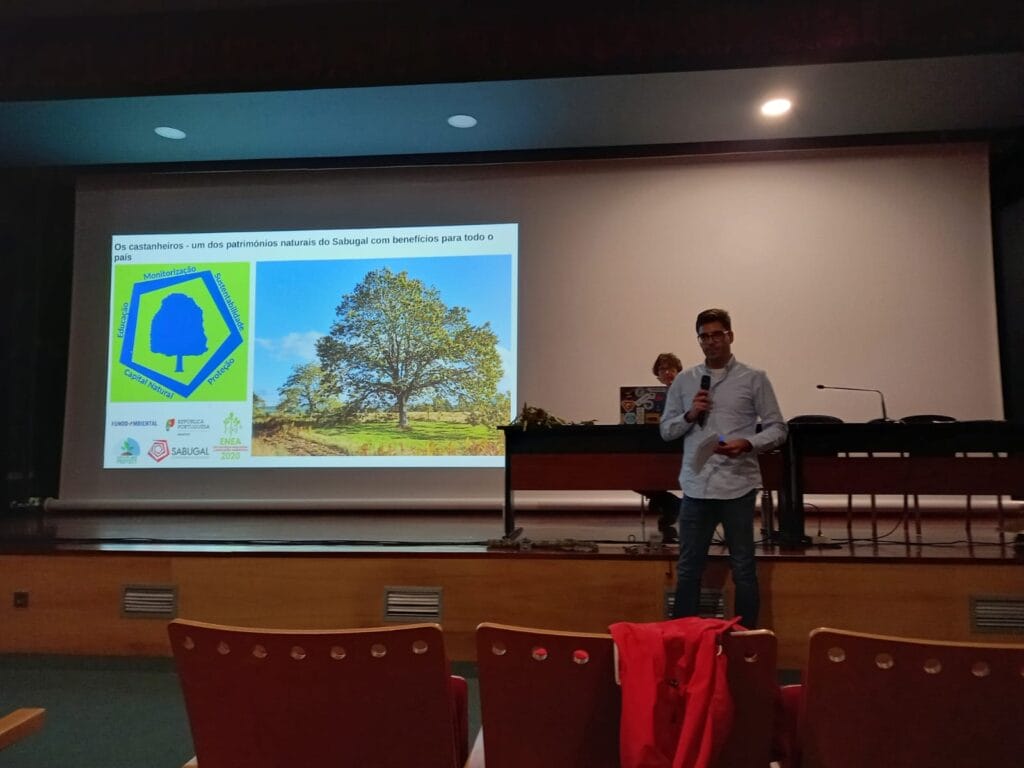
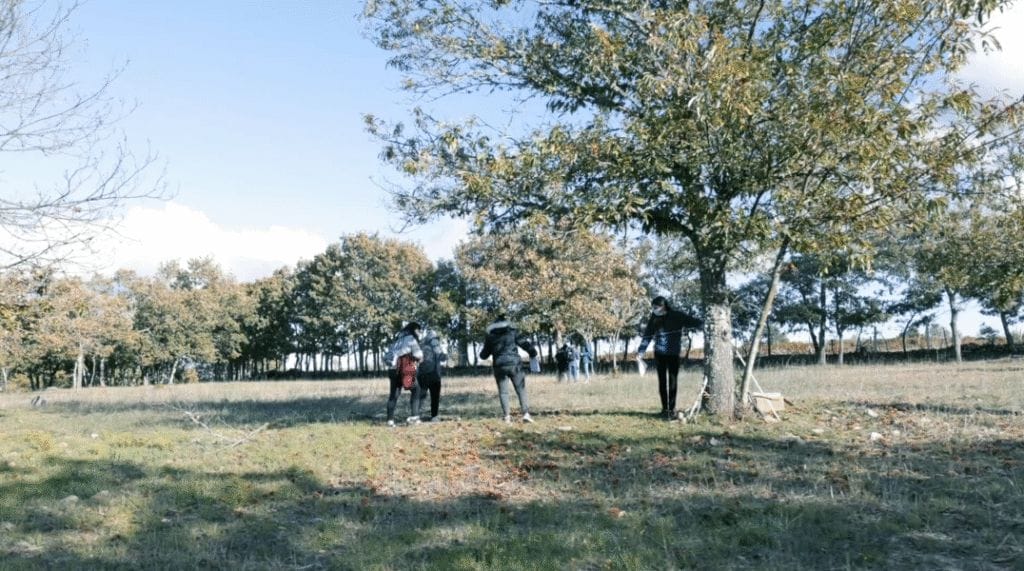
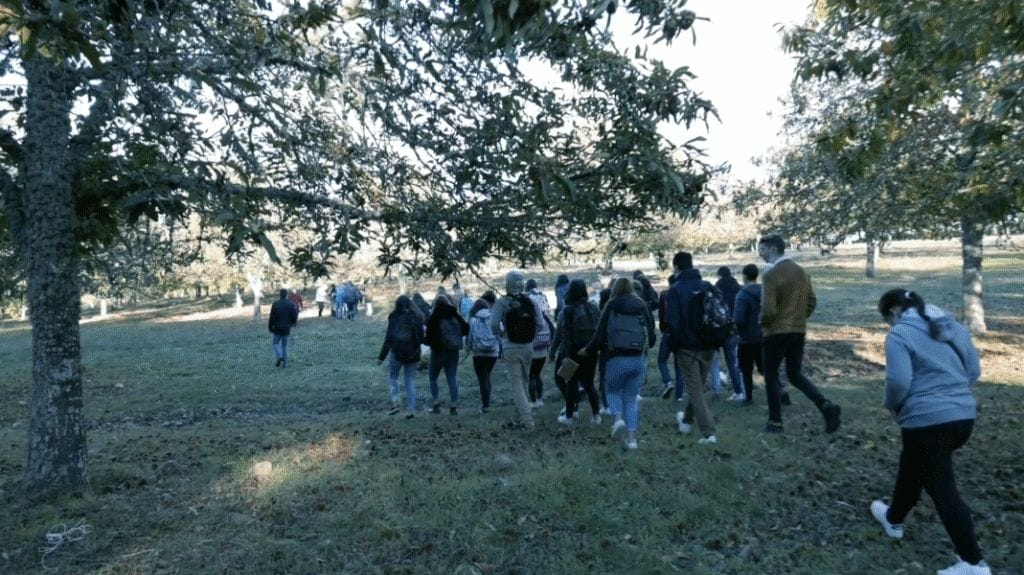
Around 50 Biology, Technology and Tourism students spent part of the morning and afternoon of November 4 with the InnovPlantProtect (InPP) team, in order to understand the importance of protecting trees, and in particular chestnut trees, a local natural heritage. The project, led by InPP, is directed by Sabugal Town Hall (CMS).
The InPP-led project was presented to students...
... from the 12th grade of the Sabugal School Group
The day was an Education 4.0 experience, in which traditional subjects such as Biology and Ecology were integrated with a description and explanation of the application of “Internet of Things” (IoT) technology to tree monitoring. Incidentally, the presentation coincided with the COP 26 Climate Summit, which ties in perfectly with the main issues being discussed in Glasgow, Scotland.
In the afternoon, the pupils were taken to a meadow used as a study area by the InPP and CMS team. It was there that they were able to see and understand first-hand how IoT sensors work. The visit to the grove was an opportunity for them to take part in practical exercises and learn how to measure some of the physical parameters of trees, such as height, diameter and crown width using traditional methods, while at the same time seeing more modern tools in action.
With in-depth knowledge of the strains and breeds that exist in the country, the Elvas CoLAB can thus devise more efficient and targeted combat strategies.
InnovPlantProtect (InPP) is analyzing yellow rust samples collected from wheat fields in Portugal. Identification at InPP is carried out using PCR techniques and analysis of DNA fragments using SeqStudio, which makes it possible to determine the lineage of the fungus by examining molecular markers.
The polymerase chain reaction, or PCR, is a technique that allows you to copy a specific region of DNA, in vitro. SeqStudio is a sequencing machine that also allows the length of fragments to be measured, from which it is possible to correlate the size of different molecular markers with a given lineage.
Yellow rust is a disease caused by the fungus Puccinia striiformis f. sp. tritici, This pathogen, which affects wheat and other cereals all over the world, jeopardizes the future and stability of cereal crops. This pathogen is biologically very dynamic, adapting quickly to climate change and to the resistant cereal varieties that are being introduced onto the market.
A. Yellow rust on wheat; B. Molecular markers amplified by PCR on an agarose gel; C. Fragment analysis to determine the size of the markers and establish the fungal lineage
So far, the PstS10 strain, the most prevalent in Europe, has been identified. PstS10 has proved to be very aggressive, affecting wheat varieties that were previously resistant to yellow rust. The race of this strain was determined by RustWatch in Denmark to be Benchmark. InPP sent samples to this European project to combat wheat rusts, which, among many other aspects, also involves genotyping and identifying the strains and races of the fungus that causes yellow rust.
With in-depth knowledge of the strains and races present in Portugal, the InPP can therefore devise more efficient and targeted combat strategies, by improving wheat varieties resistant to yellow rust and developing bioinspired control agents.
No product currently on the market is capable of eliminating Xylella fastidiosa, the Commission for the Regional Budget of Puglia, southern Italy. The bacterium continues to seriously affect olive groves in Italy's main olive oil producing region.
“The two products marketed in recent weeks as a treatment against the drying out of trees, and useful for bringing plants back to their original glory, are a mixture of natural soaps or adjuvants,” said the director of Puglia's phytosanitary observatory, Salvatore Infantino, at a public hearing, quoted by OliveOilTimes. The heads of the regional budget commission for this area of southern Italy, which forms the “heel” of the “boot”, guarantee that there are currently no products on the market capable of eliminating the bacteria Xylella fastidiosa of infected trees, particularly olive trees.
This bacterium is the most active pathogen affecting olive trees in Italy's main olive oil producing region. For Salvatore Infantino, the development of a product capable of combating it remains an important goal for many of those striving to reduce the devastation caused by the bacteria. Xylella fastidiosa.
Public authorities must not make the mistakes of the past by giving credence to unscientific theories that have already caused so much damage and wasted so much time.
Fabiano Amati, president of Puglia's regional budget committee
A Xylella fastidiosa was first detected in the European Union precisely in Puglia, in October 2013, and was responsible for an outbreak that, by 2015, had already infected one million olive trees in this Italian region alone. “Currently, good agricultural practices and eradication are the only weapons we have against the Xylella, It's a way of saving time while we wait for a truly effective treatment,” says Salvatore Infantino.
Olive groves infested with Xylella fastidiosa, Puglia, Italy, 2019.