News & Events

white plant

NEWS

“We're here to listen to the sector's problems”: InPP in the spotlight in Voz do Campo magazine

“We're here to listen to the sector's problems and find solutions together”. This was said by António Saraiva, executive director of InnovPlantProtect (InPP), who attended the eighth edition of the National Olive Oil Congress, held in Campo Maior and featured in the July edition of Voz do Campo magazine.

In the interview, António Saraiva highlighted the importance of olive growing, one of the most representative crops in the Mediterranean, and pointed out some of the major challenges currently facing the sector:

  • A growing shortage of phytosanitary solutions: many tools are disappearing and effective alternatives are not always emerging.
  • The long road between research and application in the field: the process of bringing a scientific solution to farmers can take around 10 years.
  • Impacts of climate change and emerging pests, which make farming even more difficult.

Faced with these challenges, InPP is committed to developing new innovative solutions that are environmentally friendly and sustainable for farmers. CoLAB is looking for agents such as active substances and microorganisms capable of controlling diseases and boosting biostimulants, as well as investing in digital technologies that allow producers to detect crop problems early and increase the effectiveness of interventions.

Another point highlighted by the executive director is the need to speed up the transfer of knowledge to the field, through partnerships and commercial agreements that ensure that innovations actually reach farmers.

“We're here to listen to the sector's problems and find solutions together. We want to be close to farmers, associations and companies, because that's the only way we can develop effective and sustainable tools,” António Saraiva stressed.

The full interview is available in the July issue of Voz do Campo magazine, on newsstands now, and in the image below.

InPP approves another Horizon Europe project

It's called PROSPER and it's a new European project that aims to transform European agriculture through the valorization of “orphan” legumes - resistant crops, little exploited, but with great potential to face the challenges of climate and food in the future.

The consortium, with total funding of around 5 million euros, brings together 27 partners from 13 European countries and Tunisia, including universities, research centers, companies and non-profit organizations in the agricultural sector. Among them are countries from the Mediterranean (Italy, Spain, Greece, Portugal and France), Central Europe (Germany, Belgium, Poland, Bulgaria and Romania), Northern Europe (Denmark, Sweden and Finland).

The aim of PROSPER is to test and validate new agricultural diversification strategies, adapted to different climates and social and economic contexts, promoting more sustainable, innovative practices that are adjusted to the needs of different agricultural realities.

InPP, PROSPER's partner, will be responsible for analyzing:

  • Soil health and environmental impact
  • Energy efficiency and waste management
  • Nutritional quality of crops
  • Fair valuation along the production chain

To do this, the InPP team will use advanced technologies, such as real-time sensors and geospatial analysis, which will help study soil health, carbon sequestration captured by crops, water management and biodiversity, among others.

PROSPER is co-created with the main players in the agricultural sector, ensuring that the solutions developed do not remain on paper: they will be practical, useful and transformative.

The project starts in September 2025. We are ready to embark on this journey towards a greener, fairer and more resilient agriculture.

Stay tuned for more news!

InPP at the Science 2025 Meeting

InnovPlantProtect (InPP) was present at the Science 2025 Meeting in Lisbon, at the Nova SBE Campus, to take part in the parallel session “Crop Protection for One Health, and Food and Environmental Sustainability”.

The Encontro Ciência took place from July 9 to 11 at the NOVA SBE Campus in Carcavelos, with the motto “Science, Innovation and Society”. Portugal's largest science and technology meeting was the stage for promoting and discussing the scientific, social, cultural and economic impact of research in Portugal, exploring the intersection between science, innovation and society, to inspire new ideas and foster transformative collaborations.

The director of the Data Management and Risk Analysis Department, Ricardo Ramiro, and the director of the New Biopesticides Department, Cristina Azevedo, presented some of the results of their work in this session co-moderated by the executive director, António Saraiva.

During the session, two important solutions for the agricultural sector, developed by our team, were presented:

  • iCountPests - an innovative app that uses AI to detect and count pests accurately and quickly in photos of chromotropic traps.
  • InPP 2 - a broad-spectrum biofungicide capable of fighting Botrytis cinerea, the fungus responsible for gray rot in tomatoes.

CoLAB MORE Colab - Collaborative Mountain Research Laboratory and Sfcolab - Collaborative Laboratory for Digital Innovation in Agriculture, were also present at the parallel session, as well as GREEN-IT, to discuss how science and innovation can tackle the challenges of climate change and promote more sustainable agricultural systems.

EVENTS

InPP é co-promotor de conferência sobre o papel da biotecnologia para a sustentabilidade da agricultura

A sustentabilidade da agricultura não seria possível atualmente sem o contributo da biotecnologia. As novas tecnologias que permitem alterar o DNA das plantas têm um impacto enorme nas novas culturas agrícolas e um papel crucial para garantir a soberania alimentar. Estas são questões a debater na conferência “A Importância da Biotecnologia para a Sustentabilidade na Agricultura”, no dia 17 de outubro, às 10h00, no Centro Cultural de Belém (CCB), in Lisbon.

No evento, organizado pela Associação Portuguesa dos Industriais de Alimentos Compostos para Animais (IACA), em parceria com o InnovPlantProtect (InPP) e o Centro de Informação de Biotecnologia (CiB), e que conta com a colaboração do Jornal Público, participarão vários especialistas da área da biotecnologia e da agricultura, serão discutidos temas cruciais para o setor, visando promover práticas agrícolas mais sustentáveis e eficazes. Pedro February, diretor executivo do InPP, vai participar no primeiro painel intitulado “O impacto da biotecnologia nas novas culturas agrícolas”.

A sessão de encerramento estará a cargo de Maria do Céu Antunes, Ministra da Agricultura e da Alimentação.

A participação no evento necessita de inscrição prévia obrigatória. As inscrições podem ser efetuadas através do preenchimento do formulário disponível here.

Para mais informações e para consultar o programa detalhado do evento, aceda here.

Não perca esta oportunidade de participar nesta conferência sobre o futuro da agricultura e a sua interação com a biotecnologia!

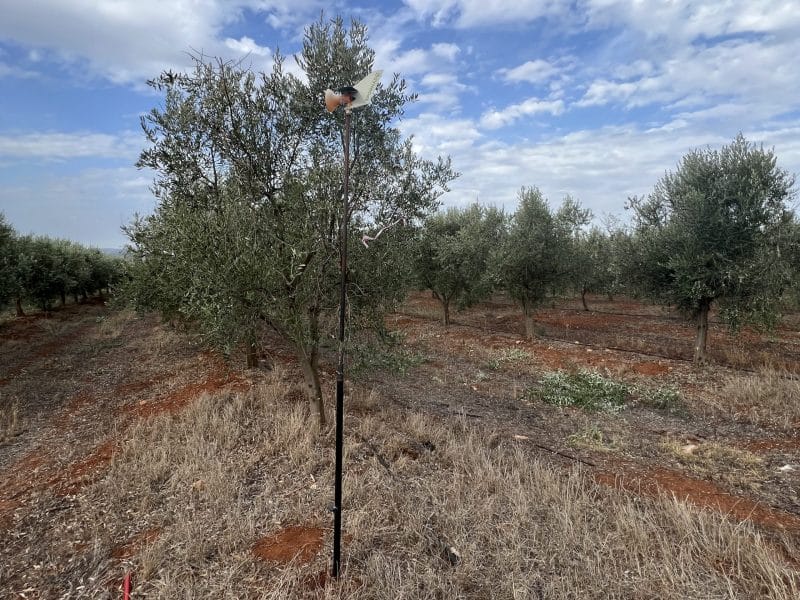
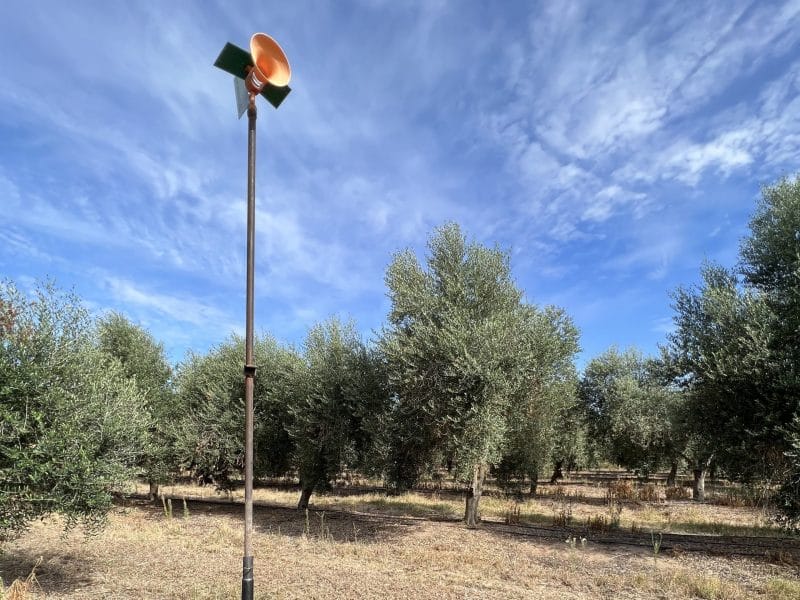
AlViGen project team installs traps in the Alentejo to capture the fungus that causes gafa in olive groves

From September until November, the “AlViGen: Creation of a hub in the ALentejo for the GENomic VIgilance of diseases in agriculture” project team will be in the field to install spore traps, known as capta-esporos, in olive groves in Portalegre, Monforte, Elvas, Évora and Beja. The traps make it possible to capture spores from fungal species that circulate in the air and, in particular, from different strains of the fungus Colletotrichum, This is responsible for causing gafa disease in Olival.

The aim is to identify some important characteristics of this pathogen, such as virulence and resistance to fungicides or pesticides.

In total, the spore traps were installed in eight olive groves in the Alentejo (Alto, Central and Baixo), a region that is the main producer of this crop at a national level, and where the fungus Colletotrichum has had a particular impact.

The team will take samples every two weeks for three months a year during the olive tree's productive cycle. Regular monitoring of the diversity of fungal species circulating in the olive groves will also make it possible to detect the appearance of new pathogenic fungi.

AlViGen, coordinated by InnovPlantProtect (InPP) in partnership with the University of Évora (WOW), was one of the innovative pilot projects selected last October and funded by the La Caixa Foundation, BPI Bank and the Foundation for Science and Technology (FCT), as part of the 4th edition of the Promove Program. This project will enable InPP to create the capacity for early detection of multiple crop diseases, using molecular methods that allow the identification of important characteristics of pathogens, such as virulence, susceptible varieties and resistance to phytopharmaceuticals, benefiting producers and government authorities.

Find out more about the AlViGen project on the project website here.

FINANCING

InPP participou em simpósio que debateu práticas laboratoriais com uma menor pegada ecológica

O InnovPlantProtect (InPP), como membro da rede portuguesa de laboratórios de investigação sustentável, a GreenLabs Portugal, participou no primeiro “Green Labs Portugal Symposium: Promoting Sustainability in Research”, dedicado a promover práticas verdes na ciência para reduzir o impacto ambiental da investigação científica em Portugal, e que teve lugar esta sexta-feira, dia 22 de setembro, na Universidade de Coimbra.

O principal objetivo deste simpósio foi promover o debate e a discussão sobre como mitigar o impacto ambiental da investigação científica, reconhecendo ao mesmo tempo o papel fundamental da ciência e da inovação no progresso da sociedade. Em mais detalhe, a iniciativa abordou os diferentes aspetos do que são os Green Labs e o procedimento para obter certificação, a sustentabilidade na ciência e como as empresas estão a reinventar e a revolucionar os seus serviços para apoiar os laboratórios de investigação na adoção de práticas mais ecológicas, de forma a reduzir a pegada ecológica da investigação.

Cristina Azevedo, diretora do departamento de Novos Biopesticidas, participou na sessão 2 dedicada ao tema “Setting a green lab” com a apresentação “How to greenUP bio-based research labs”. A iniciativa contou ainda com palestras de especialistas na área, como Melina Kerou da Sustainable European Laboratory Network (SELs), e Martin Farley da Green Lab Associates.

O programa incluiu vários momentos interativos com os participantes, incluindo uma mesa redonda, um jogo “Ask the Green Teams” e uma sessão de posters. Alguns elementos da equipa de InPP Greeners do InPP, representada pelas investigadoras Cátia Patrício, Cláudia Silva e Leonor Martins participaram nesta última, na qual apresentaram o poster “InPPGreeners – Story of a colab built with sustainability as its cornerstone”.

Na sessão de encerramento teve lugar um momento especial em que foi plantada uma árvore no Jardim Botânico da Universidade de Coimbra.

O tempo para um futuro científico mais sustentável é agora, e todos somos responsáveis por fazer parte desta mudança!

Os InPP Greeners são a equipa de sustentabilidade do InPP, criada no final de 2021, com a missão de partilhar conhecimento e de promover boas práticas nas áreas da biotecnologia e da proteção de culturas agrícolas, que conduzam à criação de laboratórios e instituições mais sustentáveis, além da promoção da adoção de comportamentos mais sustentáveis por todos os cidadãos.

A GreenLabs Portugal é uma rede de laboratórios de investigação sustentável em Portugal que promove práticas sustentáveis para reduzir o impacto ambiental da investigação científica a nível nacional, e da qual o InPP faz parte.