Imagine a future where drones and artificial intelligence work together to protect your vineyards. That's what the AI4Leafhopper project is making a reality!
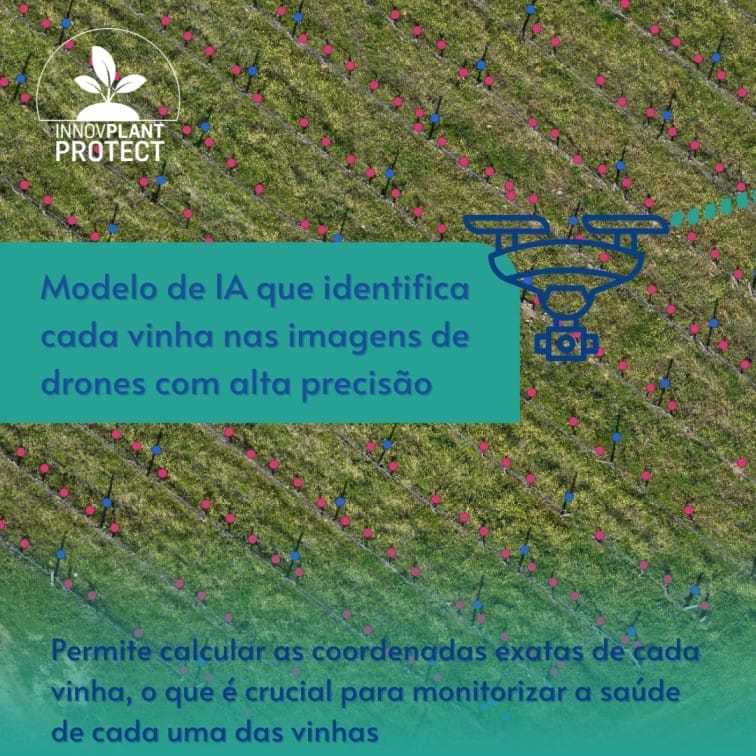
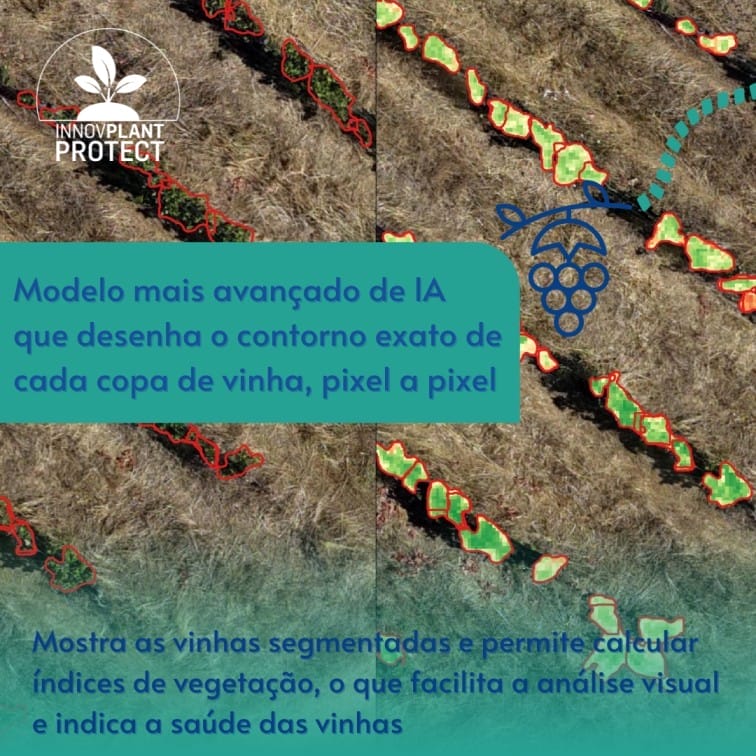
Manisha Sirsat, a researcher on the AI4Leafhopper team, has developed two artificial intelligence models that analyze the aerial images captured by our latest generation drone... and these models make it possible:
geolocation of each vine
to know if there are vine failures
quickly identify “sick” vines”
optimize the application of treatments
The result? Growers can have a detailed view of the health of their vineyards, detect problems early and make more informed decisions.
AI4Leafhopper is a project led by InPP and funded by the ICAERUS Horizon Europe program, which began in April 2024 and ended on April 30 with a final meeting involving the six European projects approved in the 1st edition of the ICAERUS program's PULL applications. The project team presented the AI-based models for detecting and monitoring the impact of the green leafhopper on vineyards.
The AI4Leafhopper project, InnovPlantProtect used a state-of-the-art drone to monitor the impact of the green leafhopper in the vineyards of our partners Reynolds Wine Growers and João Portugal Ramos. Although the results show that this advanced technology is more effective at detecting attacks at advanced stages, we are excited about the potential of this tool to provide valuable data for the management of this harmful insect.
We believe that with more research, we can refine our solution to detect early attacks and prevent significant damage to vineyards. Transforming the monitoring of this pest is where we want to go, always with the aim of protecting vineyards and guaranteeing the quality of production for winegrowers.
Over the next few days we'll be revealing everything that the AI4Leafhopper project is making a reality and how drones and artificial intelligence are working together to create a more sustainable future for viticulture. Stay tuned!
AI4Leafhopper, funded by the ICAERUS Horizon Europe program, which began in April 2024, is now in its final stages. The development phase of the project, which took place in the field, is now over and the final stage is to present the solutions developed by our team on Portuguese soil to the market.
Elvas, in the heart of the Alentejo, is preparing to welcome a new entomology laboratory. This specialized facility will help improve our understanding of the world of insects, small giants that are vital to ecosystems. More than a scientific research center, this laboratory aims to develop innovative strategies for pest management and control and support more sustainable agricultural practices, fostering collaboration between researchers, farmers and companies in the region and beyond.
Hadi Sheikhnejad, one of InnovPlantProtect's entomologists, shares his enthusiasm and vision for this project. “The entomology lab is a space where we can study, breed and exhibit insects, unlocking their secrets and applying that knowledge for the benefit of agriculture and the environment,” explains Hadi.
The installation of the laboratory, already underway since 2024, faces complex challenges, from finding funding to creating specialized infrastructures that simulate the insects“ natural habitats. ”Every detail is crucial and meticulously planned,“ reveals Hadi. ”We need to control the temperature, humidity and lighting to create an ideal environment and to ensure the well-being of the various species of insects that will reside here."
Hadi Sheikhnejad, an entomologist at InnovPlantProtect, engaged in the observation and study of insects in the new entomology laboratory in Elvas, which is yet to be set up.
And what species will these be? The laboratory will house an impressive diversity of insects, from beneficial predators such as ladybugs and parasitoid wasps, responsible for natural pest control, to agricultural pest species such as leafhoppers, aphids and whiteflies, and decomposers, important for maintaining soil health, such as soldier flies. “Each insect has a role to play in the balance of ecosystems,” says the entomologist. “By studying them, we can develop more effective and sustainable pest control methods, reducing our dependence on synthetic pesticides.”
Technology is a fundamental pillar of the laboratory. “We are integrating cutting-edge technologies such as image analysis using Artificial Intelligence (AI), automated traps and sensors and even climate-controlled breeding cameras,” Hadi reveals. “These technologies allow us to monitor insect behaviour in real time, detect pests early and diagnose infestations accurately, revolutionizing the way we deal with pest management.”
The laboratory will not be limited to research. It will offer consultancy services to farmers and companies that will include pest identification and, over time, the development of pest management strategies, the adoption of integrated pest management (IPM), training workshops on insect monitoring and access to auxiliary insects, which will act as biological pest control agents to help farmers control infestations naturally.
Looking to the future, Hadi shares his vision for the laboratory: “We would like to be a reference laboratory for sustainable agriculture”. “By sharing our knowledge and experience gained in the entomology lab, we can help promote more ecological and efficient agricultural practices,” he adds.
Left photo: Hadi Sheikhnejad observing an insect under a magnifying glass, revealing essential details for entomological study, Right photo: Facilities of the new entomology laboratory in Elvas, a space dedicated to research, innovation and pest management.
Collaboration is another key aspect of this project. “We are open to partnerships with companies in the agricultural sector, research institutes, universities, other CoLABs and governmental or non-governmental organizations,” says Hadi. “We believe that these collaborations are essential for driving innovation and finding sustainable insect-based solutions to agricultural and environmental challenges. Ultimately, we can shape a future where agriculture and nature coexist in harmony.”
The entomology laboratory in Elvas is a step towards a more sustainable future, where the small world of insects plays a fundamental role in building a healthier planet. In Elvas, innovation crawls, flies, jumps and reveals a promising future for entomology and pest management.
What are the main diseases affecting olive trees in Portugal, and how do they impact olive oil production? Why does the bacterium 𝘟𝘺𝘭𝘦𝘭𝘭𝘢 𝘧𝘢𝘴𝘵𝘪𝘥𝘪𝘰𝘴𝘢 pose such a threat to olive groves and olive growers? What prevention and control measures are recommended to prevent the spread of this bacterium? How are we innovating in the monitoring and management of diseases in olive groves and of 𝘟𝘺𝘭𝘦𝘭𝘭𝘢 𝘧𝘢𝘴𝘵𝘪𝘥𝘪𝘰𝘴𝘢?
These are some of the questions that will be answered in the webinar “Olive Tree Diseases and 𝘟𝘺𝘭𝘦𝘭𝘭𝘢 𝘧𝘢𝘴𝘵𝘪𝘥𝘪𝘰𝘴𝘢”, promoted by the Center for the Study and Promotion of Olive Oil in Alentejo (CEPAAL), which will take place next Tuesday, April 1, starting at 10:30 a.m., and where these and many other topics will be discussed!
The director of InnovPlantProtect's Monitoring and Diagnostics Department, iLaria Marengo, will be one of the speakers at the webinar that will present the platform for monitoring the bacterium 𝘟𝘺𝘭𝘦𝘭𝘭𝘢 𝘧𝘢𝘴𝘵𝘪𝘥𝘪𝘰𝘴𝘢, developed by our team, which is being used nationwide by the Directorate-General for Food and Veterinary (DGAV).
Participation in the session is free, but prior registration is required. You can register here.
See the full program in the image below.
This is an initiative developed under the Da Oliveira à Mesa project, promoted by CEPAAL and funded by the PDR 2020. The monitoring platform was developed as part of the SNM_XylellaVt - Sistema Nacional de Monitorização de Insetos Vetores da 𝘟𝘺𝘭𝘦𝘭𝘭𝘢 𝘧𝘢𝘴𝘵𝘪𝘥𝘪𝘰𝘴𝘢 project, funded by the Recovery and Resilience Plan (PRR).



 Português
  English