O InPP participou no Fórum Nacional de Clubes Ciência Viva na Escola, que teve lugar no dia 27 de março, integrando a Mostra de Ciência e Tecnologia com um stand dedicado à proteção das plantas.
Neste espaço, foram apresentados diversos materiais demonstrativos, incluindo placas de Petri com fungos e bactérias, plantas, algas e exemplos de produtos formulados, com o objetivo de despertar o interesse e a curiosidade dos visitantes para a importância da saúde das plantas e da investigação científica nesta área.
Ao longo do dia, a Gestora de Comunicação, Inês Ferreira, e o Gestor de Inovação, Paulo Madeira, dinamizaram o contacto com o público visitante, explicando de que forma a investigação em proteção das plantas contribui para melhorar a proteção das culturas e promover uma agricultura mais resiliente e sustentável.
O Fórum Nacional de Clubes Ciência Viva na Escola decorreu no CNEMA, em Santarém, reunindo escolas, centros Ciência Viva, universidades, centros de investigação e diversas outras entidades, num encontro dedicado à ciência, tecnologia e inovação.
O InPP agradece a todos os visitantes que passaram pelo seu stand, destacando a importância destes momentos de partilha para promover o conhecimento científico junto da comunidade.
No dia 26 de março, o InPP participou numa sessão promovida pela Agência Nacional de Inovação (ANI), em Lisboa, que contou com a presença de uma comitiva da República Checa ligada ao setor das biotecnologias.
Em representação do InPP estiveram Cristina Azevedo, Diretora de Biosoluções, e Paulo Madeira, Gestor de Inovação, que apresentou a instituição e as suas principais áreas de atuação e competências.
A iniciativa teve como principal objetivo identificar oportunidades de cooperação entre entidades portuguesas e checas, nomeadamente nas áreas de transferência de tecnologia, codesenvolvimento, ensaios pré-clínicos e diagnósticos, coinvestimento e internacionalização da inovação.
A sessão contou com a participação de representantes de entidades relevantes da República Checa, incluindo Petra Kinzlova, CEO da Prague.bio, Katarina Psenakova, Head of Biology da PharmTheon, bem como representantes da Embaixada da República Checa e da Academia das Ciências da República Checa.
Este encontro contribuiu para reforçar o posicionamento do InPP na promoção de parcerias internacionais e no desenvolvimento de soluções inovadoras, evidenciando o compromisso contínuo da instituição em fortalecer redes de colaboração científica e tecnológica e em contribuir para o crescimento e internacionalização da inovação.
O InPP marcou presença no Encontro com orizicultores e técnicos(as) em Portugal, promovido pela EDAF, que decorreu no dia 5 de março, no Pólo de Inovação de Salvaterra de Magos, em Santarém.
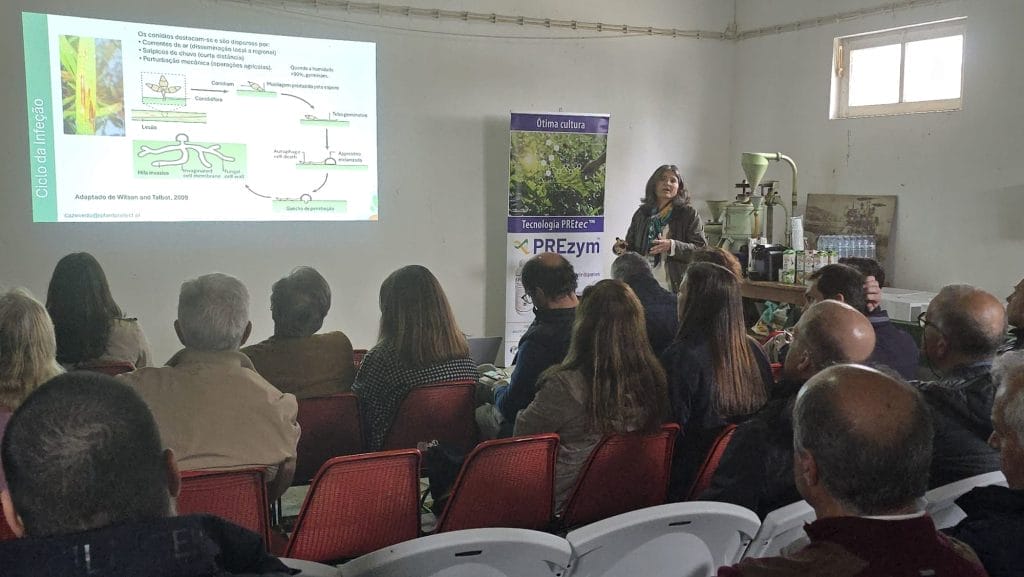
A Diretora de Biosoluções do InPP, Cristina Azevedo, integrou o painel de oradores convidados, tendo apresentado a comunicação intitulada “A problemática da Pyricularia na cultura do arroz”. A apresentação incidiu sobre os principais desafios fitossanitários associados a esta doença, que continua a constituir uma das maiores ameaças à produção de arroz a nível mundial e também em Portugal.
O encontro reuniu produtores, técnicos e especialistas da fileira do arroz, proporcionando um espaço de partilha de conhecimento e debate sobre soluções atuais e em desenvolvimento para o controlo da piriculariose. Foram igualmente abordados outros temas relevantes para a sustentabilidade e produtividade da cultura, nomeadamente a gestão da fertilização.
A participação do InPP neste tipo de iniciativas reforça o compromisso da instituição com a inovação, a transferência de conhecimento e o desenvolvimento de soluções sustentáveis para a agricultura nacional.
O InPP agradece à EDAF e ao COTArroz o convite e a organização deste importante encontro, esperando que esta colaboração continue a fortalecer-se no futuro.
Elvas, in the heart of the Alentejo, is preparing to welcome a new entomology laboratory. This specialized facility will help improve our understanding of the world of insects, small giants that are vital to ecosystems. More than a scientific research center, this laboratory aims to develop innovative strategies for pest management and control and support more sustainable agricultural practices, fostering collaboration between researchers, farmers and companies in the region and beyond.
Hadi Sheikhnejad, one of InnovPlantProtect's entomologists, shares his enthusiasm and vision for this project. “The entomology lab is a space where we can study, breed and exhibit insects, unlocking their secrets and applying that knowledge for the benefit of agriculture and the environment,” explains Hadi.
The installation of the laboratory, already underway since 2024, faces complex challenges, from finding funding to creating specialized infrastructures that simulate the insects“ natural habitats. ”Every detail is crucial and meticulously planned,“ reveals Hadi. ”We need to control the temperature, humidity and lighting to create an ideal environment and to ensure the well-being of the various species of insects that will reside here."
Hadi Sheikhnejad, an entomologist at InnovPlantProtect, engaged in the observation and study of insects in the new entomology laboratory in Elvas, which is yet to be set up.
And what species will these be? The laboratory will house an impressive diversity of insects, from beneficial predators such as ladybugs and parasitoid wasps, responsible for natural pest control, to agricultural pest species such as leafhoppers, aphids and whiteflies, and decomposers, important for maintaining soil health, such as soldier flies. “Each insect has a role to play in the balance of ecosystems,” says the entomologist. “By studying them, we can develop more effective and sustainable pest control methods, reducing our dependence on synthetic pesticides.”
Technology is a fundamental pillar of the laboratory. “We are integrating cutting-edge technologies such as image analysis using Artificial Intelligence (AI), automated traps and sensors and even climate-controlled breeding cameras,” Hadi reveals. “These technologies allow us to monitor insect behaviour in real time, detect pests early and diagnose infestations accurately, revolutionizing the way we deal with pest management.”
The laboratory will not be limited to research. It will offer consultancy services to farmers and companies that will include pest identification and, over time, the development of pest management strategies, the adoption of integrated pest management (IPM), training workshops on insect monitoring and access to auxiliary insects, which will act as biological pest control agents to help farmers control infestations naturally.
Looking to the future, Hadi shares his vision for the laboratory: “We would like to be a reference laboratory for sustainable agriculture”. “By sharing our knowledge and experience gained in the entomology lab, we can help promote more ecological and efficient agricultural practices,” he adds.
Left photo: Hadi Sheikhnejad observing an insect under a magnifying glass, revealing essential details for entomological study, Right photo: Facilities of the new entomology laboratory in Elvas, a space dedicated to research, innovation and pest management.
Collaboration is another key aspect of this project. “We are open to partnerships with companies in the agricultural sector, research institutes, universities, other CoLABs and governmental or non-governmental organizations,” says Hadi. “We believe that these collaborations are essential for driving innovation and finding sustainable insect-based solutions to agricultural and environmental challenges. Ultimately, we can shape a future where agriculture and nature coexist in harmony.”
The entomology laboratory in Elvas is a step towards a more sustainable future, where the small world of insects plays a fundamental role in building a healthier planet. In Elvas, innovation crawls, flies, jumps and reveals a promising future for entomology and pest management.
What are the main diseases affecting olive trees in Portugal, and how do they impact olive oil production? Why does the bacterium 𝘟𝘺𝘭𝘦𝘭𝘭𝘢 𝘧𝘢𝘴𝘵𝘪𝘥𝘪𝘰𝘴𝘢 pose such a threat to olive groves and olive growers? What prevention and control measures are recommended to prevent the spread of this bacterium? How are we innovating in the monitoring and management of diseases in olive groves and of 𝘟𝘺𝘭𝘦𝘭𝘭𝘢 𝘧𝘢𝘴𝘵𝘪𝘥𝘪𝘰𝘴𝘢?
These are some of the questions that will be answered in the webinar “Olive Tree Diseases and 𝘟𝘺𝘭𝘦𝘭𝘭𝘢 𝘧𝘢𝘴𝘵𝘪𝘥𝘪𝘰𝘴𝘢”, promoted by the Center for the Study and Promotion of Olive Oil in Alentejo (CEPAAL), which will take place next Tuesday, April 1, starting at 10:30 a.m., and where these and many other topics will be discussed!
The director of InnovPlantProtect's Monitoring and Diagnostics Department, iLaria Marengo, will be one of the speakers at the webinar that will present the platform for monitoring the bacterium 𝘟𝘺𝘭𝘦𝘭𝘭𝘢 𝘧𝘢𝘴𝘵𝘪𝘥𝘪𝘰𝘴𝘢, developed by our team, which is being used nationwide by the Directorate-General for Food and Veterinary (DGAV).
Participation in the session is free, but prior registration is required. You can register here.
See the full program in the image below.
This is an initiative developed under the Da Oliveira à Mesa project, promoted by CEPAAL and funded by the PDR 2020. The monitoring platform was developed as part of the SNM_XylellaVt - Sistema Nacional de Monitorização de Insetos Vetores da 𝘟𝘺𝘭𝘦𝘭𝘭𝘢 𝘧𝘢𝘴𝘵𝘪𝘥𝘪𝘰𝘴𝘢 project, funded by the Recovery and Resilience Plan (PRR).




 Português
  English