It's called PROSPER and it's a new European project that aims to transform European agriculture through the valorization of “orphan” legumes - resistant crops, little exploited, but with great potential to face the challenges of climate and food in the future.
The consortium, with total funding of around 5 million euros, brings together 27 partners from 13 European countries and Tunisia, including universities, research centers, companies and non-profit organizations in the agricultural sector. Among them are countries from the Mediterranean (Italy, Spain, Greece, Portugal and France), Central Europe (Germany, Belgium, Poland, Bulgaria and Romania), Northern Europe (Denmark, Sweden and Finland).
The aim of PROSPER is to test and validate new agricultural diversification strategies, adapted to different climates and social and economic contexts, promoting more sustainable, innovative practices that are adjusted to the needs of different agricultural realities.
InPP, PROSPER's partner, will be responsible for analyzing:
Soil health and environmental impact
Energy efficiency and waste management
Nutritional quality of crops
Fair valuation along the production chain
To do this, the InPP team will use advanced technologies, such as real-time sensors and geospatial analysis, which will help study soil health, carbon sequestration captured by crops, water management and biodiversity, among others.
PROSPER is co-created with the main players in the agricultural sector, ensuring that the solutions developed do not remain on paper: they will be practical, useful and transformative.
The project starts in September 2025. We are ready to embark on this journey towards a greener, fairer and more resilient agriculture.
InnovPlantProtect (InPP) was present at the Science 2025 Meeting in Lisbon, at the Nova SBE Campus, to take part in the parallel session “Crop Protection for One Health, and Food and Environmental Sustainability”.
The Encontro Ciência took place from July 9 to 11 at the NOVA SBE Campus in Carcavelos, with the motto “Science, Innovation and Society”. Portugal's largest science and technology meeting was the stage for promoting and discussing the scientific, social, cultural and economic impact of research in Portugal, exploring the intersection between science, innovation and society, to inspire new ideas and foster transformative collaborations.
The director of the Data Management and Risk Analysis Department, Ricardo Ramiro, and the director of the New Biopesticides Department, Cristina Azevedo, presented some of the results of their work in this session co-moderated by the executive director, António Saraiva.
During the session, two important solutions for the agricultural sector, developed by our team, were presented:
iCountPests - an innovative app that uses AI to detect and count pests accurately and quickly in photos of chromotropic traps.
InPP 2 - a broad-spectrum biofungicide capable of fighting Botrytis cinerea, the fungus responsible for gray rot in tomatoes.
CoLAB MORE Colab - Collaborative Mountain Research Laboratory and Sfcolab - Collaborative Laboratory for Digital Innovation in Agriculture, were also present at the parallel session, as well as GREEN-IT, to discuss how science and innovation can tackle the challenges of climate change and promote more sustainable agricultural systems.
On June 30, InnovPlantProtect (InPP) was present at the meeting “7 years of CoLABs: impacts and perspectives”, which brought together political decision-makers, experts from the Portuguese innovation ecosystem, leaders from different sectors, representatives of public and private entities and the representatives of the 41 Collaborative Laboratories (CoLAB), at the Pavilhão do Conhecimento in Lisbon.
The meeting, organized by the Forum of Collaborative Laboratories (FCoLAB), aimed to reflect on the impact of the work carried out by the different CoLABs over the last seven years, as well as to address future prospects and identify strategies to boost the contribution of scientific research and innovation to the economy and society.
This initiative was an opportunity to showcase the products, services and solutions developed by CoLAB over the last seven years, highlighting its contribution to innovation, competitiveness and sustainability in various sectors of the economy. The application recently launched by InPP, iCountPests, which allows pests to be counted automatically using images from traps, reducing the time invested in monitoring and making it possible to create a pest history, was also highlighted.
The event was attended by the Minister of Education, Science and Innovation, Fernando Alexandre, the Secretary of State for the Economy, João Rui Ferreira, Manuel Heitor, from the IN+ Center for Innovation, Technology and Policy Research and former Minister of Science and Innovation, António Grilo, President of ANI, among others.
In his speech, the Minister for Education, Science and Innovation, Fernando Alexandre, highlighted the purpose of science at national level: “We hope that the science created in Portugal will generate innovation. More than technology, innovation is the answer to society's problems. You are the agents of change!”.
During the session, the main activity indicators and proven impact of the first seven years of CoLABs' activity were also presented, and multisectoral perspectives on their role in the national science and innovation ecosystem were debated, focusing on topics such as socio-economic impact, internationalization, business competitiveness, technological innovation and sustainability.
The activity indicators and the impact of the 7 years of activity are as follows:
More than 260 projects approved
More than 1,300 qualified jobs created
19M€ in tax revenue generated
More than 900 interactions with companies
33 patent applications (10 granted)
680 scientific articles published
The two afternoon panels were attended by companies, partners and management entities, who reflected on the impact generated so far and presented proposals for maximizing CoLAB's long-term contribution to both the economy and Portuguese society.
At a time when the basic funding options for CoLABs are being discussed, this event is of the utmost importance. The area of crop protection, in particular, needs more investment in innovation. Holding this event was important for bringing this urgent and strategically important issue to the debate.
The InPP was also present in the exhibition area, receiving important visitors, including the Minister of Education, Science and Innovation, Fernando Alexandre, the Secretary of State for the Economy, João Rui Ferreira, the Secretary of State for Science and Innovation, Helena Canhão, the President of the FCT, Madalena Alves, the President of the National Innovation Agency, António Grilo, the President of the National Monitoring Committee for the RRP, Pedro Dominguinhos and the Executive Director of Ciência Viva, Ana Noronha.
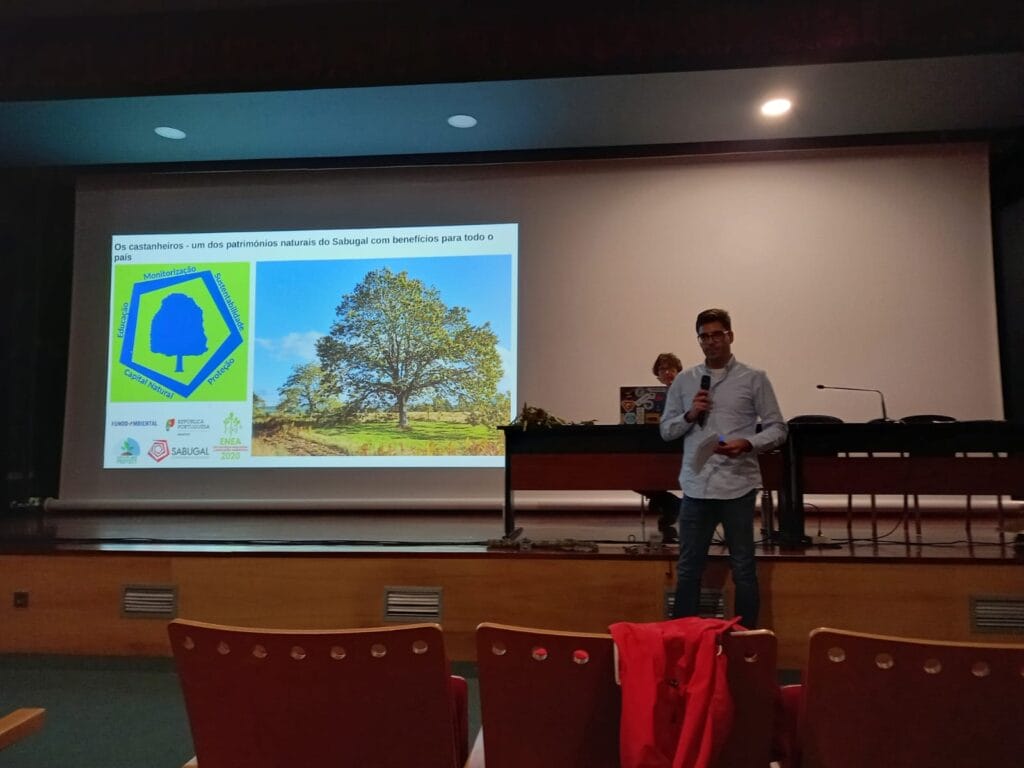
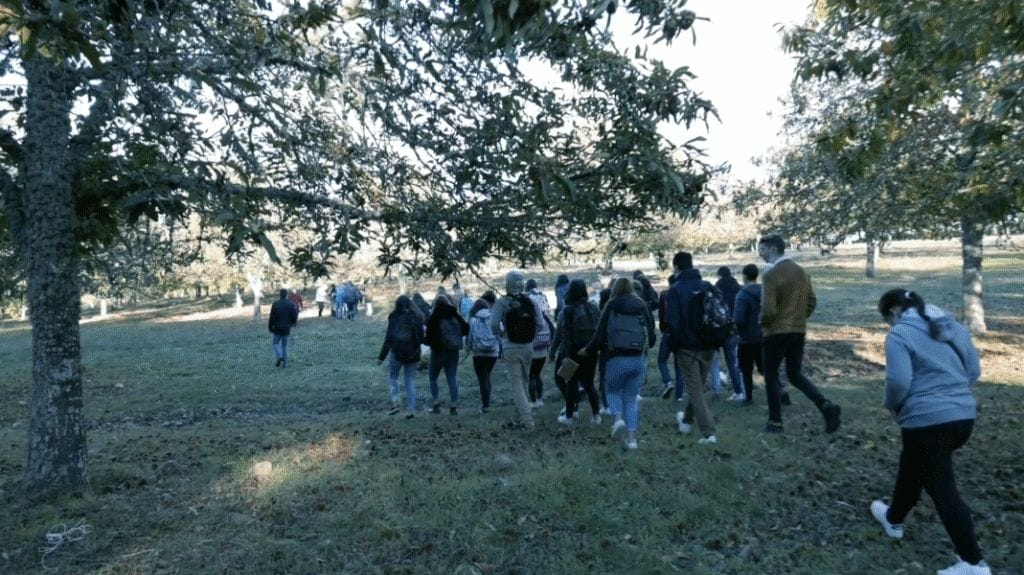
Around 50 Biology, Technology and Tourism students spent part of the morning and afternoon of November 4 with the InnovPlantProtect (InPP) team, in order to understand the importance of protecting trees, and in particular chestnut trees, a local natural heritage. The project, led by InPP, is directed by Sabugal Town Hall (CMS).
The InPP-led project was presented to students...
... from the 12th grade of the Sabugal School Group
The day was an Education 4.0 experience, in which traditional subjects such as Biology and Ecology were integrated with a description and explanation of the application of “Internet of Things” (IoT) technology to tree monitoring. Incidentally, the presentation coincided with the COP 26 Climate Summit, which ties in perfectly with the main issues being discussed in Glasgow, Scotland.
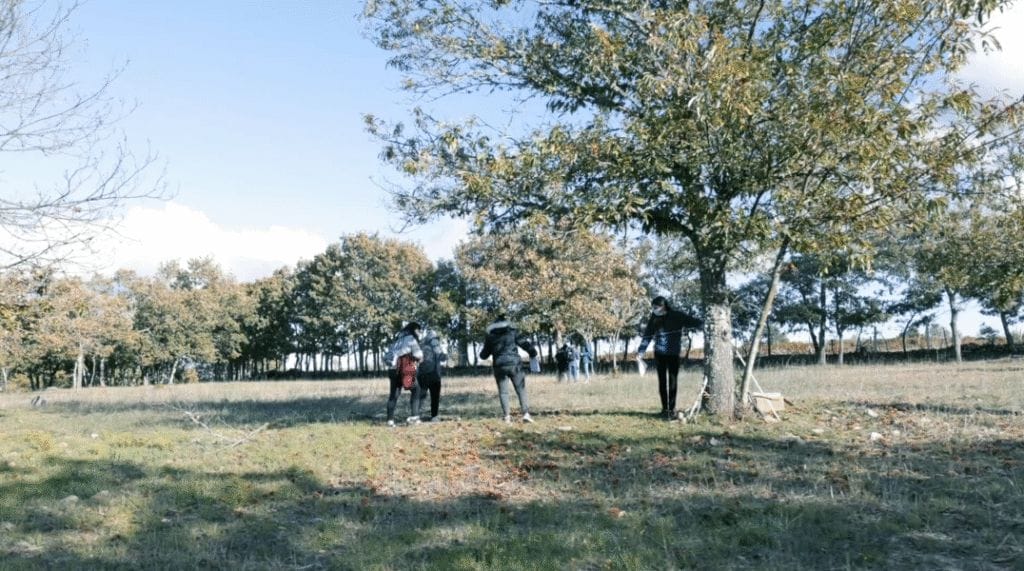
In the afternoon, the pupils were taken to a meadow used as a study area by the InPP and CMS team. It was there that they were able to see and understand first-hand how IoT sensors work. The visit to the grove was an opportunity for them to take part in practical exercises and learn how to measure some of the physical parameters of trees, such as height, diameter and crown width using traditional methods, while at the same time seeing more modern tools in action.
With in-depth knowledge of the strains and breeds that exist in the country, the Elvas CoLAB can thus devise more efficient and targeted combat strategies.
InnovPlantProtect (InPP) is analyzing yellow rust samples collected from wheat fields in Portugal. Identification at InPP is carried out using PCR techniques and analysis of DNA fragments using SeqStudio, which makes it possible to determine the lineage of the fungus by examining molecular markers.
The polymerase chain reaction, or PCR, is a technique that allows you to copy a specific region of DNA, in vitro. SeqStudio is a sequencing machine that also allows the length of fragments to be measured, from which it is possible to correlate the size of different molecular markers with a given lineage.
Yellow rust is a disease caused by the fungus Puccinia striiformis f. sp. tritici, This pathogen, which affects wheat and other cereals all over the world, jeopardizes the future and stability of cereal crops. This pathogen is biologically very dynamic, adapting quickly to climate change and to the resistant cereal varieties that are being introduced onto the market.
A. Yellow rust on wheat; B. Molecular markers amplified by PCR on an agarose gel; C. Fragment analysis to determine the size of the markers and establish the fungal lineage
So far, the PstS10 strain, the most prevalent in Europe, has been identified. PstS10 has proved to be very aggressive, affecting wheat varieties that were previously resistant to yellow rust. The race of this strain was determined by RustWatch in Denmark to be Benchmark. InPP sent samples to this European project to combat wheat rusts, which, among many other aspects, also involves genotyping and identifying the strains and races of the fungus that causes yellow rust.
With in-depth knowledge of the strains and races present in Portugal, the InPP can therefore devise more efficient and targeted combat strategies, by improving wheat varieties resistant to yellow rust and developing bioinspired control agents.
No product currently on the market is capable of eliminating Xylella fastidiosa, the Commission for the Regional Budget of Puglia, southern Italy. The bacterium continues to seriously affect olive groves in Italy's main olive oil producing region.
“The two products marketed in recent weeks as a treatment against the drying out of trees, and useful for bringing plants back to their original glory, are a mixture of natural soaps or adjuvants,” said the director of Puglia's phytosanitary observatory, Salvatore Infantino, at a public hearing, quoted by OliveOilTimes. The heads of the regional budget commission for this area of southern Italy, which forms the “heel” of the “boot”, guarantee that there are currently no products on the market capable of eliminating the bacteria Xylella fastidiosa of infected trees, particularly olive trees.
This bacterium is the most active pathogen affecting olive trees in Italy's main olive oil producing region. For Salvatore Infantino, the development of a product capable of combating it remains an important goal for many of those striving to reduce the devastation caused by the bacteria. Xylella fastidiosa.
Public authorities must not make the mistakes of the past by giving credence to unscientific theories that have already caused so much damage and wasted so much time.
Fabiano Amati, president of Puglia's regional budget committee
A Xylella fastidiosa was first detected in the European Union precisely in Puglia, in October 2013, and was responsible for an outbreak that, by 2015, had already infected one million olive trees in this Italian region alone. “Currently, good agricultural practices and eradication are the only weapons we have against the Xylella, It's a way of saving time while we wait for a truly effective treatment,” says Salvatore Infantino.
Olive groves infested with Xylella fastidiosa, Puglia, Italy, 2019.