News & Events

white plant

NEWS

Seminar highlights CoLABs' contribution to the future of agricultural and agri-food innovation

On June 11th, InnovPlantProtect (InPP) held a seminar on “Six years of innovation: CoLABs” path to the future of the agricultural and agri-food sectors", at the National Agriculture Fair (FNA) in Santarém.

The event brought together, for the first time, six Collaborative Laboratories (CoLABs) with direct involvement in the agricultural and agri-food sectors: InnovPlantProtect, CoLAB4Food, FeedInov CoLAB, Food4Sustainability, MORE CoLAB and SmartFarmCoLAB.

The program included two round tables. The first, dedicated to “Innovation in Action: The Results and Impacts of CoLABs in Agriculture and Agrifood”, representatives from each CoLAB took part, presenting success stories and projects developed, with emphasis on the intervention of the innovation manager at InnovPlantProtect, Paulo Madeira, He shared InPP's achievements in developing solutions for more sustainable agriculture.

The second round table, under the theme “Partnerships for the Future: How CoLABs are Driving Innovation in the Agricultural and Agri-Food Sector”, The event was attended by partner companies and associations, who stressed the importance of collaborating with the CoLABs. Among the speakers were Pedro Viterbo, manager of Fertiprado, InnovPlantProtect's partner, accompanied by representatives of the following organizations Sense Test, Associação Portuguesa Dos Industriais De Alimentos Compostos Para Animais (IACA), Building Global Innovators (BGI), DEIFIL Technology and TeroMovigo.

The seminar ended with a moment of joint reflection, with speeches from all the executive directors of the CoLABs present, including the executive director of InnovPlantProtect, António Saraiva, The meeting was organized by the European Commission, which stressed the importance of cooperation and strategic coordination between the Collaborative Laboratories, reinforcing their collective commitment to innovation and sustainable development in the agricultural and agri-food sectors.

Throughout the seminar, the importance of synergies between science, innovation and the market became clear, as did the need to strengthen funding and guarantee conditions for the continuity and growth of these Collaborative Laboratories, whose impacts are already visible in the national agricultural and agri-food ecosystem.

This meeting was an important moment for sharing experiences and strengthening collaborative work, charting a joint path towards a more competitive, sustainable and innovative future for agriculture and agri-food in Portugal.

CoLABs in the spotlight at FNA: Innovation and Impact for Agriculture and Agrifood

O InnovPlantProtect (InPP) promotes the seminar “Six years of innovation: The path of CoLABs for the future of the agricultural and agri-food sectors”, on the next day June 11thfrom 09h30 until 11h00, in center stage at Espaço InsectERA, located in the Central Cloisters of the National Center for Agricultural Exhibitions and Markets (CNEMA) in Santarém.

The seminar aims to present the practical results and real impact of six Collaborative Laboratories (CoLABs) in Portugal - InnovPlantProtect, Colab4Food, FeedInov, Food4Sustainability, MORE and SmartFarmCoLAB. These interface infrastructures are essential pillars of the National Innovation System (SNI) and play a growing and essential role in the dynamics of innovation for agriculture and agri-food.

The event will be attended by members of the teams and partners of each of the CoLABs, who will talk about their vision of the added value of these interface and innovation entities, from the point of view of those who collaborate directly with them.

The initiative, which is part of the National Agriculture Fair (FNA) 2025, which this year has the theme “Biosolutions” and will be the stage for exploring the innovations that are shaping the future of the sector, brings together different representatives of the innovation ecosystem to show the role of CoLABs in stimulating the transfer of knowledge and making innovation available to agriculture and agri-food in Portugal, creating value and attracting highly qualified human resources to the country.

See the full program in the image below.

The registration for the event is free, but mandatory due to the limited capacity of the space. Guarantee your presence by filling in the available form here.

We look forward to welcoming you for a morning of sharing and debate on the future of innovation in the agricultural and agri-food sectors!

InPP participa na FNA25

Estamos em contagem decrescente para a Feira Nacional de Agricultura (FNA), uma das maiores feiras agrícolas do país!

É já de 7 a 15 de junho que o InPP vai estar na 61ª edição da Feira Nacional de Agricultura, que se realiza no CNEMA – Centro Nacional de Exposições, em Santarém.

O tema da edição deste ano é “Biosoluções”e pretende destacar a importância das soluções e tecnologias inovadoras no setor agroalimentar e na promoção de práticas mais sustentáveis e eficientes.

A FNA reúne agricultores, empresários e especialistas dos setores agroalimentar, pecuário e agrícola e é um excelente espaço para aumentar a nossa rede de contactos, trocar conhecimentos e apresentar as mais recentes tendências e soluções agrícolas que a nossa equipa tem desenvolvido.

Vai poder encontrar-nos no stand nº.18, à entrada do Espaço dos claustros, dedicado à Agenda InsectERA, entre as 10h e as 20h.

Venha visitar-nos. Esperamos por si!

EVENTS

The talking chestnut trees arrive at the Sabugal School Group

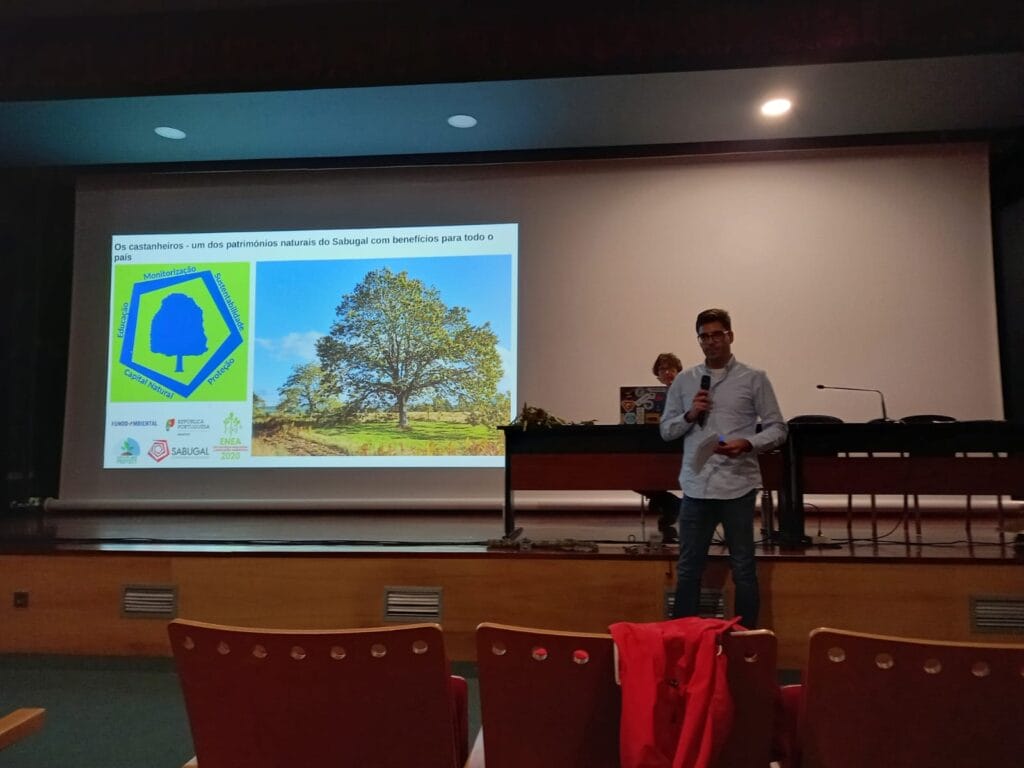
The project “Educating to know, protect and monitor chestnut trees through IoT technology”, The project, co-financed by the Environmental Fund, was presented last week to 12th grade students from the Sabugal School Group.

Around 50 Biology, Technology and Tourism students spent part of the morning and afternoon of November 4 with the InnovPlantProtect (InPP) team, in order to understand the importance of protecting trees, and in particular chestnut trees, a local natural heritage. The project, led by InPP, is directed by Sabugal Town Hall (CMS).

The day was an Education 4.0 experience, in which traditional subjects such as Biology and Ecology were integrated with a description and explanation of the application of “Internet of Things” (IoT) technology to tree monitoring. Incidentally, the presentation coincided with the COP 26 Climate Summit, which ties in perfectly with the main issues being discussed in Glasgow, Scotland.

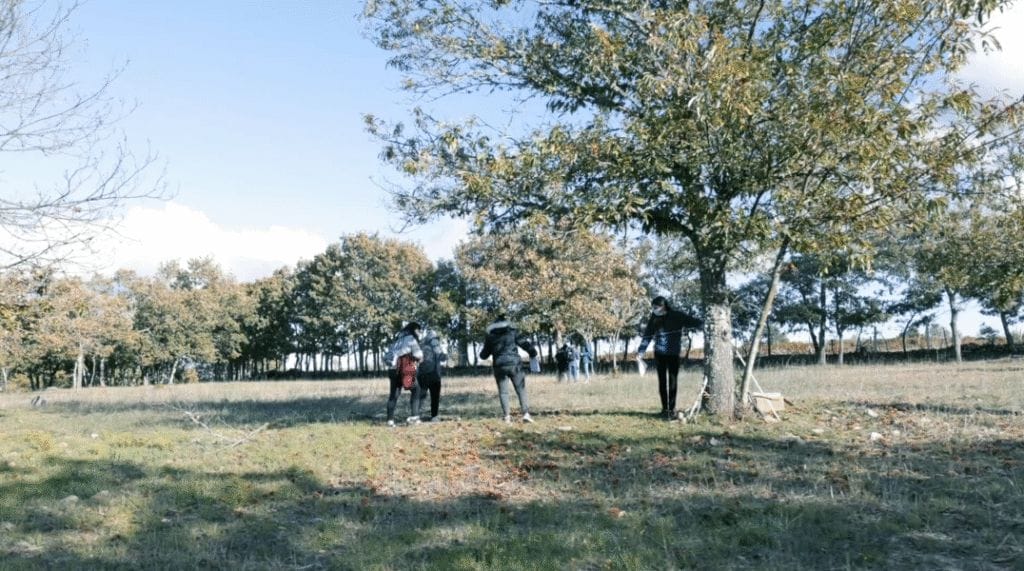
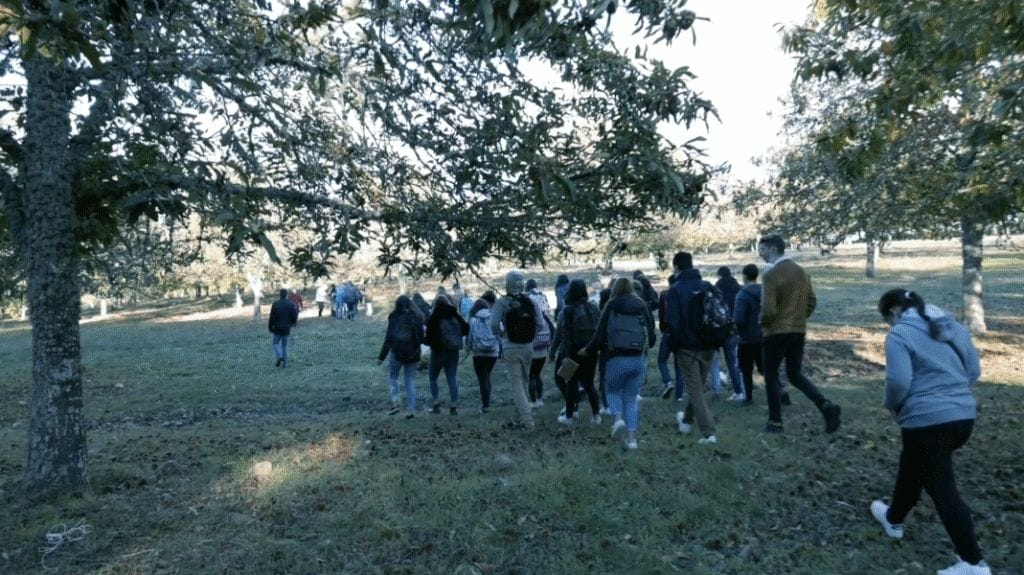
In the afternoon, the pupils were taken to a meadow used as a study area by the InPP and CMS team. It was there that they were able to see and understand first-hand how IoT sensors work. The visit to the grove was an opportunity for them to take part in practical exercises and learn how to measure some of the physical parameters of trees, such as height, diameter and crown width using traditional methods, while at the same time seeing more modern tools in action.

Sampling and molecular identification of yellow rust in Portugal

With in-depth knowledge of the strains and breeds that exist in the country, the Elvas CoLAB can thus devise more efficient and targeted combat strategies.

InnovPlantProtect (InPP) is analyzing yellow rust samples collected from wheat fields in Portugal. Identification at InPP is carried out using PCR techniques and analysis of DNA fragments using SeqStudio, which makes it possible to determine the lineage of the fungus by examining molecular markers.

The polymerase chain reaction, or PCR, is a technique that allows you to copy a specific region of DNA, in vitro. SeqStudio is a sequencing machine that also allows the length of fragments to be measured, from which it is possible to correlate the size of different molecular markers with a given lineage.

Yellow rust is a disease caused by the fungus Puccinia striiformis f. sp. tritici, This pathogen, which affects wheat and other cereals all over the world, jeopardizes the future and stability of cereal crops. This pathogen is biologically very dynamic, adapting quickly to climate change and to the resistant cereal varieties that are being introduced onto the market.


A. Yellow rust on wheat; B. Molecular markers amplified by PCR on an agarose gel; C. Fragment analysis to determine the size of the markers and establish the fungal lineage

So far, the PstS10 strain, the most prevalent in Europe, has been identified. PstS10 has proved to be very aggressive, affecting wheat varieties that were previously resistant to yellow rust. The race of this strain was determined by RustWatch in Denmark to be Benchmark. InPP sent samples to this European project to combat wheat rusts, which, among many other aspects, also involves genotyping and identifying the strains and races of the fungus that causes yellow rust.

With in-depth knowledge of the strains and races present in Portugal, the InPP can therefore devise more efficient and targeted combat strategies, by improving wheat varieties resistant to yellow rust and developing bioinspired control agents.

InnovPlantProtect's project to combat this disease was started in March 2020.

Puglia warns farmers about ineffective cures for Xylella fastidiosa

No product currently on the market is capable of eliminating Xylella fastidiosa, the Commission for the Regional Budget of Puglia, southern Italy. The bacterium continues to seriously affect olive groves in Italy's main olive oil producing region.

“The two products marketed in recent weeks as a treatment against the drying out of trees, and useful for bringing plants back to their original glory, are a mixture of natural soaps or adjuvants,” said the director of Puglia's phytosanitary observatory, Salvatore Infantino, at a public hearing, quoted by OliveOilTimes. The heads of the regional budget commission for this area of southern Italy, which forms the “heel” of the “boot”, guarantee that there are currently no products on the market capable of eliminating the bacteria Xylella fastidiosa of infected trees, particularly olive trees.

This bacterium is the most active pathogen affecting olive trees in Italy's main olive oil producing region. For Salvatore Infantino, the development of a product capable of combating it remains an important goal for many of those striving to reduce the devastation caused by the bacteria. Xylella fastidiosa.

Public authorities must not make the mistakes of the past by giving credence to unscientific theories that have already caused so much damage and wasted so much time.

Fabiano Amati, president of Puglia's regional budget committee

A Xylella fastidiosa was first detected in the European Union precisely in Puglia, in October 2013, and was responsible for an outbreak that, by 2015, had already infected one million olive trees in this Italian region alone. “Currently, good agricultural practices and eradication are the only weapons we have against the Xylella, It's a way of saving time while we wait for a truly effective treatment,” says Salvatore Infantino.

Olive groves infested with Xylella fastidiosa, Puglia, Italy, 2019.

Image: WIKI/ Sjor