O InPP participou no Fórum Nacional de Clubes Ciência Viva na Escola, que teve lugar no dia 27 de março, integrando a Mostra de Ciência e Tecnologia com um stand dedicado à proteção das plantas.
Neste espaço, foram apresentados diversos materiais demonstrativos, incluindo placas de Petri com fungos e bactérias, plantas, algas e exemplos de produtos formulados, com o objetivo de despertar o interesse e a curiosidade dos visitantes para a importância da saúde das plantas e da investigação científica nesta área.
Ao longo do dia, a Gestora de Comunicação, Inês Ferreira, e o Gestor de Inovação, Paulo Madeira, dinamizaram o contacto com o público visitante, explicando de que forma a investigação em proteção das plantas contribui para melhorar a proteção das culturas e promover uma agricultura mais resiliente e sustentável.
O Fórum Nacional de Clubes Ciência Viva na Escola decorreu no CNEMA, em Santarém, reunindo escolas, centros Ciência Viva, universidades, centros de investigação e diversas outras entidades, num encontro dedicado à ciência, tecnologia e inovação.
O InPP agradece a todos os visitantes que passaram pelo seu stand, destacando a importância destes momentos de partilha para promover o conhecimento científico junto da comunidade.
No dia 26 de março, o InPP participou numa sessão promovida pela Agência Nacional de Inovação (ANI), em Lisboa, que contou com a presença de uma comitiva da República Checa ligada ao setor das biotecnologias.
Em representação do InPP estiveram Cristina Azevedo, Diretora de Biosoluções, e Paulo Madeira, Gestor de Inovação, que apresentou a instituição e as suas principais áreas de atuação e competências.
A iniciativa teve como principal objetivo identificar oportunidades de cooperação entre entidades portuguesas e checas, nomeadamente nas áreas de transferência de tecnologia, codesenvolvimento, ensaios pré-clínicos e diagnósticos, coinvestimento e internacionalização da inovação.
A sessão contou com a participação de representantes de entidades relevantes da República Checa, incluindo Petra Kinzlova, CEO da Prague.bio, Katarina Psenakova, Head of Biology da PharmTheon, bem como representantes da Embaixada da República Checa e da Academia das Ciências da República Checa.
Este encontro contribuiu para reforçar o posicionamento do InPP na promoção de parcerias internacionais e no desenvolvimento de soluções inovadoras, evidenciando o compromisso contínuo da instituição em fortalecer redes de colaboração científica e tecnológica e em contribuir para o crescimento e internacionalização da inovação.
O InPP marcou presença no Encontro com orizicultores e técnicos(as) em Portugal, promovido pela EDAF, que decorreu no dia 5 de março, no Pólo de Inovação de Salvaterra de Magos, em Santarém.
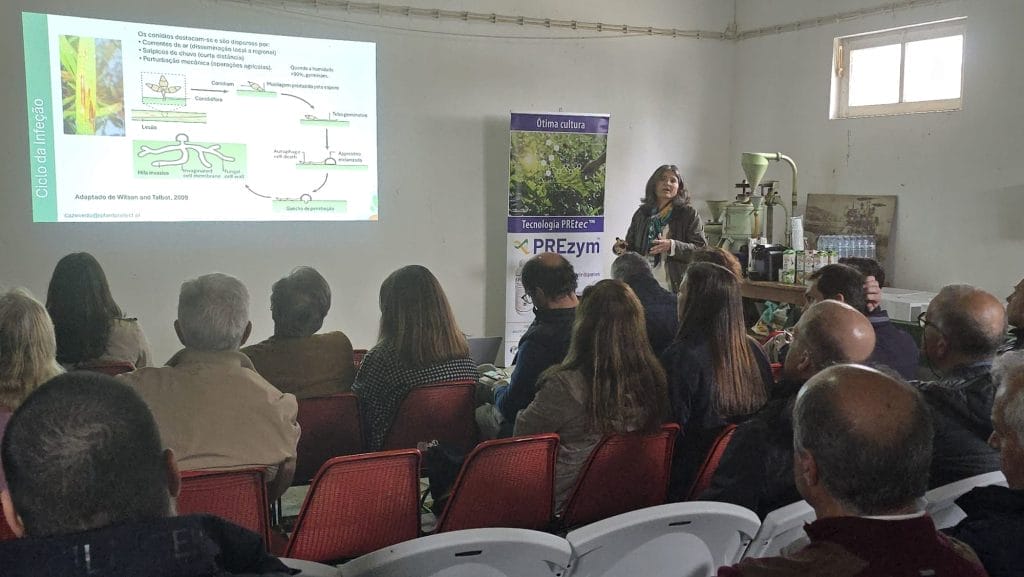
A Diretora de Biosoluções do InPP, Cristina Azevedo, integrou o painel de oradores convidados, tendo apresentado a comunicação intitulada “A problemática da Pyricularia na cultura do arroz”. A apresentação incidiu sobre os principais desafios fitossanitários associados a esta doença, que continua a constituir uma das maiores ameaças à produção de arroz a nível mundial e também em Portugal.
O encontro reuniu produtores, técnicos e especialistas da fileira do arroz, proporcionando um espaço de partilha de conhecimento e debate sobre soluções atuais e em desenvolvimento para o controlo da piriculariose. Foram igualmente abordados outros temas relevantes para a sustentabilidade e produtividade da cultura, nomeadamente a gestão da fertilização.
A participação do InPP neste tipo de iniciativas reforça o compromisso da instituição com a inovação, a transferência de conhecimento e o desenvolvimento de soluções sustentáveis para a agricultura nacional.
O InPP agradece à EDAF e ao COTArroz o convite e a organização deste importante encontro, esperando que esta colaboração continue a fortalecer-se no futuro.
Last Friday, August 26, the InPP received a visit from Catalonia's Councillor for External Action and Open Government, Victòria Alsina, and the delegate of the Government of Catalonia in Portugal, Rui Reis, They were accompanied by the Councillor of Elvas City Council, Paula Calado.
They were received by the heads of department, David Learmonth, iLaria Marengo e Sandra Correia, They presented InPP's infrastructures, laboratories and the different areas of research being explored by the collaborative laboratory's five departments.
The aim of this visit was to create and establish new partnerships and collaborations with this autonomous community of Spain, a key international player for Portugal in its economic and scientific spheres, in which the agri-food industries play a major role. Establishing partnerships is part of InPP's philosophy and, therefore, this visit allowed us to explore the strengths of each of those involved and find points of synergy, where we wanted to identify areas of interest for possible partnerships and collaborations.
During the visit to InPP's facilities, the delegation also had the opportunity to speak to some of InPP's researchers, who were able to personally explain some of the research they are currently carrying out at InPP in the fight against emerging plant pests and diseases.
Tiago Amaro explains the work of the New Biopesticides departmentRupesh Singh, researcher at the Department for the Protection of Specific CropsHadi Sheikhnejad, researcher at the Department for the Protection of Specific CulturesTânia Pinto, researcher in the Formulations and Process Development department
InnovPlantProtect (InPP) team identifies the most promising materials for encapsulating biological protection agents to control emerging pests and diseases in agricultural crops. Natural products of animal origin, from marine and terrestrial sources, as well as synthetic ones, have been the most widely used due to their low toxicity and biodegradability, the researchers conclude in a systematic review article now published in the scientific journal ACS Agricultural Science & Technology. But are these solutions scalable and economically viable?
Biological protection agents, microorganisms such as bacteria, fungi or biomolecules with active substances capable of preventing or controlling or suppressing pests and diseases in plants, have been considered more sustainable alternatives to traditional chemical pesticides. However, these agents are very sensitive to atmospheric conditions and begin to degrade due to humidity, temperature and solar radiation.
Due to the sensitivity of the active substances, the challenge is to develop a biodegradable and sustainable material that envelops, i.e. encapsulates the biological agents, protecting them so that they can be applied effectively to Mediterranean agricultural crops. The encapsulation of biological agents brings several advantages for the agricultural producer, namely ease of handling, controlled application of lower and less frequent dosages, greater specificity for the target, prolonged stability and maximized permanence, which leads to greater effectiveness of the biological agent in combating pests and diseases.
Schematic representation of the encapsulation process of a biological agent to protect pear pests
The four researchers analyzed the studies with a view to “identifying the materials most commonly used to encapsulate biological agents for pest and disease control with greater efficacy, greater systemic activity and less environmental impact”. The researchers also analyzed the encapsulation methods and techniques currently being used by research teams in various parts of the world.
“The data presented in this article indicate that materials based on polymers, of natural or synthetic origin, and inorganic materials can improve the stability and performance of a wide range of bioinspired active substances,” say the researchers.
However, the team warns that “although research interest in these encapsulating materials is increasing, the current level of knowledge does not yet allow for a totally fair and unbiased assessment of the pros and cons that will arise from the use of micro and nano systems for encapsulating biological agents and their use in agriculture”, adding that “a better understanding of the fate and long-term safety of these products is needed”.
“Although the technologies presented in this review exhibit promising efficacy and safety profiles, it is unlikely that all of them will be scalable and transformable into economically viable solutions to current and future agricultural problems. More research and development of efforts against crop pests and diseases is needed, focusing on strategies that truly take into account the needs of farmers in agricultural fields, as only then will innovation be possible,” the team concludes.
Researchers Cláudia Silva, Tânia Pinto, Sónia Siquenique and David Learmonth
On August 18th, researchers from the New Biopesticides Department of InnovPlantProtect (InPP).., Pedro Rosa e Tiago Amaro, were in the Tagus/Sorraia basin, in Coruche and Porto Alto, in Samora Correia, to collect samples of rice infected with the fungus Magnaporthe oryzae, which causes pyriculariosis. The sampling was carried out as part of the BlaSTOP project - Developing integrated solutions to combat rice pyriculariosis.




 Português
  English