O InPP participou no Fórum Nacional de Clubes Ciência Viva na Escola, que teve lugar no dia 27 de março, integrando a Mostra de Ciência e Tecnologia com um stand dedicado à proteção das plantas.
Neste espaço, foram apresentados diversos materiais demonstrativos, incluindo placas de Petri com fungos e bactérias, plantas, algas e exemplos de produtos formulados, com o objetivo de despertar o interesse e a curiosidade dos visitantes para a importância da saúde das plantas e da investigação científica nesta área.
Ao longo do dia, a Gestora de Comunicação, Inês Ferreira, e o Gestor de Inovação, Paulo Madeira, dinamizaram o contacto com o público visitante, explicando de que forma a investigação em proteção das plantas contribui para melhorar a proteção das culturas e promover uma agricultura mais resiliente e sustentável.
O Fórum Nacional de Clubes Ciência Viva na Escola decorreu no CNEMA, em Santarém, reunindo escolas, centros Ciência Viva, universidades, centros de investigação e diversas outras entidades, num encontro dedicado à ciência, tecnologia e inovação.
O InPP agradece a todos os visitantes que passaram pelo seu stand, destacando a importância destes momentos de partilha para promover o conhecimento científico junto da comunidade.
No dia 26 de março, o InPP participou numa sessão promovida pela Agência Nacional de Inovação (ANI), em Lisboa, que contou com a presença de uma comitiva da República Checa ligada ao setor das biotecnologias.
Em representação do InPP estiveram Cristina Azevedo, Diretora de Biosoluções, e Paulo Madeira, Gestor de Inovação, que apresentou a instituição e as suas principais áreas de atuação e competências.
A iniciativa teve como principal objetivo identificar oportunidades de cooperação entre entidades portuguesas e checas, nomeadamente nas áreas de transferência de tecnologia, codesenvolvimento, ensaios pré-clínicos e diagnósticos, coinvestimento e internacionalização da inovação.
A sessão contou com a participação de representantes de entidades relevantes da República Checa, incluindo Petra Kinzlova, CEO da Prague.bio, Katarina Psenakova, Head of Biology da PharmTheon, bem como representantes da Embaixada da República Checa e da Academia das Ciências da República Checa.
Este encontro contribuiu para reforçar o posicionamento do InPP na promoção de parcerias internacionais e no desenvolvimento de soluções inovadoras, evidenciando o compromisso contínuo da instituição em fortalecer redes de colaboração científica e tecnológica e em contribuir para o crescimento e internacionalização da inovação.
O InPP marcou presença no Encontro com orizicultores e técnicos(as) em Portugal, promovido pela EDAF, que decorreu no dia 5 de março, no Pólo de Inovação de Salvaterra de Magos, em Santarém.
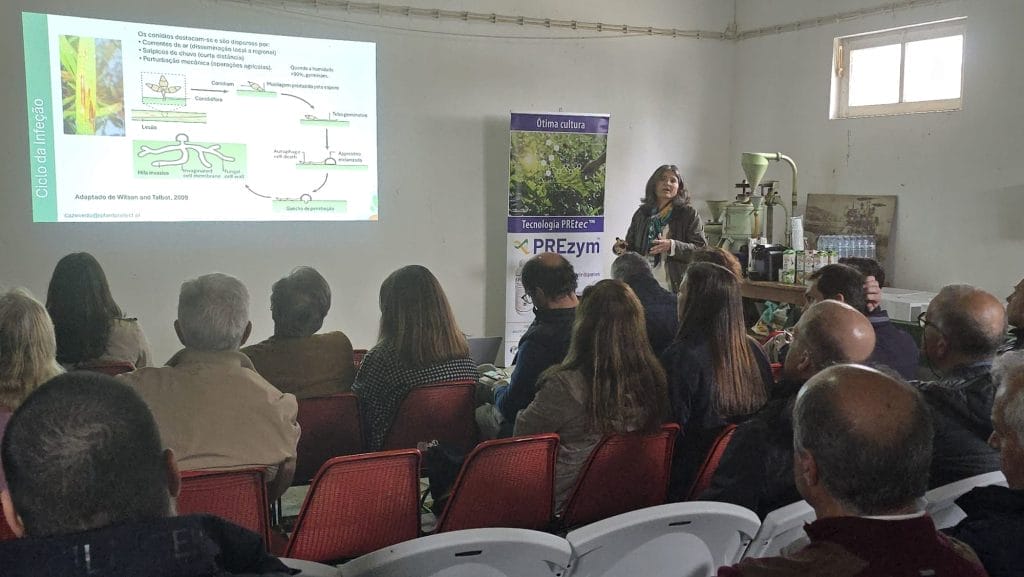
A Diretora de Biosoluções do InPP, Cristina Azevedo, integrou o painel de oradores convidados, tendo apresentado a comunicação intitulada “A problemática da Pyricularia na cultura do arroz”. A apresentação incidiu sobre os principais desafios fitossanitários associados a esta doença, que continua a constituir uma das maiores ameaças à produção de arroz a nível mundial e também em Portugal.
O encontro reuniu produtores, técnicos e especialistas da fileira do arroz, proporcionando um espaço de partilha de conhecimento e debate sobre soluções atuais e em desenvolvimento para o controlo da piriculariose. Foram igualmente abordados outros temas relevantes para a sustentabilidade e produtividade da cultura, nomeadamente a gestão da fertilização.
A participação do InPP neste tipo de iniciativas reforça o compromisso da instituição com a inovação, a transferência de conhecimento e o desenvolvimento de soluções sustentáveis para a agricultura nacional.
O InPP agradece à EDAF e ao COTArroz o convite e a organização deste importante encontro, esperando que esta colaboração continue a fortalecer-se no futuro.
InnovPlantProtect (InPP) took part in the National Olive Growing Fair (FNO 25) in Campo Maior, from May 23 to 25, presenting its latest biological and digital innovations for crop protection, including projects focused on biopesticides for olive diseases and early detection of fungi that cause gafa, and monitoring insect vectors of the bacterium Xylella fastidiosa, which attacks olive groves. The Elvas CoLAB was present with its own stand to demonstrate its strengths and the impact of its research on agricultural sustainability, inviting producers, technicians and researchers to learn about its innovative bio-based and digital solutions and to actively participate in the discussion of the sector's challenges.
The collaborative laboratory (CoLAB) welcomed visitors at the stand no. 14, located at thematic area at the Campo Maior Municipal Garden, to showcase their activity, the ongoing projects that are developing solutions to the main olive diseases, the patents already submitted, the apps for agricultural management and the bio-based and digital products and services they have to offer the agricultural sector and the market. Throughout the three days of the fair, some of InPP's researchers were at the stand to demonstrate to visitors the various features of the Elvas CoLAB, which has been developing innovation that it hopes will contribute to the sustainability of agricultural systems.
InPP announced ValorCannBio project, which is processing biomass that is not used in the medical cannabis industry to develop effective and sustainable biopesticides against gafa and tuberculosis, The project will be carried out in the municipality of Elvas, which is responsible for decimating entire harvests, leading to severe economic losses and compromising food quality. The impact of this project will be felt in the municipality of Elvas, where the project is being developed, but it is expected that it will extend to the entire olive-growing region from Trás-os-Montes to the Algarve, where production losses are increasing due to these diseases. O AlViGen project was also one of the protagonists and is using cutting-edge technology to detecting and identifying the strains of fungi that cause gafa, long before the symptoms become visible. The project team has used traps to collect spores that circulate in the air to monitor the presence of fungi, which can give farmers an important advantage in preventing infections and protecting their crops, reducing production losses.
O SNM_XylellaVt project, The SNM_XylellaVt project, led by DRAPCENTRO and in which InPP actively participates, was also highlighted at FNO. SNM_XylellaVt is monitor the insect vectors of the bacteria Xyllela fastidiosa, in particular the foam leafhopper, the insect responsible for transmitting the bacterium, which attacks various agricultural and forestry crops, and in particular olive groves. The project team is developing new tools, such as risk prediction models which, in the presence of the bacterium, whether in plants or insect vectors, will allow the National Agricultural Warning Service (SNAA) to alert, in real time, about the economic attack levels (EAL) for these insects, thus allowing prevent infection of the main crops. As part of this project, the team has also developed an online platform where citizens can report the sighting of foams, which are signs of the presence of the insect vectors of X. fastidiosa, This will help to map its temporal and spatial distribution and to plan measures to combat this bacterium.
The FNO, organized jointly by the Campo Maior City Council and the Centre for the Study and Promotion of Olive Oil in the Alentejo (CEPAAL), is an event that aims to enhance national olive growing, and in particular Portuguese olive oil, boosting the local economy and bringing together professionals from the sector - producers, technicians, or researchers - from all over the country to discuss challenges and trends in the Portuguese olive and olive oil sector.
InPP was delighted to welcome May 15th, Maria do Carmo Pereira, Europe Insect Control & Global Biofungicides Product Manager in Syngenta, a founding member of our Institute.
The expert led an inspiring session on the “Syngenta Biologicals Strategy”, which brought together our team of researchers and technicians.
Focus on Sustainability and Portfolio
During her presentation, Maria do Carmo Pereira unveiled Syngenta's ambitious journey in the field of biosolutions, highlighting:
Team Driven Innovation: The company's strong focus on innovative research, driven by a large and talented team dedicated to finding effective and sustainable solutions to agricultural challenges, was emphasized.
Vast Biological Portfolio: The session provided an unmissable opportunity for the InPP team to get to know the extensive portfolio of biological solutions from Syngenta, which includes biostimulants (to improve crop development and resilience) to bioprotectors (for pest and disease control).
Commitment to Sustainability: The solutions presented reflect Syngenta's strong commitment to sustainability and innovation in modern agriculture.
Thank you
InPP warmly thanks Maria do Carmo Pereira for the visit and the valuable sharing of experiences and insights strategies on the future of biological solutions.
We look forward to new meetings and collaborations that will continue to strengthen research and development in crop protection.
The executive director of InnovPlantProtect (InPP), António Saraiva, took part in the conference “What are the challenges facing the national agroforestry sector over the next decade?”, which took place at the Escola Superior Agrária de Coimbra (ESAC) of the Polytechnic Institute of Coimbra last Tuesday, April 22.
The event, which brought together more than 150 participants and was organized by 17 national Competence Centres, discussed topics such as innovation, sustainability, soil conservation, monitoring cork oak forests and efficient agricultural management.
António Saraiva was part of the panel of commentators, whose speaker was Pedro Santos, Director General of CONSULAI, and moderated by Maria Custódia Correia, Coordinator of the AKIS Portugal Network. The opening session was attended by the Minister for Agriculture and Fisheries, José Manuel Fernandes, who announced the publication of the Ordinance of April 21 to open the Grant for Initiatives for the creation of Operational Groups (OG).
This initiative provides a total of 11 million euros for new GOs, with a maximum of 350,000 euros per project and eligible funding of 100%.
The GOs are considered crucial structures for transferring knowledge and strengthening the AKIS (Agricultural Knowledge and Innovation System).
Special thanks to the 17 Competence Centers for the opportunity to participate in this productive meeting!




 Português
  English