News & Events

white plant

NEWS

O InnovPlantProtect (InPP), Collaborative Laboratory specializing in biological and digital solutions for crop protection, aligned with the emerging challenges of agriculture, will launch its new institutional website on January 24th, on a symbolic date marking 7 years working in the agricultural sector.

This launch is part of a phase of institutional evolution and consolidation InPP, reinforcing its strategy of proximity to the sector, clarity in the communication of its competencies and affirmation as a strategic partner for companies, producers, associations and public bodies.

An even clearer, more up-to-date and sector-oriented platform

With a renewed structure and a more intuitive browsing experience, the new website features:

  • an area of Services and Products completely reorganized, which facilitates access to specialized services, laboratory capabilities and biological and digital solutions developed by InPP, as well as to a updated catalog of services and biosolutions;
  • more complete institutional content that reinforces transparency, scientific rigor and CoLAB's mission;
  • a clearer presentation of scientific skills and research areas, highlighting the impact of the work carried out by InPP's multidisciplinary teams.

New image, same mission - but reinforced

The launch of the website is accompanied by the implementation of InnovPlantProtect's new visual identity, This reflects the maturity of CoLAB and its future ambitions.

The new image - accompanied by the slogan “Innovate together. Protect better.” - reflects InPP's ongoing commitment to:

  • Developing new generation biological and digital solutions;
  • Promoting safer, more innovative and more productive agriculture;
  • Strengthen collaboration and partnership with the agricultural sector and the innovation ecosystem.

A new phase for InPP

The digital and visual renovation is part of a broader strategy of maturity and consolidation, Through this initiative, InPP aims to strengthen its role as a scientific and technological partner for the agricultural sector in applied research and the development of crop protection solutions.

According to António Saraiva, InPP's executive director: “This new website isn't just a digital revamp - it's a reflection of the ambition we have for our future and how we want to communicate with the sector. We want every visitor to understand the purpose that drives us: to create innovative solutions that protect crops, boost productivity and contribute to more sustainable agricultural systems. InPP is entering a new phase, with a clearer, more accessible identity aligned with the real needs of agriculture and a renewed commitment to real impact on the ground.”

Available from January 24th

The new InnovPlantProtect website will be available from January 24th at: https://iplantprotect.pt/

The start of a new year also marks a new cycle for InnovPlantProtect. In 2026, InPP enters a phase of evolution and consolidation, with several new features that reinforce its position as a strategic partner for the intelligent transformation of agriculture.

Over the next few months, initiatives, content and tools will be presented that reflect the work carried out by our teams in the areas of applied research, biological solutions, specialized services and digital innovation.

The first step in this new phase will be presented in the next January 24th, InnovPlantProtect is celebrating the date 7 years in business at the service of the agricultural sector.

Until then, we continue to prepare a range of new products that reflect our mission to promote safer, more innovative and more productive agriculture.

Stay tuned. What's coming is just the beginning.

InnovPlantProtect (InPP) was present at the conference “Building value together”, organized by our associate FNOP - National Association of Fruit and Vegetable Producers' Organizations.

InPP's executive director, António Saraiva, moderated the panel “Sustainability that generates value: The role of ESG in the future of the sector”, which included interventions from Catarina Pinto Correia (VdA), Cristina Câmara (APED), Filipa Saldanha (Crédito Agrícola), Joana Oom de Sousa (Sovena) and Rui Veríssimo Baptista (Companhia das Lezírias).

The opening session was given by Domingos dos Santos, president of FNOP and a member of CoLAB's Board of Directors of our CoLAB.

The meeting brought together producer organizations, farmers, companies, experts and political decision-makers to discuss the current challenges and look to the future of the national fruit and vegetable sector.

With the participation of national and international experts, the conference was a privileged space for sharing experiences and strategic reflection, focusing on the organization of production and the role of public policies in promoting sustainable growth.

Congratulations to FNOP for the initiative and the ability to bring together a panel of excellent speakers, making this conference a relevant and topical milestone for the sector.

Image credits: Voz do Campo magazine

FNOP Event

EVENTS

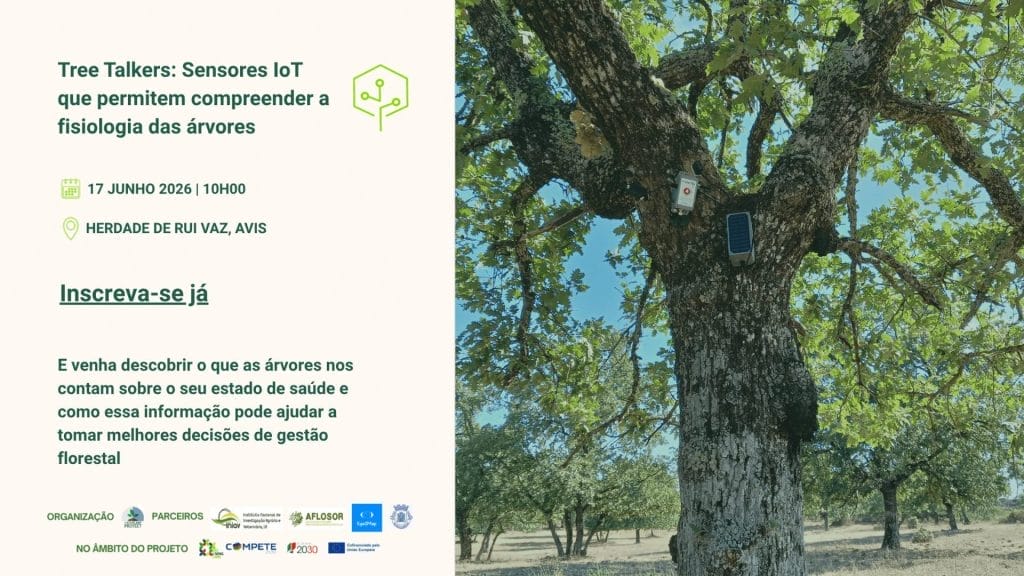
The software used to access and visualize the data sent by the Tree Talker sensors installed in chestnut trees in Sabugal has been improved and is now more intelligent and interactive, thanks to the use of data science tools. This development was carried out by the Monitoring and Diagnostics Department as part of the project “Educating to know, protect and monitor chestnut trees through IoT technology”, co-financed by the Environmental Fund and led by InnovPlantProtect (InPP) in collaboration with Sabugal Municipal Council (CMS).

The application of the technology known as “Internet of Things” (IoT, from the English Internet of Things) is the main novelty of this year. innovative environmental education program. By installing remote sensors on the trunks, the trees communicate their state of health, including parameters such as water consumption, biomass growth, stem humidity, absorbed solar radiation and the state of health of the leaves through light reflection.

Once collected by the TT Cloud concentrator (gateway), the raw data from the Tree Talkers is transmitted to a server via the Internet and converted into “readable” information, in the form of graphs, tables and fault alerts, among other things. With the new development, users can no longer view static graphs but can interact with dynamic graphs, which, for example, allow them to zoom in on a particular peak or curve to access a very specific and precise time period.

In addition to facilitating and improving the consultation and analysis of data on the variation in the voltage of the batteries that power the Tree Talkers, or on the temperature recorded, among many others, the new software automatically triggers email messages to pre-defined users in the event of an alert - for example, if a battery suddenly runs out of charge, in which case a trip to the site is necessary to replace the power supply device.

As part of its strategy for developing bio-inspired products, InnovPlantProtect (InPP) is building a library of microorganisms isolated from various environments, which are being identified by molecular characterization and evaluated for their biochemical properties, indicative of their potential role as Biological Control Agents (BCA). In parallel, InPP is building up a portfolio of phytopathogenic agents (bacteria and fungi), which will serve as a basis for evaluating the BCA. in vitro e in vivo the potential of isolated BCA. 

According to the Food and Agriculture Organization of the United Nations (FAO), around 40% of global agricultural production is lost every year due to pests and diseases, which translates into losses of more than 195 billion euros. For decades, phytopharmaceuticals have played a fundamental role in maintaining agricultural health, protecting crops against pests and diseases and ensuring food safety. However, their excessive and sometimes inappropriate use has a negative impact on soil, water and biodiversity, and can have harmful effects on the health of animals and humans.

As part of the “From Farm to Fork” strategy, one of the pillars of the European Green Deal, the European Commission has set targets for the sustainable use of phytopharmaceuticals, one of which is to reduce their use by 50% by 2030. In order to cope with the withdrawal of these products from the market, it is necessary to develop effective, sustainable, environmentally friendly and economical alternatives.

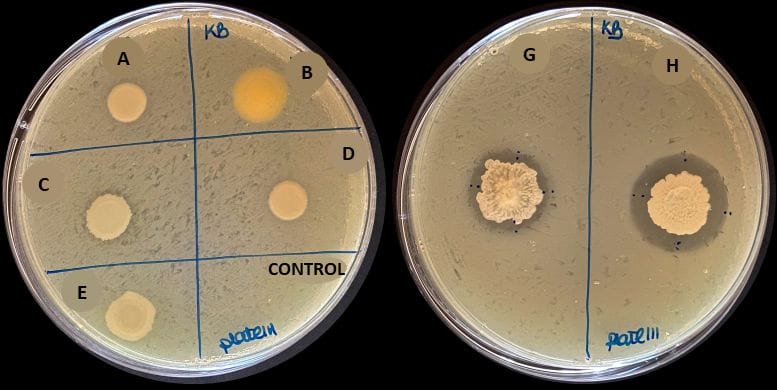
Bacterial growth inhibition test.

One of these alternatives is the use of BCA. These microorganisms are efficient at reducing the incidence or severity of diseases caused by phytopathogens, and some also act as biostimulants, i.e. they have the ability to increase the strength and speed of plant development.

There are several mechanisms through which BCAs carry out their functions, namely: inducing resistance mechanisms in the plant; competing with pathogens for space and nutrients; interacting through antibiosis mechanisms (in which one organism harms the development of the other); secreting antimicrobial or antifungal compounds; and invading and/or killing the cells of plant pathogens.

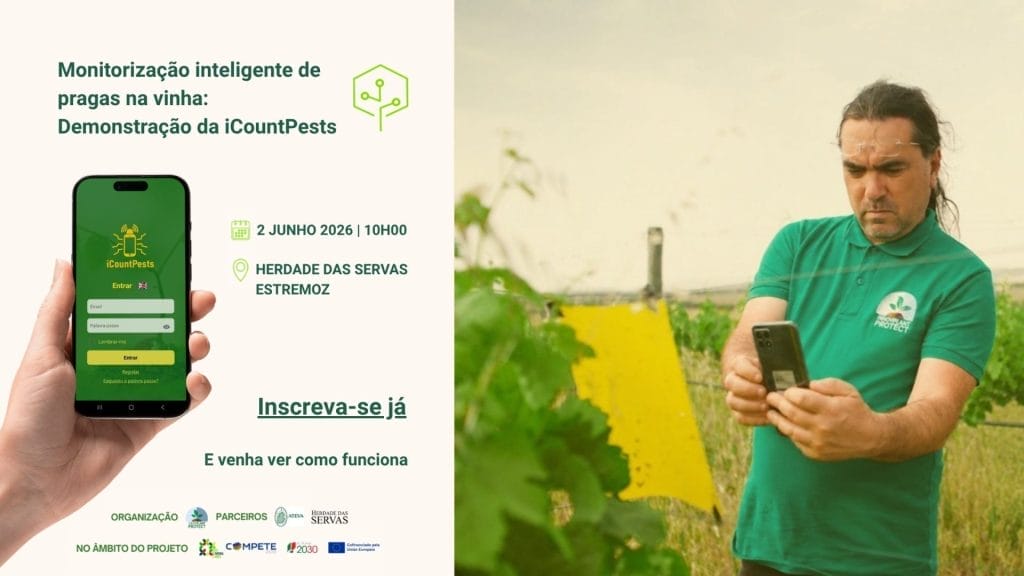
In the current context of climate change in the Alentejo region, the green leafhopper (or cicada) represents one of the biggest challenges in terms of pests faced by wine producers, with a significant impact on production. It was against this backdrop that a team from InnovPlantProtect (InPP) designed and carried out the experimental trial “Monitoring and Diagnosis of Green Leafhopper Infestations in Vineyards of the João Portugal Ramos”, work on which began in May 2021, on the Vila Santa estate in Estremoz.

The green leafhopper (species Jacobiasca lybicand Empoasca spp.), in this case, is a pest that sucks the leaves of the vine, altering their color and shape. The leaves lose their ability to photosynthesize, darken and, in the most serious cases, fall off. The grapes lose quality and quantity. The vineyard can also be weakened in the post-harvest period.

The main objectives of this trial, led by Pest and Disease Monitoring and Diagnosis Department of the InPP, were to characterize the damage caused by leafhoppers and to obtain information on the demographic parameters of these insects, which will serve as a basis for using remote sensing to predict the time and space of the pest's occurrence. 

In the first phase, traps were placed in 14 locations, in collaboration between technicians from João Portugal Ramos and the InPP. These traps were monitored weekly between May and August by an InPP team to count adult individuals of the green leafhopper. In June, field work intensified, with surveys being carried out to detect vines infested by green leafhoppers.

The surveys ran until the end of July and 58 vines were selected and marked for weekly monitoring. The selected vines were monitored between June and August, and the number of nymphs was counted, the instar of the nymphs observed (stage of metamorphosis between two moulting periods), as well as recording the severity of the symptoms observed.

All the information obtained was recorded using the app ODK Collect for Android, being immediately accessible through a WebGIS platform created with the software open source QGIS/Lizmap. Other tasks carried out included collecting specimens for identification in the laboratory and prospecting for the pest in potential natural hosts during the winter period.

InPP will soon be presenting some of the results of this trial, and the R&D plan for 2022 is currently being prepared.