News & Events

white plant

NEWS

O InPP participou no Fórum Nacional de Clubes Ciência Viva na Escola, que teve lugar no dia 27 de março, integrando a Mostra de Ciência e Tecnologia com um stand dedicado à proteção das plantas.

Neste espaço, foram apresentados diversos materiais demonstrativos, incluindo placas de Petri com fungos e bactérias, plantas, algas e exemplos de produtos formulados, com o objetivo de despertar o interesse e a curiosidade dos visitantes para a importância da saúde das plantas e da investigação científica nesta área.

Ao longo do dia, a Gestora de Comunicação, Inês Ferreira, e o Gestor de Inovação, Paulo Madeira, dinamizaram o contacto com o público visitante, explicando de que forma a investigação em proteção das plantas contribui para melhorar a proteção das culturas e promover uma agricultura mais resiliente e sustentável.

O Fórum Nacional de Clubes Ciência Viva na Escola decorreu no CNEMA, em Santarém, reunindo escolas, centros Ciência Viva, universidades, centros de investigação e diversas outras entidades, num encontro dedicado à ciência, tecnologia e inovação.

O InPP agradece a todos os visitantes que passaram pelo seu stand, destacando a importância destes momentos de partilha para promover o conhecimento científico junto da comunidade.

No dia 26 de março, o InPP participou numa sessão promovida pela Agência Nacional de Inovação (ANI), em Lisboa, que contou com a presença de uma comitiva da República Checa ligada ao setor das biotecnologias.

Em representação do InPP estiveram Cristina Azevedo, Diretora de Biosoluções, e Paulo Madeira, Gestor de Inovação, que apresentou a instituição e as suas principais áreas de atuação e competências.

A iniciativa teve como principal objetivo identificar oportunidades de cooperação entre entidades portuguesas e checas, nomeadamente nas áreas de transferência de tecnologia, codesenvolvimento, ensaios pré-clínicos e diagnósticos, coinvestimento e internacionalização da inovação.

A sessão contou com a participação de representantes de entidades relevantes da República Checa, incluindo Petra Kinzlova, CEO da Prague.bio, Katarina Psenakova, Head of Biology da PharmTheon, bem como representantes da Embaixada da República Checa e da Academia das Ciências da República Checa.

Este encontro contribuiu para reforçar o posicionamento do InPP na promoção de parcerias internacionais e no desenvolvimento de soluções inovadoras, evidenciando o compromisso contínuo da instituição em fortalecer redes de colaboração científica e tecnológica e em contribuir para o crescimento e internacionalização da inovação.

O InPP marcou presença no Encontro com orizicultores e técnicos(as) em Portugal, promovido pela EDAF, que decorreu no dia 5 de março, no Pólo de Inovação de Salvaterra de Magos, em Santarém.

A Diretora de Biosoluções do InPP, Cristina Azevedo, integrou o painel de oradores convidados, tendo apresentado a comunicação intitulada “A problemática da Pyricularia na cultura do arroz”. A apresentação incidiu sobre os principais desafios fitossanitários associados a esta doença, que continua a constituir uma das maiores ameaças à produção de arroz a nível mundial e também em Portugal.

WhatsApp Image 2026 03 06 at 14.28.18

O encontro reuniu produtores, técnicos e especialistas da fileira do arroz, proporcionando um espaço de partilha de conhecimento e debate sobre soluções atuais e em desenvolvimento para o controlo da piriculariose. Foram igualmente abordados outros temas relevantes para a sustentabilidade e produtividade da cultura, nomeadamente a gestão da fertilização.

A participação do InPP neste tipo de iniciativas reforça o compromisso da instituição com a inovação, a transferência de conhecimento e o desenvolvimento de soluções sustentáveis para a agricultura nacional.

O InPP agradece à EDAF e ao COTArroz o convite e a organização deste importante encontro, esperando que esta colaboração continue a fortalecer-se no futuro.

EVENTS

The software used to access and visualize the data sent by the Tree Talker sensors installed in chestnut trees in Sabugal has been improved and is now more intelligent and interactive, thanks to the use of data science tools. This development was carried out by the Monitoring and Diagnostics Department as part of the project “Educating to know, protect and monitor chestnut trees through IoT technology”, co-financed by the Environmental Fund and led by InnovPlantProtect (InPP) in collaboration with Sabugal Municipal Council (CMS).

The application of the technology known as “Internet of Things” (IoT, from the English Internet of Things) is the main novelty of this year. innovative environmental education program. By installing remote sensors on the trunks, the trees communicate their state of health, including parameters such as water consumption, biomass growth, stem humidity, absorbed solar radiation and the state of health of the leaves through light reflection.

Once collected by the TT Cloud concentrator (gateway), the raw data from the Tree Talkers is transmitted to a server via the Internet and converted into “readable” information, in the form of graphs, tables and fault alerts, among other things. With the new development, users can no longer view static graphs but can interact with dynamic graphs, which, for example, allow them to zoom in on a particular peak or curve to access a very specific and precise time period.

In addition to facilitating and improving the consultation and analysis of data on the variation in the voltage of the batteries that power the Tree Talkers, or on the temperature recorded, among many others, the new software automatically triggers email messages to pre-defined users in the event of an alert - for example, if a battery suddenly runs out of charge, in which case a trip to the site is necessary to replace the power supply device.

As part of its strategy for developing bio-inspired products, InnovPlantProtect (InPP) is building a library of microorganisms isolated from various environments, which are being identified by molecular characterization and evaluated for their biochemical properties, indicative of their potential role as Biological Control Agents (BCA). In parallel, InPP is building up a portfolio of phytopathogenic agents (bacteria and fungi), which will serve as a basis for evaluating the BCA. in vitro e in vivo the potential of isolated BCA. 

According to the Food and Agriculture Organization of the United Nations (FAO), around 40% of global agricultural production is lost every year due to pests and diseases, which translates into losses of more than 195 billion euros. For decades, phytopharmaceuticals have played a fundamental role in maintaining agricultural health, protecting crops against pests and diseases and ensuring food safety. However, their excessive and sometimes inappropriate use has a negative impact on soil, water and biodiversity, and can have harmful effects on the health of animals and humans.

As part of the “From Farm to Fork” strategy, one of the pillars of the European Green Deal, the European Commission has set targets for the sustainable use of phytopharmaceuticals, one of which is to reduce their use by 50% by 2030. In order to cope with the withdrawal of these products from the market, it is necessary to develop effective, sustainable, environmentally friendly and economical alternatives.

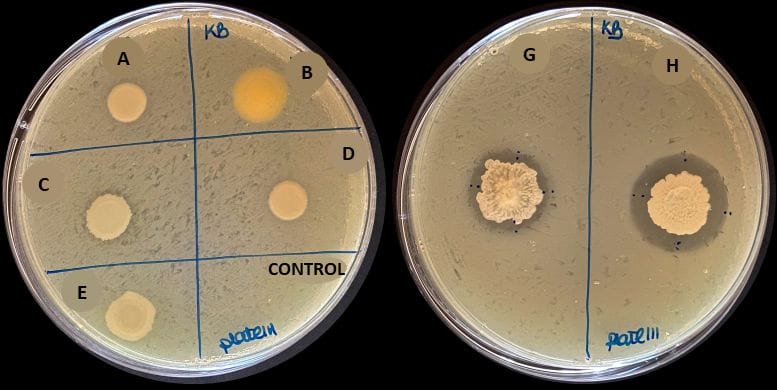
Bacterial growth inhibition test.

One of these alternatives is the use of BCA. These microorganisms are efficient at reducing the incidence or severity of diseases caused by phytopathogens, and some also act as biostimulants, i.e. they have the ability to increase the strength and speed of plant development.

There are several mechanisms through which BCAs carry out their functions, namely: inducing resistance mechanisms in the plant; competing with pathogens for space and nutrients; interacting through antibiosis mechanisms (in which one organism harms the development of the other); secreting antimicrobial or antifungal compounds; and invading and/or killing the cells of plant pathogens.

In the current context of climate change in the Alentejo region, the green leafhopper (or cicada) represents one of the biggest challenges in terms of pests faced by wine producers, with a significant impact on production. It was against this backdrop that a team from InnovPlantProtect (InPP) designed and carried out the experimental trial “Monitoring and Diagnosis of Green Leafhopper Infestations in Vineyards of the João Portugal Ramos”, work on which began in May 2021, on the Vila Santa estate in Estremoz.

The green leafhopper (species Jacobiasca lybicand Empoasca spp.), in this case, is a pest that sucks the leaves of the vine, altering their color and shape. The leaves lose their ability to photosynthesize, darken and, in the most serious cases, fall off. The grapes lose quality and quantity. The vineyard can also be weakened in the post-harvest period.

The main objectives of this trial, led by Pest and Disease Monitoring and Diagnosis Department of the InPP, were to characterize the damage caused by leafhoppers and to obtain information on the demographic parameters of these insects, which will serve as a basis for using remote sensing to predict the time and space of the pest's occurrence. 

In the first phase, traps were placed in 14 locations, in collaboration between technicians from João Portugal Ramos and the InPP. These traps were monitored weekly between May and August by an InPP team to count adult individuals of the green leafhopper. In June, field work intensified, with surveys being carried out to detect vines infested by green leafhoppers.

The surveys ran until the end of July and 58 vines were selected and marked for weekly monitoring. The selected vines were monitored between June and August, and the number of nymphs was counted, the instar of the nymphs observed (stage of metamorphosis between two moulting periods), as well as recording the severity of the symptoms observed.

All the information obtained was recorded using the app ODK Collect for Android, being immediately accessible through a WebGIS platform created with the software open source QGIS/Lizmap. Other tasks carried out included collecting specimens for identification in the laboratory and prospecting for the pest in potential natural hosts during the winter period.

InPP will soon be presenting some of the results of this trial, and the R&D plan for 2022 is currently being prepared.