News & Events

white plant

NEWS

Imagine a future where drones and artificial intelligence work together to protect your vineyards. That's what the AI4Leafhopper project is making a reality!

Manisha Sirsat, a researcher on the AI4Leafhopper team, has developed two artificial intelligence models that analyze the aerial images captured by our latest generation drone... and these models make it possible:

  • geolocation of each vine
  • to know if there are vine failures
  • quickly identify “sick” vines”
  • optimize the application of treatments

The result? Growers can have a detailed view of the health of their vineyards, detect problems early and make more informed decisions.

Find out all about it here.

AI4Leafhopper is a project led by InPP and funded by the ICAERUS Horizon Europe program, which began in April 2024 and ended on April 30 with a final meeting involving the six European projects approved in the 1st edition of the ICAERUS program's PULL applications. The project team presented the AI-based models for detecting and monitoring the impact of the green leafhopper on vineyards.

The AI4Leafhopper project, InnovPlantProtect used a state-of-the-art drone to monitor the impact of the green leafhopper in the vineyards of our partners Reynolds Wine Growers and João Portugal Ramos. Although the results show that this advanced technology is more effective at detecting attacks at advanced stages, we are excited about the potential of this tool to provide valuable data for the management of this harmful insect.

We believe that with more research, we can refine our solution to detect early attacks and prevent significant damage to vineyards. Transforming the monitoring of this pest is where we want to go, always with the aim of protecting vineyards and guaranteeing the quality of production for winegrowers.

Over the next few days we'll be revealing everything that the AI4Leafhopper project is making a reality and how drones and artificial intelligence are working together to create a more sustainable future for viticulture. Stay tuned!

Find out all about it here.

AI4Leafhopper, funded by the ICAERUS Horizon Europe program, which began in April 2024, is now in its final stages. The development phase of the project, which took place in the field, is now over and the final stage is to present the solutions developed by our team on Portuguese soil to the market.

EVENTS

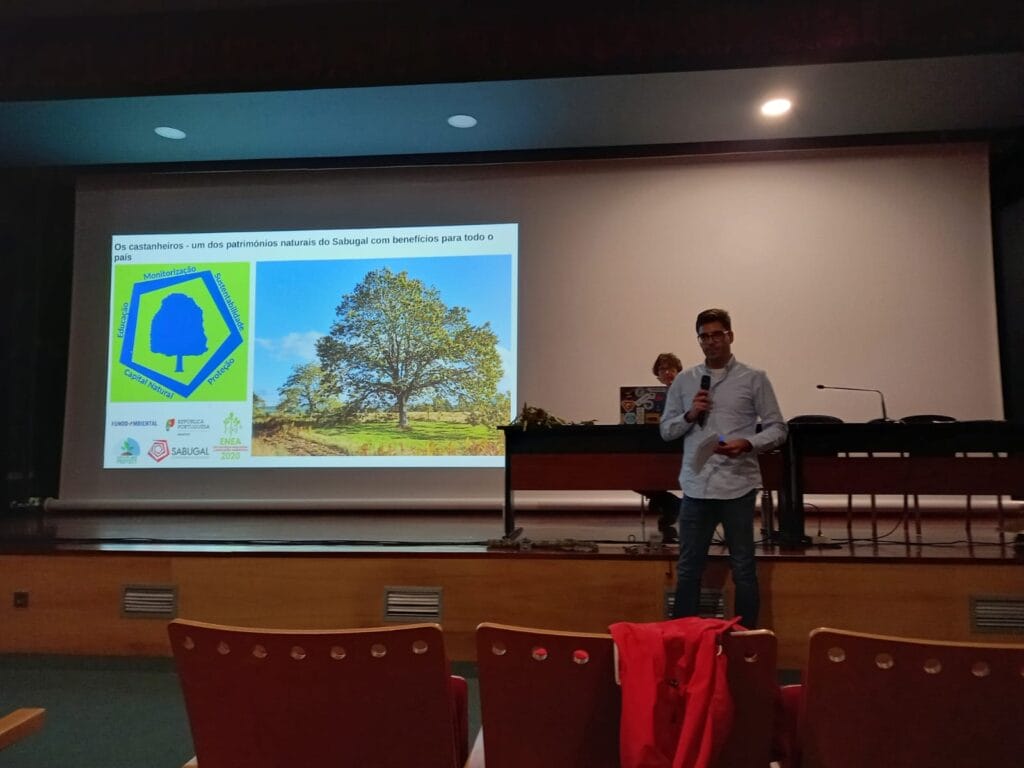
The project “Educating to know, protect and monitor chestnut trees through IoT technology”, The project, co-financed by the Environmental Fund, was presented last week to 12th grade students from the Sabugal School Group.

Around 50 Biology, Technology and Tourism students spent part of the morning and afternoon of November 4 with the InnovPlantProtect (InPP) team, in order to understand the importance of protecting trees, and in particular chestnut trees, a local natural heritage. The project, led by InPP, is directed by Sabugal Town Hall (CMS).

The day was an Education 4.0 experience, in which traditional subjects such as Biology and Ecology were integrated with a description and explanation of the application of “Internet of Things” (IoT) technology to tree monitoring. Incidentally, the presentation coincided with the COP 26 Climate Summit, which ties in perfectly with the main issues being discussed in Glasgow, Scotland.

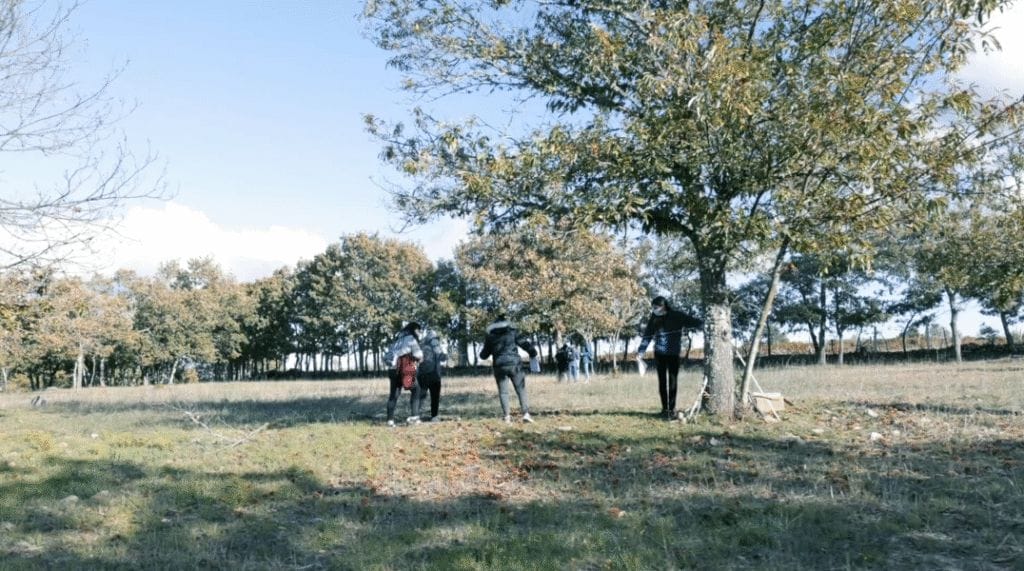
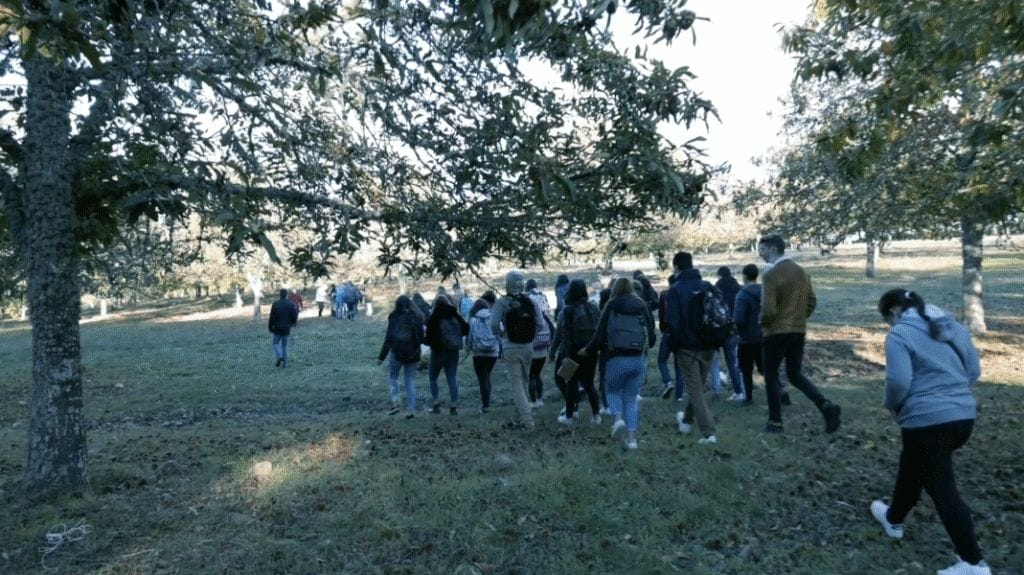
In the afternoon, the pupils were taken to a meadow used as a study area by the InPP and CMS team. It was there that they were able to see and understand first-hand how IoT sensors work. The visit to the grove was an opportunity for them to take part in practical exercises and learn how to measure some of the physical parameters of trees, such as height, diameter and crown width using traditional methods, while at the same time seeing more modern tools in action.

With in-depth knowledge of the strains and breeds that exist in the country, the Elvas CoLAB can thus devise more efficient and targeted combat strategies.

InnovPlantProtect (InPP) is analyzing yellow rust samples collected from wheat fields in Portugal. Identification at InPP is carried out using PCR techniques and analysis of DNA fragments using SeqStudio, which makes it possible to determine the lineage of the fungus by examining molecular markers.

The polymerase chain reaction, or PCR, is a technique that allows you to copy a specific region of DNA, in vitro. SeqStudio is a sequencing machine that also allows the length of fragments to be measured, from which it is possible to correlate the size of different molecular markers with a given lineage.

Yellow rust is a disease caused by the fungus Puccinia striiformis f. sp. tritici, This pathogen, which affects wheat and other cereals all over the world, jeopardizes the future and stability of cereal crops. This pathogen is biologically very dynamic, adapting quickly to climate change and to the resistant cereal varieties that are being introduced onto the market.


A. Yellow rust on wheat; B. Molecular markers amplified by PCR on an agarose gel; C. Fragment analysis to determine the size of the markers and establish the fungal lineage

So far, the PstS10 strain, the most prevalent in Europe, has been identified. PstS10 has proved to be very aggressive, affecting wheat varieties that were previously resistant to yellow rust. The race of this strain was determined by RustWatch in Denmark to be Benchmark. InPP sent samples to this European project to combat wheat rusts, which, among many other aspects, also involves genotyping and identifying the strains and races of the fungus that causes yellow rust.

With in-depth knowledge of the strains and races present in Portugal, the InPP can therefore devise more efficient and targeted combat strategies, by improving wheat varieties resistant to yellow rust and developing bioinspired control agents.

InnovPlantProtect's project to combat this disease was started in March 2020.

No product currently on the market is capable of eliminating Xylella fastidiosa, the Commission for the Regional Budget of Puglia, southern Italy. The bacterium continues to seriously affect olive groves in Italy's main olive oil producing region.

“The two products marketed in recent weeks as a treatment against the drying out of trees, and useful for bringing plants back to their original glory, are a mixture of natural soaps or adjuvants,” said the director of Puglia's phytosanitary observatory, Salvatore Infantino, at a public hearing, quoted by OliveOilTimes. The heads of the regional budget commission for this area of southern Italy, which forms the “heel” of the “boot”, guarantee that there are currently no products on the market capable of eliminating the bacteria Xylella fastidiosa of infected trees, particularly olive trees.

This bacterium is the most active pathogen affecting olive trees in Italy's main olive oil producing region. For Salvatore Infantino, the development of a product capable of combating it remains an important goal for many of those striving to reduce the devastation caused by the bacteria. Xylella fastidiosa.

Public authorities must not make the mistakes of the past by giving credence to unscientific theories that have already caused so much damage and wasted so much time.

Fabiano Amati, president of Puglia's regional budget committee

A Xylella fastidiosa was first detected in the European Union precisely in Puglia, in October 2013, and was responsible for an outbreak that, by 2015, had already infected one million olive trees in this Italian region alone. “Currently, good agricultural practices and eradication are the only weapons we have against the Xylella, It's a way of saving time while we wait for a truly effective treatment,” says Salvatore Infantino.

Olive groves infested with Xylella fastidiosa, Puglia, Italy, 2019.

Image: WIKI/ Sjor