News & Events

white plant

NEWS

There are days when science begins long before you enter the laboratory or the field. It starts at dawn, when the alarm clock goes off too early. When you mentally review the day's list: an experiment that can't be missed, a trip to the field that depends on the weather, an unfinished report, a meeting scheduled at the wrong time. In between, someone to wake up, someone to drop off, someone to call. And yet science moves forward.

At InnovPlantProtect, there are now 15 women who give a face to the science and innovation developed here. Women who represent commitment, demand, resilience, overcoming, quality, talent, excellence and creativity. But they are only part of a greater whole. There are many more - and each one brings with it a story that doesn't fit into a CV, a patent application or an article.

Today, February 11th, marks the International Day of Women and Girls in Science, a UNESCO initiative that underlines the importance of the female role in the production of scientific and technological knowledge and the need to continue promoting equal access to careers in science and innovation. Portugal has encouraging figures: women represent almost 50% researchers in the country. It's a relevant figure, reflecting decades of progress. But the figures don't show what happens between them.

Because science, for many women, is made up of fragile balances.

There are women with intense family lives, others with more solitary journeys, still others who build support networks outside traditional models, with effort and creativity. There are difficult choices and decisions, unexpected circumstances, forced breaks, changes of pace, different phases of life. All legitimate. Many are invisible when you only look at the end result of a project, an article or a biosolution developed. - but they all influence the paths of science.

One day, one of our researchers - let's just call her that - told us that she had finished a field trial close to sunset. The phone rang while she was putting away her materials. It was the school. A delay. Nothing extraordinary. It was business as usual. She came home exhausted, with dirt still on her boots, opened her computer after dinner and went back to her data, because the experiment couldn't wait.
“It wasn't a heroic day,” she said. “It was just a normal day.”

And perhaps that is what is most remarkable.

In the field of crop protection, the work is demanding, technical and often unpredictable. It takes place in the laboratory and in the field, between strict protocols and decisions made under real conditions. It requires persistence, adaptability, attention to detail and an integrated view of problems. Characteristics that so many women bring with them - not by nature, but by experience, by path, by everything they have learned to manage at the same time.

Each personal story profoundly shapes the way we do science. The doubts, the challenges, the forced breaks, the changes of pace, the new beginnings. None of this is left at the laboratory door. It all silently enters into the way we observe, question and build knowledge.

To celebrate the International Day of Women and Girls in Science is to recognise this reality as a whole. It is to honour the women who continue to do science despite the challenges — and often because of them. And it is to remember that innovation is also born from lives fully lived, shaped by imperfection, effort and courage.

Today we celebrate them. Not just for what they produce, but for all that they are. In science, in the field, in the laboratory - and in the life that happens in between.

O InnovPlantProtect (InPP), Collaborative Laboratory specializing in biological and digital solutions for crop protection, aligned with the emerging challenges of agriculture, will launch its new institutional website on January 24th, on a symbolic date marking 7 years working in the agricultural sector.

This launch is part of a phase of institutional evolution and consolidation InPP, reinforcing its strategy of proximity to the sector, clarity in the communication of its competencies and affirmation as a strategic partner for companies, producers, associations and public bodies.

An even clearer, more up-to-date and sector-oriented platform

With a renewed structure and a more intuitive browsing experience, the new website features:

  • an area of Services and Products completely reorganized, which facilitates access to specialized services, laboratory capabilities and biological and digital solutions developed by InPP, as well as to a updated catalog of services and biosolutions;
  • more complete institutional content that reinforces transparency, scientific rigor and CoLAB's mission;
  • a clearer presentation of scientific skills and research areas, highlighting the impact of the work carried out by InPP's multidisciplinary teams.

New image, same mission - but reinforced

The launch of the website is accompanied by the implementation of InnovPlantProtect's new visual identity, This reflects the maturity of CoLAB and its future ambitions.

The new image - accompanied by the slogan “Innovate together. Protect better.” - reflects InPP's ongoing commitment to:

  • Developing new generation biological and digital solutions;
  • Promoting safer, more innovative and more productive agriculture;
  • Strengthen collaboration and partnership with the agricultural sector and the innovation ecosystem.

A new phase for InPP

The digital and visual renovation is part of a broader strategy of maturity and consolidation, Through this initiative, InPP aims to strengthen its role as a scientific and technological partner for the agricultural sector in applied research and the development of crop protection solutions.

According to António Saraiva, InPP's executive director: “This new website isn't just a digital revamp - it's a reflection of the ambition we have for our future and how we want to communicate with the sector. We want every visitor to understand the purpose that drives us: to create innovative solutions that protect crops, boost productivity and contribute to more sustainable agricultural systems. InPP is entering a new phase, with a clearer, more accessible identity aligned with the real needs of agriculture and a renewed commitment to real impact on the ground.”

Available from January 24th

The new InnovPlantProtect website will be available from January 24th at: https://iplantprotect.pt/

The start of a new year also marks a new cycle for InnovPlantProtect. In 2026, InPP enters a phase of evolution and consolidation, with several new features that reinforce its position as a strategic partner for the intelligent transformation of agriculture.

Over the next few months, initiatives, content and tools will be presented that reflect the work carried out by our teams in the areas of applied research, biological solutions, specialized services and digital innovation.

The first step in this new phase will be presented in the next January 24th, InnovPlantProtect is celebrating the date 7 years in business at the service of the agricultural sector.

Until then, we continue to prepare a range of new products that reflect our mission to promote safer, more innovative and more productive agriculture.

Stay tuned. What's coming is just the beginning.

EVENTS

A sustentabilidade da agricultura não seria possível atualmente sem o contributo da biotecnologia. As novas tecnologias que permitem alterar o DNA das plantas têm um impacto enorme nas novas culturas agrícolas e um papel crucial para garantir a soberania alimentar. Estas são questões a debater na conferência “A Importância da Biotecnologia para a Sustentabilidade na Agricultura”, no dia 17 de outubro, às 10h00, no Centro Cultural de Belém (CCB), in Lisbon.

No evento, organizado pela Associação Portuguesa dos Industriais de Alimentos Compostos para Animais (IACA), em parceria com o InnovPlantProtect (InPP) e o Centro de Informação de Biotecnologia (CiB), e que conta com a colaboração do Jornal Público, participarão vários especialistas da área da biotecnologia e da agricultura, serão discutidos temas cruciais para o setor, visando promover práticas agrícolas mais sustentáveis e eficazes. Pedro February, diretor executivo do InPP, vai participar no primeiro painel intitulado “O impacto da biotecnologia nas novas culturas agrícolas”.

A sessão de encerramento estará a cargo de Maria do Céu Antunes, Ministra da Agricultura e da Alimentação.

A participação no evento necessita de inscrição prévia obrigatória. As inscrições podem ser efetuadas através do preenchimento do formulário disponível here.

Para mais informações e para consultar o programa detalhado do evento, aceda here.

Não perca esta oportunidade de participar nesta conferência sobre o futuro da agricultura e a sua interação com a biotecnologia!

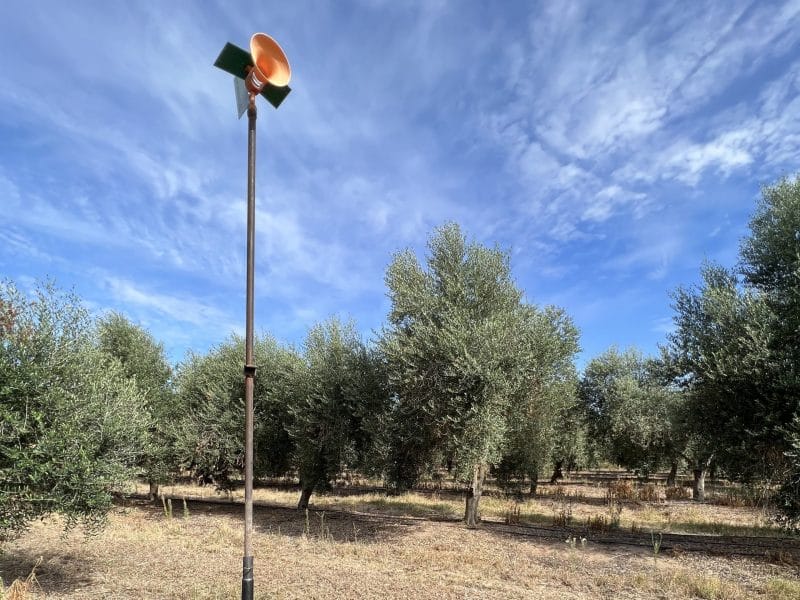
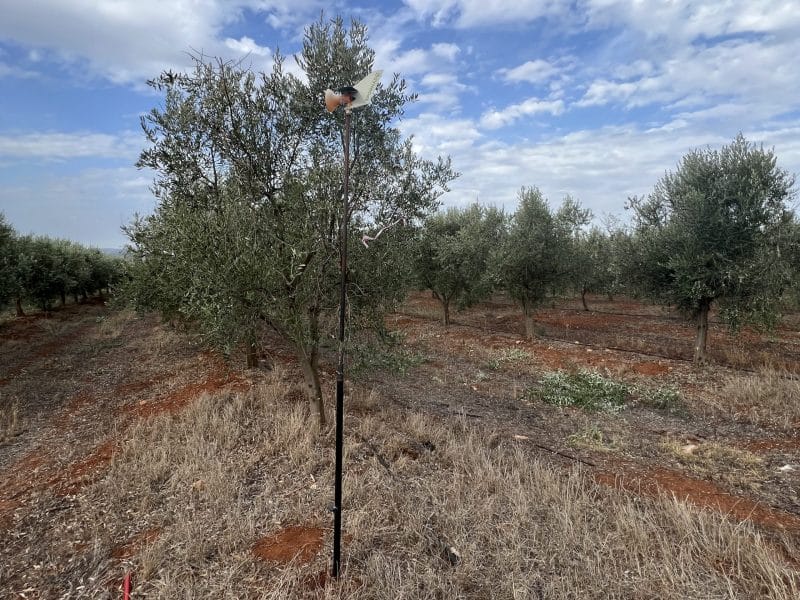
From September until November, the “AlViGen: Creation of a hub in the ALentejo for the GENomic VIgilance of diseases in agriculture” project team will be in the field to install spore traps, known as capta-esporos, in olive groves in Portalegre, Monforte, Elvas, Évora and Beja. The traps make it possible to capture spores from fungal species that circulate in the air and, in particular, from different strains of the fungus Colletotrichum, This is responsible for causing gafa disease in Olival.

The aim is to identify some important characteristics of this pathogen, such as virulence and resistance to fungicides or pesticides.

In total, the spore traps were installed in eight olive groves in the Alentejo (Alto, Central and Baixo), a region that is the main producer of this crop at a national level, and where the fungus Colletotrichum has had a particular impact.

The team will take samples every two weeks for three months a year during the olive tree's productive cycle. Regular monitoring of the diversity of fungal species circulating in the olive groves will also make it possible to detect the appearance of new pathogenic fungi.

AlViGen, coordinated by InnovPlantProtect (InPP) in partnership with the University of Évora (WOW), was one of the innovative pilot projects selected last October and funded by the La Caixa Foundation, BPI Bank and the Foundation for Science and Technology (FCT), as part of the 4th edition of the Promove Program. This project will enable InPP to create the capacity for early detection of multiple crop diseases, using molecular methods that allow the identification of important characteristics of pathogens, such as virulence, susceptible varieties and resistance to phytopharmaceuticals, benefiting producers and government authorities.

Find out more about the AlViGen project on the project website here.

FINANCING

O InnovPlantProtect (InPP), como membro da rede portuguesa de laboratórios de investigação sustentável, a GreenLabs Portugal, participou no primeiro “Green Labs Portugal Symposium: Promoting Sustainability in Research”, dedicado a promover práticas verdes na ciência para reduzir o impacto ambiental da investigação científica em Portugal, e que teve lugar esta sexta-feira, dia 22 de setembro, na Universidade de Coimbra.

O principal objetivo deste simpósio foi promover o debate e a discussão sobre como mitigar o impacto ambiental da investigação científica, reconhecendo ao mesmo tempo o papel fundamental da ciência e da inovação no progresso da sociedade. Em mais detalhe, a iniciativa abordou os diferentes aspetos do que são os Green Labs e o procedimento para obter certificação, a sustentabilidade na ciência e como as empresas estão a reinventar e a revolucionar os seus serviços para apoiar os laboratórios de investigação na adoção de práticas mais ecológicas, de forma a reduzir a pegada ecológica da investigação.

Cristina Azevedo, diretora do departamento de Novos Biopesticidas, participou na sessão 2 dedicada ao tema “Setting a green lab” com a apresentação “How to greenUP bio-based research labs”. A iniciativa contou ainda com palestras de especialistas na área, como Melina Kerou da Sustainable European Laboratory Network (SELs), e Martin Farley da Green Lab Associates.

O programa incluiu vários momentos interativos com os participantes, incluindo uma mesa redonda, um jogo “Ask the Green Teams” e uma sessão de posters. Alguns elementos da equipa de InPP Greeners do InPP, representada pelas investigadoras Cátia Patrício, Cláudia Silva e Leonor Martins participaram nesta última, na qual apresentaram o poster “InPPGreeners – Story of a colab built with sustainability as its cornerstone”.

Na sessão de encerramento teve lugar um momento especial em que foi plantada uma árvore no Jardim Botânico da Universidade de Coimbra.

O tempo para um futuro científico mais sustentável é agora, e todos somos responsáveis por fazer parte desta mudança!

Os InPP Greeners são a equipa de sustentabilidade do InPP, criada no final de 2021, com a missão de partilhar conhecimento e de promover boas práticas nas áreas da biotecnologia e da proteção de culturas agrícolas, que conduzam à criação de laboratórios e instituições mais sustentáveis, além da promoção da adoção de comportamentos mais sustentáveis por todos os cidadãos.

A GreenLabs Portugal é uma rede de laboratórios de investigação sustentável em Portugal que promove práticas sustentáveis para reduzir o impacto ambiental da investigação científica a nível nacional, e da qual o InPP faz parte.