O InPP participou no Fórum Nacional de Clubes Ciência Viva na Escola, que teve lugar no dia 27 de março, integrando a Mostra de Ciência e Tecnologia com um stand dedicado à proteção das plantas.
Neste espaço, foram apresentados diversos materiais demonstrativos, incluindo placas de Petri com fungos e bactérias, plantas, algas e exemplos de produtos formulados, com o objetivo de despertar o interesse e a curiosidade dos visitantes para a importância da saúde das plantas e da investigação científica nesta área.
Ao longo do dia, a Gestora de Comunicação, Inês Ferreira, e o Gestor de Inovação, Paulo Madeira, dinamizaram o contacto com o público visitante, explicando de que forma a investigação em proteção das plantas contribui para melhorar a proteção das culturas e promover uma agricultura mais resiliente e sustentável.
O Fórum Nacional de Clubes Ciência Viva na Escola decorreu no CNEMA, em Santarém, reunindo escolas, centros Ciência Viva, universidades, centros de investigação e diversas outras entidades, num encontro dedicado à ciência, tecnologia e inovação.
O InPP agradece a todos os visitantes que passaram pelo seu stand, destacando a importância destes momentos de partilha para promover o conhecimento científico junto da comunidade.
No dia 26 de março, o InPP participou numa sessão promovida pela Agência Nacional de Inovação (ANI), em Lisboa, que contou com a presença de uma comitiva da República Checa ligada ao setor das biotecnologias.
Em representação do InPP estiveram Cristina Azevedo, Diretora de Biosoluções, e Paulo Madeira, Gestor de Inovação, que apresentou a instituição e as suas principais áreas de atuação e competências.
A iniciativa teve como principal objetivo identificar oportunidades de cooperação entre entidades portuguesas e checas, nomeadamente nas áreas de transferência de tecnologia, codesenvolvimento, ensaios pré-clínicos e diagnósticos, coinvestimento e internacionalização da inovação.
A sessão contou com a participação de representantes de entidades relevantes da República Checa, incluindo Petra Kinzlova, CEO da Prague.bio, Katarina Psenakova, Head of Biology da PharmTheon, bem como representantes da Embaixada da República Checa e da Academia das Ciências da República Checa.
Este encontro contribuiu para reforçar o posicionamento do InPP na promoção de parcerias internacionais e no desenvolvimento de soluções inovadoras, evidenciando o compromisso contínuo da instituição em fortalecer redes de colaboração científica e tecnológica e em contribuir para o crescimento e internacionalização da inovação.
O InPP marcou presença no Encontro com orizicultores e técnicos(as) em Portugal, promovido pela EDAF, que decorreu no dia 5 de março, no Pólo de Inovação de Salvaterra de Magos, em Santarém.
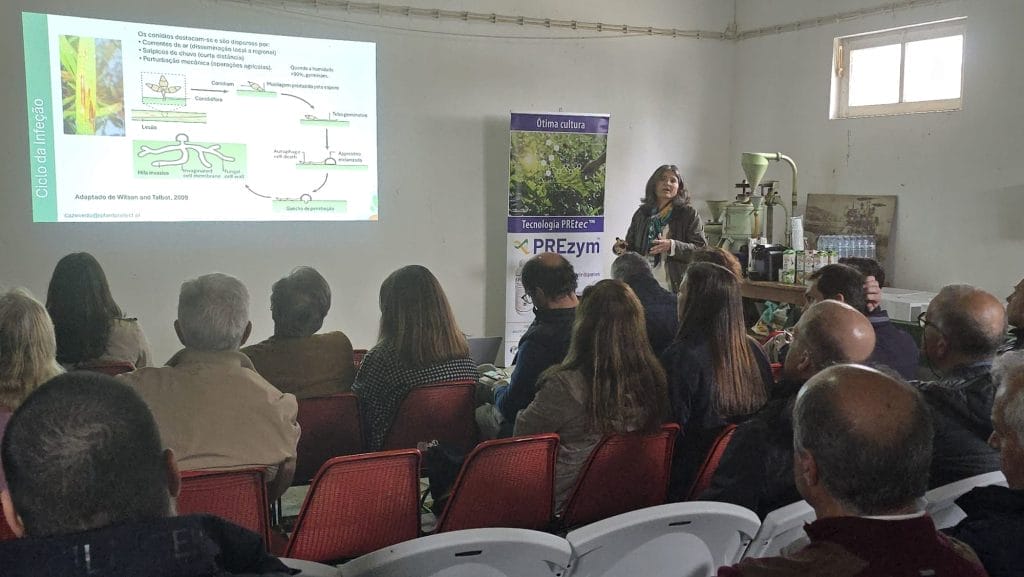
A Diretora de Biosoluções do InPP, Cristina Azevedo, integrou o painel de oradores convidados, tendo apresentado a comunicação intitulada “A problemática da Pyricularia na cultura do arroz”. A apresentação incidiu sobre os principais desafios fitossanitários associados a esta doença, que continua a constituir uma das maiores ameaças à produção de arroz a nível mundial e também em Portugal.
O encontro reuniu produtores, técnicos e especialistas da fileira do arroz, proporcionando um espaço de partilha de conhecimento e debate sobre soluções atuais e em desenvolvimento para o controlo da piriculariose. Foram igualmente abordados outros temas relevantes para a sustentabilidade e produtividade da cultura, nomeadamente a gestão da fertilização.
A participação do InPP neste tipo de iniciativas reforça o compromisso da instituição com a inovação, a transferência de conhecimento e o desenvolvimento de soluções sustentáveis para a agricultura nacional.
O InPP agradece à EDAF e ao COTArroz o convite e a organização deste importante encontro, esperando que esta colaboração continue a fortalecer-se no futuro.
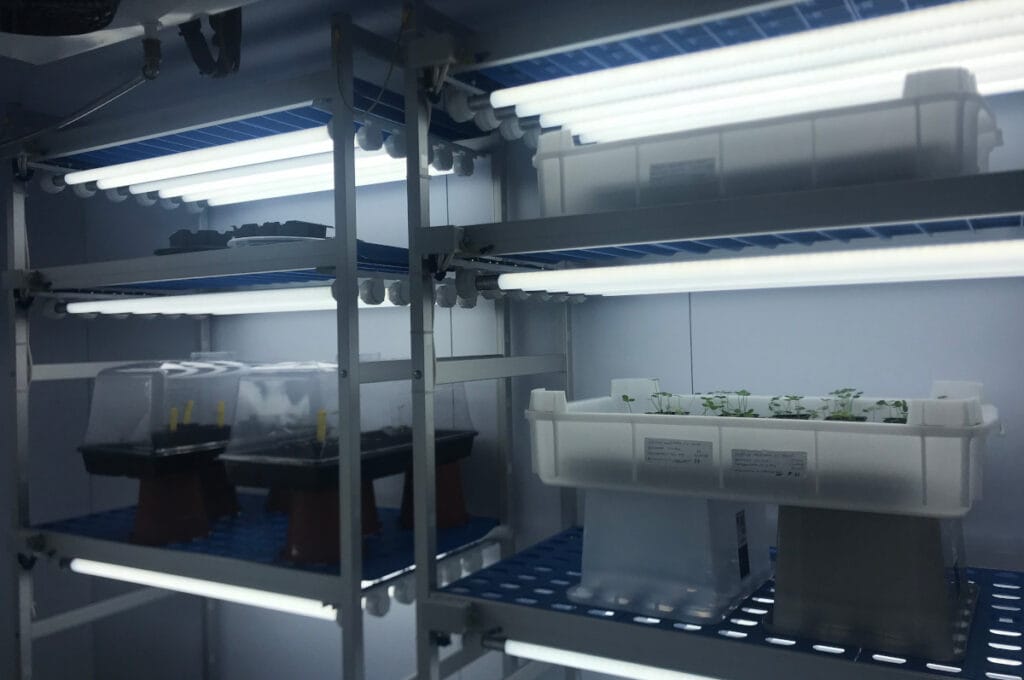
InnovPlantProtect (InPP) already has a camera walk-in with temperature control, humidity and exposure to light with photoperiod, to grow plants as part of their projects.
The Department for the Protection of Specific Crops has been using this new equipment since May 10, namely to grow Persian clover and wheat, for the PitSTOP projects, with Fertiprado, and WhYRust, respectively.
The climate chamber walk-in will allow experiments to be carried out under controlled conditions on different crops throughout the year. “Together with the renovation of the greenhouse, this plant growth environment is very important for expanding our response capacity,” explains Paula Oblessuc, director of that department.
“The climate chamber walk-in allows experiments to be carried out under controlled conditions all year round.“
In other words, InPP researchers will be able to carry out more detailed experiments and work on a greater number of projects simultaneously, with a camera that “is maintaining the established conditions very well”, stresses Paula Oblessuc. The PitSTOP project aims to identify the pathogen(s) that is/are attacking Fertiprado's clover meadows and propose a solution to combat the disease(s).
WhYRust aims to combat wheat yellow rust, in particular by identifying resistance genes in the cereal, validating a warning system and developing genomic prediction models to support precision breeding.
The Rector of NOVA University Lisbon doesn't know if the special affection he feels for farmers comes from his “Alentejo rib” and his childhood connected to the land, but he does know that farmers play a crucial role in building a more sustainable world. So it is with enthusiasm that João Sàágua speaks of InnovPlantProtect, a collaborative laboratory led by NOVA, as an ally of sustainability in agricultural production, created to develop innovative solutions to protect crops from pests and diseases.
Text: Margarida Paredes/ InPP Photos and video: NOVA University Lisbon NOVA University Lisbon (NOVA) is the institution that has put the most effort into creating the InnovPlantProtect (InPP) Collaborative Laboratory (CoLab). Why is this project so important to NOVA? Essentially for two reasons. Despite having excellent teaching and research, NOVA University still has a lot of room for growth in terms of knowledge transfer or, if you like, connection to society. In fact, one of the strong points of my candidacy for Rector of NOVA was the desire to increase the University's connection to society, in a visible and concrete way, and InnovPlantProtect is an example of this.
The other reason has to do with the topic itself: agriculture. The sustainability of agriculture and the guarantee of that sustainability based on knowledge and technology are fundamental to the country's development, in particular, but also to achieving the very important SDGs - Sustainable Development Goals. Let's just say that InPP represents NOVA's commitment to sustainable agriculture. I should also add that the enthusiasm with which the mayor of Elvas, Nuno Mocinha, welcomed us and supported the project from the outset has increased our desire to carry out this project and to do it in Elvas.
Is this CoLab “the apple of your eye”? I ask because NOVA, despite having eleven Collaborative Laboratories, has only led two projects, including this one. It's true, we lead two CoLabs - this one and another in the health area - and we participate in nine others, but InPP really has all the conditions to be the “apple of my eye”. Firstly, because of its area of activity. Contributing to making the Mediterranean diet sustainable is very important to us, because we know that in doing so we are also supporting the country's development. Secondly, as the son of a woman from Alentejo, I consider this project's contribution to territorial cohesion to be crucial.
The InPP was approved by the FCT - Foundation for Science and Technology with the highest grade, after evaluation by an international team, and its work is already underway. What is NOVA's role in this project at the moment? Our presence at InPP is permanent. It's visible in the Board of Directors, chaired by NOVA, and in the Management - the CEO, Professor Pedro Fevereiro, came from ITQB NOVA, a University Institute. In addition, in terms of research, we have joint projects that have already been submitted for funding. Another important aspect is the dual affiliation, which allows researchers from this University to also work at the CoLab for five years.
“I think the most important impact of the InPP will be the creation of economic and social value.”
As an entity that trains researchers, and given that this project was led by the GREEN-IT research unit of NOVA's Institute of Chemical and Biological Technology, in cooperation with other NOVA research units (CTS FCT NOVA, NOVA LINCS, FCT NOVA and MagiC NOVA IMS), is there any link between NOVA and InPP in terms of hiring highly qualified human resources? There is strategic collaboration and exchange between researchers on both sides and also intense collaboration between several NOVA professors, from the various research centers you mentioned, at the InPP. But the InPP is hiring its own body of researchers, solid and with a high international profile, who will certainly also work on projects involving NOVA professors and researchers. I want to emphasize that I consider this aspect: progressively, the Elvas community is growing with people who work at the InPP and who make their living and have their family in Elvas.
“Given the particular nature of this CoLab, our expectation is that funding will come from its ability to innovate and even export innovation.”
What are the challenges facing a CoLab like InPP, the only one in this area in Portugal? I would point to three fundamental challenges, the first of which is financial sustainability. CoLab has significant funding from the FCT - Foundation for Science and Technology, strong support from the Elvas local authority, which was crucial in launching this laboratory, and significant support from its various associates. But it will have to generate enough wealth in five years to guarantee its own financial sustainability.
Given the particular nature of this CoLab, our expectation is that funding will come from its ability to innovate and even export innovation. If InPP manages to develop products (such as biopesticides and plants resistant to pests and diseases) and services (such as forecasting and monitoring pests and diseases, among others) of sufficient quality and importance, it can not only guarantee its sustainability through the sale of these products and services, but also increase Portugal's export capacity in the area of knowledge in sustainable agriculture.
Another challenge, which I think has already been met, is attracting highly qualified human resources. As Elvas is not a major metropolis, it might have been difficult to attract an international scientific community and their families to the city, but it turned out not to be.
“In fact, InPP has all the conditions to be the ‘apple of my eye’.”.
In terms of fundamental knowledge, a lot of science has been funded and a lot of progress has been made in molecular-based technologies and tools, but the application is still residual. Do you believe that the InPP will reduce this gap? I think so. One of the ways of reducing this gap is precisely related to one of the great challenges of Collaborative Laboratories, which is to increase export activity and the sale of products and services. The government has launched this initiative at a good time, and it's only fair to point this out.
I think the InPP has made a good start in this respect, having two multinational companies as founding members - Bayer and Syngenta - for whom this project is not merely commercial, but involves resources and knowledge. For this reason, their integration into this project had to be authorized by their parent companies in Germany, which shows the great commitment of these multinationals to InPP. In addition, we also have an impressive group of farmers from the region, who are the real lifeblood of the area, and who are represented on InPP's Governing Bodies through their associations.
InPP works on the protection of Mediterranean crops, but multinational companies invest more in corn, rapeseed, cotton and soy, because these are the crops that sell the most in the world. Aren't you worried about a lack of investment from companies? Honestly, no. Mediterranean crops are an increasingly valued niche, first and foremost olive oil, for which demand is increasing significantly, but also fruit, vegetables and cereals. The Mediterranean diet has established itself as a healthy diet, and has taken on a leading role thanks to the widespread concern of the population about food, the problems of obesity and malnutrition, which is very much the result of the knowledge of the link between food, health and well-being. I have no doubt that the products of the Mediterranean diet will be booming in Europe, the United States and other territories. Again: a good export opportunity.
“Mediterranean crops are an increasingly valued niche, first and foremost olive oil, for which demand is increasing significantly, but also fruit, vegetables and cereals.”
Current EU legislation does not favor the use of New Genomic Techniques in Mediterranean crops. If the EU is not prepared to accept innovative solutions such as those that InPP is trying to develop, for example plants resistant to pests and diseases, what will be the alternative? This is one of InPP's lines of activity, but not the only one. The European Union has yet to take a definitive stance on the matter, but if the plant breeding part of the project faces the difficulties you mentioned, the alternative is to sell the products in many other possible markets outside the EU. Furthermore, genomic techniques are not all the same, nor do they all respond to the same motivations; in the case of the InPP, sustainability and respect for the environment are also the motto here. In any case, as I said, we have other lines of activity, “all our eggs are not in one basket”.
What do you think will be the most important impact of the InPP? I think it will be the creation of economic and social value. InnovPlantProtect will have a very important impact on Elvas, because by building a new community of national and foreign researchers it will contribute to territorial cohesion and development and to the socio-economic fabric of the city - I've heard that it's already difficult to find vacant housing.
The second impact will be visible in agricultural activity, as the InPP will develop products and services for crop protection, and the third will be on exports, as these products and services will also be made available on foreign markets.
“Given the particular nature of this CoLab, our expectation is that funding will come from its ability to innovate and even export innovation.”
JOÃO SÁGUA
Rector of NOVA University Lisbon (NOVA) since September 2017, he previously held the position of Vice-Rector of NOVA for Academic Affairs and International Relations (between 2014 and 2017). He holds a PhD in Contemporary Philosophy and is a Full Professor at NOVA's Faculty of Social Sciences and Humanities (FCSH/NOVA). He has been teaching at NOVA since 1980, accumulating a long experience as a teacher at all levels of education: bachelor's, master's and doctorate, in Portugal and abroad. In addition to an intensive teaching and research activity, he has held various management positions, namely at FCSH/NOVA, where he was Director (between 2005 and 2013) and Chairman of the Scientific Council (between 2009 and 2013).
Interview published first hand by Rural Life, March 2021 edition.
“I feel much more comfortable discussing these issues today in Portugal than I did ten years ago,” said the executive director of InnovPlantProtect (InPP) today, May 26. The question on the table was: “Are the new genomic techniques (NTG) one of the tools to achieve the goals of the Farm to Fork Strategy?”. For Pedro Fevereiro, who was speaking at one of the “workshop of solutions” entitled “NTG - a sustainable tool for tackling climate change”, organized by the Forum for the Future of Agriculture (FFA), there are three types of public when it comes to perceptions of NTG.
Part of society “associates these technologies with a greater impact on diversity and ecosystems, and reacts almost emotionally to the application of NTGs,” says February. Then, “there is a public that has difficulty understanding them and associates them with the loss of the traditional component of their production.” There is also, in his opinion, another public who, once they have been enlightened about the new plant breeding techniques, “tend to understand that they are nothing more than a natural process in which we are adjusting the crops we eat to the needs we have as a global society”.
The session was moderated by Cristina Nobre Soares and shared with the member of the European Parliament Álvaro Amaro, agronomist Manuel Chaveiro Soares, Rui Barreiras, from Nature Association Portugal/ WWF and keynote speaker Andreas Weber, director of the Plant Biochemistry Institute of[RF1] Heinrich Heine University in Germany.
Pedro Fevereiro was convinced that “we will be able to develop new technologies, based on the knowledge that is being accumulated, which will enable us to respond more efficiently to the challenges that lie ahead” - such as feeding the population and ensuring that production can withstand the climate impacts that are already present in Mediterranean territories.






 Português
  English