News & Events

white plant

NEWS

O InPP participou no Fórum Nacional de Clubes Ciência Viva na Escola, que teve lugar no dia 27 de março, integrando a Mostra de Ciência e Tecnologia com um stand dedicado à proteção das plantas.

Neste espaço, foram apresentados diversos materiais demonstrativos, incluindo placas de Petri com fungos e bactérias, plantas, algas e exemplos de produtos formulados, com o objetivo de despertar o interesse e a curiosidade dos visitantes para a importância da saúde das plantas e da investigação científica nesta área.

Ao longo do dia, a Gestora de Comunicação, Inês Ferreira, e o Gestor de Inovação, Paulo Madeira, dinamizaram o contacto com o público visitante, explicando de que forma a investigação em proteção das plantas contribui para melhorar a proteção das culturas e promover uma agricultura mais resiliente e sustentável.

O Fórum Nacional de Clubes Ciência Viva na Escola decorreu no CNEMA, em Santarém, reunindo escolas, centros Ciência Viva, universidades, centros de investigação e diversas outras entidades, num encontro dedicado à ciência, tecnologia e inovação.

O InPP agradece a todos os visitantes que passaram pelo seu stand, destacando a importância destes momentos de partilha para promover o conhecimento científico junto da comunidade.

No dia 26 de março, o InPP participou numa sessão promovida pela Agência Nacional de Inovação (ANI), em Lisboa, que contou com a presença de uma comitiva da República Checa ligada ao setor das biotecnologias.

Em representação do InPP estiveram Cristina Azevedo, Diretora de Biosoluções, e Paulo Madeira, Gestor de Inovação, que apresentou a instituição e as suas principais áreas de atuação e competências.

A iniciativa teve como principal objetivo identificar oportunidades de cooperação entre entidades portuguesas e checas, nomeadamente nas áreas de transferência de tecnologia, codesenvolvimento, ensaios pré-clínicos e diagnósticos, coinvestimento e internacionalização da inovação.

A sessão contou com a participação de representantes de entidades relevantes da República Checa, incluindo Petra Kinzlova, CEO da Prague.bio, Katarina Psenakova, Head of Biology da PharmTheon, bem como representantes da Embaixada da República Checa e da Academia das Ciências da República Checa.

Este encontro contribuiu para reforçar o posicionamento do InPP na promoção de parcerias internacionais e no desenvolvimento de soluções inovadoras, evidenciando o compromisso contínuo da instituição em fortalecer redes de colaboração científica e tecnológica e em contribuir para o crescimento e internacionalização da inovação.

O InPP marcou presença no Encontro com orizicultores e técnicos(as) em Portugal, promovido pela EDAF, que decorreu no dia 5 de março, no Pólo de Inovação de Salvaterra de Magos, em Santarém.

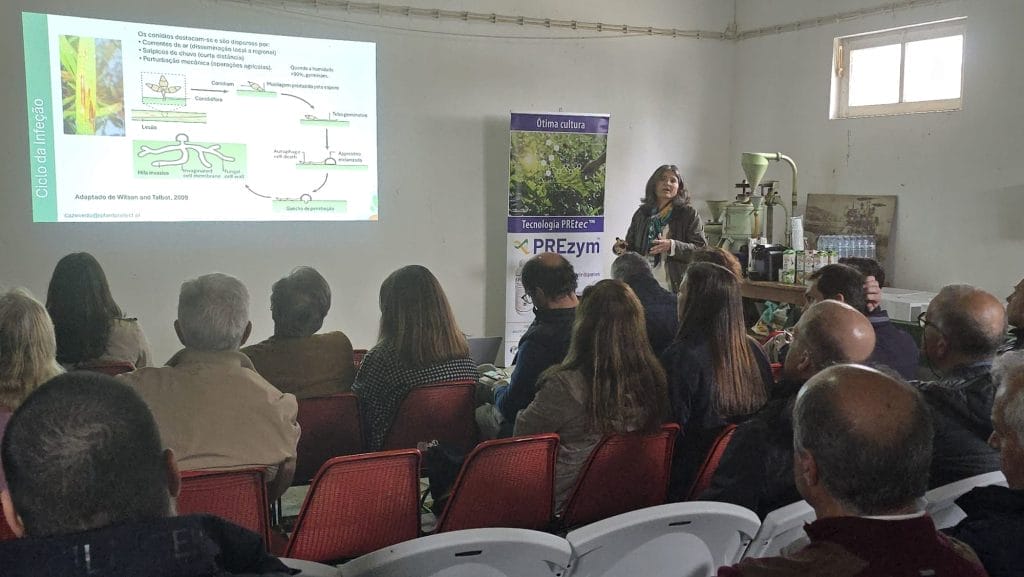
A Diretora de Biosoluções do InPP, Cristina Azevedo, integrou o painel de oradores convidados, tendo apresentado a comunicação intitulada “A problemática da Pyricularia na cultura do arroz”. A apresentação incidiu sobre os principais desafios fitossanitários associados a esta doença, que continua a constituir uma das maiores ameaças à produção de arroz a nível mundial e também em Portugal.

WhatsApp Image 2026 03 06 at 14.28.18

O encontro reuniu produtores, técnicos e especialistas da fileira do arroz, proporcionando um espaço de partilha de conhecimento e debate sobre soluções atuais e em desenvolvimento para o controlo da piriculariose. Foram igualmente abordados outros temas relevantes para a sustentabilidade e produtividade da cultura, nomeadamente a gestão da fertilização.

A participação do InPP neste tipo de iniciativas reforça o compromisso da instituição com a inovação, a transferência de conhecimento e o desenvolvimento de soluções sustentáveis para a agricultura nacional.

O InPP agradece à EDAF e ao COTArroz o convite e a organização deste importante encontro, esperando que esta colaboração continue a fortalecer-se no futuro.

EVENTS

Researchers have found evidence that Huanglongbing, also known as citrus greening, This is an immune-mediated disease, which can be mitigated with antioxidants and phytohormones such as gibberellin, lifting the veil on the mechanism that causes this disease. O article on this study was recently published in Nature Communications.

Huanglongbing disease, which affects citrus fruits and ornamental plants, is caused by the bacterium Candidatus liberibacter transmitted by the citrus psyllid, a biting-sucking insect vector that also causes considerable direct damage to plants. The African psyllid (Trioza erytreae), vector of the bacterium Candidatus liberibacter africanus, is listed as a quarantine pest in Europe and its presence in Portugal has been expanding. O citrus greening is considered the most serious disease for these plant species worldwide.

The team from the Citrus Research and Education Center at the University of Florida (USA) shows that the infection of orange trees (Citrus sinensis) by the bacterium Candidatus liberibacter asiaticus induces a chronic systemic immune response in the plant's phloem, mimicking chronic systemic inflammatory diseases in humans, which leads to the death of the cells that make up the phloem tissue.

The conclusion that this is an immune-mediated phytopathology “helps guide the battle against this infamous disease”, the authors state in the article. The researchers consider it likely that horticultural approaches that suppress the oxidative stress of infected plants could mitigate the damage, including the optimal use of plant growth hormones such as gibberellin and brassinosteroids, as well as treatments with antioxidants.

Feature image © UF/IFAS Citrus Research and Education Center

Members of the Elvas CoLAB team tell the camera what brought them to the raia and the “Queen of the Border”, and what led them to accept the challenge of building the InPP.

Because I believe in a more sustainable future

Joana Castro

January 24, 2022. 3rd anniversary of the signing of the public deed setting up the InnovPlantProtect - Association collaborative laboratory. What a journey! Congratulations to the entire team, associates, members of the governing bodies and partners who have contributed and are contributing today to the birth and growth of this young CoLAB.

Because it represented a huge challenge for my return to Portugal

Cristina Azevedo

Why our lives depend on plants

iLaria Marengo

Completing the multilingual, multicultural and multidiverse team of 39 people that make up InPP today was one of the great achievements of the last year. Find out what brought us to Elvas and why we decided to stake our professional and personal lives on the challenge that is InnovPlantProtect. Watch the video on our YouTube channel.

To put into practice the knowledge I've acquired over more than 12 years abroad in the service of my country's scientific development.

Cláudia Rato da Silva

“Building a new institution is always a challenge and a risk. These three years have shown just that: the need to take risks and accept the challenge of overcoming difficulty after difficulty,” recognizes Pedro Fevereiro, executive director of “CoLAB de Elvas”. “The pillar that sustains InnovPlantProtect is people. And it is to all the people who have accepted the challenge of coming to build that the (over)experience and growth of InPP is due. It will continue to grow. Thank you for that.”

For the chance to settle in the country I chose to live in and live in a beautiful city like Elvas

Márcio Almeida

To rid crops of pests using artificial intelligence

Manisha Sirsat

The chance to do what I love

Tiago Amaro

To apply the knowledge acquired in the biopharmaceutical industry to the discovery of biopesticides

Miguel Carvalho

“AI applied to a prediction and early detection system for Phytophthora cinnamomi in dehesa ecosystems/ dehesa” is the name of the winning project of the 2020 edition of the Promove Program, which brings together InnovPlantProtect (InPP), the National Institute for Agricultural and Veterinary Research (INIAV), the Centro de Investigaciones Científicas y Tecnológicas de Extremadura (CICYTEX), a ACPA - Association of Alentejo Pig Breeders and the Aflosor - Agro-Forestry Association of the Ponte de Sor Region. Now you can find out more about this collaborative initiative, which has won a own page on the InPP website.

With three study areas, two in Portugal (the municipalities of Avis and Ourique) and one in Spain (Alcuescar), the overall aim is to apply monitoring and warning systems to large patches of forest, using digital robotic and artificial intelligence (AI) technologies on a large scale.

This project is funded under Promove - The Future of the Interior, a program of the la Caixa“ Foundation” launched in partnership with BPI and Foundation for Science and Technology, The aim is to support innovative initiatives in strategic areas for the development of Portugal's inland regions.