Uma nova tecnologia de revestimento biológico de sementes desenvolvida pelo InnovPlantProtect (InPP), em colaboração com a Fertiprado, poderá vir a transformar o desempenho de pastagens e forragens, contribuindo para sistemas agrícolas mais eficientes e sustentáveis.
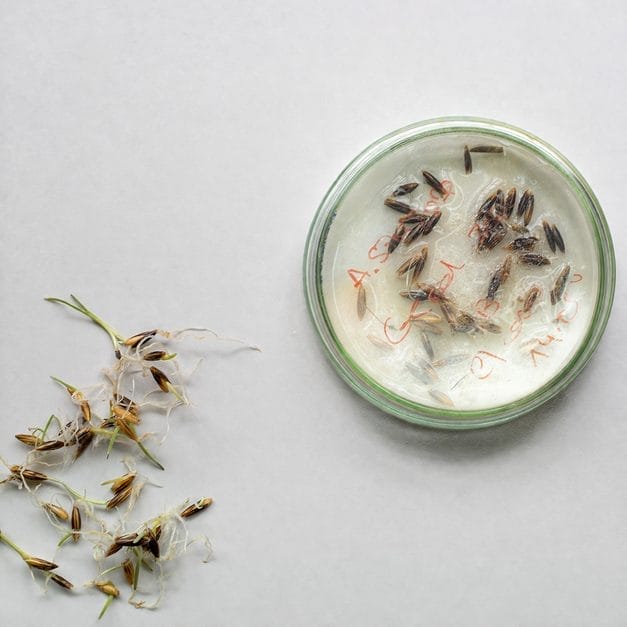
Baseada em compostos derivados de algas, esta solução inovadora apresenta efeito bioestimulante e foi concebida para atuar desde as fases iniciais do desenvolvimento das plantas. Os ensaios realizados demonstraram resultados promissores ao nível da estimulação da nodulação em leguminosas, do crescimento vegetativo e da resistência das plantas a condições adversas, com impacto positivo no valor nutricional do pasto.
Este desenvolvimento resulta de um percurso de investigação conjunta que decorreu ao longo de cinco anos, refletindo o compromisso contínuo do InPP em transformar conhecimento científico em soluções com aplicação prática no setor agrícola. A tecnologia encontra-se atualmente em processo de patenteamento e representa um marco relevante no pipeline de inovação do laboratório.
Para a Fertiprado, parceiro estratégico neste projeto, esta tecnologia constitui uma alternativa aos revestimentos tradicionais baseados em compostos sintéticos, reforçando a aposta em soluções mais sustentáveis e alinhadas com as necessidades futuras da agricultura.
O desenvolvimento desta solução insere-se na Agenda Mobilizadora Pacto da Bioeconomia Azul, financiada pelo Plano de Recuperação e Resiliência (PRR), iniciativa que promove a valorização de recursos marinhos através da criação de novos produtos e tecnologias. Como parte do processo de valorização da tecnologia, foi assinado um memorando de entendimento com vista à sua futura exploração comercial.
Num contexto em que a procura por biosoluções agrícolas continua a crescer, iniciativas colaborativas como esta demonstram o papel fundamental da investigação aplicada na resposta aos desafios da sustentabilidade e da produtividade agrícola.
Investigação com impacto no setor agrícola
O trabalho desenvolvido pelo InPP evidencia o valor da colaboração entre ciência e indústria, permitindo acelerar processos de inovação e criar soluções ajustadas às necessidades reais do setor agrícola.
A parceria com empresas constitui um dos pilares estratégicos do InPP, promovendo a transferência de conhecimento científico e o desenvolvimento de tecnologias que contribuem para sistemas agrícolas mais resilientes e sustentáveis.
O InPP participou no Fórum Nacional de Clubes Ciência Viva na Escola, que teve lugar no dia 27 de março, integrando a Mostra de Ciência e Tecnologia com um stand dedicado à proteção das plantas.
Neste espaço, foram apresentados diversos materiais demonstrativos, incluindo placas de Petri com fungos e bactérias, plantas, algas e exemplos de produtos formulados, com o objetivo de despertar o interesse e a curiosidade dos visitantes para a importância da saúde das plantas e da investigação científica nesta área.
Ao longo do dia, a Gestora de Comunicação, Inês Ferreira, e o Gestor de Inovação, Paulo Madeira, dinamizaram o contacto com o público visitante, explicando de que forma a investigação em proteção das plantas contribui para melhorar a proteção das culturas e promover uma agricultura mais resiliente e sustentável.
O Fórum Nacional de Clubes Ciência Viva na Escola decorreu no CNEMA, em Santarém, reunindo escolas, centros Ciência Viva, universidades, centros de investigação e diversas outras entidades, num encontro dedicado à ciência, tecnologia e inovação.
O InPP agradece a todos os visitantes que passaram pelo seu stand, destacando a importância destes momentos de partilha para promover o conhecimento científico junto da comunidade.
No dia 26 de março, o InPP participou numa sessão promovida pela Agência Nacional de Inovação (ANI), em Lisboa, que contou com a presença de uma comitiva da República Checa ligada ao setor das biotecnologias.
Em representação do InPP estiveram Cristina Azevedo, Diretora de Biosoluções, e Paulo Madeira, Gestor de Inovação, que apresentou a instituição e as suas principais áreas de atuação e competências.
A iniciativa teve como principal objetivo identificar oportunidades de cooperação entre entidades portuguesas e checas, nomeadamente nas áreas de transferência de tecnologia, codesenvolvimento, ensaios pré-clínicos e diagnósticos, coinvestimento e internacionalização da inovação.
A sessão contou com a participação de representantes de entidades relevantes da República Checa, incluindo Petra Kinzlova, CEO da Prague.bio, Katarina Psenakova, Head of Biology da PharmTheon, bem como representantes da Embaixada da República Checa e da Academia das Ciências da República Checa.
Este encontro contribuiu para reforçar o posicionamento do InPP na promoção de parcerias internacionais e no desenvolvimento de soluções inovadoras, evidenciando o compromisso contínuo da instituição em fortalecer redes de colaboração científica e tecnológica e em contribuir para o crescimento e internacionalização da inovação.
“InnovPlantProtect (InPP) uses state-of-the-art biological and digital knowledge to work together with producers, plant protection and seed companies, research institutions and local authorities to solve the problems posed to Mediterranean agriculture by climate change, the reduced availability of active ingredients for crop protection and the emergence of new pests and diseases for which there are no prevention and combat solutions,” says Pedro Fevereiro, InPP's executive director, in a press conference. Voz do Campo magazine.
InPP is featured in the February edition of Voz do Campo magazine and its online edition, with an opinion article entitled “InnovPlantProtect: 5 years of a Collaborative Laboratory for the protection of Mediterranean crops”, which includes an “x-ray” of the 5 years of existence of the collaborative laboratory (CoLAB) carried out by InPP's executive director.
And as far as the future is concerned, Pedro Fevereiro has some clues: “We will continue to invest in the development of innovation for crop protection using biological compounds or living organisms from different sources and types, with a view to the circular economy and sustainability, adding value to products through their industrial protection and subsequent sale.”.
This Wednesday, February 7, we had the pleasure of welcoming a delegation of members of the Angolan Embassy to the InnovPlantProtect (InPP) facilities, accompanied by the Mayor of Elvas, José Rondão Almeida.
During the visit, the ambassador of the Republic of Angola, Maria de Jesus Ferreira, as well as 1st secretary Analberto Guilherme and 3rd secretary Maria da Conceição Pimenta, had the opportunity to get to know the collaborative laboratory (CoLAB), the laboratories and find out a little more about the work and the different areas of activity being explored by the five departments of CoLAB.
This was a great opportunity to identify and discuss future opportunities for new partnerships, collaborations and projects.
I would like to thank the delegation from the Angolan embassy for their visit.
InnovPlantProtect (InPP) celebrated its fifth anniversary this Wednesday, January 24th, at 2pm, in the building of the National Institute for Agricultural and Veterinary Research (INIAV) - Elvas Pole, in Elvas, with the presence of 120 guests. The commemorative event, which brought together InPP members, different representatives of the innovation ecosystem, representatives of other collaborative laboratories (CoLAB) in the agri-food sector, producer associations, farmers and policy makers, aimed to take stock of the 5 years of CoLAB activity and explore prospects for the future.
The afternoon began with the opening session, which was attended by Margarida Oliveira, chairman of the InPP Board of Directors, who warned of the need for more sustainable crop protection solutions than the current ones, reducing the negative impacts on food safety and agrosystems, adding that the new export markets have tighter certification processes, in which there is greater control, and therefore the new solutions should focus on crops that can be grown in the region, i.e. Mediterranean crops.
InPP, an initiative of the New University of Lisbon (UNL) led by the Green-it research center of the Institute of Chemical and Biological Technology (in Oeiras), in cooperation with other UNL scientific units, “is one of the 41 approved CoLABs that make up the existing CoLAB network in Portugal, and one of the 7 that is based in regions of low population density and the only one whose area of activity is the protection of agricultural crops,” said the Chairman of the Board of Directors.
The 14 members that currently make up CoLAB were also highlighted. In 2023, the Polytechnic Institute of Portalegre and Lusosem joined the 12 members that make up InPP, such as the Municipality of Elvas, universities, R&D centers, agricultural companies and producers“ associations. ”However, we intend to increase this number and include all the educational and research institutions in the Alentejo and also increase the number of associated agricultural companies," said Margarida Oliveira.
CoLAB's first five years were about “setting up the conditions, getting the project off the ground, starting to show results (...) and demonstrating credibility in the field. This is extremely important in order to move on to the next phase because you can't win competitive projects with a team that isn't recognized as having quality,” he explained.
According to the chairwoman of the Board of Directors, for the next phase “we need to find someone to promote the products that are coming out of the InPP team's work and someone to obtain contracts that will ensure InPP's viability when public funds reduce” due to the institution's coming of age.
Currently, InPP develops innovative bio-inspired and digital solutions to protect crops, develops services according to users' needs, promotes more sustainable agriculture, adaptable to climate change and in solidarity with the environment, and takes on board the European Union's environmental, climate and digital transition directives.
Margarida Oliveira ended her speech by pointing out that “maintaining a CoLAB like the InPP is something critical for the country and something we not only need, but have a duty to invest in”.
The Secretary of State for Regional Development, Isabel Ferreira, began her speech by recalling the network of collaborative laboratories, initially designed by Manuel Reitor, Portugal's former Minister of Science, Technology and Higher Education, who prioritized inland regions as places to set up CoLABs.
“Collaborative laboratories are still very young, but today we can be proud to have a network of CoLABs spread throughout the country (...) and also in different themes (...) that result from what is most important for the territory where they are located. In the case of InPP (...) it is undoubtedly today an essential driving force for the development of the Alentejo region (...) which is the interface between the Academy and the socio-economic/productive fabric, the companies,” said the Secretary of State.
Isabel Ferreira congratulated the work carried out by the entire team that makes up the InPP, “especially on issues that are so relevant to what is the country's strategy for 2030 (...), aligned with the European context and which is of enormous importance for the European Union's environmental, climate and digital transition directives”.
The InPP's “obvious” contribution to mitigating the impact of climate change on crops was also highlighted by the Secretary of State, “who knows that today [crops] face such important challenges that require increasingly focused research and an increasingly rapid response, and only by working in a network, in partnership, can this be achieved.”
When asked about the ease of attracting highly qualified human resources to the interior territories, particularly to Elvas, the Secretary of State's answer left no room for doubt: “They will never have any difficulties because the project is attractive, the job they are offering is a highly qualified, motivating job and, therefore, people come and stay. And this is a very powerful weapon for territorial cohesion and the development of the interior.”.
Isabel Ferreira ended her speech by saying that it has been a “real privilege” to witness the growth of CoLAB, which has gone through a process with different stages, from signing, recovering facilities and obtaining state-of-the-art equipment and technologies, and which has culminated in the evolution of these structures with “competence and quality”.
At 3:15 p.m., the session “What innovation is produced at InPP?” took place, in which the five department directors Cristina Azevedo, Sandra Correia, David Learmonth (three photos above, from left to right), Ricardo Ramiro and iLaria Marengo (two photos below, from left to right), presented their teams and the work they have been able to develop, as well as the new technologies, products and services that have been produced in the various areas of CoLAB's activity.
“We want to create value through the management of living organisms in the farmer's field. This is the purpose of the InPP”. These were the words chosen by InPP's executive director, Pedro Fevereiro, to kick off the closing session, which took place from 4pm.
The executive director considers the InnovPlantProtect brand to already be a recognized reference throughout the country, particularly in the agricultural sector, and emphasized the four patents already produced by CoLAB to protect crops against various diseases that affect them at regional and national level and the more than 2 million euros raised in 8 innovation and development projects that are currently active, one of which is the first CoLAB project funded by the international Horizon Europe program.
One of CoLAB's latest innovations - the InPP app store, which is in the final stages of development and will soon be available to farmers - was also highlighted. The app aims to give users access to six applications that the team has been developing.
What about the future? Pedro Fevereiro believes that if the “good pace” of innovation production and patent creation continues, and if the ability to attract contracts with companies and producers who want to see their problems solved and who turn to InPP increases, CoLAB will be able to complete the 1/3 of funding from its own revenues that is required of CoLABs.
For InPP, the executive director aims to increase interaction with the regional network through projects and partnerships, participate in the training of young people at various levels of schooling, extend the international network, ensure budgetary sustainability and guarantee jobs.
Pedro Fevereiro thanked the Minister for Territorial Cohesion for all the support and funding that her Ministry has made available to CoLAB whenever difficulties have arisen, the Municipality of Elvas, NOVA University, INIAV, the National Innovation Agency (ANI), InPP's associates and the human resources that make up the InPP team.
“InPP is about people. (...) Everything else is just talk. If we don't have these people with us, we don't have patents, we don't have InPP, we don't have anything. We owe this to them,” he concluded.
The second speaker at the closing session was Hermenegildo Rodrigues, a councillor from Elvas Municipal Council (CM), who was present on behalf of José Rondão Almeida, president of Elvas Municipal Council, and who began by highlighting the work carried out by the InPP over the last five years and identifying the “added value it brings to the municipality, the region and the world of science, and, at the same time, its proactivity with the farming and school community, both through contracts and partnerships, protocols that have raised awareness, changed habits and added knowledge”.
The Elvas city councilor continued his speech with the topic of CoLAB's internationalization, saying that “it is to the credit of all the professionals who work here, for the way they have integrated, dignified and interacted with Elvish society, and for the work they have done, and for fostering collaboration between the various players”.
The municipality's support for InPP was reinforced in the words of Hermenegildo Rodrigues: “It's up to us, the local authorities, to keep the door open, your door. We will, as always, be available to walk side by side in the search for solutions that make strategies and objectives viable. (...) From us to you, thank you very much,” he concluded.
The closing session continued with Gonçalo Rodrigues, Secretary of State for Agriculture, representing the Minister for Agriculture and Food, Maria do Céu Antunes, who highlighted the role of the country's inland regions for agricultural activity.
“This CoLAB is about bringing the countryside, which is often “ostracized and forgotten” (in the words of Hérman José, quoted by the Secretary of State), but which is actually at the heart of it all. This is where agriculture is. The urban environment, unfortunately, continues to create a gap with the rural world. But we also have to bring in this experience, bring in academia, bring in scientists, to feel the land, to feel the countryside, and then somehow produce what are the necessary tools for the development of this basic economic activity, (...) without which we wouldn't have quality, safe food on our shelves,” recalled the Secretary of State for Agriculture.
In his speech, Gonçalo Rodrigues stressed the importance of the InPP in making the agricultural sector more sustainable, innovative and competitive: “This is a demonstration of what a collaborative laboratory should be. (...) I would venture to say that few or perhaps very few have had or have the success that we find here at the InPP. It must also serve as a flagship for what is done well in our country and try to transfer this capacity to others, materializing it in our sector. This is what our agriculture needs,” he concluded.
The session ended with a speech by the Minister for Territorial Cohesion, Ana Abrunhosa, who thanked the municipality and the Alentejo Regional Coordination and Development Commission (CCDR Alentejo) for their support for the InPP, which, according to the minister, she hopes will continue to be given to this project.
For Ana Abrunhosa, “[the InPP] has helped us a lot to get across the idea that quality research can and should be done anywhere, as long as the essential conditions are met”.
“It's a benchmark project, which carries out scientific research at the highest level, attracts talent (...) from different geographical origins, some of whom have had the opportunity to return to our country after their world experience, through this project. What's very important about these projects is that they guarantee fair pay, with excellent working qualities. And if we add to all this that this project is located in this beautiful city in the countryside, (...) the quality of life is exceptional,” he said.
The Minister for Territorial Cohesion continued her speech by reiterating the government's support for CoLABs, because according to her “there is no better use for European funds than projects like this”. Government support for the CoLAB network began in 2020, with the Portugal 2020 program, and will continue until 2030, with the current Portugal 2030 program.
“We spend our lives trying to invent the wheel. This is an example [of a project, the InPP] that we can give and that we would very much like to multiply throughout the rest of our country and, above all, it's important that those who have responsibility do so,” he concluded.
From 4.45 p.m. guests gathered for a drink and to sing happy birthday to InPP with birthday cake.
The balance of the commemorative event was positive, having been able to attract the Elven community, representatives of various companies and agricultural producers, and the academic community.
After five years, InPP promotes the transfer of knowledge, reinforces its position as a CoLAB capable of fostering the development of new technologies, products and services with a strong technological and innovation component, and strengthens its commitment to promoting solutions that make a difference in tackling the various challenges of agricultural crop protection.



 Português
  English