Estamos em contagem decrescente para a Feira Nacional de Agricultura (FNA), uma das maiores feiras agrícolas do país!
É já de 7 a 15 de junho que o InPP vai estar na 61ª edição da Feira Nacional de Agricultura, que se realiza no CNEMA – Centro Nacional de Exposições, em Santarém.
O tema da edição deste ano é “Biosoluções”e pretende destacar a importância das soluções e tecnologias inovadoras no setor agroalimentar e na promoção de práticas mais sustentáveis e eficientes.
A FNA reúne agricultores, empresários e especialistas dos setores agroalimentar, pecuário e agrícola e é um excelente espaço para aumentar a nossa rede de contactos, trocar conhecimentos e apresentar as mais recentes tendências e soluções agrícolas que a nossa equipa tem desenvolvido.
Vai poder encontrar-nos no stand nº.18, à entrada do Espaço dos claustros, dedicado à Agenda InsectERA, entre as 10h e as 20h.
InnovPlantProtect (InPP) took part in the National Olive Growing Fair (FNO 25) in Campo Maior, from May 23 to 25, presenting its latest biological and digital innovations for crop protection, including projects focused on biopesticides for olive diseases and early detection of fungi that cause gafa, and monitoring insect vectors of the bacterium Xylella fastidiosa, which attacks olive groves. The Elvas CoLAB was present with its own stand to demonstrate its strengths and the impact of its research on agricultural sustainability, inviting producers, technicians and researchers to learn about its innovative bio-based and digital solutions and to actively participate in the discussion of the sector's challenges.
The collaborative laboratory (CoLAB) welcomed visitors at the stand no. 14, located at thematic area at the Campo Maior Municipal Garden, to showcase their activity, the ongoing projects that are developing solutions to the main olive diseases, the patents already submitted, the apps for agricultural management and the bio-based and digital products and services they have to offer the agricultural sector and the market. Throughout the three days of the fair, some of InPP's researchers were at the stand to demonstrate to visitors the various features of the Elvas CoLAB, which has been developing innovation that it hopes will contribute to the sustainability of agricultural systems.
InPP announced ValorCannBio project, which is processing biomass that is not used in the medical cannabis industry to develop effective and sustainable biopesticides against gafa and tuberculosis, The project will be carried out in the municipality of Elvas, which is responsible for decimating entire harvests, leading to severe economic losses and compromising food quality. The impact of this project will be felt in the municipality of Elvas, where the project is being developed, but it is expected that it will extend to the entire olive-growing region from Trás-os-Montes to the Algarve, where production losses are increasing due to these diseases. O AlViGen project was also one of the protagonists and is using cutting-edge technology to detecting and identifying the strains of fungi that cause gafa, long before the symptoms become visible. The project team has used traps to collect spores that circulate in the air to monitor the presence of fungi, which can give farmers an important advantage in preventing infections and protecting their crops, reducing production losses.
O SNM_XylellaVt project, The SNM_XylellaVt project, led by DRAPCENTRO and in which InPP actively participates, was also highlighted at FNO. SNM_XylellaVt is monitor the insect vectors of the bacteria Xyllela fastidiosa, in particular the foam leafhopper, the insect responsible for transmitting the bacterium, which attacks various agricultural and forestry crops, and in particular olive groves. The project team is developing new tools, such as risk prediction models which, in the presence of the bacterium, whether in plants or insect vectors, will allow the National Agricultural Warning Service (SNAA) to alert, in real time, about the economic attack levels (EAL) for these insects, thus allowing prevent infection of the main crops. As part of this project, the team has also developed an online platform where citizens can report the sighting of foams, which are signs of the presence of the insect vectors of X. fastidiosa, This will help to map its temporal and spatial distribution and to plan measures to combat this bacterium.
The FNO, organized jointly by the Campo Maior City Council and the Centre for the Study and Promotion of Olive Oil in the Alentejo (CEPAAL), is an event that aims to enhance national olive growing, and in particular Portuguese olive oil, boosting the local economy and bringing together professionals from the sector - producers, technicians, or researchers - from all over the country to discuss challenges and trends in the Portuguese olive and olive oil sector.
Each year, crop diseases cause devastating losses in agricultural production, threatening food security and the livelihoods of millions of farmers. In the heart of Alentejo, an innovative project is harnessing the power of genomics to help combat these invisible threats. The AlViGen Project, with the participation of InnovPlantProtect researchers Rute Rego and João Bilro, is paving the way for a new era of crop surveillance and protection.
The Problem and the Solution
“Yellow rust in wheat and olive quick decline syndrome are real scourges for farmers,” explains Rute Rego, a researcher at AlViGen. “These diseases can decimate entire harvests, leading to severe economic losses and compromising food quality.”
But AlViGen is not limited to observing the problem. The team is using cutting-edge technology to detect and identify the strains of fungi that cause these diseases, long before the symptoms become visible.
“We use traps to collect spores circulating in the air,” Rute continues. “These traps allow us to monitor the presence of fungi in real-time, which gives us an important advantage in preventing infections.”
But the magic happens in the laboratory, where the team extracts the DNA from the spores and performs advanced genomic analyses, using powerful DNA sequencing technology based on the metabarcoding method, carried out with cutting-edge technology like the portable Nanopore sequencer.
Rute Rego, a researcher at InnovPlantProtect, analyzes samples of the fungus causing olive quick decline syndrome as part of the AlViGen project.
Unraveling the Genetic Code of Fungi
To better explain what metabarcoding is and its advantage in detecting the presence of species or strains of fungi that cause diseases in crops, the researcher gives the example of a bag full of different types of grains - rice, beans, corn - being analyzed by the reader. “Metabarcoding is like placing a unique label (a ‘barcode’) on each type of grain. Then, you can mix all the grains in a single sample, and by reading the labels, you can identify the quantity of each type of grain present.'”
In the case of AlViGen, this technique allows for the analysis of multiple fungal species simultaneously (in multiple samples), each with its own genetic ‘barcode,’ and to ‘identify exactly which fungi are present, even in small quantities,'” the researcher explains.
And what is the practical impact of this method for monitoring and predicting disease? The AlViGen project researcher can identify, with high precision, the moment when the pathogenic agent begins to appear in the field, which makes it possible to alert farmers in real-time about the risk of disease. Producers can adopt preventative measures and apply the necessary products to avoid infection, contributing to a rapid and effective response in disease prevention.
The Timeline of Fungal Evolution
AlViGen's research is not limited to identifying the microorganisms harmful to crops; it also seeks to understand their evolution and diversity. João Bilro, another researcher on the project, is dedicated to studying the phylogeny of the Colletotrichum fungus, a microorganism responsible for causing olive anthracnose or blight, a disease that affects olive groves in Portugal. This disease mainly affects the olives, which compromises the quality of the olive oil.
“Phylogeny is crucial for understanding how the different strains of Colletotrichum Just as a family tree traces the history of a family, showing how members are related to each other, phylogenetic trees reveal the evolutionary relationships between the different strains of this fungus. Each branch of the tree represents an evolutionary lineage, and the nodes indicate common ancestors. By comparing the DNA sequences of these strains, we can reconstruct their evolutionary history, identifying which are genetically closer or more distant, and thus infer characteristics such as virulence or resistance to fungicides,” he reveals.
This knowledge allows researchers to identify patterns of dissemination and adaptation of the fungus, which is fundamental for developing more effective strategies to contain and/or reduce the damage this fungus causes to Portuguese olive groves.
“One of the challenges of our research is the great genetic diversity of the Colletotrichum,” admits João. “However, by uncovering their evolutionary secrets, we are paving the way for the development of more precise and targeted detection and control methods.”
Left photo: João Bilro, a bioinformatician at InnovPlantProtect, studying the phylogeny of the Colletotrichum fungus within the scope of the AlViGen project; Right photo: Rute Rego and João Bilro discuss ideas about the AlViGen project.
The Future of Agriculture Starts Here
The AlViGen Project aims to have a significant impact on the agricultural landscape, especially in Alentejo, a region with a strong agricultural tradition. By providing farmers with early detection tools and precise information about the microorganisms that cause crop diseases, the project intends to aid in decision-making, allowing farmers to protect their crops and reduce production losses.
“Our ultimate goal is to empower farmers with the knowledge and tools they need to protect their crops sustainably,” states Rute. “We believe that genomic surveillance is a key tool for the future of crop protection.”
João Bilro agrees and adds, “Continuous research is fundamental to keep up with the evolution of harmful microorganisms and to develop new, consistently effective control strategies. In the future, we hope to expand the scope of AlViGen to include other microorganisms and crops, and to make genomic surveillance an accessible tool for all farmers.”
Science at the Service of Agriculture
The AlViGen Project, supported by the Promove Program of the “la Caixa” Foundation, in partnership with Banco BPI and the Foundation for Science and Technology (FCT), is an inspiring example of how science and technology can be applied to solve real-world problems and transform agriculture. By unraveling the genetic secrets of crop microorganisms, Rute Rego and João Bilro are paving the way for a safer, more sustainable, and resilient agriculture.
The fight against crop diseases continues, but with AlViGen, farmers can finally see the enemy before it becomes visible.
Discover the latest advances in project WhYRust, regarding fungal epidemiology and population structure studies, data collection and model validation of a warning system, and identification of wheat genes involved in YR resistance.
Supporting the Portuguese wheat breeding program in the climate change scenario is the purpose of the WhYRust project. Yellow rust (YR), caused by Puccinia striiformis f. sp. tritici (Pst), is one of the most destructive diseases for wheat (Triticum ssp.), with global annual losses of US$ 979 million. Planting resistant cultivars is the most effective, economic, and environmental-friendly way to control diseases. Among other things, WhYRust aims to identify the wheat's genome areas associated with resistance or susceptibility to YR, a major threat to this cereal.
InnovPlantProtect, namely through its Department of Protection of Specific Crops - Department 2, leads this project, with the participation of INIAV Elvas and ITQB NOVA, and the collaboration of ANPOC and CERSUL.We are (1) studying the fungus epidemiology in Portugal, evaluating the fungal pathogenesis mechanisms by (2) sequencing the fungus genome, (3) investigating its transcriptome during plant interaction and (4) proteome of secreted proteins under conditions of low versus high temperature, (5) performing genome-wide association studies to identify resistance genes in the plant, and (6) developing genomic prediction models through machine learning in order to support precision breeding.
Wheat seeds germination in vitro. Two-week-old wheat plants in our growth chamber. Sampling of yellow rust fungal spores from wheat leaf showing symptoms of YR disease (by Miguel Teixeira and Cláudia Rato)
As far as fungal epidemiology and population structure studies are concerned, the quarantine enforced by COVID-19 in the first trimester of 2020 imposed some difficulties, but some wheat infected leaves were sampled in the 2019/2020 season. New sampling will be performed for the 2020/2021 season. Collected spores are being used to isolate single pustules, which will be further used to identify the specific fungus races.
Germination of YR fungus spores (called urediniospores) in vitro conditions (by Miguel Teixeira and Cláudia Rato)
Sampling app, by iLaria Marengo
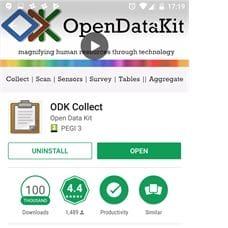
InPP's Department 2 is also collaborating with Department 4 (Monitoring and Diagnosis). Portuguese agronomists are going to be trained on data collection and model validation of a yellow rust warning system. The goal is to use Open Data Kit (ODK), an open source software for (android) mobile devices that uses a form designed by InPP (Dep. 4) to collect data in the field and offline. The submission of the data to the InPP server is made once back to the office, when Internet connectivity is available. The app not only speeds up the data collection but also improves its management and accessibility.
Regarding the identification of wheat genes involved in YR resistance, the first field trial for the evaluation of disease symptoms in a panel of 250 wheat accessions of INIAV's breeding pool has been sown in the INIAV Elvas field. The crop of common or bread wheat (Triticum aestivum) is checked by the team every week, to remove weeds and check accessions status.
Disease evaluation will begin as soon as first symptoms develop. Image analysis of infected leaves will be performed to identify the percentage of pustules per leaf. This experiment will be performed in three consecutive years, and the data will be used to access the genetic and phenotypic variability within this panel and for future genome-wide association studies.
Field work by researchers Miguel Teixeira, Asmae Jlilat, Ana Miguel Reis, Diana Acácio, Flavio Storino, Diana Sousa and Hadi Sheikhnejad
For 2021, we also expect the most prevalent YR fungus race will have its genome sequenced and potential virulent factors will be identified by in silico analysis.
Accelerating technological innovation and creating new sustainable solutions for the protection of agricultural crops against pests, diseases and weeds, while protecting ecosystems, is the aim of the new collaboration between Syngenta Crop Protection, an InnovPlantProtect (InPP) member, and Insilico Medicine, which specializes in artificial intelligence (AI) and deep learning.
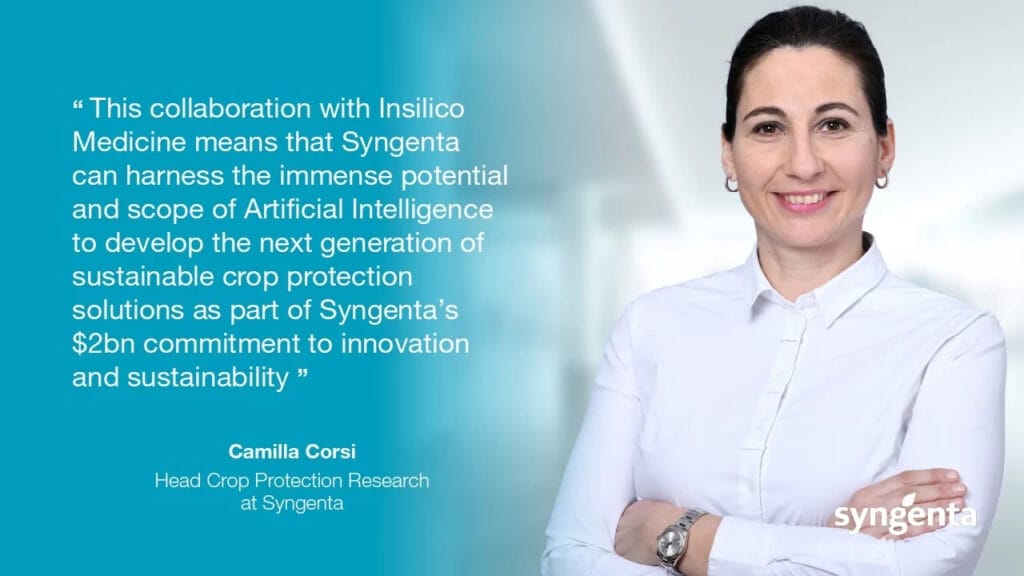
The partnership “will further transform agriculture by providing farmers around the world with the tools they need to produce healthy, nutritious, affordable and sustainably grown food in the most efficient way, while minimizing environmental impact,” Camilla Corsi said in a statement, head of Crop Protection Research at Syngenta.
Insilico Medicine's solid and proven experience in the use of AI and deep learning to develop, synthesize and validate new active substances promises to “transform the development of new solutions that help keep plants safe, from planting to harvest,” Syngenta points out. The safety of agricultural products and the protection of human health, in the short and long term, are also top priorities.
Twelve founding members, the InnovPlantProtect team and all those who contributed to giving birth to this young CoLab are to be congratulated today: two years ago, the formal constitution of InPP was registered with a notary in Elvas.
On January 24, 2019, in pre-pandemic times, the public deed was signed to establish the InnovPlantProtect - Associação collaborative laboratory in Elvas. Today, a highly qualified team is now complete, work is underway and projects are in progress, marking the second anniversary of the formal establishment of the collaborative laboratory, which has twelve founding partners.
Despite the restrictions imposed on all of us by the Covid-19 crisis, 2021 promises to be auspicious. “The conditions are beginning to be created for the careful and dedicated management to achieve the desired results,” says the mayor of Elvas (CME), an InnovPlantProtect (InPP) member. “Now it's ‘hands on’,” says Nuno Mocinha.
Admitting that “it's been a Herculean task to set up the CoLab”, the chairman of the board of Casa do Arroz has no doubt that “it's been worth it” and that InPP “will be on the map”. “It has everything it takes to succeed,” assures Pedro Monteiro. “For us, the CoLab is our insurance for the future. It's a laboratory that represents a great opportunity for the defense of rice cultivation in Portugal.”
InPP members sign the public deed of incorporation, on January 24, 2019, at the notary's office in Elvas.
The traditional “family photo”.
The great satisfaction with the quality of the technical staff is shared by CME, CEBAL and Fertiprado - and by InPP's executive director and “man at the helm”, Pedro Fevereiro. “The high level of professionalism, the dedication of all the professionals who make it up and its great organization put this institution on the map of major international organizations in the field of plant protection,” says Liliana Marum, a researcher at CEBAL. “CEBAL, as a founding partner, congratulates InnovPlantProtect on its excellent work and its mission of great importance for the sustainability of national agriculture.”.
“Although it's still in the installation phase, the excellent team already set up by Professor Pedro Fevereiro gives us high hopes for the success of the important projects already underway in the InnovPlantProtect collaborative laboratory,” says Ana Barradas, Fertiprado's R&D director. The company is already working with InPP on the Pythium project, the aim of which is to “identify the pathological organism that causes root rot and find a solution to eliminate it”.
“The CoLab is our insurance for the future.” Pedro Monteiro, Casa do Arroz
“Fertiprado is very proud to be a founding member of the InnovPlantProtect CoLab and we are very pleased to be celebrating its second anniversary,” concludes Ana Barradas. “After two years, the CoLab has a team of 38 employees, the vast majority of whom are highly educated, highly motivated and competent. It's a team that is expected to make a difference on the agricultural innovation scene and to be able to respond to the challenge of developing biopesticides and services that reduce the impact of pests and diseases on Mediterranean crops,” stresses Pedro Fevereiro.
“Our resilience lies and will lie in the fact that we have created a friendly and interactive working environment, which we want to maintain and expand,” argues InPP's CEO, who bet on this project “because it is a way of participating in the transfer of academic knowledge to real life, on the one hand, and of participating in the construction of solutions for a more productive and sustainable agriculture, on the other.”.
For Pedro Fevereiro, the second anniversary of the establishment of CoLab means above all that the institution has survived the initial installation phase, “which is not over yet, even despite the pandemic situation we are living in”. “It means that what we invested in is still in a position to progress and develop. The preliminary process of setting up was the effort of a team that knew how to put the common interest ahead of individual agendas and that knew how to find a way to make this project viable,” stresses the executive director.
“CoLab has a team of 38 highly motivated and competent employees.” Pedro Fevereiro, CEO of InPP
In the current context, the biggest challenge “is to keep the team active and working, while we wait for the possibility of having everyone working in the same place and in suitable conditions to develop the projects we already have in hand” - a goal that Pedro Fevereiro hopes to achieve within six months. “Another challenge is to create a modern institution of reference in a territory far from the major centers.” For Nuno Mocinha, InnovPlantProtect represents, in fact, “a qualitative leap in the affirmation of Elvas as a research hub in the national context and a special partnership between academia, companies and local government”.
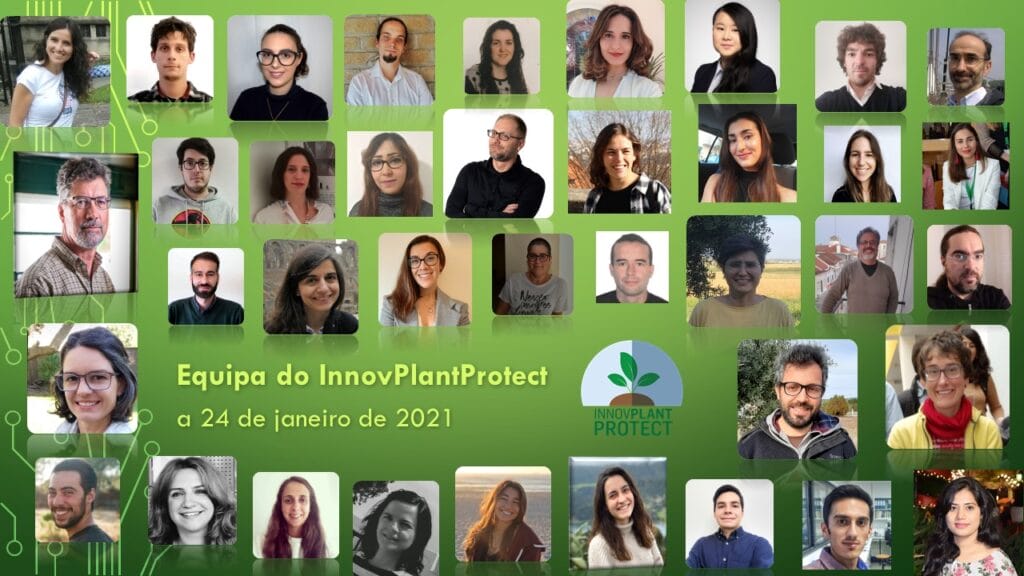
The 38 members of the InnovPlantProtect team in January 2021.
The main objective now is to “develop national and international projects in the field of crop protection that have the capacity to present solutions as soon as possible, while guaranteeing the CoLab's financial balance,” says Pedro Fevereiro. New bio-based solutions for protecting plants against pests and diseases are “a market that is expected to double in the next five years at international level and which will certainly expand enormously in the European Union in the light of the European Green Deal and the ‘Farm to Fork’ and ‘Biodiversity’ Strategies”, recalls Felisbela Torres de Campos, responsible for Regulatory and Business Sustainability at Syngenta Portugal, an InPP member.
“This collaborative laboratory is on the right track: towards the sustainability of agriculture,” says Felisbela Campos, who considers CoLab “a strategic partnership for Syngenta and also because of the company's strong commitment to R&D in biological solutions for agriculture”. In addition, “InnovPlantProtect positions Portugal as a creator of technologies to solve specific phytosanitary problems in Portuguese agriculture, which will certainly help to reduce the country's dependence on foreign technologies and ensure that the solutions found are more effective from the outset”.
“We welcome this partnership and its potential to accelerate innovationfor farmers and nature”. Felisbela Torres de Campos, Syngenta Portugal
“CEBAL, as a founding partner, congratulates InnovPlantProtect for its excellent work and its mission of great importance for the sustainability of national agriculture,” agrees Liliana Marum, a researcher at the biotechnology center based in Beja.
InPP's founding partners are the National Institute for Agricultural and Veterinary Research, Elvas City Council, the New University of Lisbon, Syngenta Crop Protection, the Alentejo Agricultural and Agri-Food Biotechnology Center, Casa do Arroz, Bayer Crop Science, the University of Évora, Fertiprado, the National Federation of Fruit and Vegetable Producers' Organizations, the National Association of Protein, Oilseed and Cereal Producers, and the National Association of Maize and Sorghum Producers.





 Português
  English