News & Events

white plant

NEWS

“We're here to listen to the sector's problems and find solutions together”. This was said by António Saraiva, executive director of InnovPlantProtect (InPP), who attended the eighth edition of the National Olive Oil Congress, held in Campo Maior and featured in the July edition of Voz do Campo magazine.

In the interview, António Saraiva highlighted the importance of olive growing, one of the most representative crops in the Mediterranean, and pointed out some of the major challenges currently facing the sector:

  • A growing shortage of phytosanitary solutions: many tools are disappearing and effective alternatives are not always emerging.
  • The long road between research and application in the field: the process of bringing a scientific solution to farmers can take around 10 years.
  • Impacts of climate change and emerging pests, which make farming even more difficult.

Faced with these challenges, InPP is committed to developing new innovative solutions that are environmentally friendly and sustainable for farmers. CoLAB is looking for agents such as active substances and microorganisms capable of controlling diseases and boosting biostimulants, as well as investing in digital technologies that allow producers to detect crop problems early and increase the effectiveness of interventions.

Another point highlighted by the executive director is the need to speed up the transfer of knowledge to the field, through partnerships and commercial agreements that ensure that innovations actually reach farmers.

“We're here to listen to the sector's problems and find solutions together. We want to be close to farmers, associations and companies, because that's the only way we can develop effective and sustainable tools,” António Saraiva stressed.

The full interview is available in the July issue of Voz do Campo magazine, on newsstands now, and in the image below.

It's called PROSPER and it's a new European project that aims to transform European agriculture through the valorization of “orphan” legumes - resistant crops, little exploited, but with great potential to face the challenges of climate and food in the future.

The consortium, with total funding of around 5 million euros, brings together 27 partners from 13 European countries and Tunisia, including universities, research centers, companies and non-profit organizations in the agricultural sector. Among them are countries from the Mediterranean (Italy, Spain, Greece, Portugal and France), Central Europe (Germany, Belgium, Poland, Bulgaria and Romania), Northern Europe (Denmark, Sweden and Finland).

The aim of PROSPER is to test and validate new agricultural diversification strategies, adapted to different climates and social and economic contexts, promoting more sustainable, innovative practices that are adjusted to the needs of different agricultural realities.

InPP, PROSPER's partner, will be responsible for analyzing:

  • Soil health and environmental impact
  • Energy efficiency and waste management
  • Nutritional quality of crops
  • Fair valuation along the production chain

To do this, the InPP team will use advanced technologies, such as real-time sensors and geospatial analysis, which will help study soil health, carbon sequestration captured by crops, water management and biodiversity, among others.

PROSPER is co-created with the main players in the agricultural sector, ensuring that the solutions developed do not remain on paper: they will be practical, useful and transformative.

The project starts in September 2025. We are ready to embark on this journey towards a greener, fairer and more resilient agriculture.

Stay tuned for more news!

InnovPlantProtect (InPP) was present at the Science 2025 Meeting in Lisbon, at the Nova SBE Campus, to take part in the parallel session “Crop Protection for One Health, and Food and Environmental Sustainability”.

The Encontro Ciência took place from July 9 to 11 at the NOVA SBE Campus in Carcavelos, with the motto “Science, Innovation and Society”. Portugal's largest science and technology meeting was the stage for promoting and discussing the scientific, social, cultural and economic impact of research in Portugal, exploring the intersection between science, innovation and society, to inspire new ideas and foster transformative collaborations.

The director of the Data Management and Risk Analysis Department, Ricardo Ramiro, and the director of the New Biopesticides Department, Cristina Azevedo, presented some of the results of their work in this session co-moderated by the executive director, António Saraiva.

During the session, two important solutions for the agricultural sector, developed by our team, were presented:

  • iCountPests - an innovative app that uses AI to detect and count pests accurately and quickly in photos of chromotropic traps.
  • InPP 2 - a broad-spectrum biofungicide capable of fighting Botrytis cinerea, the fungus responsible for gray rot in tomatoes.

CoLAB MORE Colab - Collaborative Mountain Research Laboratory and Sfcolab - Collaborative Laboratory for Digital Innovation in Agriculture, were also present at the parallel session, as well as GREEN-IT, to discuss how science and innovation can tackle the challenges of climate change and promote more sustainable agricultural systems.

EVENTS

Insect vector of Xylella is attracted or repelled by different aromatic plants depending on the sex of the adult and its distance from the source of essential oils.

Lavandula angustifolia Photo: JLPC/ Wiki

It was already known that the nefarious Xylella fastidiosa “liked” Lavandula spp.; after all, it was in a lavender plant that the presence of the bacterium in Portugal was confirmed for the first time in January 2019. A team of scientists has since concluded that the males of the insect vector of the Xylella in Europe are attracted to the essential oils of lavender over long distances.

“Sustainable vector control is an essential part of pest management strategies.”, remember those responsible for the European XF-ACTORS project. The results of this study could contribute to the development of innovative approaches and tools to control the insect, as alternatives to the use of synthetic pesticides Philaenus spumarius, vector of Xylella fastidiosa in Europe - essential to control the spread of the bacteria.

The team found that the peripheral olfactory system of the P. spumarius captures the volatile organic compounds present in the essential oils of pelargonium (also known as geranium or sardinia). Pelargonium graveolens, from Cymbopogon nardus (a relative of lemongrass), which produces citronella, and the Lavandula angustifolia (before officinalis), lavender. But the effect of this detection depends on the “dose” and the distance.

At any distance, both lavender and pelargonium repelled the females. Males, on the other hand, were attracted to geranium and repelled by citronella. At close range, both lavender and citronella were repellent to both females and males.

You can consult the original scientific article here.

In celebration of the International Day of Women and Girls in Science, some of InnovPlantProtect's women researchers share the reasons they became scientists.

“I became a scientist for the thrill of being able to discover something new every day and a plant scientist in particular with the dream of producing plants resistant to pathogens, avoiding the need for chemical pesticides. A win-win solution to reduce the environmental impacts of agriculture and the production costs to small farmers.”

Cristina Azevedo, PhD researcher, Head of the New Biopesticides Department

“Ever since I was a child, I always felt drawn to nature, particularly at the beach, where I would explore sea life, but also at my grandparents’ vegetable garden, where I loved to play. The fact that my mother is really passionate about nature, particularly about plants and birds, also played a role when I decided to apply for Biology. On top of that, there's my desire to understand the world around me; being a scientist allows me to ask questions and work towards an answer, and that moment when you discover something new in the lab is still beyond thrilling.”

Cláudia Rato da Silva, PhD researcher, Protection of Specific Crops Department

“I have had a passion for technology and science since childhood, so I decided to pursue my career in a computer science discipline in which Artificial Intelligence is one of the great research fields, which could help to solve complex problems of nearly every field. ‘The human brain cannot deal with terabytes but Machine Learning can!’ Hence I was inspired to do research in this field.”

Manisha Sirsat, PhD researcher, Department of Data Management and Risk Analysis

Cláudia Almeida Silva
Cátia Patrício
Ana Cláudia Silva

“When I was younger, I used to ask my parents ‘Why this happens?’ or ‘Why this works the way it does?’ Most of the questions were ‘Why?’ and my parents didn't know how to answer, so they encouraged me to go look for it. From then on, I didn't ask my parents anymore. I would search for the answer. That feeling did not disappear as I grew up. So, during my school years, I always searched for the answer to the question ‘Why?’. When I was in 12th grade, I had to choose my college degree and it was very difficult to choose between all the available courses, but I knew that it would be related to science, because 99% of the questions that you ask, Science can answer it. And that was the moment that I decided to become a scientist - to search for the answers to my questions. Science is a part of our life, Science is in everything, with Science you can change the world.”

Cláudia Almeida Silva, MSc researcher, Department of New Formulations and Matrices for the Application of Biopesticides

“I decided to become a scientist when my father got sick, and I knew that I should contribute to science to help answer the questions that still had no answers. This profession showed me that there are many things that we already know but, on the other hand, there is much more that we need to discover and learn. The idea that small discoveries that you can make can lead to the solution of big problems is gratifying to me.”

Cátia Patrício, MSc Researcher, Department of New Biopesticides

“As an undergraduate, I started collaborating in a Nematology laboratory at the University where I was studying. There began my passion for science, and particularly for phytopathology. Since then, I have been gaining more knowledge and working in this topic, and it is a great pleasure for me to be able to keep on following this career at the InnovPlantProtect CoLab, with such a prodigious team of women and men scientists.”

Ana Cláudia Silva, MSc Researcher, Department of New Biopesticides

“I didn't always want to become a scientist. One thing I did know was that I had been forever fascinated with my surroundings, nature at its finest. And there was this random driving force that made me question things, as although I felt an overwhelming need to pursue all the answers. Why is everything the way it is? Why is that leaf falling from the tree? Questioning, and an overall endless curiosity, that's what made me become ‘sort-of-a-scientist’”.

Maria Miguel Pires, MSc Researcher, Department of New Biopesticides

“Since childhood, I have always been fascinated with nature, how plants survive on rainy days, how the dough rises, how the grape juice that I could drink turns into something that I was not allowed to... at the end of the day, how life makes sense! So, I wanted to know more and more, and that curiosity made me pursue life sciences.”

Diana Pimentel, PhD researcher/ Biostatistics Technician, Department of Data Management and Risk Analysis

“Isn't it fascinating how the tiniest organisms can affect a whole ecosystem? And, even more so, to understand how they work and how we can fight or improve them? This feeling was what made me pursue a scientific career. Science is non-stop challenges but is also non-stop knowledge and progress.”

Jordana Branco, MSc researcher, Department of New Biopesticides

Diana Sousa

“I have always loved nature and helping people, in order to always contribute to a more sustainable world and better health for all people. I confess that I was also fascinated by the investigation, due to CSI. Ahahah And that's why I became a scientific researcher, always ready to promote a better world.”

Diana Sousa, MSc researcher, Department Protection of Specific Crops

© 2021 InnovPlantProtect, All rights reserved

XfSTOP aims to develop a solution to protect olive groves against the bacterium Xylella fastidiosa. The project is led by InnovPlantProtect's New Biopesticides Department - Department 1, headed by researcher Cristina Azevedo.

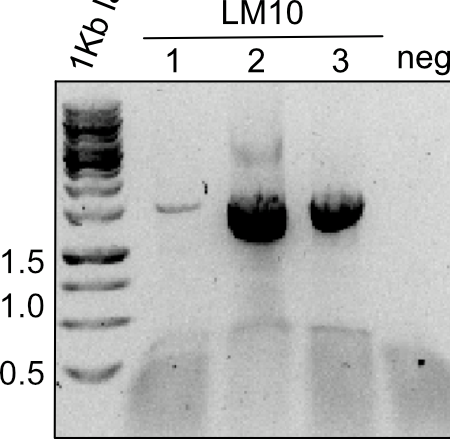
The team is now starting laboratory work, with the aim of trying to isolate peptides (small amino acids) that inhibit the growth of the bacterial pathogen Xylella fastidiosa. “We have established collaboration with researchers in different countries, through which we have obtained genomic DNA from different isolates [strains] of Xylella, and we are in the process of isolating the genes that code for the virulence proteins against which we want to select the peptides,” explains Cristina Azevedo.

Isolation of Xylella fastidiosa (strain LM10)

The director of Dep. 1 said that the team is also “starting to isolate bacterial endophytes [organisms that live inside a host] present in the xylem of olive varieties grown in the Alentejo region (Cobrançosa and Arbequina) and of an Italian variety that is resistant to Xylella (Leccino), from the Herdade de Reguengo, belonging to INIAV, Elvas center”.

The project's acronym, XfSTOP, stands for “Integrated approach to disease management for the biocontrol of Xylella fastidiosa in olive trees”. The olive tree is of enormous economic importance in Portugal, particularly in the Alentejo. The biopesticide to be developed will use a microorganism capable of coexisting in the same environment as the olive tree. Xylella, The plant will then produce a biological compound capable of eliminating the bacteria. This mechanism will be sustainable, environmentally friendly and non-toxic.

© 2021 InnovPlantProtect, All rights reserved