News & Events

white plant

NEWS

InnovPlantProtect (InPP) was present at the project launch meeting BioLivingLABS - Bioeconomia ao Serviço da Sustentabilidade dos Territórios do Interior (Bioeconomy at the Service of the Sustainability of Inland Territories), which took place on October 1st at the School of Agriculture of the Polytechnic Institute of Castelo Branco (IPCB).

Funded by COMPETE 2023, the BioLivingLABS project, led by MORE CoLAB - Laboratório Colaborativo Montanhas de Investigação, in partnership with the InPP, the IPCB, from AQUAVALOR and the Polytechnic Institute of Bragança (IPB).

This project's mission is to add value to the low-density territories in the north, center and south of the country by demonstrating and economically boosting the work carried out by the partners - through the creation, demonstration and application of products, processes and services resulting from joint research.

Four living laboratories will be created (Living Labs) in the innovation hubs of Mirandela, Douro, Covilhã and Elvas, which they intend to promote:

  • the transfer of knowledge;
  • technology demonstration;
  • strategic roadmapping and
  • the protection of intellectual property.

BioLivingLABS strengthens the link between academia, business and society, driving innovation and sustainability.

Expected impact:
Over the course of 24 months, and with Living Labs dedicated to sectors such as olive groves and olive oil, vineyards and wine, fruit and cereals, legumes, among others, the project will contribute to:

  • increase regional competitiveness;
  • promote sustainable practices and
  • responding to the environmental, social and economic challenges facing inland territories.

More news about this new project soon.

On September 25, InnovPlantProtect (InPP) was present at the National Exhibition of Blue Bioeconomy Pact Projects, held at the Port of Leixões Cruise Terminal, for the exhibition session of the Algae Vertical project, led by PhytoBloom by Necton.

InPP, leader of sub-project 6 - Agriculture, was represented by department director Cristina Azevedo and executive director António Saraiva, who presented some of the new algae-based biosolutions that our team and partners are developing.

There were more than 300 participants and 80 entities, including companies, research centers and political decision-makers. The Opening Conference was attended by the Chairman of Inovamar's General and Supervisory Board, José Soares dos Santos, and round tables were held on the future of the blue economy in Portugal.

Algae Vertical explores the biotechnological potential of algae in sectors as diverse as food, cosmetics, pharmaceuticals, agriculture and energy.

Find out more about the Algae Vertical Project here

InnovPlantProtect (InPP) recently received approval for an application submitted to COMPETE2030-2024-6 - Collective Actions - Transfer of scientific and technological knowledge - BioLivingLABS - Bioeconomy at the service of the sustainability of inland territories, led by MORE CoLAB - Laboratório Colaborativo Montanhas de Investigação, Associação, in partnership with the Polytechnic Institute of Bragança (IPB), the Polytechnic Institute of Castelo Branco (IPCB) and AQUAVALOR.

BioLivingLABS aims to promote the economic valorization of research and development (R&D) results obtained by various institutions in the North, Center and Alentejo. To this end, it will create an experimental demonstration network, the so-called Living Labs, The project will be held in the innovation hubs of Mirandela, Douro, Covilhã and Elvas. In addition, demonstration actions, workshops, an inland innovation catalog and training on intellectual property protection will be developed with the aim of encouraging the incorporation of innovative solutions in the business sectors of these regions.

Scheduled to begin in October and lasting 24 months, the project has a total eligible investment of over 740,000 euros, financed by COMPETE2030 - Thematic Program for Innovation and Digital Transition. For InPP, this project is a strategic opportunity to strengthen its mission as a center for technology development and transfer, boosting the practical application of scientific knowledge to promote sustainable development.

This initiative confirms InPP's commitment to open and sustainable innovation, integrating science, technology and regional development to respond to the challenges and potential of the interior of the country.

EVENTS

Insect vector of Xylella is attracted or repelled by different aromatic plants depending on the sex of the adult and its distance from the source of essential oils.

Lavandula angustifolia Photo: JLPC/ Wiki

It was already known that the nefarious Xylella fastidiosa “liked” Lavandula spp.; after all, it was in a lavender plant that the presence of the bacterium in Portugal was confirmed for the first time in January 2019. A team of scientists has since concluded that the males of the insect vector of the Xylella in Europe are attracted to the essential oils of lavender over long distances.

“Sustainable vector control is an essential part of pest management strategies.”, remember those responsible for the European XF-ACTORS project. The results of this study could contribute to the development of innovative approaches and tools to control the insect, as alternatives to the use of synthetic pesticides Philaenus spumarius, vector of Xylella fastidiosa in Europe - essential to control the spread of the bacteria.

The team found that the peripheral olfactory system of the P. spumarius captures the volatile organic compounds present in the essential oils of pelargonium (also known as geranium or sardinia). Pelargonium graveolens, from Cymbopogon nardus (a relative of lemongrass), which produces citronella, and the Lavandula angustifolia (before officinalis), lavender. But the effect of this detection depends on the “dose” and the distance.

At any distance, both lavender and pelargonium repelled the females. Males, on the other hand, were attracted to geranium and repelled by citronella. At close range, both lavender and citronella were repellent to both females and males.

You can consult the original scientific article here.

In celebration of the International Day of Women and Girls in Science, some of InnovPlantProtect's women researchers share the reasons they became scientists.

“I became a scientist for the thrill of being able to discover something new every day and a plant scientist in particular with the dream of producing plants resistant to pathogens, avoiding the need for chemical pesticides. A win-win solution to reduce the environmental impacts of agriculture and the production costs to small farmers.”

Cristina Azevedo, PhD researcher, Head of the New Biopesticides Department

“Ever since I was a child, I always felt drawn to nature, particularly at the beach, where I would explore sea life, but also at my grandparents’ vegetable garden, where I loved to play. The fact that my mother is really passionate about nature, particularly about plants and birds, also played a role when I decided to apply for Biology. On top of that, there's my desire to understand the world around me; being a scientist allows me to ask questions and work towards an answer, and that moment when you discover something new in the lab is still beyond thrilling.”

Cláudia Rato da Silva, PhD researcher, Protection of Specific Crops Department

“I have had a passion for technology and science since childhood, so I decided to pursue my career in a computer science discipline in which Artificial Intelligence is one of the great research fields, which could help to solve complex problems of nearly every field. ‘The human brain cannot deal with terabytes but Machine Learning can!’ Hence I was inspired to do research in this field.”

Manisha Sirsat, PhD researcher, Department of Data Management and Risk Analysis

Cláudia Almeida Silva
Cátia Patrício
Ana Cláudia Silva

“When I was younger, I used to ask my parents ‘Why this happens?’ or ‘Why this works the way it does?’ Most of the questions were ‘Why?’ and my parents didn't know how to answer, so they encouraged me to go look for it. From then on, I didn't ask my parents anymore. I would search for the answer. That feeling did not disappear as I grew up. So, during my school years, I always searched for the answer to the question ‘Why?’. When I was in 12th grade, I had to choose my college degree and it was very difficult to choose between all the available courses, but I knew that it would be related to science, because 99% of the questions that you ask, Science can answer it. And that was the moment that I decided to become a scientist - to search for the answers to my questions. Science is a part of our life, Science is in everything, with Science you can change the world.”

Cláudia Almeida Silva, MSc researcher, Department of New Formulations and Matrices for the Application of Biopesticides

“I decided to become a scientist when my father got sick, and I knew that I should contribute to science to help answer the questions that still had no answers. This profession showed me that there are many things that we already know but, on the other hand, there is much more that we need to discover and learn. The idea that small discoveries that you can make can lead to the solution of big problems is gratifying to me.”

Cátia Patrício, MSc Researcher, Department of New Biopesticides

“As an undergraduate, I started collaborating in a Nematology laboratory at the University where I was studying. There began my passion for science, and particularly for phytopathology. Since then, I have been gaining more knowledge and working in this topic, and it is a great pleasure for me to be able to keep on following this career at the InnovPlantProtect CoLab, with such a prodigious team of women and men scientists.”

Ana Cláudia Silva, MSc Researcher, Department of New Biopesticides

“I didn't always want to become a scientist. One thing I did know was that I had been forever fascinated with my surroundings, nature at its finest. And there was this random driving force that made me question things, as although I felt an overwhelming need to pursue all the answers. Why is everything the way it is? Why is that leaf falling from the tree? Questioning, and an overall endless curiosity, that's what made me become ‘sort-of-a-scientist’”.

Maria Miguel Pires, MSc Researcher, Department of New Biopesticides

“Since childhood, I have always been fascinated with nature, how plants survive on rainy days, how the dough rises, how the grape juice that I could drink turns into something that I was not allowed to... at the end of the day, how life makes sense! So, I wanted to know more and more, and that curiosity made me pursue life sciences.”

Diana Pimentel, PhD researcher/ Biostatistics Technician, Department of Data Management and Risk Analysis

“Isn't it fascinating how the tiniest organisms can affect a whole ecosystem? And, even more so, to understand how they work and how we can fight or improve them? This feeling was what made me pursue a scientific career. Science is non-stop challenges but is also non-stop knowledge and progress.”

Jordana Branco, MSc researcher, Department of New Biopesticides

Diana Sousa

“I have always loved nature and helping people, in order to always contribute to a more sustainable world and better health for all people. I confess that I was also fascinated by the investigation, due to CSI. Ahahah And that's why I became a scientific researcher, always ready to promote a better world.”

Diana Sousa, MSc researcher, Department Protection of Specific Crops

© 2021 InnovPlantProtect, All rights reserved

XfSTOP aims to develop a solution to protect olive groves against the bacterium Xylella fastidiosa. The project is led by InnovPlantProtect's New Biopesticides Department - Department 1, headed by researcher Cristina Azevedo.

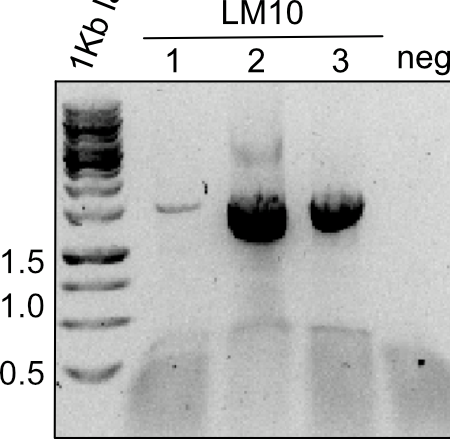
The team is now starting laboratory work, with the aim of trying to isolate peptides (small amino acids) that inhibit the growth of the bacterial pathogen Xylella fastidiosa. “We have established collaboration with researchers in different countries, through which we have obtained genomic DNA from different isolates [strains] of Xylella, and we are in the process of isolating the genes that code for the virulence proteins against which we want to select the peptides,” explains Cristina Azevedo.

Isolation of Xylella fastidiosa (strain LM10)

The director of Dep. 1 said that the team is also “starting to isolate bacterial endophytes [organisms that live inside a host] present in the xylem of olive varieties grown in the Alentejo region (Cobrançosa and Arbequina) and of an Italian variety that is resistant to Xylella (Leccino), from the Herdade de Reguengo, belonging to INIAV, Elvas center”.

The project's acronym, XfSTOP, stands for “Integrated approach to disease management for the biocontrol of Xylella fastidiosa in olive trees”. The olive tree is of enormous economic importance in Portugal, particularly in the Alentejo. The biopesticide to be developed will use a microorganism capable of coexisting in the same environment as the olive tree. Xylella, The plant will then produce a biological compound capable of eliminating the bacteria. This mechanism will be sustainable, environmentally friendly and non-toxic.

© 2021 InnovPlantProtect, All rights reserved