News & Events

white plant

NEWS

O InnovPlantProtect (InPP), Collaborative Laboratory specializing in biological and digital solutions for crop protection, aligned with the emerging challenges of agriculture, will launch its new institutional website on January 24th, on a symbolic date marking 7 years working in the agricultural sector.

This launch is part of a phase of institutional evolution and consolidation InPP, reinforcing its strategy of proximity to the sector, clarity in the communication of its competencies and affirmation as a strategic partner for companies, producers, associations and public bodies.

An even clearer, more up-to-date and sector-oriented platform

With a renewed structure and a more intuitive browsing experience, the new website features:

  • an area of Services and Products completely reorganized, which facilitates access to specialized services, laboratory capabilities and biological and digital solutions developed by InPP, as well as to a updated catalog of services and biosolutions;
  • more complete institutional content that reinforces transparency, scientific rigor and CoLAB's mission;
  • a clearer presentation of scientific skills and research areas, highlighting the impact of the work carried out by InPP's multidisciplinary teams.

New image, same mission - but reinforced

The launch of the website is accompanied by the implementation of InnovPlantProtect's new visual identity, This reflects the maturity of CoLAB and its future ambitions.

The new image - accompanied by the slogan “Innovate together. Protect better.” - reflects InPP's ongoing commitment to:

  • Developing new generation biological and digital solutions;
  • Promoting safer, more innovative and more productive agriculture;
  • Strengthen collaboration and partnership with the agricultural sector and the innovation ecosystem.

A new phase for InPP

The digital and visual renovation is part of a broader strategy of maturity and consolidation, Through this initiative, InPP aims to strengthen its role as a scientific and technological partner for the agricultural sector in applied research and the development of crop protection solutions.

According to António Saraiva, InPP's executive director: “This new website isn't just a digital revamp - it's a reflection of the ambition we have for our future and how we want to communicate with the sector. We want every visitor to understand the purpose that drives us: to create innovative solutions that protect crops, boost productivity and contribute to more sustainable agricultural systems. InPP is entering a new phase, with a clearer, more accessible identity aligned with the real needs of agriculture and a renewed commitment to real impact on the ground.”

Available from January 24th

The new InnovPlantProtect website will be available from January 24th at: https://iplantprotect.pt/
The start of a new year also marks a new cycle for InnovPlantProtect. In 2026, InPP enters a phase of evolution and consolidation, with several new features that reinforce its position as a strategic partner for the intelligent transformation of agriculture.

Over the next few months, initiatives, content and tools will be presented that reflect the work carried out by our teams in the areas of applied research, biological solutions, specialized services and digital innovation.

The first step in this new phase will be presented in the next January 24th, InnovPlantProtect is celebrating the date 7 years in business at the service of the agricultural sector.

Until then, we continue to prepare a range of new products that reflect our mission to promote safer, more innovative and more productive agriculture.

Stay tuned. What's coming is just the beginning.

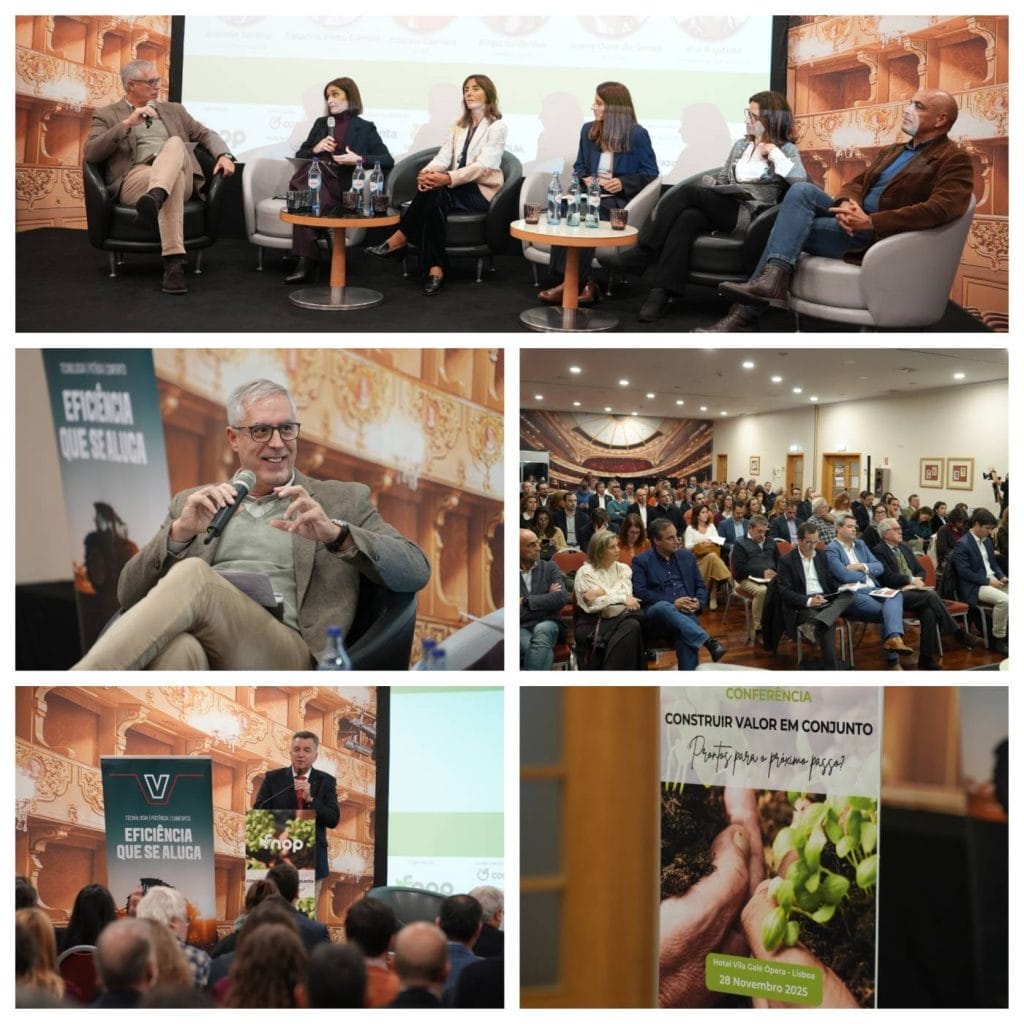
InnovPlantProtect (InPP) was present at the conference “Building value together”, organized by our associate FNOP - National Association of Fruit and Vegetable Producers' Organizations.

InPP's executive director, António Saraiva, moderated the panel “Sustainability that generates value: The role of ESG in the future of the sector”, which included interventions from Catarina Pinto Correia (VdA), Cristina Câmara (APED), Filipa Saldanha (Crédito Agrícola), Joana Oom de Sousa (Sovena) and Rui Veríssimo Baptista (Companhia das Lezírias).

The opening session was given by Domingos dos Santos, president of FNOP and a member of CoLAB's Board of Directors of our CoLAB.

The meeting brought together producer organizations, farmers, companies, experts and political decision-makers to discuss the current challenges and look to the future of the national fruit and vegetable sector.

With the participation of national and international experts, the conference was a privileged space for sharing experiences and strategic reflection, focusing on the organization of production and the role of public policies in promoting sustainable growth.

Congratulations to FNOP for the initiative and the ability to bring together a panel of excellent speakers, making this conference a relevant and topical milestone for the sector.

Image credits: Voz do Campo magazine

FNOP Event

EVENTS

Latest information from the Stenphyliosis Working Group released by INIAV. Controlling the maturation of the future spores of the fungus that causes the disease is crucial to stamping it out.

Monitoring the development of the spores of the fungus that causes stenphylliosis, also known as brown spot disease of the pear tree, indicates that the time has come to remove the leaves from under the tree canopy, recommends the Stenphylliosis Working Group.

The maturity index (MI) of the pseudothecae - structures where the endogenous spores (ascospores) form during the winter - increased by 0.9 in the Alcobaça orchard, 0.8 in the Maiorga orchard, 0.5 in the Picanceira orchard and 0.4 in the Sobrena orchard, between January 25 and February 8, 2021. Compared to the same period last year, the IM in these orchards in Western Portugal is 0.4 lower in Sobrena, 0.2 lower in Picanceira and Alcobaça, and 0.1 higher in Maiorga.

The data can be found in 2nd Information from the Stenphilosis Working Group (Stenphilosis WG), coordinated by INIAV, in which it is considered important to “remove/destroy the leaves under the canopy before the pseudothecae mature and the ascospores are released (IM=7), so that the primary inoculum of stenphyliosis is minimal and, as a result, the incidence of the disease is reduced”.

Those responsible for the Stenphyliosis WG point out that, at this time, the ascospores won't necessarily infect the pear trees, “but they will infect the vegetation in the soil and, possibly, the organic matter on the surface of the soil” - where the inoculum will be produced during the spring.

On February 8, the orchard with the highest IM was Maiorga (IM=4.7, n=103), followed by Alcobaça (IM=4.2, n=90), Picanceira (IM=4.1,0 n=94) and Sobrena (IM=3.9, n=102). The IM of the Maiorga orchard, very close to stage 5, means that there are ascospores in formation and mature ones.

A stenphylosis, caused by the fungus Stemphylium versicarium, is a disease that affects the production and quality of the rock pear, and for which there are still no phytopharmaceuticals capable of effectively neutralizing it.

Feature image: Nicky/ Pixabay

How are we going to reduce the use of chemical pesticides by 50%? This was one of the questions discussed in the online debate on the Farm to Fork strategy organized today by Syngenta, which presented its Good Growth Plan 2.0, a plan of commitments for sustainable agriculture by 2025.

Two billion dollars is how much Syngenta is going to invest in sustainable agriculture under its new commitment plan until 2025, the Good Growth Plan 2.0. The company will also make two technologies available per year and develop specific commitments for Portugal and Spain, Felisbela Torres de Campos said today. The Head of Regulatory & Business Sustainability Portugal was speaking at a online debate promoted on 25/2/2021 by Syngenta, an associate of InnovPlantProtect (InPP), where the new Good Growth Plan of the company was presented and the European Farm to Fork (F2F) strategy was discussed.

Felisbela Campos explained to the InPP blog that the two technologies “can be used in various areas, such as new molecules, biopesticides, apps monitoring, digital tools, etc.” With regard to the specifics of Portugal and Spain, the company is “still developing local commitments, but the areas in which we already have concrete projects underway are biodiversity, soil conservation, carbon neutrality, and the safe and sustainable use of plant protection products”.

The head of Syngenta also stressed that the main objectives until 2025 are to accelerate innovation for agriculture and nature, working towards carbon-neutral agriculture. And that in the period relating to the first Good Growth Plan, between 2013 and 2020, there was an increase of 20% in crop productivity in Portugal and Spain.

In the debate, the various speakers said “yes” to F2F, which aims, among other things, to reduce the use of chemical pesticides by 50%, something that, in the words of José Diogo Albuquerque, CEO of the Agroportal, This worries farmers because of the risk of an increase in pests and a reduction in production.

Nuno Canada, president of INIAV, also a partner at InPP, recalled that the F2F “has tools to better manage the transition and adaptation” needed and that knowledge, innovation and science “make it possible to overcome” the challenges that lie ahead. He also argued that the European Commission “has created a set of financial instruments for this area, more robust than in the past, to innovate in agriculture and food” - instruments that the sector must be able to use.

The president of INIAV recalled that of the 26 collaborative laboratories that have been set up in Portugal, six are in the agri-food sector, which he considered to be very significant and exemplary of the improvements that have taken place in the national agricultural education and research ecosystem, as well as the “very significant journey” that has been made towards bringing the entities that produce knowledge closer to those that use and apply it.

For the director general of Office of Planning, Policy and General Administration, According to Eduardo Diniz, “the main debate is not about the objectives of the Green Deal [the European Green Deal that the F2F is part of], it's about being aware that they require the introduction of innovation and technology, which requires investment and income in the sector.”.

As for the use of biopesticides, Eduardo Diniz believes that there is still a long way to go, from the point of view of research and regulation, and that they will always be a complementary strategy in the fight against pests and diseases, not a total alternative. For his part, Nuno Canada mentioned the case of InPP, based at the INIAV center in Elvas, which aims precisely to develop biopesticides for crop protection and the post-harvest phase.

© 2021 InnovPlantProtect, All rights reserved

Gene in common wheat that promotes the fungal diseases yellow rust and black rust identified.

A team of researchers from John Innes Centre identified a common wheat gene (Triticum aestivum), which acts as a promoter of yellow rust and black rust, fungal infections that attack this breadmaking cereal worldwide, in a very destructive way and with great economic impact.

Disrupting the function of this gene makes wheat more resistant to these diseases, according to a published news on the website of that international center of excellence in Plant Science.

Yellow rust under the microscope
Yellow rust on a wheat leaf. © John Innes Center

In a study published in The Plant Cell, The scientists conclude that the gene, called TaBCAT1, is activated (becomes expressed) at an early stage of yellow rust infection - caused by the fungus Puccinia striiformis f.sp. tritici. When these fungi attack, they activate (induce) and deactivate specific genes to prevent the wheat from defending itself. If successful, the plant is unable to eliminate the invader and ends up getting sick.

Eliminating this gene in mutant plants drastically reduced infection. “We were amazed to see that removing just this one gene in our mutant plants makes them alert their defense responses even before they are attacked,” says Pilar Corredor-Moreno, first author of the study.

The full scientific article is available at https://doi.org/10.1093/plcell/koab049

© 2021 InnovPlantProtect, All rights reserved

