News & Events

white plant

NEWS

O InnovPlantProtect (InPP), Collaborative Laboratory specializing in biological and digital solutions for crop protection, aligned with the emerging challenges of agriculture, will launch its new institutional website on January 24th, on a symbolic date marking 7 years working in the agricultural sector.

This launch is part of a phase of institutional evolution and consolidation InPP, reinforcing its strategy of proximity to the sector, clarity in the communication of its competencies and affirmation as a strategic partner for companies, producers, associations and public bodies.

An even clearer, more up-to-date and sector-oriented platform

With a renewed structure and a more intuitive browsing experience, the new website features:

  • an area of Services and Products completely reorganized, which facilitates access to specialized services, laboratory capabilities and biological and digital solutions developed by InPP, as well as to a updated catalog of services and biosolutions;
  • more complete institutional content that reinforces transparency, scientific rigor and CoLAB's mission;
  • a clearer presentation of scientific skills and research areas, highlighting the impact of the work carried out by InPP's multidisciplinary teams.

New image, same mission - but reinforced

The launch of the website is accompanied by the implementation of InnovPlantProtect's new visual identity, This reflects the maturity of CoLAB and its future ambitions.

The new image - accompanied by the slogan “Innovate together. Protect better.” - reflects InPP's ongoing commitment to:

  • Developing new generation biological and digital solutions;
  • Promoting safer, more innovative and more productive agriculture;
  • Strengthen collaboration and partnership with the agricultural sector and the innovation ecosystem.

A new phase for InPP

The digital and visual renovation is part of a broader strategy of maturity and consolidation, Through this initiative, InPP aims to strengthen its role as a scientific and technological partner for the agricultural sector in applied research and the development of crop protection solutions.

According to António Saraiva, InPP's executive director: “This new website isn't just a digital revamp - it's a reflection of the ambition we have for our future and how we want to communicate with the sector. We want every visitor to understand the purpose that drives us: to create innovative solutions that protect crops, boost productivity and contribute to more sustainable agricultural systems. InPP is entering a new phase, with a clearer, more accessible identity aligned with the real needs of agriculture and a renewed commitment to real impact on the ground.”

Available from January 24th

The new InnovPlantProtect website will be available from January 24th at: https://iplantprotect.pt/
The start of a new year also marks a new cycle for InnovPlantProtect. In 2026, InPP enters a phase of evolution and consolidation, with several new features that reinforce its position as a strategic partner for the intelligent transformation of agriculture.

Over the next few months, initiatives, content and tools will be presented that reflect the work carried out by our teams in the areas of applied research, biological solutions, specialized services and digital innovation.

The first step in this new phase will be presented in the next January 24th, InnovPlantProtect is celebrating the date 7 years in business at the service of the agricultural sector.

Until then, we continue to prepare a range of new products that reflect our mission to promote safer, more innovative and more productive agriculture.

Stay tuned. What's coming is just the beginning.

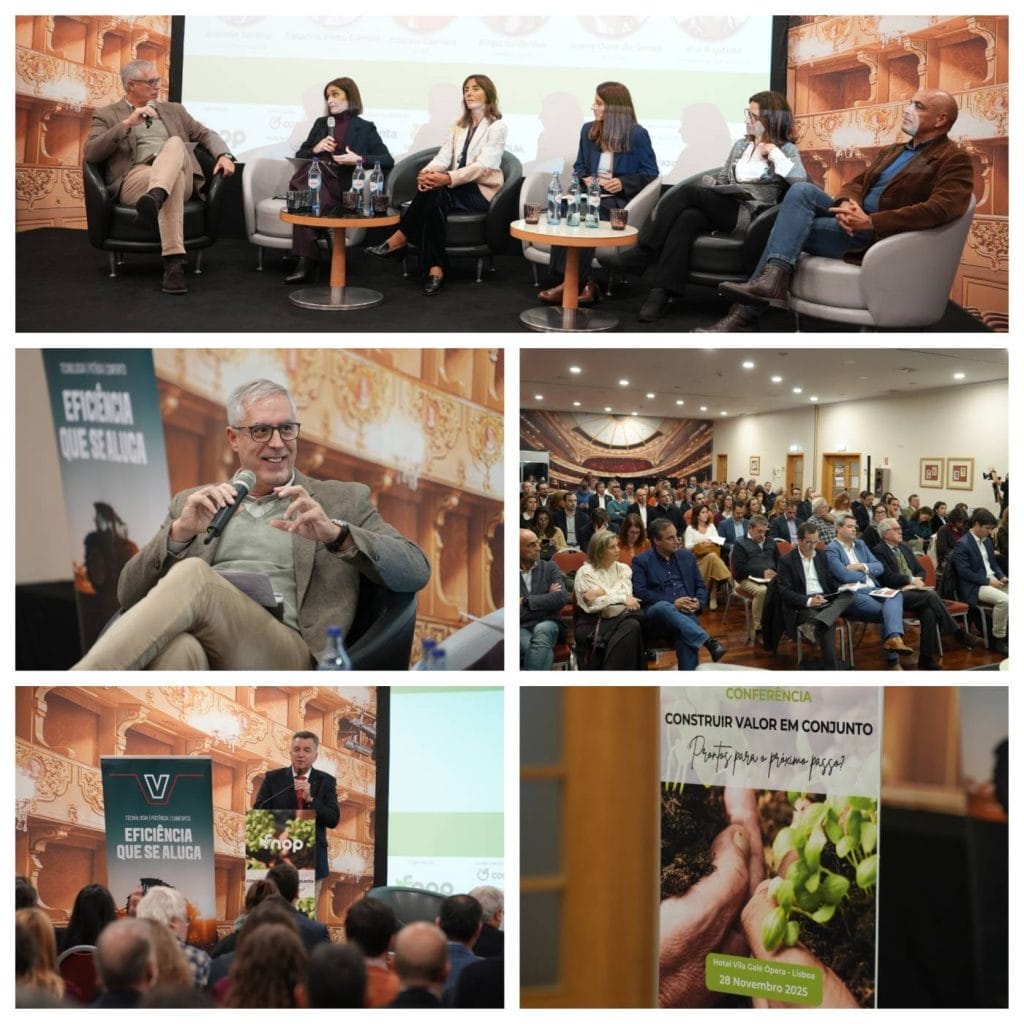
InnovPlantProtect (InPP) was present at the conference “Building value together”, organized by our associate FNOP - National Association of Fruit and Vegetable Producers' Organizations.

InPP's executive director, António Saraiva, moderated the panel “Sustainability that generates value: The role of ESG in the future of the sector”, which included interventions from Catarina Pinto Correia (VdA), Cristina Câmara (APED), Filipa Saldanha (Crédito Agrícola), Joana Oom de Sousa (Sovena) and Rui Veríssimo Baptista (Companhia das Lezírias).

The opening session was given by Domingos dos Santos, president of FNOP and a member of CoLAB's Board of Directors of our CoLAB.

The meeting brought together producer organizations, farmers, companies, experts and political decision-makers to discuss the current challenges and look to the future of the national fruit and vegetable sector.

With the participation of national and international experts, the conference was a privileged space for sharing experiences and strategic reflection, focusing on the organization of production and the role of public policies in promoting sustainable growth.

Congratulations to FNOP for the initiative and the ability to bring together a panel of excellent speakers, making this conference a relevant and topical milestone for the sector.

Image credits: Voz do Campo magazine

FNOP Event

EVENTS

International Day for the Fascination of Plants is celebrated every two years on May 18th..

A pedipaper for 10th graders and an activity of urban sketching open to the public will take place at Elvas Municipal Garden on May 18th, in celebration of the International Day for the Fascination of Plants. The initiative, to which Elvas City Council (CME) associates, is organized by the collaborative laboratory InnovPlantProtect (InPP) together with D. Sancho II Secondary School, Agrupamento de Escolas n.º 3 de Elvas, and the association AIAR.

O pedipaper, The event, which is aimed at three 10th grade classes from the D. Sancho II School, takes place between 8.30am and 1pm. In the afternoon, the drawing meeting promoted by AIAR will take place, starting at 6pm. The aim of the pedipaper is to allow the students, who are studying biodiversity this year, to explore, identify and marvel at the different trees in the Garden - the largest green space in the city - and their differentiating characteristics.

As a result of this activity, InPP, Escola Secundária D. Sancho II, AIAR and CME intend to continue collaborating with a view to developing a physical identification system for the Garden's trees based on a QR code that will allow mobile access to a “digital brochure” with more information.

Plant Fascination Day is an initiative of the European Plant Science Organization (EPSO), which takes place every two years on May 18th. It is coordinated at national level by the Portuguese Society of Plant Physiology and by the ITQB NOVA, with events across the country.

What is natural about the plants we eat? If it weren't for man's intervention in nature, would we have the variability we have today? Would bananas, avocados, carrots and grapes have anything to eat or were they just seeds? These and many other questions will be answered in the debate “Do the plants we eat really come from nature?”, which will take place online on May 18 at 6pm to celebrate Plant Fascination Day.

“Do the plants we eat really come from nature?” is the theme of the online debate that ITQB NOVA, CiBAnsemeiBETGREEN-IT e InnovPlantProtect will take place on May 18, International Day for the Fascination of Plants, at 6 p.m.

Whether they're edible, ornamental or have medicinal properties, plants are always fascinating. But have the plants we know always been like this? Or has our intervention in nature led to the diversity we have today? And, after all, do we have more or less biodiversity to celebrate today?

The truth is that the plants we eat are a positive construction of the human species. If the plants that nature has given us hadn't been actively manipulated by man over the millennia, they wouldn't be enough to feed us. Instead of ears full of corn kernels, we'd have teosinto. Instead of full-bodied orange carrots rich in beta-carotenes, we'd have thin, whitish roots. Watermelons, bananas, grapes and avocados would have more seeds than pulp. And the tomato wouldn't have the variability of colors, flavors and properties that it has today. It was the activity of the human species that led to what we eat today. And we did so in order to develop plant varieties that would produce seeds or fruit suitable for our diet and that would guarantee us food security and diversity.

With the aim of uncovering what is, after all, “natural” about the plants we eat, the event will feature an initial presentation by plant biology researcher Pedro Fevereiro, which will include comparative images of ‘Before’ & ’Now’ plants, followed by a debate moderated by Luís Ribeiro, a journalist from the magazine Vision specializing in the environment and sustainability, with the participation of Pedro Fevereiro, farmer Gabriela Cruz, nutritionist Conceição Calhau, and chef and gastronome José Maria Moreira.

Anyone who wants to celebrate the fascinating world of the plants we eat should join the live event, from 6pm (GMT+1). No prior registration is required.

Fascination of Plants Day takes place every two years on May 18th. In addition to this event, there are other activitiesAn online workshop, a virtual exhibition and a guided tour are some of the activities to celebrate the fascinating world of plants. 

The Fascination of Plants Day is an initiative coordinated at national level by the Portuguese Society of Plant Physiology and ITQB NOVA, with activities taking place throughout the country


It was on a beautiful sunny Thursday that a team from the New Biopesticides Department, involved in the XfSTOP project, went to Herdade do Álamo de Cima, belonging to the Eugénio de Almeida Foundation, near Évora, and returned with a car full of olive and almond branches.

And it wasn't, of course, for the pleasure of pruning trees. The aim was to collect samples of two crops that are very important to the local agricultural economy, and which are targets of the nefarious bacterium Xylella fastidiosa, for which InnovPlantProtect intends to develop a new biopesticide.

The researchers collected samples from four varieties of olive tree - Cobrançosa, Arbequina, Galega and Picual - and four varieties of almond tree - Solena, Guara, Belona and Avijor. This work will make it possible to isolate bacterial endophytes common to olive and almond trees.

The following day, Friday, the team processed the samples. They began by cutting branches about 15-20 cm long, removing the bark, disinfecting the outside of the branch to eliminate epiphytic microorganisms and macerating the xylem vessels with a buffer solution. This solution is then filtered through special bags, diluted, plated on culture medium and placed in an incubator at 30 ºC for around 15 days. Throughout this period, the appearance of colonies is monitored.

