News & Events

white plant

NEWS

O InnovPlantProtect (InPP), Collaborative Laboratory specializing in biological and digital solutions for crop protection, aligned with the emerging challenges of agriculture, will launch its new institutional website on January 24th, on a symbolic date marking 7 years working in the agricultural sector.

This launch is part of a phase of institutional evolution and consolidation InPP, reinforcing its strategy of proximity to the sector, clarity in the communication of its competencies and affirmation as a strategic partner for companies, producers, associations and public bodies.

An even clearer, more up-to-date and sector-oriented platform

With a renewed structure and a more intuitive browsing experience, the new website features:

  • an area of Services and Products completely reorganized, which facilitates access to specialized services, laboratory capabilities and biological and digital solutions developed by InPP, as well as to a updated catalog of services and biosolutions;
  • more complete institutional content that reinforces transparency, scientific rigor and CoLAB's mission;
  • a clearer presentation of scientific skills and research areas, highlighting the impact of the work carried out by InPP's multidisciplinary teams.

New image, same mission - but reinforced

The launch of the website is accompanied by the implementation of InnovPlantProtect's new visual identity, This reflects the maturity of CoLAB and its future ambitions.

The new image - accompanied by the slogan “Innovate together. Protect better.” - reflects InPP's ongoing commitment to:

  • Developing new generation biological and digital solutions;
  • Promoting safer, more innovative and more productive agriculture;
  • Strengthen collaboration and partnership with the agricultural sector and the innovation ecosystem.

A new phase for InPP

The digital and visual renovation is part of a broader strategy of maturity and consolidation, Through this initiative, InPP aims to strengthen its role as a scientific and technological partner for the agricultural sector in applied research and the development of crop protection solutions.

According to António Saraiva, InPP's executive director: “This new website isn't just a digital revamp - it's a reflection of the ambition we have for our future and how we want to communicate with the sector. We want every visitor to understand the purpose that drives us: to create innovative solutions that protect crops, boost productivity and contribute to more sustainable agricultural systems. InPP is entering a new phase, with a clearer, more accessible identity aligned with the real needs of agriculture and a renewed commitment to real impact on the ground.”

Available from January 24th

The new InnovPlantProtect website will be available from January 24th at: https://iplantprotect.pt/
The start of a new year also marks a new cycle for InnovPlantProtect. In 2026, InPP enters a phase of evolution and consolidation, with several new features that reinforce its position as a strategic partner for the intelligent transformation of agriculture.

Over the next few months, initiatives, content and tools will be presented that reflect the work carried out by our teams in the areas of applied research, biological solutions, specialized services and digital innovation.

The first step in this new phase will be presented in the next January 24th, InnovPlantProtect is celebrating the date 7 years in business at the service of the agricultural sector.

Until then, we continue to prepare a range of new products that reflect our mission to promote safer, more innovative and more productive agriculture.

Stay tuned. What's coming is just the beginning.

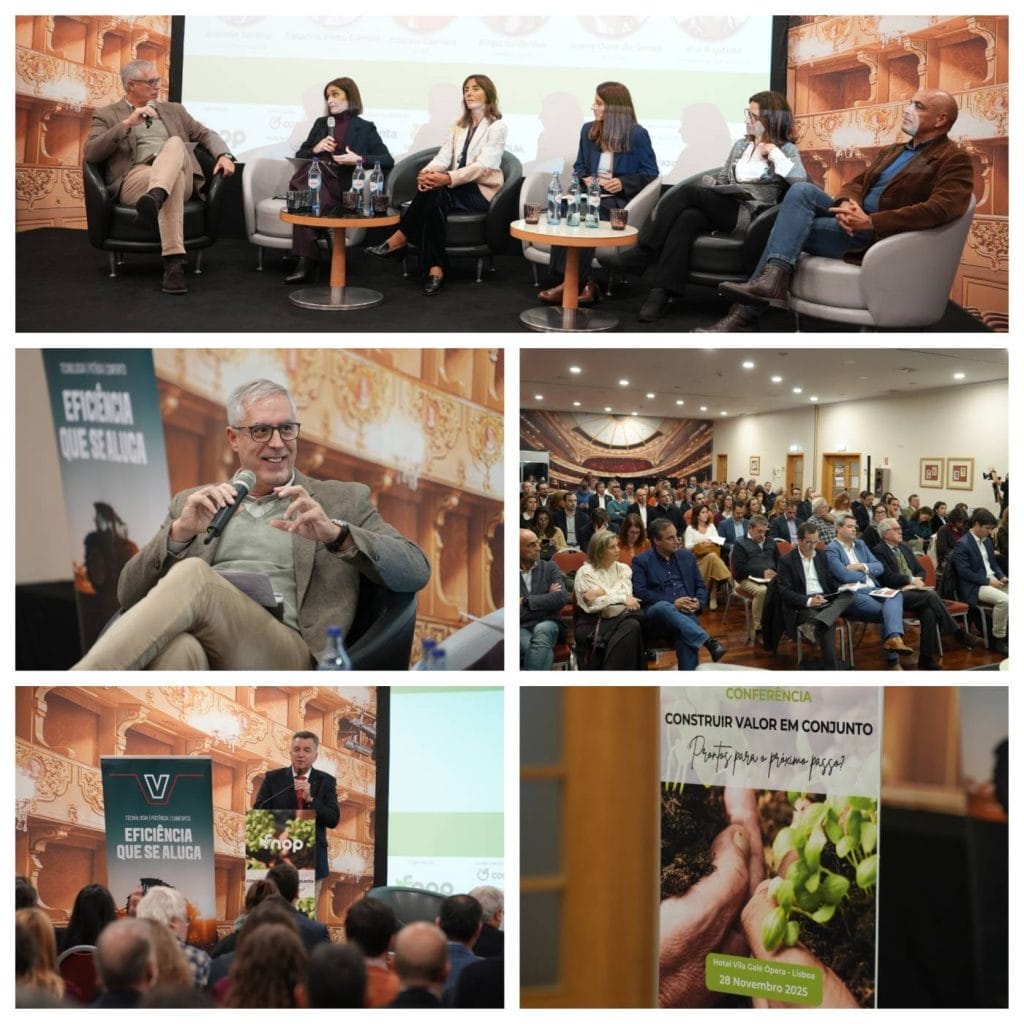
InnovPlantProtect (InPP) was present at the conference “Building value together”, organized by our associate FNOP - National Association of Fruit and Vegetable Producers' Organizations.

InPP's executive director, António Saraiva, moderated the panel “Sustainability that generates value: The role of ESG in the future of the sector”, which included interventions from Catarina Pinto Correia (VdA), Cristina Câmara (APED), Filipa Saldanha (Crédito Agrícola), Joana Oom de Sousa (Sovena) and Rui Veríssimo Baptista (Companhia das Lezírias).

The opening session was given by Domingos dos Santos, president of FNOP and a member of CoLAB's Board of Directors of our CoLAB.

The meeting brought together producer organizations, farmers, companies, experts and political decision-makers to discuss the current challenges and look to the future of the national fruit and vegetable sector.

With the participation of national and international experts, the conference was a privileged space for sharing experiences and strategic reflection, focusing on the organization of production and the role of public policies in promoting sustainable growth.

Congratulations to FNOP for the initiative and the ability to bring together a panel of excellent speakers, making this conference a relevant and topical milestone for the sector.

Image credits: Voz do Campo magazine

FNOP Event

EVENTS

InPP and CEPAAL formalized a partnership protocol with the aim of supporting the members of the Center for the Study and Promotion of Olive Oil in Alentejo in the protection of their olive groves.

The two entities will collaborate in developing strategies to solve the challenges posed by pests and diseases to the Center's member agricultural companies. The partnership also includes the provision of laboratory and digital services by InPP to CEPAAL producers, under specific contracts.

Feature image: Julie-Kolibrie | Pixabay

InnovPlantProtect has been formally accepted as an observer for the European Technology Platform (ETP) ‘Plants for the Future’.

InPP has joined the observer group of the European Technology Platform (ETP) ‘Plants for the Future’, which represents the innovation channel in the area of plant science and agriculture. The Plant ETP aims to stimulate research and innovation by promoting dialogue between industry, academia and the agricultural community, in order to benefit producers and end consumers.

The ETPs are public-private partnerships recognized by the European Commission and are considered instrumental in the transfer of knowledge, driving innovation and promoting competitiveness at European level.

“All the new technologies applied to [plant] breeding are the result of the development of scientific knowledge and its application to a practice that goes back 10,000 years,” defended InPP's executive director, during the event. webinar “Debates on Biotechnology: from Agriculture to the Bioeconomy”. “The ability we have to improve plants so that they produce what we need is not something that suddenly appears,” recalled Pedro Fevereiro, in the session entitled “Biotechnology in agriculture and agro-industry”.

The event, organized on June 7 by the Portuguese Farmers' Confederation (CAP) and the Portuguese Bioindustry Association (P-BIO), as part of the National Agriculture Fair 2021 and BIOMEET Sessions 2021, “We are now able to intervene at specific points in order to make changes in a similar way to what happens in nature,” explains Pedro Fevereiro. The InPP CEO recalls that these NTGs derive from our current ability to sequence the genomes of all organisms, particularly plants - which allows us to know at what point we need to act in order to alter plant characteristics so that they behave as we want them to, be it with an increase in productivity, an increase in tolerance to environmental factors, etc.

NTG also allows for a much more regional adaptation to the needs of producers and consumers. “One of the big differences is that we don't introduce new DNA sequences into plants, or we introduce very small sequences.” For Pedro Fevereiro, the concern about biodiversity is really a false question, since we've always been looking for more adaptable plants and “what can affect biodiversity are bad agricultural practices”. For a CoLab like InPP, which is dedicated to developing bio-inspired technologies for crop protection, NTG is the most advanced way of managing the genome of plants so that they resist pests and diseases, particularly emerging ones, in the context of reducing the use of traditional phytopharmaceuticals.

One of the aspects enshrined in the GMO directive, which dates back to 2001, is that the legislation should be adjusted in line with the evolution and practice of these techniques, recalls the director of the InPP, concluding that “we should have started ten years ago”. Not least because only NTGs will make it possible to respond to consumer requests in good time.

The three speakers on this panel, moderated by CAP's secretary-general Luís Mira, were unanimous: communication about NTGs needs to be more effective than that regarding genetically modified organisms (GMOs) in the 1990s, and it needs to reach the general population, agreed the deputy director-general of the Directorate-General for Food and Veterinary (DGAV), and Pedro Queiroz, director-general of the Federation of Portuguese Agri-Food Industries (FIPA). Paula Carvalho, who mentioned the case of wheat in Germany and France, which has already reached stagnation in terms of production capacity, even hopes that “European legislative adaptation won't take too long”.

