News & Events

white plant

NEWS

O InnovPlantProtect (InPP), Collaborative Laboratory specializing in biological and digital solutions for crop protection, aligned with the emerging challenges of agriculture, will launch its new institutional website on January 24th, on a symbolic date marking 7 years working in the agricultural sector.

This launch is part of a phase of institutional evolution and consolidation InPP, reinforcing its strategy of proximity to the sector, clarity in the communication of its competencies and affirmation as a strategic partner for companies, producers, associations and public bodies.

An even clearer, more up-to-date and sector-oriented platform

With a renewed structure and a more intuitive browsing experience, the new website features:

  • an area of Services and Products completely reorganized, which facilitates access to specialized services, laboratory capabilities and biological and digital solutions developed by InPP, as well as to a updated catalog of services and biosolutions;
  • more complete institutional content that reinforces transparency, scientific rigor and CoLAB's mission;
  • a clearer presentation of scientific skills and research areas, highlighting the impact of the work carried out by InPP's multidisciplinary teams.

New image, same mission - but reinforced

The launch of the website is accompanied by the implementation of InnovPlantProtect's new visual identity, This reflects the maturity of CoLAB and its future ambitions.

The new image - accompanied by the slogan “Innovate together. Protect better.” - reflects InPP's ongoing commitment to:

  • Developing new generation biological and digital solutions;
  • Promoting safer, more innovative and more productive agriculture;
  • Strengthen collaboration and partnership with the agricultural sector and the innovation ecosystem.

A new phase for InPP

The digital and visual renovation is part of a broader strategy of maturity and consolidation, Through this initiative, InPP aims to strengthen its role as a scientific and technological partner for the agricultural sector in applied research and the development of crop protection solutions.

According to António Saraiva, InPP's executive director: “This new website isn't just a digital revamp - it's a reflection of the ambition we have for our future and how we want to communicate with the sector. We want every visitor to understand the purpose that drives us: to create innovative solutions that protect crops, boost productivity and contribute to more sustainable agricultural systems. InPP is entering a new phase, with a clearer, more accessible identity aligned with the real needs of agriculture and a renewed commitment to real impact on the ground.”

Available from January 24th

The new InnovPlantProtect website will be available from January 24th at: https://iplantprotect.pt/
The start of a new year also marks a new cycle for InnovPlantProtect. In 2026, InPP enters a phase of evolution and consolidation, with several new features that reinforce its position as a strategic partner for the intelligent transformation of agriculture.

Over the next few months, initiatives, content and tools will be presented that reflect the work carried out by our teams in the areas of applied research, biological solutions, specialized services and digital innovation.

The first step in this new phase will be presented in the next January 24th, InnovPlantProtect is celebrating the date 7 years in business at the service of the agricultural sector.

Until then, we continue to prepare a range of new products that reflect our mission to promote safer, more innovative and more productive agriculture.

Stay tuned. What's coming is just the beginning.

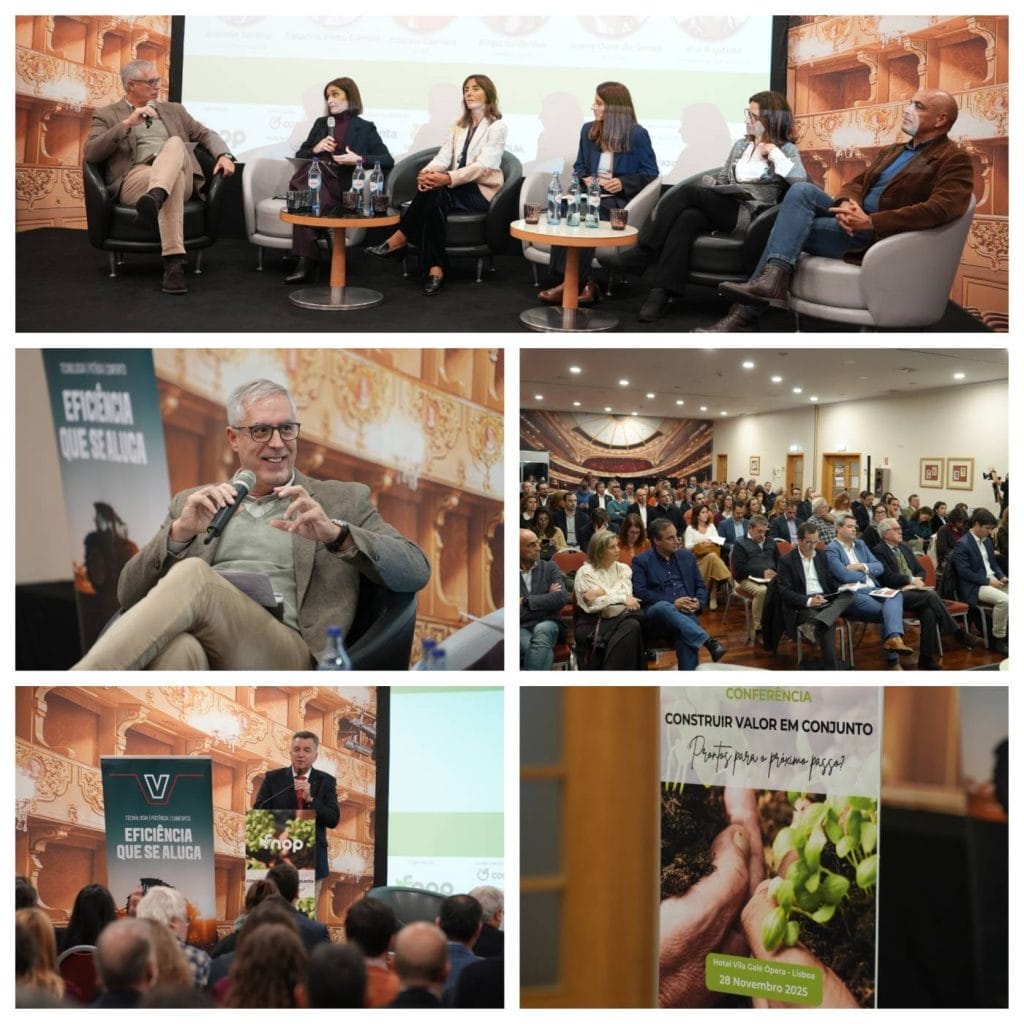
InnovPlantProtect (InPP) was present at the conference “Building value together”, organized by our associate FNOP - National Association of Fruit and Vegetable Producers' Organizations.

InPP's executive director, António Saraiva, moderated the panel “Sustainability that generates value: The role of ESG in the future of the sector”, which included interventions from Catarina Pinto Correia (VdA), Cristina Câmara (APED), Filipa Saldanha (Crédito Agrícola), Joana Oom de Sousa (Sovena) and Rui Veríssimo Baptista (Companhia das Lezírias).

The opening session was given by Domingos dos Santos, president of FNOP and a member of CoLAB's Board of Directors of our CoLAB.

The meeting brought together producer organizations, farmers, companies, experts and political decision-makers to discuss the current challenges and look to the future of the national fruit and vegetable sector.

With the participation of national and international experts, the conference was a privileged space for sharing experiences and strategic reflection, focusing on the organization of production and the role of public policies in promoting sustainable growth.

Congratulations to FNOP for the initiative and the ability to bring together a panel of excellent speakers, making this conference a relevant and topical milestone for the sector.

Image credits: Voz do Campo magazine

FNOP Event

EVENTS

Elvas collaborative laboratory distinguished by Rural Life as “the most significant investment in the last year in the agricultural and agro-industrial sector”.

“Investment that makes a mark” 2021 is the name of the prize awarded today to InnovPlantProtect by Rural Life. The award, conferred by the editorial board of the professional agribusiness magazine, recognizes the most significant investment in the last year in the agricultural and agro-industrial sector at a national level.

The choice of the collaborative laboratory (CoLab), based in Elvas, “aims to reinforce the importance of investing in research and innovation in a key area for the future of agriculture: the search for biologically-based solutions for crop protection, in a challenging context, in which it is necessary to ensure the production of food in an increasingly sustainable way,” explains Isabel Martins, director of the company. Rural Life and publications coordinator at IFE.

This award “honors the initiative of the 12 founding partners to create an innovative institution to develop biological and digital solutions for crop protection,” says Pedro Fevereiro, the CoLab's executive director, adding: “It's an incentive for InnovPlantProtect, which set up in a low-density region and managed to attract 38 highly qualified human resources to set up a modern innovation unit. It also rewards the vision of the municipality of Elvas, which embraced this challenge from the outset.”

The “Investment that Makes a Mark” 2021 award was presented during the 8th edition of the AgroIn - Annual Agribusiness Congress, organized by Rural Life/ IFE, held in the auditorium of the Faculty of Dental Medicine of the University of Lisbon.

The InPP team, like scientists around the world, concludes that new techniques can mitigate the challenges posed by climate change and the continuing increase in the world's population.

We know that in order to feed the world's population in 2050, we will have to increase food production by 70% [1]. And we also know that agriculture is under intense pressure to meet the sustainability goals of the European Green Deal and Farm to Fork Strategy, This is under pressure from climate change and the increase in pests and diseases attacking crops.

A team from InnovPlantProtect (InPP) reviewed hundreds of scientific articles published in recent years and concluded that “genome editing is an important tool for improving food security in a sustainable way and mitigating the challenges posed by global climate change and the expansion of the world's population”. The review article [2], entitled Genome editing for resistance against plant pests and pathogens, has just been published in Transgenic Research.

“The development of new tools to improve plant protection is critical in the context of current agricultural, environmental and ecological challenges,” say the researchers, adding that “various efforts in the area of genome editing have resulted in plants with potentially beneficial characteristics that can be quickly and easily applied in the field.”.

Crops are invariably exposed to pests and diseases (left). In order to speed up the plant breeding process, genome editing technologies such as CRISPR-Cas make it possible to introduce resistance mechanisms or remove susceptibility quickly and precisely (right).

The team analyzed the latest advances in genome editing with a view to improving plant protection, focusing on editing the genomes of crops, pests and pathogens based on the CRISPR-Cas technique (Nobel Prize in Chemistry in 2020). The researchers did not forget other technologies, such as host-induced gene silencing (HIGS) and the use of biocontrol agents, discussing how CRISPR-Cas can be used to accelerate the development of ecological strategies that promote sustainable agriculture in the future.

[HIGS consists of the plant producing small molecules of RNA (ribonucleic acid), which lead to the silencing of the pathogen's genes; silencing a gene means “canceling” its expression].

As genome editing does not require crossbreeding, the authors of the article point out, it avoids the introduction of unwanted characteristics through genetic linkage (a situation in which a gene with a positive characteristic is physically linked to a gene that confers negative characteristics) in improved varieties, speeding up the entire breeding process.

In addition, genome editing technologies can directly target the susceptibility genes or virulence factors of pests and pathogens, either by directly editing the genome of the pest in question, or by adding genome editing mechanisms to the plant genome, or to microorganisms that act as biocontrol agents.

Several studies have shown that the targeted inactivation of susceptibility genes through genome editing is a solid strategy for crop protection, capable of producing non-transgenic plants. The technique has been shown to be particularly effective in editing susceptibility genes to pathogenic bacteria and fungi.

“The potential impact of genome editing, and CRISPR technology in particular, on plant synthetic biology to improve resistance to pests and diseases is enormous and will have a direct effect on agricultural sustainability on a scale never seen before,” the team concludes.

Original article:

Rato, C., Carvalho, M.F., Azevedo, C. & Oblessuc, Paula. Genome editing for resistance against plant pests and pathogens. Transgenic Research (2021). https://doi.org/10.1007/s11248-021-00262-x

[1] How to Feed the World in 2050, FAO expert paper

[2] In a review article, researchers critically summarize what has already been studied and published by other scientists.

Elvas City Council promotes a visit to the works in progress at InnovPlantProtect and at the Elvense pole of the National Institute for Agrarian and Veterinary Research.

The work in progress at INIAV Elvas, including those that will accommodate the permanent facilities of the InnovPlantProtect (InPP), were visited yesterday, June 16, by a delegation that included the president of the Elvas City Council, Nuno Mocinha, the vice-president of the municipality, Cláudio Carapuça, as well as a number of council technicians, the presidents of parish councils in the municipality and representatives of the media.

InPP is an institution that wants to last for many, many years, not a “one-off project”, said the executive director of the collaborative laboratory (CoLab). Pedro February He also highlighted the fact that the research and innovation carried out here “leaves” the laboratory for the field, in the form of specific, biologically-based products and services supplied to companies, farmers and producers, among others.

Nuno Mocinha stressed the CoLab's great importance for agriculture and the region, particularly thanks to the establishment of highly qualified workers dedicated to science and technology applied in the field.

The visit took place as part of a tour promoted by the CME of some of the works underway in the municipality.

