News & Events

white plant

NEWS

The project TomaBioTec started in January with the aim of developing and validating innovative solutions that contribute to a more sustainable and efficient production of tomatoes in the industry, in line with the current challenges of the agri-food sector, by integrating biotechnology and digital technologies.

TomaBioTec Logo

The initiative aims to evaluate, under real field conditions, the effectiveness and efficiency of a biosolution with bioprotective and/or biostimulant properties, developed by InnovPlantProtect (InPP), This could help improve the quality and productivity of industrial tomato crops.

The rehearsals take place at Alentejo and Spanish Extremadura and combine traditional agronomic methods with advanced technologies, such as drones, multispectral sensors and artificial intelligence models. This approach allows detailed monitoring of the health of the crop, the presence of pests and diseases and the impact of the bioproduct throughout the production cycle.

The project “TomaBioTec: New biological and digital solutions for tomato crop protection and fertilization” is led by the InPP, in collaboration with the Centro Tecnológico Nacional Agroalimentario Extremadura (CTAEX) and Cordeiro Group, and was selected as one of the winners of the 7th edition of the Promove Program, The prize was awarded by the “la Caixa” Foundation, in partnership with Banco BPI and the Foundation for Science and Technology (FCT), in the category of innovative pilot projects.

This project reinforces the commitment to biological and digital solutions as drivers of more sustainable, competitive agriculture based on scientific evidence, with a direct impact on producers and industry.

More information about the project here.

InnovPlantProtect (InPP) was present at the XVI National Maize Congress, which also included the 2nd Meeting of Cereal Crops, organized by ANPROMIS, in collaboration with ANPOC and AOP. The event took place on February 11 and 12 at CNEMA in Santarém, bringing together national and international experts to discuss the sector's main challenges.

António Saraiva, Executive Director of InPP, took part in the panel “Cereal Production: What technical challenges are we facing?”, where he highlighted the decisive role of research in responding to the emerging challenges of cereal production, in a context of growing demographic, environmental and economic pressure.

“I'm proud that today, after seven years, we have 28 researchers working full-time on this topic, 12 of whom have PhDs, with experience in crops such as rice, which has been central to our work,” he said, emphasizing the multifunctional and international nature of InPP's teams.

He also pointed out that the work being done extends beyond rice to include maize, through ongoing projects and new operational groups focused on emerging crop problems. Among the initiatives in the spotlight is an application to Horizon Europe focused on developing improved and more resilient varieties.

For António Saraiva, anticipation is the key to success: “These challenges can't wait too long to be discussed or resolved. The sooner we anticipate the issues, the easier, more effective and more economical the solutions will be.”

In a debate that also marked the 40th anniversary of Portugal's integration into Europe and the role of the Common Agricultural Policy in the cohesion of the European Union, one message was clear across the board: “Climate change is the biggest threat we have.”

InPP thus reaffirms its commitment to innovation, science and the development of sustainable solutions for the future of cereal crops.

There are days when science begins long before you enter the laboratory or the field. It starts at dawn, when the alarm clock goes off too early. When you mentally review the day's list: an experiment that can't be missed, a trip to the field that depends on the weather, an unfinished report, a meeting scheduled at the wrong time. In between, someone to wake up, someone to drop off, someone to call. And yet science moves forward.

At InnovPlantProtect, there are now 15 women who give a face to the science and innovation developed here. Women who represent commitment, demand, resilience, overcoming, quality, talent, excellence and creativity. But they are only part of a greater whole. There are many more - and each one brings with it a story that doesn't fit into a CV, a patent application or an article.

Today, February 11th, marks the International Day of Women and Girls in Science, a UNESCO initiative that underlines the importance of the female role in the production of scientific and technological knowledge and the need to continue promoting equal access to careers in science and innovation. Portugal has encouraging figures: women represent almost 50% researchers in the country. It's a relevant figure, reflecting decades of progress. But the figures don't show what happens between them.

Because science, for many women, is made up of fragile balances.

There are women with intense family lives, others with more solitary journeys, still others who build support networks outside traditional models, with effort and creativity. There are difficult choices and decisions, unexpected circumstances, forced breaks, changes of pace, different phases of life. All legitimate. Many are invisible when you only look at the end result of a project, an article or a biosolution developed. - but they all influence the paths of science.

One day, one of our researchers - let's just call her that - told us that she had finished a field trial close to sunset. The phone rang while she was putting away her materials. It was the school. A delay. Nothing extraordinary. It was business as usual. She came home exhausted, with dirt still on her boots, opened her computer after dinner and went back to her data, because the experiment couldn't wait.
“It wasn't a heroic day,” she said. “It was just a normal day.”

And perhaps that is what is most remarkable.

In the field of crop protection, the work is demanding, technical and often unpredictable. It takes place in the laboratory and in the field, between strict protocols and decisions made under real conditions. It requires persistence, adaptability, attention to detail and an integrated view of problems. Characteristics that so many women bring with them - not by nature, but by experience, by path, by everything they have learned to manage at the same time.

Each personal story profoundly shapes the way we do science. The doubts, the challenges, the forced breaks, the changes of pace, the new beginnings. None of this is left at the laboratory door. It all silently enters into the way we observe, question and build knowledge.

To celebrate the International Day of Women and Girls in Science is to recognise this reality as a whole. It is to honour the women who continue to do science despite the challenges — and often because of them. And it is to remember that innovation is also born from lives fully lived, shaped by imperfection, effort and courage.

Today we celebrate them. Not just for what they produce, but for all that they are. In science, in the field, in the laboratory - and in the life that happens in between.

EVENTS

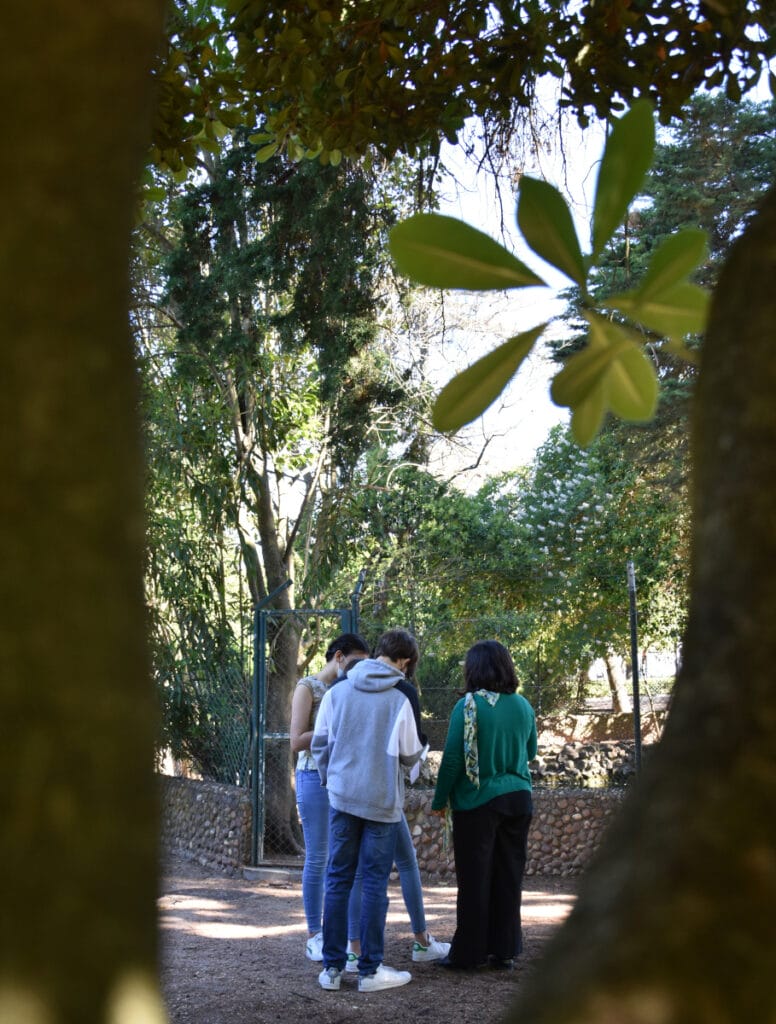
“It was motivating for the students to realize what they can do given what they study at school, and even how they can contribute to their own community.” This is the opinion of Telma Rafael, a teacher at D. Sancho II Secondary School, in Elvas, who today, May 24th, accompanied the pedipaper held at the Municipal Garden of the city, for the 11th grade class of the Professional Technical Course in Agricultural Production.

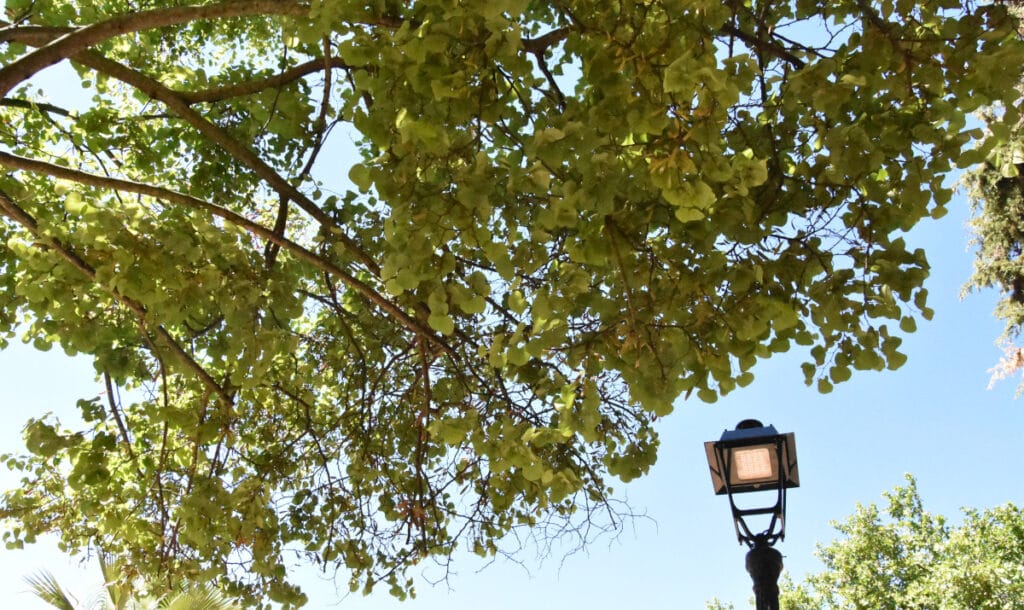
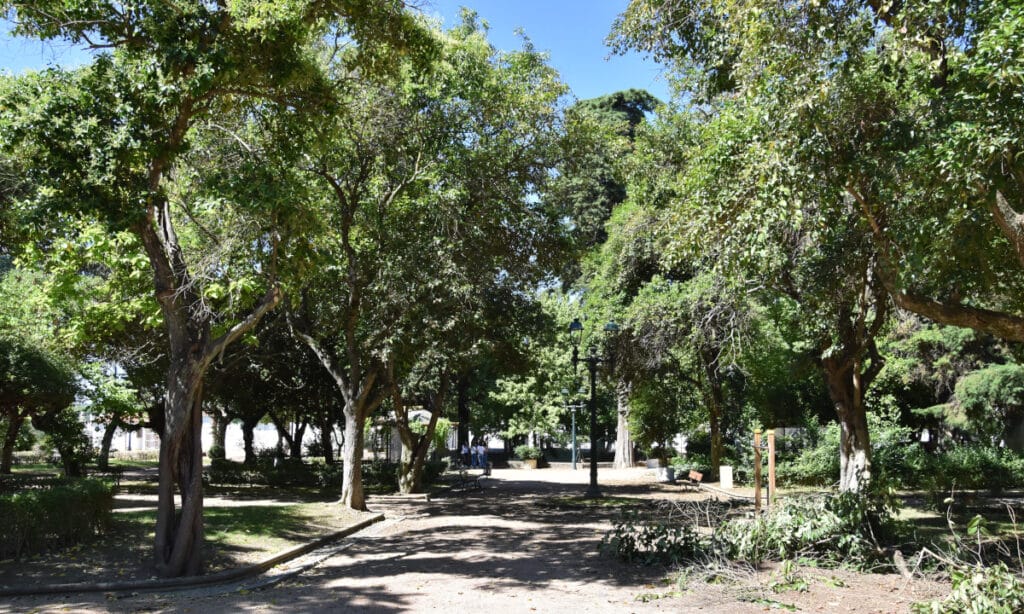
The activity, co-organized by the collaborative laboratory InnovPlantProtect (InPP) and that educational institution, as part of the celebrations of the International Day for the Fascination of Plants, to which the Elvas City Council (CME) joined in, with the aim of allowing the students to explore, identify and marvel at the different trees in the Garden - the largest green space in the city - and their differentiating characteristics.


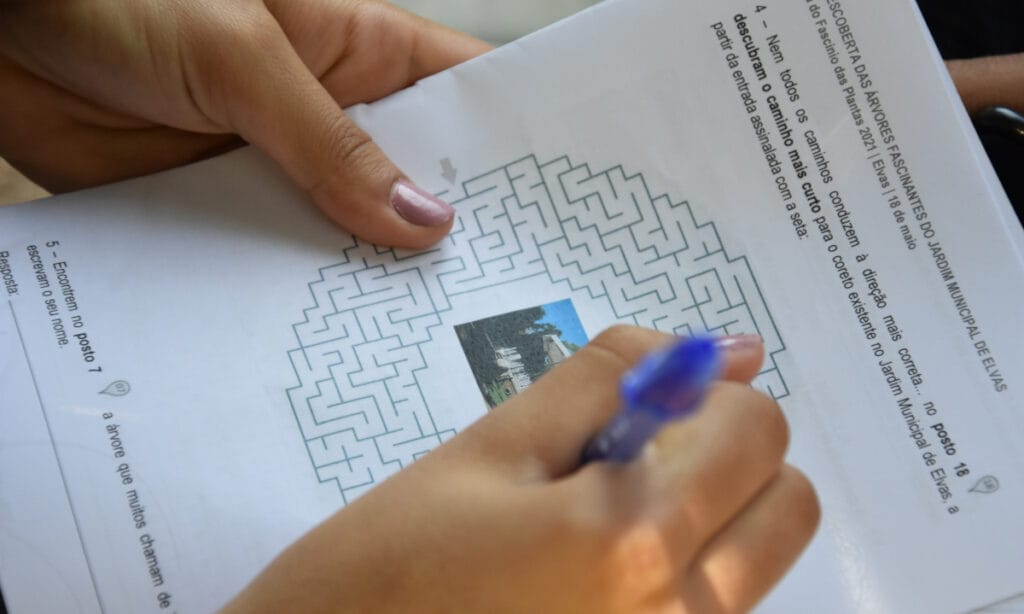
The 26 young people present, who had the opportunity to share experiences with half a dozen InPP researchers, “enjoyed the activity”, which they found “very interesting and interactive”, says Telma Rafael. Divided into teams, they had to travel along a predefined route, meeting a dozen different trees, answering questions about them and solving tasks.

As a result of this activity, InPP, Escola Secundária D. Sancho II, the association AIAR and CME intend to continue collaborating with a view to developing an identification system for the Garden's trees based on a QR code, which will allow mobile access to a “digital brochure” with information about the plants.

Images © 2021 InnovPlantProtect

Watercolors, pencils, charcoal... there were several techniques used by the participants in the activity of urban sketching held on May 18, in the late afternoon, at the Elvas Municipal Garden. The session was co-organized by the association AIAR and the collaborative lab InnovPlantProtect (InPP), with the support of Elvas City Council (CME), in celebration of the International Day for the Fascination of Plants.

Open to the public, the meeting attracted around a dozen sketchers. “The participants were super friendly and super interested,” says Pedro Rosa, an InPP researcher, who took part in the initial tour to introduce the designers to the Garden's plants. Carla Moreira, InPP's project manager, highlights “the sharing of experiences, both by the researchers and the participants”.

The initiative also paved the way for future collaborations and greater interaction between AIAR and InPP. Together with D. Sancho II Secondary School and the CME, cooperation is already planned with a view to developing an identification system for the Garden's trees, based on a QR code, which will allow mobile access to a “digital brochure” with information about the plants.

Plant Fascination Day is an initiative of the European Plant Science Organization (EPSO), which takes place every two years on May 18th. It is coordinated at national level by the Portuguese Society of Plant Physiology and by the ITQB NOVA, and included events across the country.

Images: © 2021 InnovPlantProtect

Challenging and fun: that's how most of the students at the D. Sancho II Secondary School rated the pedipaper made in Elvas Municipal Garden on May 18th, in celebration of the International Day for the Fascination of Plants. Some running, others walking, more than 80 young people from three 10th grade classes took part in the tree identification game all morning, answering questions and solving tasks.

“It depends a lot on the enthusiasm of the kids,” observes Pedro Rosa, a researcher at the collaborative laboratory InnovPlantProtect (InPP), who considers that the pedipaper “went well”: “There was communication, [the students] were attentive; we had a very good connection.” “It was very positive for the students” understanding of the diversity that exists in the Garden, as well as their contact with the CoLab," said Carla Moreira, InPP's project manager.

The initiative, to which Elvas City Council (The event was organized by the InPP and the Secondary School of Agrupamento de Escolas n.º 3 de Elvas. The aim was to allow the youngsters, who are studying biodiversity this year, to explore, identify and marvel at the different trees in the garden - the largest green space in the city - and their differentiating characteristics. Another class, from the multimedia technical course, was on site to capture images of the event.

As a result of this activity, InPP, Escola Secundária D. Sancho II, the association AIAR and CME intend to continue collaborating with a view to developing an identification system for the Garden's trees based on a QR code, which will allow mobile access to a “digital brochure” with information about the plants.

Plant Fascination Day is an initiative of the European Plant Science Organization (EPSO), which takes place every two years on May 18th. It is coordinated at national level by the Portuguese Society of Plant Physiology and by the ITQB NOVA, and included events across the country.

Images: © 2021 InnovPlantProtect