News & Events

white plant

NEWS

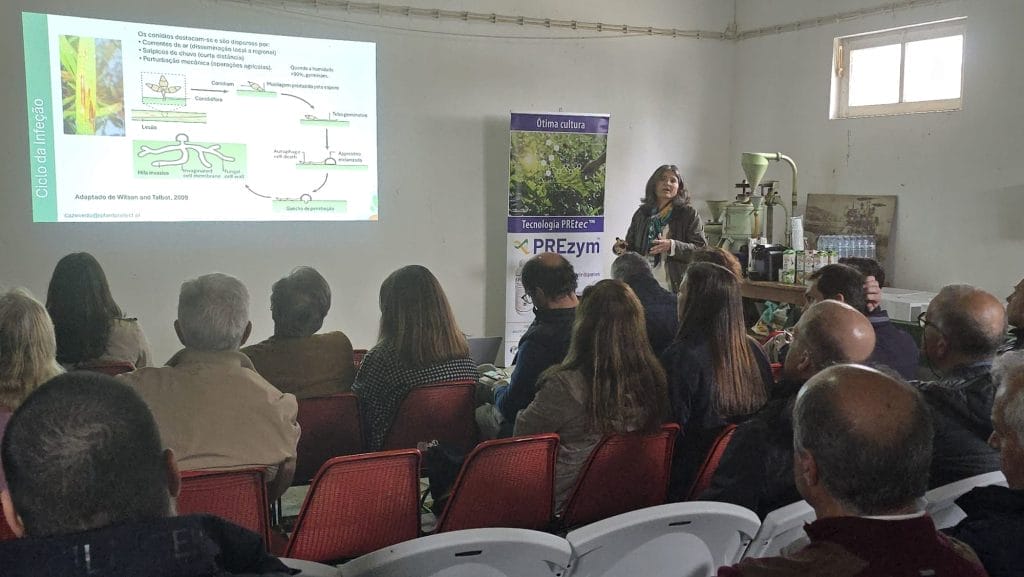
O InPP marcou presença no Encontro com orizicultores e técnicos(as) em Portugal, promovido pela EDAF, que decorreu no dia 5 de março, no Pólo de Inovação de Salvaterra de Magos, em Santarém.

A Diretora de Biosoluções do InPP, Cristina Azevedo, integrou o painel de oradores convidados, tendo apresentado a comunicação intitulada “A problemática da Pyricularia na cultura do arroz”. A apresentação incidiu sobre os principais desafios fitossanitários associados a esta doença, que continua a constituir uma das maiores ameaças à produção de arroz a nível mundial e também em Portugal.
WhatsApp Image 2026 03 06 at 14.28.18

O encontro reuniu produtores, técnicos e especialistas da fileira do arroz, proporcionando um espaço de partilha de conhecimento e debate sobre soluções atuais e em desenvolvimento para o controlo da piriculariose. Foram igualmente abordados outros temas relevantes para a sustentabilidade e produtividade da cultura, nomeadamente a gestão da fertilização.

A participação do InPP neste tipo de iniciativas reforça o compromisso da instituição com a inovação, a transferência de conhecimento e o desenvolvimento de soluções sustentáveis para a agricultura nacional.

O InPP agradece à EDAF e ao COTArroz o convite e a organização deste importante encontro, esperando que esta colaboração continue a fortalecer-se no futuro.

The project TomaBioTec started in January with the aim of developing and validating innovative solutions that contribute to a more sustainable and efficient production of tomatoes in the industry, in line with the current challenges of the agri-food sector, by integrating biotechnology and digital technologies.

TomaBioTec Logo

The initiative aims to evaluate, under real field conditions, the effectiveness and efficiency of a biosolution with bioprotective and/or biostimulant properties, developed by InnovPlantProtect (InPP), This could help improve the quality and productivity of industrial tomato crops.

The rehearsals take place at Alentejo and Spanish Extremadura and combine traditional agronomic methods with advanced technologies, such as drones, multispectral sensors and artificial intelligence models. This approach allows detailed monitoring of the health of the crop, the presence of pests and diseases and the impact of the bioproduct throughout the production cycle.

The project “TomaBioTec: New biological and digital solutions for tomato crop protection and fertilization” is led by the InPP, in collaboration with the Centro Tecnológico Nacional Agroalimentario Extremadura (CTAEX) and Cordeiro Group, and was selected as one of the winners of the 7th edition of the Promove Program, The prize was awarded by the “la Caixa” Foundation, in partnership with Banco BPI and the Foundation for Science and Technology (FCT), in the category of innovative pilot projects.

This project reinforces the commitment to biological and digital solutions as drivers of more sustainable, competitive agriculture based on scientific evidence, with a direct impact on producers and industry.

More information about the project here.

InnovPlantProtect (InPP) was present at the XVI National Maize Congress, which also included the 2nd Meeting of Cereal Crops, organized by ANPROMIS, in collaboration with ANPOC and AOP. The event took place on February 11 and 12 at CNEMA in Santarém, bringing together national and international experts to discuss the sector's main challenges.

António Saraiva, Executive Director of InPP, took part in the panel “Cereal Production: What technical challenges are we facing?”, where he highlighted the decisive role of research in responding to the emerging challenges of cereal production, in a context of growing demographic, environmental and economic pressure.

“I'm proud that today, after seven years, we have 28 researchers working full-time on this topic, 12 of whom have PhDs, with experience in crops such as rice, which has been central to our work,” he said, emphasizing the multifunctional and international nature of InPP's teams.

He also pointed out that the work being done extends beyond rice to include maize, through ongoing projects and new operational groups focused on emerging crop problems. Among the initiatives in the spotlight is an application to Horizon Europe focused on developing improved and more resilient varieties.

For António Saraiva, anticipation is the key to success: “These challenges can't wait too long to be discussed or resolved. The sooner we anticipate the issues, the easier, more effective and more economical the solutions will be.”

In a debate that also marked the 40th anniversary of Portugal's integration into Europe and the role of the Common Agricultural Policy in the cohesion of the European Union, one message was clear across the board: “Climate change is the biggest threat we have.”

InPP thus reaffirms its commitment to innovation, science and the development of sustainable solutions for the future of cereal crops.

EVENTS

InnovPlantProtect (InPP) took part in the 12th National Meeting on Integrated Protection (ENPI), promoted by the Escola Superior Agrária de Elvas (ESAE) of the Instituto Politécnico de Portalegre (IPP), which took place on October 30 and 31, 2023.

The director of the New Biopesticides department, Cristina Azevedo, was one of the guest speakers at session 4 entitled “Towards new bio-based solutions to control plant diseases”.

With the motto “Integrated Protection's Contribution to the SDGs”, the meeting aimed to bring together experts from research, teaching and production, as well as young students interested in the protection of plants and plant products, to analyze, share knowledge, propose and debate innovative ideas and techniques for protecting crops and agricultural products.

The ENPI addressed four main thematic areas such as “Crop protection in the context of climate change and globalization”, “Recovering the concepts of “Risk estimation” and “Decision making” in the context of emerging problems”, “Plant defence mechanisms” and “Alternative means of protection”.

The 13th edition of ENPI will take place in 2026 in Madeira and will be organized by the University of Madeira.

More information on the event website here.

Image credits: Escola Superior Agrária de Elvas

On October 23 and 25, the third and final field activity of the ABC - AgriBioCircular project, led by InnovPlantProtect (InPP), took place at the Figueira de Cima estate, owned by Reynolds Wine Growers. This activity was entirely dedicated to the olive grove and the main sampling techniques for its main pests, the olive fly (Batrocera oleae) and the olive moth (Prays oleae). This activity was designed to give students the ability to identify and experiment with traditional techniques and new technologies in pest sampling, as well as new digital tools for monitoring and managing pests. The content presented focused on the importance of monitoring and controlling pests with a view to the sustainability of agricultural production systems from an environmental, social and economic perspective.

During this visit, the students were shown the life cycles of the olive fly and the olive moth, explaining in detail the links with meteorological variables and crop management options, with a view to more effective and sustainable pest control, focusing in particular on the importance of maintaining the biological richness of the pasture under the traditional olive grove. In addition, the students were invited to compare the specificities and potential of different sampling techniques in combination with attractive substances such as pheromones.

The students were also introduced to the morphology of the fly and the moth, and challenged to revisit the taxonomic identification of the groups to which they belonged, as well as to identify the pests in the traps and potential biological control organisms such as small wasps (parasitoids) or spiders. Understanding the life cycles, damage caused and control strategies of these pests is essential for developing effective pest control alternatives and sustainable agriculture with a low environmental impact. The students were able to count olive flies in both the adult stage in the chromotropic traps (with pheromone) and in the remaining stages of the cycle inside the olives, and showed an interest in and ability to identify these pests and diagnose the associated symptoms/damage. The visit to the Reynolds estate also included an approach to the use of entomological shrimp traps to monitor pests, potential disease vectors and auxiliary fauna in the olive grove.

Still on the subject of pest monitoring, the students had access to the new digital tools for monitoring and managing olive groves. We're talking specifically about the information obtained from the automatic traps and the associated software, which allows visualization, real-time interaction and cross-referencing of biological and meteorological information, as well as calculating risk estimates for olive fly attacks. Finally, in a short lecture aimed at the students, estate manager Nelson Martins explained the principles of sustainable wine production, focusing on the importance of the circular economy and, in particular, the recycling of materials in the various stages of wine production, such as the reuse of oak barrels to produce different types of wine, or identifying the agro-ecological techniques that contribute to increasing the quality and uniqueness of the wines produced on the estate and their connection with the microorganisms responsible for the fermentation process (yeasts).

In conclusion, the ABC project sought to encourage learning about sustainable practices in agriculture, boosting their future use in the students' professional activities.

InnovPlantProtect (InPP) was present at the second Dried Fruit Campaign Review, organized by Portugal Nuts - Associação de Promoção de Frutos Secos, in partnership with the Centro Nacional de Competências dos Frutos Secos (CNCFS) and the National Horticultural Operational and Technological Center (COTHN), which took place on October 26 at the Events Pavilion of the Fair and Exhibition Park in Borba.

The initiative aimed to evaluate the performance of the dried fruit production campaign in the country and to be a moment for producers to exchange experiences and deepen their technical knowledge.

During the morning, participants were able to make technical visits to two farms - Maned and De Prado, and in the afternoon there were several round tables on the campaign, markets and another dedicated to plant health in almonds and walnuts, and three technical presentations, which were attended by several well-known spokespeople in the sector.

Image credits: Portugal Nuts