News & Events

white plant

NEWS

Beyond strategy: The secret ingredient of innovation

On the path to success, organizations define strategies, plan each step, and invest in crucial resources such as the sale of services and products, project applications, the development of solid business plans, and the protection of intellectual property. However, there is an often-neglected element that is fundamental to the flourishing of innovation: serendipity. But what exactly is this mysterious force, and why is it so vital to advancing agriculture and so many other areas?

When chance opens doors: The power of unplanned discovery

Serendipity lies in the art of finding something valuable when looking for something else. It's the unintentional discoveries that arise from unexpected situations. Throughout history, some of the most transformative innovations have not been the result of a rigorous plan, but rather of a fortuitous encounter with the unknown. Although deliberate research and methodical experimentation are pillars of scientific and technological progress, openness to the unexpected proves to be a powerful catalyst. When researchers cultivate this openness, they often come across revelations that have the potential to revolutionize entire industries, transform technologies, and expand our understanding of the world around us.

A close look at the “error”: The genesis of an innovative biofungicide

Today, we unveil the surprising and inspiring story of Maria Miguel, a talented researcher from the InPP's New Biopesticides Department, whose insight transformed a fortuitous event into a discovery of inestimable value: a broad-spectrum biofungicide capable of combating Botrytis cinerea, the relentless fungus responsible for the devastating gray mold disease in tomato plants. This pathology represents one of the greatest phytosanitary challenges in tomato cultivation, especially when grown in greenhouses, causing significant losses to producers if not controlled in a timely manner.

From discard to discovery: An investigator's insight

The journey of this discovery began in a scenario familiar to any researcher: the observation of Petri dishes, used to grow cell or microorganism cultures. In Maria Miguel's Petri dishes, colonies of the fungus Botrytis cinerea were growing, intentionally introduced there for study. However, something else caught her attention: one of the plates was contaminated by mold, and curiously, a clear zone surrounded this intruder. Instead of discarding the plate and ignoring it as mere contamination, Maria Miguel decided to investigate the reason behind that clear area. Her curiosity revealed that the mold had a surprising ability to inhibit the growth of Botrytis cinerea in its vicinity.

“Sometimes we look at something and think it's a mistake. The truth is that within a failure, there can be something good,” shares the researcher. The emotion and enthusiasm of a researcher when realizing that what at first seemed like an obstacle, a negative result, can actually be an opportunity, is contagious. For Maria Miguel, this “error” transformed into a serendipitous discovery with enormous potential.

Maria Miguel, a researcher at the InPP's Department of New Biopesticides, transformed an unexpected event into a groundbreaking discovery: a broad-spectrum biofungicide to combat gray mold in tomato plants.

Beyond chance: The active ingredients of scientific discovery

As the story of this biofungicide demonstrates, the world of science is full of examples of discoveries that arose from the unexpected. One of the most famous cases is the discovery of penicillin by Alexander Fleming in 1928. While observing Petri dishes, Fleming noticed that a mold was producing a substance that eliminated Staphylococcus aureus bacteria around it. He identified the mold as Penicillium notatum and named his revolutionary antibiotic penicillin. Penicillin ended up becoming an extremely important drug for fighting infections.

However, chance is not the only protagonist of these important revelations. “Sometimes we have to follow our intuition and be able to prove that we are right or wrong,” explains Maria Miguel. In addition to intuition, a generous dose of curiosity, an open mind to accept unexpected results, a solid scientific knowledge, and the ability to see and advance to further investigations on surprising results play a crucial role in the alchemy of discovery.

The ecosystem of discovery: Fostering an environment conducive to innovation

There are other ingredients that contribute to the recipe for scientific success:

  • Creativity: The ability to generate new perspectives, concepts, questions, or solutions, and the willingness to explore existing ideas under a new light.
  • Flexibility: The courage to venture into unknown territories without fear of failure, thus increasing the odds of serendipitous encounters.

But no discovery flourishes in isolation. At InPP, the strong team spirit and culture of collaboration transcend departmental boundaries. Maria Miguel's discovery is a testament to this synergy, as she herself acknowledges: “My colleagues opened doors so that I could do my research.”

To foster innovation, organizations need to cultivate an environment that stimulates open discussions and connects people from diverse areas of knowledge and life experiences, without judgment; that encourages curiosity and receptiveness to new experiences; and that promotes a relentless pursuit of improving scientific knowledge, the fertile ground where serendipity can germinate.

Sowing the future: The impact of a discovery and the path of research

Although Maria Miguel is about to embark on a new journey, driven by a prestigious Marie Skłodowska-Curie doctoral fellowship - a program that supports the career of researchers and promotes excellence and innovation in research - her legacy at InPP is already flourishing. Her innovative discovery is opening new and promising doors for future research in the area of crop protection, demonstrating how, at times, it is in the unexpected that the potential to transform our world lies.

Beyond strategy: The secret ingredient of innovation

On the road to success, organizations define strategies, plan every step and invest in crucial resources such as selling services and products, applying for projects, drawing up solid business plans and protecting intellectual property. However, there is an element that is often overlooked, but which is fundamental to the flourishing of innovation: serendipity. But what exactly is this mysterious force and why is it so vital to the advancement of agriculture and so many other areas?

When chance opens doors: The power of unplanned discovery

Serendipity is the art of finding something valuable when you're looking for something else. It's the unintentional discoveries that arise from unexpected situations. Throughout history, some of the most transformative innovations have not been the result of a rigorous plan, but rather a chance encounter with the unknown. While deliberate research and methodical experimentation are pillars of scientific and technological progress, openness to the unexpected proves to be a powerful catalyst. When researchers cultivate this openness, they often stumble upon revelations that have the potential to revolutionize entire industries, transform technologies and expand our understanding of the world around us.

A close look at “error”: The genesis of an innovative biofungicide

Today, we unveil the surprising and inspiring story of Maria Miguel, a talented researcher from InPP's New Biopesticides Department, whose acumen turned a chance event into a priceless discovery: a broad-spectrum biofungicide capable of combating the Botrytis cinerea, the relentless fungus responsible for the devastating gray rot disease in tomato plants. This pathology represents one of the biggest phytosanitary challenges in tomato cultivation, especially when grown in greenhouses, causing significant losses to producers if it is not controlled in good time.

From discard to discovery: The insight of a researcher

The journey of this discovery began in a setting familiar to any researcher: the observation of Petri dishes, used to grow cultures of cells or microorganisms. On Maria Miguel's plates, colonies of the fungus Botrytis cinerea were growing, intentionally introduced there for study. However, something else caught her eye: one of the plates was contaminated by mold, and curiously, a clear area surrounded this intruder. Instead of discarding the plate and dismissing it as mere contamination, Maria Miguel decided to investigate the reason behind the clear area. Her curiosity revealed that the mold had a surprising ability to prevent the growth of Botrytis cinerea in its vicinity.

“Sometimes we look at something and think it's a mistake. The truth is that in a failure there can be something good,” the researcher shares. The excitement and enthusiasm of a researcher realizing that what at first glance seemed like an obstacle, a negative result, could actually be an opportunity, is contagious. For Maria Miguel, this “mistake” turned into a serendipitous discovery with enormous potential.

Maria Miguel, a researcher at InPP's New Biopesticides Department, who turned an unexpected event into a discovery that changed the course of her work: a broad-spectrum biofungicide to combat gray rot in tomato plants.

Beyond chance: The active ingredients of scientific discovery

As the history of this biofungicide shows, the world of science is full of examples of discoveries that came out of the blue. One of the most famous cases is Alexander Fleming's discovery of penicillin in 1928. While observing Petri dishes, Fleming noticed that a mold was producing a substance that eliminated bacteria Staphylococcus aureus around him. He identified the mold as Penicillium notatum and named his revolutionary antibiotic penicillin. Penicillin ended up becoming an extremely important medicine for fighting infections.

However, chance is not the only protagonist of these important revelations. “Sometimes we have to follow our intuition and be able to prove ourselves right or wrong,” explains Maria Miguel. In addition to intuition, a generous dose of curiosity, an open mind to accept unexpected results, solid scientific knowledge and the ability to see and move on to further research into surprising results play a crucial role in the alchemy of discovery.

The discovery ecosystem: Fostering an environment conducive to innovation

There are other ingredients that contribute to the recipe for scientific success:

  • Creativity: The ability to generate new perspectives, concepts, questions or solutions, and the willingness to explore existing ideas in a new light.
  • Flexibility: The courage to venture into unknown territory without the fear of failure, thus increasing the chances of serendipitous encounters.

But no discovery flourishes in isolation. At InPP, the strong team spirit and culture of collaboration transcend departmental boundaries. The case of Maria Miguel's discovery is testimony to this synergy, as she herself acknowledges: “My colleagues opened doors so that I could do my research”.

To foster innovation, organizations need to cultivate an environment that encourages open discussions and connects people from different areas of knowledge and life experiences, without judgment; that encourages curiosity and receptiveness to new experiences; and that promotes an incessant quest to improve scientific knowledge, the fertile ground where serendipity can germinate.

Sowing the future: The impact of a discovery and the path of research

Although Maria Miguel is about to embark on a new journey, boosted by a prestigious Marie Skłodowska-Curie PhD scholarship - a program that supports the careers of researchers and promotes excellence and innovation in research - her legacy at InPP is already flourishing. Her groundbreaking discovery is opening promising new doors for future research in the field of crop protection, demonstrating how sometimes it is in the unexpected that the potential to transform our world lies.

In the March issue of Fruits, vegetables and flowers you will find the opinion article entitled “The role of InnovPlantProtect in Organic Farming: Paths to sustainable and efficient solutions”, in which the executive director of InnovPlantProtect (InPP), António Saraiva, reveals how our CoLAB is contributing to the success of organic farming.

“By boosting research, collaboration and knowledge sharing, InPP is helping to solve the central challenges of this practice [organic farming], allowing it to expand and enhancing the supply of agricultural products to consumers. The solutions developed by InPP make organic farming a more viable option for producers,” says the executive director.

Read the full article and find out how we are shaping the future of agriculture.

We thank Frutas, legumes e flores magazine for its recognition and reiterate our commitment to the agriculture of the future.

EVENTS

Insect vector of Xylella is attracted or repelled by different aromatic plants depending on the sex of the adult and its distance from the source of essential oils.

Lavandula angustifolia Photo: JLPC/ Wiki

It was already known that the nefarious Xylella fastidiosa “liked” Lavandula spp.; after all, it was in a lavender plant that the presence of the bacterium in Portugal was confirmed for the first time in January 2019. A team of scientists has since concluded that the males of the insect vector of the Xylella in Europe are attracted to the essential oils of lavender over long distances.

“Sustainable vector control is an essential part of pest management strategies.”, remember those responsible for the European XF-ACTORS project. The results of this study could contribute to the development of innovative approaches and tools to control the insect, as alternatives to the use of synthetic pesticides Philaenus spumarius, vector of Xylella fastidiosa in Europe - essential to control the spread of the bacteria.

The team found that the peripheral olfactory system of the P. spumarius captures the volatile organic compounds present in the essential oils of pelargonium (also known as geranium or sardinia). Pelargonium graveolens, from Cymbopogon nardus (a relative of lemongrass), which produces citronella, and the Lavandula angustifolia (before officinalis), lavender. But the effect of this detection depends on the “dose” and the distance.

At any distance, both lavender and pelargonium repelled the females. Males, on the other hand, were attracted to geranium and repelled by citronella. At close range, both lavender and citronella were repellent to both females and males.

You can consult the original scientific article here.

In celebration of the International Day of Women and Girls in Science, some of InnovPlantProtect's women researchers share the reasons they became scientists.

“I became a scientist for the thrill of being able to discover something new every day and a plant scientist in particular with the dream of producing plants resistant to pathogens, avoiding the need for chemical pesticides. A win-win solution to reduce the environmental impacts of agriculture and the production costs to small farmers.”

Cristina Azevedo, PhD researcher, Head of the New Biopesticides Department

“Ever since I was a child, I always felt drawn to nature, particularly at the beach, where I would explore sea life, but also at my grandparents’ vegetable garden, where I loved to play. The fact that my mother is really passionate about nature, particularly about plants and birds, also played a role when I decided to apply for Biology. On top of that, there's my desire to understand the world around me; being a scientist allows me to ask questions and work towards an answer, and that moment when you discover something new in the lab is still beyond thrilling.”

Cláudia Rato da Silva, PhD researcher, Protection of Specific Crops Department

“I have had a passion for technology and science since childhood, so I decided to pursue my career in a computer science discipline in which Artificial Intelligence is one of the great research fields, which could help to solve complex problems of nearly every field. ‘The human brain cannot deal with terabytes but Machine Learning can!’ Hence I was inspired to do research in this field.”

Manisha Sirsat, PhD researcher, Department of Data Management and Risk Analysis

Cláudia Almeida Silva
Cátia Patrício
Ana Cláudia Silva

“When I was younger, I used to ask my parents ‘Why this happens?’ or ‘Why this works the way it does?’ Most of the questions were ‘Why?’ and my parents didn't know how to answer, so they encouraged me to go look for it. From then on, I didn't ask my parents anymore. I would search for the answer. That feeling did not disappear as I grew up. So, during my school years, I always searched for the answer to the question ‘Why?’. When I was in 12th grade, I had to choose my college degree and it was very difficult to choose between all the available courses, but I knew that it would be related to science, because 99% of the questions that you ask, Science can answer it. And that was the moment that I decided to become a scientist - to search for the answers to my questions. Science is a part of our life, Science is in everything, with Science you can change the world.”

Cláudia Almeida Silva, MSc researcher, Department of New Formulations and Matrices for the Application of Biopesticides

“I decided to become a scientist when my father got sick, and I knew that I should contribute to science to help answer the questions that still had no answers. This profession showed me that there are many things that we already know but, on the other hand, there is much more that we need to discover and learn. The idea that small discoveries that you can make can lead to the solution of big problems is gratifying to me.”

Cátia Patrício, MSc Researcher, Department of New Biopesticides

“As an undergraduate, I started collaborating in a Nematology laboratory at the University where I was studying. There began my passion for science, and particularly for phytopathology. Since then, I have been gaining more knowledge and working in this topic, and it is a great pleasure for me to be able to keep on following this career at the InnovPlantProtect CoLab, with such a prodigious team of women and men scientists.”

Ana Cláudia Silva, MSc Researcher, Department of New Biopesticides

“I didn't always want to become a scientist. One thing I did know was that I had been forever fascinated with my surroundings, nature at its finest. And there was this random driving force that made me question things, as although I felt an overwhelming need to pursue all the answers. Why is everything the way it is? Why is that leaf falling from the tree? Questioning, and an overall endless curiosity, that's what made me become ‘sort-of-a-scientist’”.

Maria Miguel Pires, MSc Researcher, Department of New Biopesticides

“Since childhood, I have always been fascinated with nature, how plants survive on rainy days, how the dough rises, how the grape juice that I could drink turns into something that I was not allowed to... at the end of the day, how life makes sense! So, I wanted to know more and more, and that curiosity made me pursue life sciences.”

Diana Pimentel, PhD researcher/ Biostatistics Technician, Department of Data Management and Risk Analysis

“Isn't it fascinating how the tiniest organisms can affect a whole ecosystem? And, even more so, to understand how they work and how we can fight or improve them? This feeling was what made me pursue a scientific career. Science is non-stop challenges but is also non-stop knowledge and progress.”

Jordana Branco, MSc researcher, Department of New Biopesticides

Diana Sousa

“I have always loved nature and helping people, in order to always contribute to a more sustainable world and better health for all people. I confess that I was also fascinated by the investigation, due to CSI. Ahahah And that's why I became a scientific researcher, always ready to promote a better world.”

Diana Sousa, MSc researcher, Department Protection of Specific Crops

© 2021 InnovPlantProtect, All rights reserved

XfSTOP aims to develop a solution to protect olive groves against the bacterium Xylella fastidiosa. The project is led by InnovPlantProtect's New Biopesticides Department - Department 1, headed by researcher Cristina Azevedo.

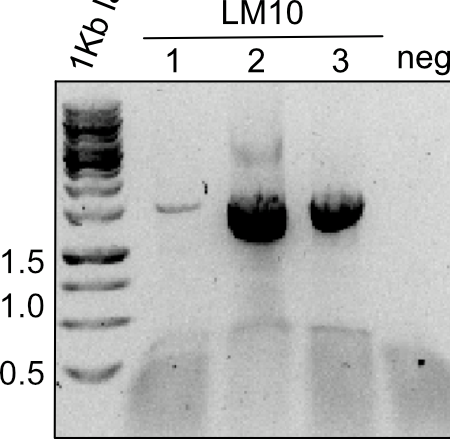
The team is now starting laboratory work, with the aim of trying to isolate peptides (small amino acids) that inhibit the growth of the bacterial pathogen Xylella fastidiosa. “We have established collaboration with researchers in different countries, through which we have obtained genomic DNA from different isolates [strains] of Xylella, and we are in the process of isolating the genes that code for the virulence proteins against which we want to select the peptides,” explains Cristina Azevedo.

Isolation of Xylella fastidiosa (strain LM10)

The director of Dep. 1 said that the team is also “starting to isolate bacterial endophytes [organisms that live inside a host] present in the xylem of olive varieties grown in the Alentejo region (Cobrançosa and Arbequina) and of an Italian variety that is resistant to Xylella (Leccino), from the Herdade de Reguengo, belonging to INIAV, Elvas center”.

The project's acronym, XfSTOP, stands for “Integrated approach to disease management for the biocontrol of Xylella fastidiosa in olive trees”. The olive tree is of enormous economic importance in Portugal, particularly in the Alentejo. The biopesticide to be developed will use a microorganism capable of coexisting in the same environment as the olive tree. Xylella, The plant will then produce a biological compound capable of eliminating the bacteria. This mechanism will be sustainable, environmentally friendly and non-toxic.

© 2021 InnovPlantProtect, All rights reserved