News & Events

white plant

NEWS

Every year, crop diseases cause devastating losses in agricultural production, threatening the food security and livelihoods of millions of farmers. In the heart of the Alentejo, an innovative project is using the power of genomics to help combat these invisible threats. The AlViGen Project, with the participation of InnovPlantProtect researchers Rute Rego and João Bilro, is paving the way for a new era of crop surveillance and protection.

The Problem and the Solution

“Yellow rust on wheat and gafa in olive groves are real scourges for farmers,” explains Rute Rego, a researcher at AlViGen. “These diseases can wipe out entire harvests, leading to severe economic losses and compromising food quality.”

But AlViGen isn't just observing the problem. The team is using cutting-edge technology to detect and identify the strains of fungi that cause these diseases, long before the symptoms become visible.

“We use traps to collect spores that circulate in the air,” continues Rute. “These traps allow us to monitor the presence of fungi in real time, which gives us an important advantage in preventing infections.”

But the magic happens in the laboratory, where the team extracts DNA from the spores and carries out advanced genomic analysis using powerful DNA sequencing technology based on the metabarcoding, The Nanopore portable sequencer is a state-of-the-art technology.

Rute Rego, InnovPlantProtect researcher, analyzes samples of the fungus that causes gafa, as part of the AlViGen project.

Unlocking the genetic code of fungi

To explain more about metabarcoding and its advantage for detecting the presence of species or strains of fungi that cause diseases in crops, the researcher gives the example of a bag full of different types of grain: rice, beans, corn, which is being analyzed by the reader. “Metabarcoding is like putting a unique label (a ‘barcode’) on each type of grain. You can then mix all the grains into a single sample and, by reading the labels, you can identify the amount of each type of grain present.”

In the case of AlViGen, this technique makes it possible to analyze multiple species of fungi at the same time (in multiple samples), each with its own genetic ‘barcode’ and “identify exactly which fungi are present, even in small quantities”, explains the researcher.

And what is the practical impact of this method for monitoring and predicting the disease? The researcher of the AlViGen project is able to identify, with high precision, the moment when the pathogen begins to appear in the field, which makes it possible to alert farmers in real time to the risk of the disease. Producers can adopt preventive measures and apply the necessary products to avoid infection, contributing to a rapid and effective response to disease prevention.

The Timeline of Fungal Evolution

AlViGen's research is not limited to identifying microorganisms that damage crops; it also seeks to understand their evolution and diversity. João Bilro, another researcher on the project, is studying the phylogeny of the fungus Colletotrichum, This is a microorganism responsible for causing gafa or anthracnose, a disease that affects olive groves in Portugal. This disease mainly affects the olives, which compromises the quality of the oil.

“Phylogeny is crucial to understanding how the different strains of Colletotrichum are related and how they have evolved over time,” explains João. “Just as a family tree traces the history of a family, showing how the members are related to each other, phylogenetic trees reveal the evolutionary relationships between the different strains of this fungus. Each branch of the tree represents an evolutionary lineage, and the nodes indicate common ancestors. By comparing the DNA sequences of these strains, we can reconstruct their evolutionary history, identifying which ones are closer or more genetically distant, and thus infer characteristics such as virulence or resistance to fungicides,” he reveals.

This knowledge allows researchers to identify patterns of spread and adaptation of the fungus, which is fundamental to developing more effective strategies to contain and/or reduce the damage this fungus causes to Portuguese olive groves.

“One of the challenges of our research is the great genetic diversity of the Colletotrichum,” admits João. “However, by uncovering their evolutionary secrets, we are paving the way for the development of more precise and targeted detection and control methods.”

Photo from left: João Bilro, InnovPlantProtect bioinformatician, studying the phylogeny of the fungus Colletotrichum as part of the AlViGen project; Photo right: Rute Rego and João Bilro discuss ideas about the AlViGen project

The Future of Agriculture Starts Here

The AlViGen Project aims to have a significant impact on the agricultural landscape, especially in the Alentejo, a region with a strong agricultural tradition. By providing farmers with early detection tools and accurate information on the microorganisms that cause crop diseases, the project aims to help with decision-making, enabling farmers to protect their crops and reduce production losses.

“Our ultimate goal is to empower farmers with the knowledge and tools they need to protect their crops sustainably,” says Rute. “We believe that genomic surveillance is a key tool for the future of crop protection.”

João Bilro agrees and adds: “Continuous research is essential to monitor the evolution of harmful microorganisms and develop new control strategies that are always effective. In the future, we hope to expand the scope of AlViGen to include other microorganisms and crops, and make genomic surveillance an accessible tool for all farmers.”

Science at the Service of Agriculture

The AlViGen Project, supported by the Promove Program of the “la Caixa” Foundation, in partnership with Banco BPI and the Foundation for Science and Technology (FCT), is an inspiring example of how science and technology can be applied to solve real problems and transform agriculture. By unlocking the genetic secrets of crop microorganisms, Rute Rego and João Bilro are paving the way for safer, more sustainable and resilient agriculture.

The fight against crop diseases continues, but with AlViGen, farmers can finally see the enemy before it becomes visible.

On May 13th, the project team AI4Leafhopper presented the new application iCountPests, an innovative solution that uses Artificial Intelligence (AI) to detect and count green leafhoppers in chromotropic traps - quickly, accurately and in real time.

Developed as an intuitive mobile application, the iCountPests was designed to facilitate the monitoring of various agricultural pests. With a simple and accessible interface, it allows users to record the evolution of pests in their crops by submitting photographs of the traps installed in the field.

The application uses advanced computer vision models to automatically detect and count insects, delivering results in around a minute - a much faster and more practical process than traditional manual counting.

In its first version, the app already has a model for detecting the green leafhopper (Jacobiasca lybica), achieving an average accuracy of approximately 90%. Functionalities will soon be added to identify other relevant pests, such as curl moth (Cryptoblabes gnidiella) and grape moth (Lobesia botrana).

In addition to automatic counting, the iCountPests makes it possible to monitor the evolution of pest populations over time, making it easier to identify trends and plan more effective interventions.

This project is the result of a multidisciplinary team combining skills in ecology, entomology, artificial intelligence, computer vision, remote sensing and software development, with the aim of making pest monitoring simpler, more accurate and more accessible.

During the presentation session, it was possible to hear the opinions and suggestions of future users of the application. These contributions are essential if we are to continue to improve the tool and ensure that it responds in a practical way to the real needs of farmers and technicians in the sector. We want to develop solutions that evolve with agriculture!

Innovation is at the heart of everything we do and our motto is clear:
“Innovate together, protect better.”

If you want to know more about iCountPests, contact us by email:
📩 apps@iplantprotect.pt

Image credits: InnovPlantProtect

The executive director of InnovPlantProtect (InPP), António Saraiva, took part in the conference “What are the challenges facing the national agroforestry sector over the next decade?”, which took place at the Escola Superior Agrária de Coimbra (ESAC) of the Polytechnic Institute of Coimbra last Tuesday, April 22.

The event, which brought together more than 150 participants and was organized by 17 national Competence Centres, discussed topics such as innovation, sustainability, soil conservation, monitoring cork oak forests and efficient agricultural management.

António Saraiva was part of the panel of commentators, whose speaker was Pedro Santos, Director General of CONSULAI, and moderated by Maria Custódia Correia, Coordinator of the AKIS Portugal Network. The opening session was attended by the Minister for Agriculture and Fisheries, José Manuel Fernandes, who announced the publication of the Ordinance of April 21 to open the Grant for Initiatives for the creation of Operational Groups (OG).

This initiative provides a total of 11 million euros for new GOs, with a maximum of 350,000 euros per project and eligible funding of 100%.

The GOs are considered crucial structures for transferring knowledge and strengthening the AKIS (Agricultural Knowledge and Innovation System).

Special thanks to the 17 Competence Centers for the opportunity to participate in this productive meeting!

Image credits: Rede Rural Nacional

EVENTS

Insect vector of Xylella is attracted or repelled by different aromatic plants depending on the sex of the adult and its distance from the source of essential oils.

Lavandula angustifolia Photo: JLPC/ Wiki

It was already known that the nefarious Xylella fastidiosa “liked” Lavandula spp.; after all, it was in a lavender plant that the presence of the bacterium in Portugal was confirmed for the first time in January 2019. A team of scientists has since concluded that the males of the insect vector of the Xylella in Europe are attracted to the essential oils of lavender over long distances.

“Sustainable vector control is an essential part of pest management strategies.”, remember those responsible for the European XF-ACTORS project. The results of this study could contribute to the development of innovative approaches and tools to control the insect, as alternatives to the use of synthetic pesticides Philaenus spumarius, vector of Xylella fastidiosa in Europe - essential to control the spread of the bacteria.

The team found that the peripheral olfactory system of the P. spumarius captures the volatile organic compounds present in the essential oils of pelargonium (also known as geranium or sardinia). Pelargonium graveolens, from Cymbopogon nardus (a relative of lemongrass), which produces citronella, and the Lavandula angustifolia (before officinalis), lavender. But the effect of this detection depends on the “dose” and the distance.

At any distance, both lavender and pelargonium repelled the females. Males, on the other hand, were attracted to geranium and repelled by citronella. At close range, both lavender and citronella were repellent to both females and males.

You can consult the original scientific article here.

In celebration of the International Day of Women and Girls in Science, some of InnovPlantProtect's women researchers share the reasons they became scientists.

“I became a scientist for the thrill of being able to discover something new every day and a plant scientist in particular with the dream of producing plants resistant to pathogens, avoiding the need for chemical pesticides. A win-win solution to reduce the environmental impacts of agriculture and the production costs to small farmers.”

Cristina Azevedo, PhD researcher, Head of the New Biopesticides Department

“Ever since I was a child, I always felt drawn to nature, particularly at the beach, where I would explore sea life, but also at my grandparents’ vegetable garden, where I loved to play. The fact that my mother is really passionate about nature, particularly about plants and birds, also played a role when I decided to apply for Biology. On top of that, there's my desire to understand the world around me; being a scientist allows me to ask questions and work towards an answer, and that moment when you discover something new in the lab is still beyond thrilling.”

Cláudia Rato da Silva, PhD researcher, Protection of Specific Crops Department

“I have had a passion for technology and science since childhood, so I decided to pursue my career in a computer science discipline in which Artificial Intelligence is one of the great research fields, which could help to solve complex problems of nearly every field. ‘The human brain cannot deal with terabytes but Machine Learning can!’ Hence I was inspired to do research in this field.”

Manisha Sirsat, PhD researcher, Department of Data Management and Risk Analysis

Cláudia Almeida Silva
Cátia Patrício
Ana Cláudia Silva

“When I was younger, I used to ask my parents ‘Why this happens?’ or ‘Why this works the way it does?’ Most of the questions were ‘Why?’ and my parents didn't know how to answer, so they encouraged me to go look for it. From then on, I didn't ask my parents anymore. I would search for the answer. That feeling did not disappear as I grew up. So, during my school years, I always searched for the answer to the question ‘Why?’. When I was in 12th grade, I had to choose my college degree and it was very difficult to choose between all the available courses, but I knew that it would be related to science, because 99% of the questions that you ask, Science can answer it. And that was the moment that I decided to become a scientist - to search for the answers to my questions. Science is a part of our life, Science is in everything, with Science you can change the world.”

Cláudia Almeida Silva, MSc researcher, Department of New Formulations and Matrices for the Application of Biopesticides

“I decided to become a scientist when my father got sick, and I knew that I should contribute to science to help answer the questions that still had no answers. This profession showed me that there are many things that we already know but, on the other hand, there is much more that we need to discover and learn. The idea that small discoveries that you can make can lead to the solution of big problems is gratifying to me.”

Cátia Patrício, MSc Researcher, Department of New Biopesticides

“As an undergraduate, I started collaborating in a Nematology laboratory at the University where I was studying. There began my passion for science, and particularly for phytopathology. Since then, I have been gaining more knowledge and working in this topic, and it is a great pleasure for me to be able to keep on following this career at the InnovPlantProtect CoLab, with such a prodigious team of women and men scientists.”

Ana Cláudia Silva, MSc Researcher, Department of New Biopesticides

“I didn't always want to become a scientist. One thing I did know was that I had been forever fascinated with my surroundings, nature at its finest. And there was this random driving force that made me question things, as although I felt an overwhelming need to pursue all the answers. Why is everything the way it is? Why is that leaf falling from the tree? Questioning, and an overall endless curiosity, that's what made me become ‘sort-of-a-scientist’”.

Maria Miguel Pires, MSc Researcher, Department of New Biopesticides

“Since childhood, I have always been fascinated with nature, how plants survive on rainy days, how the dough rises, how the grape juice that I could drink turns into something that I was not allowed to... at the end of the day, how life makes sense! So, I wanted to know more and more, and that curiosity made me pursue life sciences.”

Diana Pimentel, PhD researcher/ Biostatistics Technician, Department of Data Management and Risk Analysis

“Isn't it fascinating how the tiniest organisms can affect a whole ecosystem? And, even more so, to understand how they work and how we can fight or improve them? This feeling was what made me pursue a scientific career. Science is non-stop challenges but is also non-stop knowledge and progress.”

Jordana Branco, MSc researcher, Department of New Biopesticides

Diana Sousa

“I have always loved nature and helping people, in order to always contribute to a more sustainable world and better health for all people. I confess that I was also fascinated by the investigation, due to CSI. Ahahah And that's why I became a scientific researcher, always ready to promote a better world.”

Diana Sousa, MSc researcher, Department Protection of Specific Crops

© 2021 InnovPlantProtect, All rights reserved

XfSTOP aims to develop a solution to protect olive groves against the bacterium Xylella fastidiosa. The project is led by InnovPlantProtect's New Biopesticides Department - Department 1, headed by researcher Cristina Azevedo.

The team is now starting laboratory work, with the aim of trying to isolate peptides (small amino acids) that inhibit the growth of the bacterial pathogen Xylella fastidiosa. “We have established collaboration with researchers in different countries, through which we have obtained genomic DNA from different isolates [strains] of Xylella, and we are in the process of isolating the genes that code for the virulence proteins against which we want to select the peptides,” explains Cristina Azevedo.

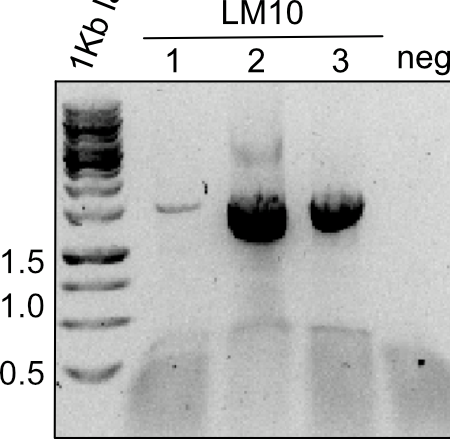
Isolation of Xylella fastidiosa (strain LM10)

The director of Dep. 1 said that the team is also “starting to isolate bacterial endophytes [organisms that live inside a host] present in the xylem of olive varieties grown in the Alentejo region (Cobrançosa and Arbequina) and of an Italian variety that is resistant to Xylella (Leccino), from the Herdade de Reguengo, belonging to INIAV, Elvas center”.

The project's acronym, XfSTOP, stands for “Integrated approach to disease management for the biocontrol of Xylella fastidiosa in olive trees”. The olive tree is of enormous economic importance in Portugal, particularly in the Alentejo. The biopesticide to be developed will use a microorganism capable of coexisting in the same environment as the olive tree. Xylella, The plant will then produce a biological compound capable of eliminating the bacteria. This mechanism will be sustainable, environmentally friendly and non-toxic.

© 2021 InnovPlantProtect, All rights reserved