Já está disponível a iCountPests, uma nova aplicação desenvolvida pelo InnovPlantProtect para apoiar a monitorização de pragas agrícolas através da análise automática de imagens captadas em campo.
A app utiliza inteligência artificial para contabilizar automaticamente pragas presentes em armadilhas adesivas, permitindo obter resultados rápidos e fiáveis diretamente no telemóvel.
Pensada para produtores e técnicos agrícolas, a iCountPests contribui para uma monitorização mais eficiente e precisa, reduzindo o tempo associado às contagens manuais e apoiando a tomada de decisão na proteção das culturas.
O funcionamento é simples:
Captar uma imagem da armadilha
Analisar automaticamente
Consultar resultados organizados e acessíveis
A app permite ainda acompanhar a evolução das pragas ao longo do tempo, facilitando a gestão e o registo da informação no terreno.
A monitorização de pragas é uma tarefa essencial na gestão agrícola, mas continua a depender, em muitos casos, de processos manuais demorados e sujeitos a erro.
A pensar nesta realidade, o InnovPlantProtect irá lançar brevemente a iCountPests, uma aplicação inovadora que utiliza inteligência artificial para automatizar a contagem de pragas a partir de imagens captadas no campo.
Com a iCountPests, será possível obter resultados rápidos e fiáveis, contribuindo para uma tomada de decisão mais informada e eficiente na proteção das culturas.
A aplicação estará brevemente disponível, sendo direcionada a produtores agrícolas e técnicos que procuram otimizar o tempo dedicado à monitorização e melhorar a precisão dos dados recolhidos.
Uma nova tecnologia de revestimento biológico de sementes desenvolvida pelo InnovPlantProtect (InPP), em colaboração com a Fertiprado, poderá vir a transformar o desempenho de pastagens e forragens, contribuindo para sistemas agrícolas mais eficientes e sustentáveis.
Baseada em compostos derivados de algas, esta solução inovadora apresenta efeito bioestimulante e foi concebida para atuar desde as fases iniciais do desenvolvimento das plantas. Os ensaios realizados demonstraram resultados promissores ao nível da estimulação da nodulação em leguminosas, do crescimento vegetativo e da resistência das plantas a condições adversas, com impacto positivo no valor nutricional do pasto.
Este desenvolvimento resulta de um percurso de investigação conjunta que decorreu ao longo de cinco anos, refletindo o compromisso contínuo do InPP em transformar conhecimento científico em soluções com aplicação prática no setor agrícola. A tecnologia encontra-se atualmente em processo de patenteamento e representa um marco relevante no pipeline de inovação do laboratório.
Para a Fertiprado, parceiro estratégico neste projeto, esta tecnologia constitui uma alternativa aos revestimentos tradicionais baseados em compostos sintéticos, reforçando a aposta em soluções mais sustentáveis e alinhadas com as necessidades futuras da agricultura.
O desenvolvimento desta solução insere-se na Agenda Mobilizadora Pacto da Bioeconomia Azul, financiada pelo Plano de Recuperação e Resiliência (PRR), iniciativa que promove a valorização de recursos marinhos através da criação de novos produtos e tecnologias. Como parte do processo de valorização da tecnologia, foi assinado um memorando de entendimento com vista à sua futura exploração comercial.
Num contexto em que a procura por biosoluções agrícolas continua a crescer, iniciativas colaborativas como esta demonstram o papel fundamental da investigação aplicada na resposta aos desafios da sustentabilidade e da produtividade agrícola.
Investigação com impacto no setor agrícola
O trabalho desenvolvido pelo InPP evidencia o valor da colaboração entre ciência e indústria, permitindo acelerar processos de inovação e criar soluções ajustadas às necessidades reais do setor agrícola.
A parceria com empresas constitui um dos pilares estratégicos do InPP, promovendo a transferência de conhecimento científico e o desenvolvimento de tecnologias que contribuem para sistemas agrícolas mais resilientes e sustentáveis.
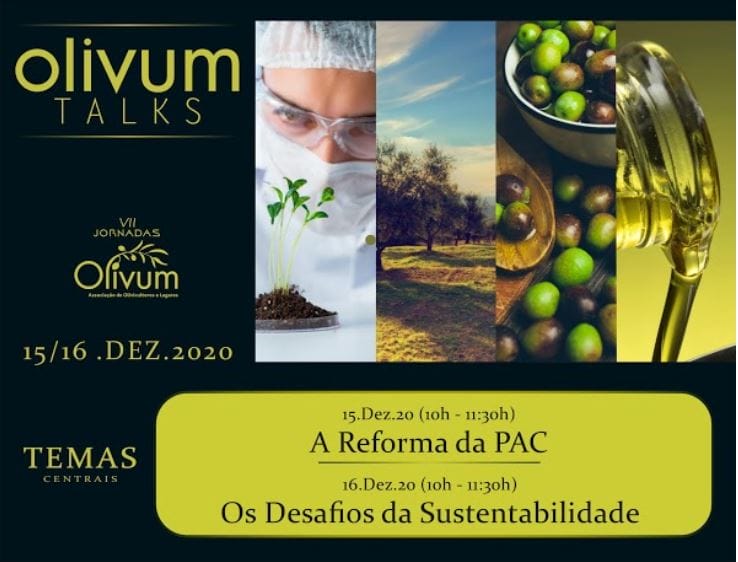
The 7th Olivum Conference will be held on December 15 and 16, this time in digital format. The first day of the event will be dedicated to the “Reform of the CAP” and the second to the “Challenges of sustainability”.
The “Reform of the CAP” will be discussed on the first day of the seventh edition of the Olivum Days, which will be held online on December 15 and 16. The session on the 15th will feature the Minister of Agriculture, Maria do Céu Antunes, MEP Isabel Carvalhais, from the Agriculture Committee, João Pacheco, Senior Fellow at think-tank Farm Europe, Paulo Gouveia, Chief Policy Adviser at COPA-COGECA, and, as moderator, the director of Diário de Notícias Rosália Amorim.
The “Challenges of Sustainability” will be the subject of analysis on the second day of the event, moderated by Isabel Martins, director of Revista Sustentável, and with speeches by Jorge Moreira da Silva, Director of Development and Cooperation at the Organization for Economic Cooperation and Development, João Wengorovius Menezes, Secretary General of the Business Council for Sustainable Development, José Pedro Salema, Chairman of the Board of Directors of Empresa de Desenvolvimento e Infra-Estruturas do Alqueva and João Luís Barroso, Director of Sustainability at the Alentejo Regional Wine Commission.
On both days, the sessions take place between 10:00 and 11:30. Participation is free, but requires registration previous.
Can Europe help feed a growing population while reducing the impact of agriculture on climate and biodiversity? Can farmers produce enough food without pesticides? Can pesticides be part of intelligent pest control, using new and innovative technologies? Find out more later in the webinar “Pesticides and a Resilient Food System”.
The debate on pesticide use is becoming increasingly contentious in Europe. As part of the Green Deal initiative launched in December last year, the European Commission is reviewing the Sustainable Use of Pesticides Directive. But this is an effort that only leads to a more fundamental discussion about the sustainable use of pesticides.
In this fundamental discussion, questions arise such as: can Europe help feed a growing population and keep farmers in business, while reducing the impact of agriculture on the climate and biodiversity? Can farmers produce enough food without pesticides? Can pesticides be part of smart pest management, which uses new and innovative technologies?
On the first anniversary of the Green Deal, Bayer is promoting an Oxford-style webinar on resilience, where two teams will ‘face off’, with the motion for the debate being “Pesticides are not necessary for a resilient food system in the European Union”.
Register to watch. The debate starts today at 16:45 (Portuguese time).
The iPlanta conferences returned this year in a different format to usual, with three webinars on RNA intervention technology (RNAi) and a panel of speakers made up of international researchers.
After the theme “Development of RNAi-based pesticides: new opportunities” on December 1, the 4th edition of the iPlanta conferences starts again today at 5pm, this time dedicated to the environmental biosafety of RNAi-based pesticides. The third and final day of the event will be on December 14, also at 5pm, where regulatory issues will be discussed.
Participation is free but requires registration. Watch the videos of the first session here e here.
iPlanta is a COST action, a European organization that promotes and funds the networking in research and technology. Chaired by Bruno Mezzetti, it aims to review existing and future applications of RNAi, create a bioinformatics database, develop specific biosafety protocols, define post-market monitoring requirements and methods for RNAi plants, and encourage, promote and disseminate research reports by scientists involved in RNAi-related studies.
The importance of the iPlanta Conferences lies in the urgent need to find more effective solutions, through the application of RNAi, one of the new breeding techniques, to combat the pathogenic interactions faced by crops, which are responsible for the loss of substantial amounts of agricultural production worldwide, including in Portugal, where around 40 % of crops are lost every year. In global terms, the figures are similar: according to estimates by the Food and Agriculture Organization of the United Nations (FAO), between 20% and 40% of crops are destroyed every year due to pests and diseases.
With the estimated increase in population, modern agriculture is facing one of its greatest challenges: guaranteeing food supplies for 10 billion people in just 30 years' time. The application of RNAi technology promises to respond effectively to this challenge.