O InPP participou no Fórum Nacional de Clubes Ciência Viva na Escola, que teve lugar no dia 27 de março, integrando a Mostra de Ciência e Tecnologia com um stand dedicado à proteção das plantas.
Neste espaço, foram apresentados diversos materiais demonstrativos, incluindo placas de Petri com fungos e bactérias, plantas, algas e exemplos de produtos formulados, com o objetivo de despertar o interesse e a curiosidade dos visitantes para a importância da saúde das plantas e da investigação científica nesta área.
Ao longo do dia, a Gestora de Comunicação, Inês Ferreira, e o Gestor de Inovação, Paulo Madeira, dinamizaram o contacto com o público visitante, explicando de que forma a investigação em proteção das plantas contribui para melhorar a proteção das culturas e promover uma agricultura mais resiliente e sustentável.
O Fórum Nacional de Clubes Ciência Viva na Escola decorreu no CNEMA, em Santarém, reunindo escolas, centros Ciência Viva, universidades, centros de investigação e diversas outras entidades, num encontro dedicado à ciência, tecnologia e inovação.
O InPP agradece a todos os visitantes que passaram pelo seu stand, destacando a importância destes momentos de partilha para promover o conhecimento científico junto da comunidade.
No dia 26 de março, o InPP participou numa sessão promovida pela Agência Nacional de Inovação (ANI), em Lisboa, que contou com a presença de uma comitiva da República Checa ligada ao setor das biotecnologias.
Em representação do InPP estiveram Cristina Azevedo, Diretora de Biosoluções, e Paulo Madeira, Gestor de Inovação, que apresentou a instituição e as suas principais áreas de atuação e competências.
A iniciativa teve como principal objetivo identificar oportunidades de cooperação entre entidades portuguesas e checas, nomeadamente nas áreas de transferência de tecnologia, codesenvolvimento, ensaios pré-clínicos e diagnósticos, coinvestimento e internacionalização da inovação.
A sessão contou com a participação de representantes de entidades relevantes da República Checa, incluindo Petra Kinzlova, CEO da Prague.bio, Katarina Psenakova, Head of Biology da PharmTheon, bem como representantes da Embaixada da República Checa e da Academia das Ciências da República Checa.
Este encontro contribuiu para reforçar o posicionamento do InPP na promoção de parcerias internacionais e no desenvolvimento de soluções inovadoras, evidenciando o compromisso contínuo da instituição em fortalecer redes de colaboração científica e tecnológica e em contribuir para o crescimento e internacionalização da inovação.
O InPP marcou presença no Encontro com orizicultores e técnicos(as) em Portugal, promovido pela EDAF, que decorreu no dia 5 de março, no Pólo de Inovação de Salvaterra de Magos, em Santarém.
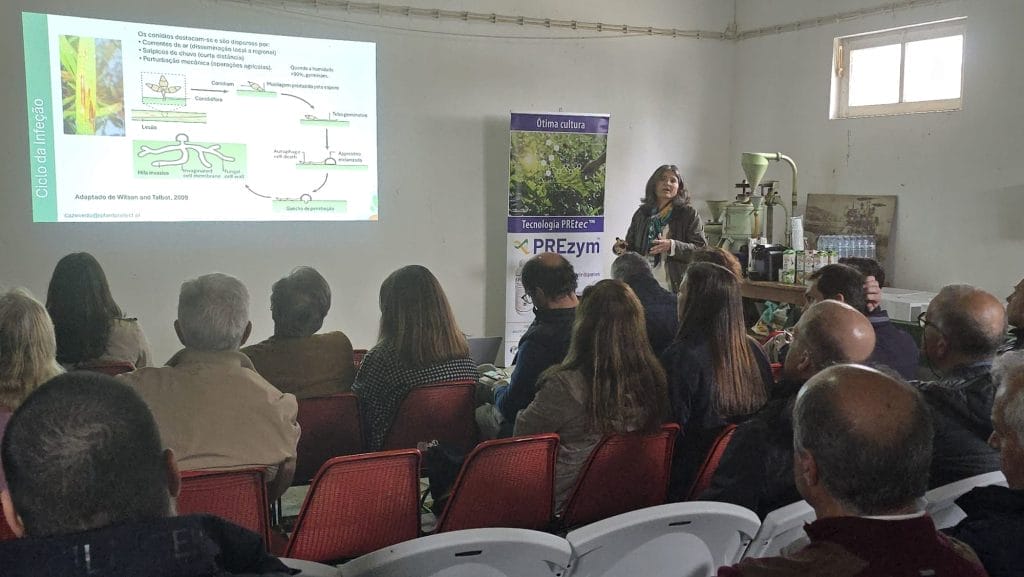
A Diretora de Biosoluções do InPP, Cristina Azevedo, integrou o painel de oradores convidados, tendo apresentado a comunicação intitulada “A problemática da Pyricularia na cultura do arroz”. A apresentação incidiu sobre os principais desafios fitossanitários associados a esta doença, que continua a constituir uma das maiores ameaças à produção de arroz a nível mundial e também em Portugal.
O encontro reuniu produtores, técnicos e especialistas da fileira do arroz, proporcionando um espaço de partilha de conhecimento e debate sobre soluções atuais e em desenvolvimento para o controlo da piriculariose. Foram igualmente abordados outros temas relevantes para a sustentabilidade e produtividade da cultura, nomeadamente a gestão da fertilização.
A participação do InPP neste tipo de iniciativas reforça o compromisso da instituição com a inovação, a transferência de conhecimento e o desenvolvimento de soluções sustentáveis para a agricultura nacional.
O InPP agradece à EDAF e ao COTArroz o convite e a organização deste importante encontro, esperando que esta colaboração continue a fortalecer-se no futuro.
Professor Pedro Fevereiro, CEO of InnovPlantProtect
InnovPlantProtect was present at the Science 2020 Meeting, which took place on November 3 and 4 at the Lisbon Congress Center in a hybrid format (face-to-face and online). Pedro Fevereiro, CEO of InPP, spoke about the activity of this Collaborative Laboratory in Elvas and its objectives for protecting Mediterranean crops from pests and diseases.
After 18 of the 26 Collaborative Laboratories (CoLAB) recognized in Portugal were presented on the first day of the Ciência2020 Meeting, the event continued yesterday with the presentation of eight more CoLAB, including InnovPlantProtect (InPP).
In the session dedicated to Biodiversity and Forestry and Agri-food (session 3), moderated by ANI-National Innovation Agency, InPP's CEO, Pedro Fevereiro, gave a short seven-minute presentation in which he spoke about the importance of InPP's activity in the current context of major challenges for food production.
This Collaborative Laboratory based in Elvas is trying to develop innovative biological solutions to protect agricultural crops from the effects of emerging pests and diseases for which there are no solutions on the market. These pests and diseases, due to the increase in global average temperature, are moving and settling in territories where they didn't exist before, including Portugal.
If the current situation is serious - “around 40% of the world's crop production is lost to pests and diseases every year”, as Pedro Fevereiro pointed out - imagine what it will be like when the average global temperature rises by the much-feared 2 degrees Celsius. “Climate change is increasing the risk of new pests and diseases emerging and expanding the areas affected. This problem, coupled with the EC's decision to discontinue traditional active molecules [synthetic agrochemicals] in Europe, imposes the need to develop alternative solutions,” warned the researcher who leads InnovPlantProtect, stressing that this is precisely the focus of the activity of the CoLAB he leads.
NASA map shows global temperature variation in 2019
In this sense, sustainability is the concept that best characterizes the products that InPP is developing. “New solutions for protecting Mediterranean crops must be more sustainable. In addition to new biopesticides based on oligopeptides and small RNAs, and formulated with biocompatible micro or nanoparticles, InPP will develop new plant varieties through genome editing and molecular selection assisted by molecular markers,” he explained.
With regard to the most interesting crops for the application of these solutions, Pedro Fevereiro gave a list of fruits and cereals whose production is of great importance to the national economy: olive trees, pears, grapes, cherries, blackberries, raspberries, strawberries, citrus fruits, tomatoes, almonds, corn, wheat, barley, oats and rice.
In addition to products, InPP will also provide services for the identification and molecular diagnosis of pests and diseases, as well as the “characterization of matrices using Fourier Transform Infrared (FTIR) spectra analysis, the molecular certification of plant varieties, the monitoring and diagnosis of pests and diseases, the creation of models for the spread of agricultural pests and diseases, forecasting models based on remote sensing data and risk models for emerging pests and diseases.
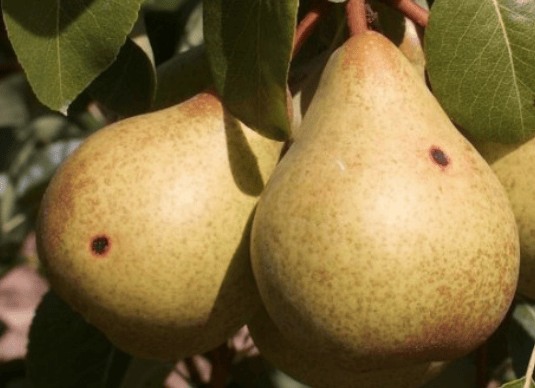
Rocha pear stenosis
Image credit: Voz do Campo
Pedro Fevereiro concluded his presentation at the Ciência2020 meeting with a summary of InPP's agenda for the coming months. In this regard, he revealed that InnovPlantProtect, the only one in Portugal working in this area of innovation, intends to develop a biopesticide to control the Xylella fastidiosa, a molecular strategy to control stenphyliosis in Rocha pears, tools based on geographic information systems to assist public and private decision-making in pest and disease control, an Artificial Intelligence-based early detection system for the early detection of the decline of cork oak forests produced by Phytophthora, Finally, to identify bread wheat alleles resistant to the new “Warrior” race of yellow rust and mobilize them in the desired varieties.
InnovPlantProtect will be present today at the Science 2020 Meeting, which is taking place at the Lisbon Congress Center in a hybrid format (in person and online). Pedro Fevereiro, CEO of InPP, will talk about the activity of this Collaborative Laboratory and its objectives in protecting agricultural crops from pests and diseases.
After 18 of the 26 Collaborative Laboratories (CoLAB) recognized in Portugal were presented in two sessions yesterday, the Science 2020 Meeting continues today with the presentation of eight more CoLAB, including InnovPlantProtect, a private non-profit association based in Elvas that is trying to develop innovative biological solutions for crop protection.
In today's session, dedicated to Biodiversity and Forestry and Agri-food (session 3), InPP's CEO, Pedro Fevereiro, will give a seven-minute presentation in which he will talk about the importance of InPP's activity, the products and services that its team of researchers is trying to develop to protect agricultural crops from biotic and abiotic factors, including climate change and new emerging pests and diseases that, due to the increase in global average temperature, are moving and settling in regions where they didn't exist before.
Session 3, moderated by the National Innovation Agency, will take place between 11.30 and 12.30.






 Português
  English