News & Events

white plant

NEWS

There are days when science begins long before you enter the laboratory or the field. It starts at dawn, when the alarm clock goes off too early. When you mentally review the day's list: an experiment that can't be missed, a trip to the field that depends on the weather, an unfinished report, a meeting scheduled at the wrong time. In between, someone to wake up, someone to drop off, someone to call. And yet science moves forward.

At InnovPlantProtect, there are now 15 women who give a face to the science and innovation developed here. Women who represent commitment, demand, resilience, overcoming, quality, talent, excellence and creativity. But they are only part of a greater whole. There are many more - and each one brings with it a story that doesn't fit into a CV, a patent application or an article.

Today, February 11th, marks the International Day of Women and Girls in Science, a UNESCO initiative that underlines the importance of the female role in the production of scientific and technological knowledge and the need to continue promoting equal access to careers in science and innovation. Portugal has encouraging figures: women represent almost 50% researchers in the country. It's a relevant figure, reflecting decades of progress. But the figures don't show what happens between them.

Because science, for many women, is made up of fragile balances.

There are women with intense family lives, others with more solitary journeys, still others who build support networks outside traditional models, with effort and creativity. There are difficult choices and decisions, unexpected circumstances, forced breaks, changes of pace, different phases of life. All legitimate. Many are invisible when you only look at the end result of a project, an article or a biosolution developed. - but they all influence the paths of science.

One day, one of our researchers - let's just call her that - told us that she had finished a field trial close to sunset. The phone rang while she was putting away her materials. It was the school. A delay. Nothing extraordinary. It was business as usual. She came home exhausted, with dirt still on her boots, opened her computer after dinner and went back to her data, because the experiment couldn't wait.
“It wasn't a heroic day,” she said. “It was just a normal day.”

And perhaps that is what is most remarkable.

In the field of crop protection, the work is demanding, technical and often unpredictable. It takes place in the laboratory and in the field, between strict protocols and decisions made under real conditions. It requires persistence, adaptability, attention to detail and an integrated view of problems. Characteristics that so many women bring with them - not by nature, but by experience, by path, by everything they have learned to manage at the same time.

Each personal story profoundly shapes the way we do science. The doubts, the challenges, the forced breaks, the changes of pace, the new beginnings. None of this is left at the laboratory door. It all silently enters into the way we observe, question and build knowledge.

To celebrate the International Day of Women and Girls in Science is to recognise this reality as a whole. It is to honour the women who continue to do science despite the challenges — and often because of them. And it is to remember that innovation is also born from lives fully lived, shaped by imperfection, effort and courage.

Today we celebrate them. Not just for what they produce, but for all that they are. In science, in the field, in the laboratory - and in the life that happens in between.

O InnovPlantProtect (InPP), Collaborative Laboratory specializing in biological and digital solutions for crop protection, aligned with the emerging challenges of agriculture, will launch its new institutional website on January 24th, on a symbolic date marking 7 years working in the agricultural sector.

This launch is part of a phase of institutional evolution and consolidation InPP, reinforcing its strategy of proximity to the sector, clarity in the communication of its competencies and affirmation as a strategic partner for companies, producers, associations and public bodies.

An even clearer, more up-to-date and sector-oriented platform

With a renewed structure and a more intuitive browsing experience, the new website features:

  • an area of Services and Products completely reorganized, which facilitates access to specialized services, laboratory capabilities and biological and digital solutions developed by InPP, as well as to a updated catalog of services and biosolutions;
  • more complete institutional content that reinforces transparency, scientific rigor and CoLAB's mission;
  • a clearer presentation of scientific skills and research areas, highlighting the impact of the work carried out by InPP's multidisciplinary teams.

New image, same mission - but reinforced

The launch of the website is accompanied by the implementation of InnovPlantProtect's new visual identity, This reflects the maturity of CoLAB and its future ambitions.

The new image - accompanied by the slogan “Innovate together. Protect better.” - reflects InPP's ongoing commitment to:

  • Developing new generation biological and digital solutions;
  • Promoting safer, more innovative and more productive agriculture;
  • Strengthen collaboration and partnership with the agricultural sector and the innovation ecosystem.

A new phase for InPP

The digital and visual renovation is part of a broader strategy of maturity and consolidation, Through this initiative, InPP aims to strengthen its role as a scientific and technological partner for the agricultural sector in applied research and the development of crop protection solutions.

According to António Saraiva, InPP's executive director: “This new website isn't just a digital revamp - it's a reflection of the ambition we have for our future and how we want to communicate with the sector. We want every visitor to understand the purpose that drives us: to create innovative solutions that protect crops, boost productivity and contribute to more sustainable agricultural systems. InPP is entering a new phase, with a clearer, more accessible identity aligned with the real needs of agriculture and a renewed commitment to real impact on the ground.”

Available from January 24th

The new InnovPlantProtect website will be available from January 24th at: https://iplantprotect.pt/

The start of a new year also marks a new cycle for InnovPlantProtect. In 2026, InPP enters a phase of evolution and consolidation, with several new features that reinforce its position as a strategic partner for the intelligent transformation of agriculture.

Over the next few months, initiatives, content and tools will be presented that reflect the work carried out by our teams in the areas of applied research, biological solutions, specialized services and digital innovation.

The first step in this new phase will be presented in the next January 24th, InnovPlantProtect is celebrating the date 7 years in business at the service of the agricultural sector.

Until then, we continue to prepare a range of new products that reflect our mission to promote safer, more innovative and more productive agriculture.

Stay tuned. What's coming is just the beginning.

EVENTS

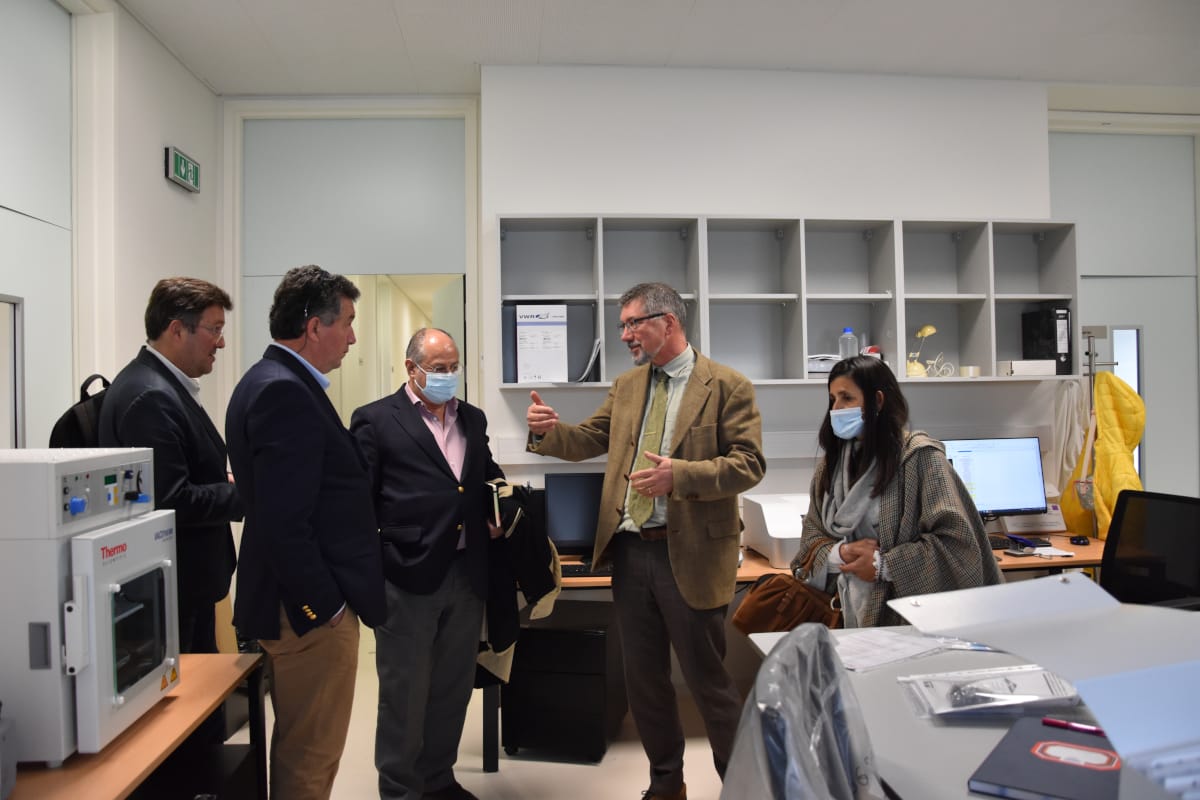
Today, April 5, InnovPlantProtect (InPP) members had the opportunity to visit the new facilities of the collaborative laboratory (CoLAB), at the Elvas Campus of the INIAV, The 39-strong team is already at work, although some laboratory equipment is still being assembled.

The visit was attended by Isabel Rocha, vice-rector of the NOVA University Lisbon, José Pereira Palha, president of the National Association of Protein, Oilseed and Cereal Producers (Anpoc), José Rato Nunes, representing the Polytechnic Institute of Portalegre, Pedro Monteiro, president of Casa do Arroz, Tiago Pinto, secretary-general of the National Association of Maize and Sorghum Producers (Anpromis), José Maria Rasquilha, vice-president of Anpoc and president of Cersul, Pedro Viterbo, manager of Fertiprado, Domingos dos Santos, president of the National Federation of Fruit and Vegetable Producers' Organizations (Fnop), Felisbela Torres de Campos, Director of Corporate Regulation and Sustainability for Portugal at Syngenta Crop Protection, Maria do Rosário Félix, representing the University of Évora, Margarida Oliveira, deputy director of the ITQB NOVA and coordinator of the InPP working group, and Benvindo Maçãs, director of INIAV's Elvas Center, who were accompanied by CoLAB's executive director, Pedro Fevereiro.

InnovPlantProtect (InPP) will be present at the 38th Ovibeja, The event will take place from April 21 to 25, with its own stand and a program of activities to be announced in due course. On Saturday, April 23rd, at 3pm, the InPP is organizing a colloquium on the theme “Protecting crops to feed the world: from soil microorganisms to pest and disease monitoring techniques”.

The executive director of the InPP is taking part in this conference, Pedro February, who will present CoLAB, iLaria Marengo, director of the Monitoring and Diagnostics department, who will talk about remote sensing applied to crop protection, and Ricardo Ramiro, director of the Data Management and Risk Analysis department, who will address the topic of the soil microbiome.

Pedro Fevereiro is also taking part in the seminar ACOS - The Southern Farmers“ Association is organizing a conference on ”How to feed the planet?“, the theme of Ovibeja 2022, on the 23rd at 11.30 a.m., and the colloquium ”The European green agenda. Sustainability of agriculture and food sovereignty", which takes place on Friday, April 22, at 4pm. The event takes place at the Manuel de Castro e Brito Fair and Exhibition Park in Beja.

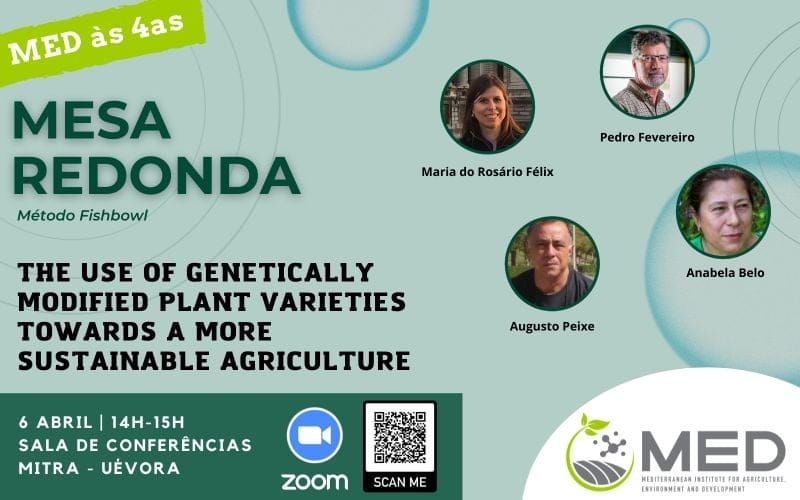
The executive director of InnovPlantProtect, Pedro Fevereiro, will take part in the next “MED às 4as” (MED on Wednesdays), on April 6, a round table organized by the MED - Mediterranean Institute for Agriculture, Environment and Development, on “The use of genetically modified plants for more sustainable agriculture”.

The session will take place in person in the Conference Room of the Mitra Campus. University of Évora, between 2 p.m. and 3 p.m., but it is also possible to attend via Zoom.

The use of genetically modified varieties is a possible solution for achieving the strategic objectives of the European Green Deal, as part of the “From Plate to Plate” and Biodiversity Strategy for 2030. However, it is still limited and remains under European legislation that does not take into account the new genomic techniques (NTG). The development of specific legislation allowing the development and use of plants subject to these NTGs would be particularly timely for meeting the objectives of the European Green Deal, say the organizers.

Find out more and meet the panel of speakers here.