News & Events

white plant

NEWS

iCountPests em campo: demonstração prática da app de monitorização de pragas agrícolas

No próximo dia 2 de junho, o InnovPlantProtect (InPP), com o apoio da ATEVA, promove uma sessão de demonstração da iCountPests, uma aplicação móvel que facilita e acelera a monitorização de pragas agrícolas através da análise automática de imagens captadas no campo.

A iniciativa, realizada no âmbito do projeto BioLivingLABs, decorre durante a manhã na Herdade das Servas (Estremoz), e é direcionada a produtores e técnicos agrícolas, proporcionando uma oportunidade para conhecer a aplicação em contexto real e perceber o seu potencial na monitorização de pragas na vinha.

Durante a sessão, os participantes poderão:

  • conhecer as funcionalidades da aplicação
  • perceber como funciona a análise automática de imagens
  • assistir a uma demonstração prática em campo da utilização da iCountPests
  • explorar o potencial da ferramenta no apoio à tomada de decisão agrícola

Lançada recentemente, a iCountPests utiliza inteligência artificial para automatizar a contagem de pragas através de imagens captadas com o telemóvel, reduzindo o tempo associado às contagens manuais e contribuindo para uma monitorização mais eficiente e informada.

Com um foco inicial na vinha, a aplicação permite monitorizar a cigarrinha-verde e a traça-dos-cachos, estando prevista a integração futura de novas pragas e culturas agrícolas.

A participação é gratuita, mas sujeita a inscrição prévia. Para se inscrever basta preencher o formulário disponível here.

📅 Data: 2 de junho de 2026

🕙 Hora: 10h00

📍 Local: Herdade das Servas, Estremoz

BannerDivulgacao iCountPests

iCountPests: nova app para monitorização automática de pragas já disponível

Já está disponível a iCountPests, uma nova aplicação desenvolvida pelo InnovPlantProtect para apoiar a monitorização de pragas agrícolas através da análise automática de imagens captadas em campo.

A app utiliza inteligência artificial para contabilizar automaticamente pragas presentes em armadilhas adesivas, permitindo obter resultados rápidos e fiáveis diretamente no telemóvel.

Pensada para produtores e técnicos agrícolas, a iCountPests contribui para uma monitorização mais eficiente e precisa, reduzindo o tempo associado às contagens manuais e apoiando a tomada de decisão na proteção das culturas.

O funcionamento é simples:

  1. Captar uma imagem da armadilha
  2. Analisar automaticamente
  3. Consultar resultados organizados e acessíveis

A app permite ainda acompanhar a evolução das pragas ao longo do tempo, facilitando a gestão e o registo da informação no terreno.

Saiba mais sobre a iCountPests here.

Brevemente disponível: nova app iCountPests vai transformar a monitorização de pragas

A monitorização de pragas é uma tarefa essencial na gestão agrícola, mas continua a depender, em muitos casos, de processos manuais demorados e sujeitos a erro.

A pensar nesta realidade, o InnovPlantProtect irá lançar brevemente a iCountPests, uma aplicação inovadora que utiliza inteligência artificial para automatizar a contagem de pragas a partir de imagens captadas no campo.

Com a iCountPests, será possível obter resultados rápidos e fiáveis, contribuindo para uma tomada de decisão mais informada e eficiente na proteção das culturas.

A aplicação estará brevemente disponível, sendo direcionada a produtores agrícolas e técnicos que procuram otimizar o tempo dedicado à monitorização e melhorar a precisão dos dados recolhidos.

Saiba mais sobre a iCountPests here.

EVENTS

Aristides de Sousa Mendes Municipal Award for Elvas

Casa da História Judaica da Rainha da Fronteira wins a government award for actions and initiatives by local authorities to “save, protect and dignify human lives in Portugal in the face of contemporary threats and atrocities”.

A Elvas City Council won the first municipal award “Aristides de Sousa Mendes and other Portuguese saviors - Holocaust, universal values, humanism and justice”, in the category “Arts, Heritage and other Cultural Domains”, with the application of the House of Jewish History.

The honorary distinction, which is national in scope, was launched by the government in 2021. Among other things, it “aims to distinguish practices, programs, projects, symbols and material and immaterial works, which, inspired by memories and teachings arising from the Holocaust, and/or developed around universal values of humanism and justice, are factors of identification, aggregation and recognition by the respective communities, and valorization by differentiation, of localities and territories”.

The House of Jewish History is located at Rua dos Açougues, nº 4-6, in Elvas, and is open from Tuesday to Sunday, from 10am to 6pm.

In addition to the diploma that will be presented to the Municipality of Elvas by the Directorate-General for Local Authorities, The government undertakes to publicize the winning project.

Elvas City Council is a founding member of CoLAB InnovPlantProtect, which is based in the city.

Image: Elvas City Council

Chestnut trees speak in Sabugal

InnovPlantProtect and the Municipality of Sabugal install sensors in the municipality's chestnut groves and launch an educational program to value the chestnut tree as a local natural capital.

The trees will communicate their state of health thanks to TreeTalker sensors. The project “Educate to know, protect and monitor chestnut trees through IoT technology”, which has been approved by the Environmental Fund, is led by InnovPlantProtect (InPP) and managed by the Sabugal Municipal Council (CMS).

The initiative is aimed at the sustainable management of chestnut trees, the enhancement of ecosystem services and protection against diseases, particularly ink disease, for which there is still no concrete solution. The project includes training courses for those currently and potentially responsible for the sustainable management and protection of chestnut trees: CMS and chestnut producers associated with CastCoa - Associação de Produtores de Castanha do Coa; and secondary school students from the Sabugal School Group.

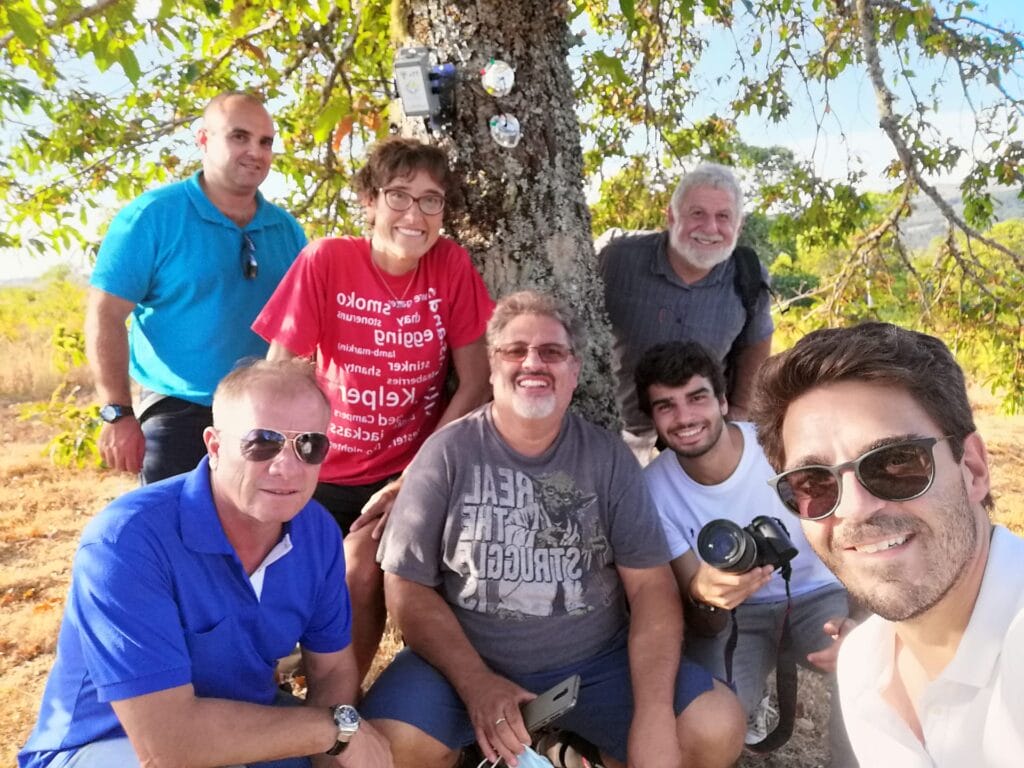
The CMS and InPP team in Sabugal at the beginning of September 2021.

The novelty of the educational program, however, is that digital 4.0 technology, based on the “Internet of Things” (IoT), is being applied to support and add value to traditional teaching methods. The TreeTalker sensors, installed around the trunk, allow the phytosanitary conditions of the trees to be monitored in real time, detecting water consumption (through sap flow), biomass growth (diameter), stem humidity, absorbed solar radiation and the state of health of the leaves through spectral indices (light reflection).

Sabugal City Council has just publicize the project. Don't miss the newly released video, which highlights the importance of the chestnut tree to the livelihoods of local communities and the value of the souto ecosystem, and shows the team at work in the field. It's also a unique opportunity to see InPP researchers in action Manuel Simões, Márcio Almeida e Ilaria Marengo, director of Pest and Disease Monitoring and Diagnosis Department, and coordinator of this project.

Can gene editing increase agricultural production?

Pedro Fevereiro in podcast version, as part of a partnership between CiB - Centro de Informação de Biotecnologia and TSF radio. In total, 5 Notes on Gene Editing were produced.

The executive director of InnovPlantProtect answers the question “Can gene editing increase agricultural production?” in this podcast, produced as part of a CiB / TSF partnership. The initiative resulted in 5 Notes on Gene Editing in food production and health. The recordings were broadcast by TSF during the week of October 4 to 8, 2021.

The challenge for 2050 is how to feed 10 million people without destroying the planet. This requires changes in food production. Pedro Fevereiro explains how gene editing can help in this process.

Listen too the other four podcasts, which feature:

Jorge Canhoto, researcher, head of the Plant Biotechnology Laboratory of the Functional Ecology Center of the University of Coimbra and president of CiB - Biotechnology Information Center

Margarida Oliveira, who leads the Plant Functional Genomics research group of the GPlantS - Plant Genomics under Stress unit at the Institute of Chemical and Biological Technology (ITQB NOVA).

Ana Sofia Coroadinha, professor at ITQB NOVA

Filipe Castro, researcher at the Interdisciplinary Center for Marine and Environmental Research, and professor at the Faculty of Sciences of the University of Porto 

Feature image: CiB