It's called PROSPER and it's a new European project that aims to transform European agriculture through the valorization of “orphan” legumes - resistant crops, little exploited, but with great potential to face the challenges of climate and food in the future.
The consortium, with total funding of around 5 million euros, brings together 27 partners from 13 European countries and Tunisia, including universities, research centers, companies and non-profit organizations in the agricultural sector. Among them are countries from the Mediterranean (Italy, Spain, Greece, Portugal and France), Central Europe (Germany, Belgium, Poland, Bulgaria and Romania), Northern Europe (Denmark, Sweden and Finland).
The aim of PROSPER is to test and validate new agricultural diversification strategies, adapted to different climates and social and economic contexts, promoting more sustainable, innovative practices that are adjusted to the needs of different agricultural realities.
InPP, PROSPER's partner, will be responsible for analyzing:
Soil health and environmental impact
Energy efficiency and waste management
Nutritional quality of crops
Fair valuation along the production chain
To do this, the InPP team will use advanced technologies, such as real-time sensors and geospatial analysis, which will help study soil health, carbon sequestration captured by crops, water management and biodiversity, among others.
PROSPER is co-created with the main players in the agricultural sector, ensuring that the solutions developed do not remain on paper: they will be practical, useful and transformative.
The project starts in September 2025. We are ready to embark on this journey towards a greener, fairer and more resilient agriculture.
InnovPlantProtect (InPP) was present at the Science 2025 Meeting in Lisbon, at the Nova SBE Campus, to take part in the parallel session “Crop Protection for One Health, and Food and Environmental Sustainability”.
The Encontro Ciência took place from July 9 to 11 at the NOVA SBE Campus in Carcavelos, with the motto “Science, Innovation and Society”. Portugal's largest science and technology meeting was the stage for promoting and discussing the scientific, social, cultural and economic impact of research in Portugal, exploring the intersection between science, innovation and society, to inspire new ideas and foster transformative collaborations.
The director of the Data Management and Risk Analysis Department, Ricardo Ramiro, and the director of the New Biopesticides Department, Cristina Azevedo, presented some of the results of their work in this session co-moderated by the executive director, António Saraiva.
During the session, two important solutions for the agricultural sector, developed by our team, were presented:
iCountPests - an innovative app that uses AI to detect and count pests accurately and quickly in photos of chromotropic traps.
InPP 2 - a broad-spectrum biofungicide capable of fighting Botrytis cinerea, the fungus responsible for gray rot in tomatoes.
CoLAB MORE Colab - Collaborative Mountain Research Laboratory and Sfcolab - Collaborative Laboratory for Digital Innovation in Agriculture, were also present at the parallel session, as well as GREEN-IT, to discuss how science and innovation can tackle the challenges of climate change and promote more sustainable agricultural systems.
On June 30, InnovPlantProtect (InPP) was present at the meeting “7 years of CoLABs: impacts and perspectives”, which brought together political decision-makers, experts from the Portuguese innovation ecosystem, leaders from different sectors, representatives of public and private entities and the representatives of the 41 Collaborative Laboratories (CoLAB), at the Pavilhão do Conhecimento in Lisbon.
The meeting, organized by the Forum of Collaborative Laboratories (FCoLAB), aimed to reflect on the impact of the work carried out by the different CoLABs over the last seven years, as well as to address future prospects and identify strategies to boost the contribution of scientific research and innovation to the economy and society.
This initiative was an opportunity to showcase the products, services and solutions developed by CoLAB over the last seven years, highlighting its contribution to innovation, competitiveness and sustainability in various sectors of the economy. The application recently launched by InPP, iCountPests, which allows pests to be counted automatically using images from traps, reducing the time invested in monitoring and making it possible to create a pest history, was also highlighted.
The event was attended by the Minister of Education, Science and Innovation, Fernando Alexandre, the Secretary of State for the Economy, João Rui Ferreira, Manuel Heitor, from the IN+ Center for Innovation, Technology and Policy Research and former Minister of Science and Innovation, António Grilo, President of ANI, among others.
In his speech, the Minister for Education, Science and Innovation, Fernando Alexandre, highlighted the purpose of science at national level: “We hope that the science created in Portugal will generate innovation. More than technology, innovation is the answer to society's problems. You are the agents of change!”.
During the session, the main activity indicators and proven impact of the first seven years of CoLABs' activity were also presented, and multisectoral perspectives on their role in the national science and innovation ecosystem were debated, focusing on topics such as socio-economic impact, internationalization, business competitiveness, technological innovation and sustainability.
The activity indicators and the impact of the 7 years of activity are as follows:
More than 260 projects approved
More than 1,300 qualified jobs created
19M€ in tax revenue generated
More than 900 interactions with companies
33 patent applications (10 granted)
680 scientific articles published
The two afternoon panels were attended by companies, partners and management entities, who reflected on the impact generated so far and presented proposals for maximizing CoLAB's long-term contribution to both the economy and Portuguese society.
At a time when the basic funding options for CoLABs are being discussed, this event is of the utmost importance. The area of crop protection, in particular, needs more investment in innovation. Holding this event was important for bringing this urgent and strategically important issue to the debate.
The InPP was also present in the exhibition area, receiving important visitors, including the Minister of Education, Science and Innovation, Fernando Alexandre, the Secretary of State for the Economy, João Rui Ferreira, the Secretary of State for Science and Innovation, Helena Canhão, the President of the FCT, Madalena Alves, the President of the National Innovation Agency, António Grilo, the President of the National Monitoring Committee for the RRP, Pedro Dominguinhos and the Executive Director of Ciência Viva, Ana Noronha.
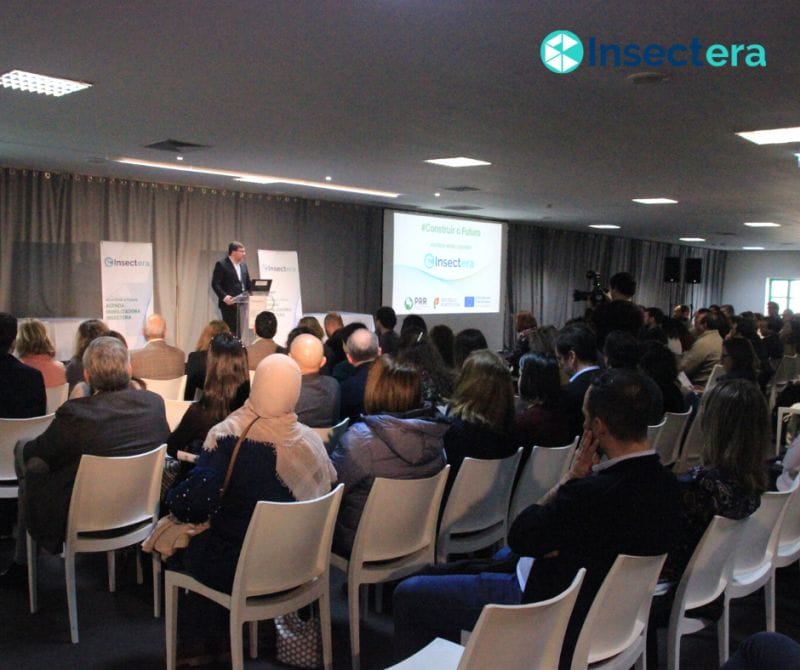
No passada terça-feira, dia 14 de Fevereiro, teve lugar a sessão de lançamento da Agenda Mobilizadora InsectERA – a ERA dos insetos, da qual o InnovPlantProtect (InPP) faz parte, no Centro de Exposições e Mercados Agrícolas, em Santarém.
A agenda InsectERA, um consórcio de 42 entidades nacionais, com produtores de insetos, uma consultora de inovação tecnológica, laboratórios colaborativos (CoLABs) e empresas, liderado pela empresa Ingredient Odyssey SA (responsável pela criação da marca ThenGreen®), a que equivale um investimento total de 43 milhões de euros, e que pretende fomentar a economia circular e alavancar o desenvolvimento de soluções tecnológicas inovadoras à base de insetos para o mercado.
A ideia é devolver subprodutos da agroindústria à cadeia de valor, sob a forma de soluções nutricionais para pessoas, animais e plantas, e de novas soluções industriais, da cosmética aos bioplásticos, bem como para o setor da biorremediação, através da criação de soluções de valorização de resíduos orgânicos.
Pedro Fevereiro, diretor executivo do InPP, esteve presente nesta sessão de lançamento, que juntou cerca de 120 pessoas e que contou com uma explicação sumária dos objetivos e estratégia de implementação do projeto, focando os desafios de tornar uma visão a longo prazo numa realidade até 2025, sendo, como explicado várias vezes, “uma maratona em sprint” na qual todos os parceiros irão acompanhar e contribuir para o sucesso.
A sessão de lançamento contou com a abertura por parte do Presidente da Câmara Municipal de Santarém, Ricardo Gonçalves, que referiu como a sua cidade se deverá tornar a capital do setor bioindustrial dos insetos, gerando-se um conjunto de ferramentas que contribuirão para que Santarém detenha um ecossistema que fomente o desenvolvimento deste setor alavancando-o de Portugal para o Mundo.
A Diretora Geral de Alimentação e Veterinária, Susana Pombo, encerrou a sessão focando os desafios atuais da sociedade que tornam esta Agenda Mobilizadora premente e uma enorme oportunidade de futuro para o nosso país, permitindo que desenvolvimentos técnicos e científicos sejam alavancados de forma acelerada e coordenada envolvendo de forma estreita a cooperação entre entidades legais, centros de I&D e empresas.
Saiba mais informações sobre a Agenda Mobilizadora here.
Pedro Fevereiro, diretor executivo do InPP, marcou presença na sessão de lançamento, entregando a placa comemorativa alusiva ao início deste projeto, no qual o InPP participa
Pedro Fevereiro, diretor executivo do InnovPlantProtect (InPP), participou no Simpósio “Semente & Biotecnologia: da inovação à sustentabilidade”, promovido pelo Centro de Informação de Biotecnologia (CiB) e pela Anseme, que teve lugar no passado dia 27 de Janeiro, em Coimbra.
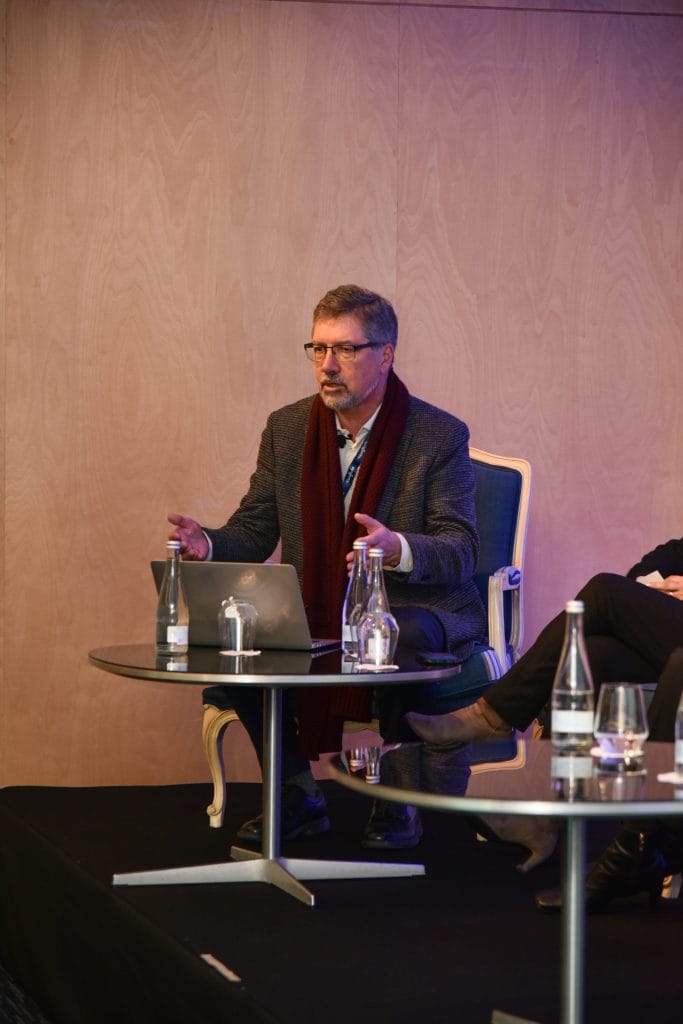
O diretor executivo moderou a mesa redonda “O papel das Novas Técnicas Genómicas (NTG) no melhoramento de plantas”, que contou com a participação de Paula Cruz Garcia da Direção-Geral de Alimentação e Veterinária (DGAV), Priscila Jacobitz da CropLife Europe, Ana Barradas da Fertiprado e António Sevinate Pinto da Anseme.
O evento pretendeu alertar para a importância do setor das sementes e das NTG, ainda não regulamentadas na União Europeia, bem como discutir aspetos relacionados com a dependência alimentar e as relações de concorrência com outras regiões do globo em que estas tecnologias são já uma realidade.
Este foi mais um passo para a inovação e sustentabilidade na área da biotecnologia.
Na passada quinta-feira, dia 26 de Janeiro, os investigadores do InnovPlantProtect (InPP) estiveram na Elvas School of Agriculture of Polytechnic Institute of Portalegre para realizar o workshop “Agricultura, Biodiversidade, Economia Circular” que pretendeu fazer a ponte entre a investigação e a comunidade escolar.
O workshop, que teve como público-alvo os alunos do Ensino Secundário da Escola D. Sancho II, em Elvas, e do Ensino Superior da Escola Superior Agrária de Elvas, e professores, pretendeu despertar os alunos para a importância da biodiversidade e da economia circular na agricultura e para os vários fatores que podem contribuir de forma positiva para a agricultura, tornando-a uma atividade cada vez mais sustentável, com consequências ao nível da produção e do seu impacto no ecossistema.
No workshop decorreram três palestras que tiveram como oradores investigadores do InPP. A diretora de departamento iLaria Marengo e a investigadora Maysa Toledo foram as oradoras da primeira palestra que teve como tema “Pode a biodiversidade e a economia circular tornar a agricultura mais sustentável”.
A segunda palestra “Insectos: Bons, maus e como identificá-los” teve como oradores os investigadores Nuno Faria e Hadi Sheikhnejad. Ricardo Ramiro, diretor de departamento, ficou responsável pela terceira palestra que teve como tema “Microbioma: o que é e para que serve na agricultura”. A moderação do workshop esteve a cargo de Ana Cordeiro, professora da Escola Superior Agrária de Elvas, e de Paula Grilo, professora da Escola Secundária D. Sancho II.
“Este workshop permitiu-nos perceber o que é a agricultura e tocou em vários assuntos que interessam aos futuros agronómos. Para muitos hoje em dia, a ideia de estudar agricultura é ‘cavar a terra’ e, num cenário de alterações climáticas, a grande missão dos agrónomos é assegurar alimento para a população, e o workshop está feito de uma forma fantástica que aborda a parte dos insetos, das pragas agrícolas e permite perceber as soluções biológicas que podemos ter na agricultura para assegurar alimento e proteger os ecossistemas”, afirmou Henrique Canha, aluno da Escola Superior Agrária de Elvas.
“Este é um tema que está na ordem do dia e como vimos tivemos um feedback extremamente positivo por parte dos alunos”, destacou Ana Cordeiro, professora da Escola Superior Agrária de Elvas. “A parceria com o InPP é fundamental. Iniciamos esta parceria com o estágio de uma aluna e já iremos ter mais dois alunos a colaborar no CoLAB e está a ser fantástico. (…) É de facto uma excelente simbiose”, sublinhou.
Programa do workshop “Agricultura, Biodiversidade, Economia Circular”, que decorreu no dia 26 de janeiro, pelas 14 h, na Escola Superior Agrária de Elvas






 Português
  English