News & Events

white plant

NEWS

“We're here to listen to the sector's problems”: InPP in the spotlight in Voz do Campo magazine

“We're here to listen to the sector's problems and find solutions together”. This was said by António Saraiva, executive director of InnovPlantProtect (InPP), who attended the eighth edition of the National Olive Oil Congress, held in Campo Maior and featured in the July edition of Voz do Campo magazine.

In the interview, António Saraiva highlighted the importance of olive growing, one of the most representative crops in the Mediterranean, and pointed out some of the major challenges currently facing the sector:

  • A growing shortage of phytosanitary solutions: many tools are disappearing and effective alternatives are not always emerging.
  • The long road between research and application in the field: the process of bringing a scientific solution to farmers can take around 10 years.
  • Impacts of climate change and emerging pests, which make farming even more difficult.

Faced with these challenges, InPP is committed to developing new innovative solutions that are environmentally friendly and sustainable for farmers. CoLAB is looking for agents such as active substances and microorganisms capable of controlling diseases and boosting biostimulants, as well as investing in digital technologies that allow producers to detect crop problems early and increase the effectiveness of interventions.

Another point highlighted by the executive director is the need to speed up the transfer of knowledge to the field, through partnerships and commercial agreements that ensure that innovations actually reach farmers.

“We're here to listen to the sector's problems and find solutions together. We want to be close to farmers, associations and companies, because that's the only way we can develop effective and sustainable tools,” António Saraiva stressed.

The full interview is available in the July issue of Voz do Campo magazine, on newsstands now, and in the image below.

InPP approves another Horizon Europe project

It's called PROSPER and it's a new European project that aims to transform European agriculture through the valorization of “orphan” legumes - resistant crops, little exploited, but with great potential to face the challenges of climate and food in the future.

The consortium, with total funding of around 5 million euros, brings together 27 partners from 13 European countries and Tunisia, including universities, research centers, companies and non-profit organizations in the agricultural sector. Among them are countries from the Mediterranean (Italy, Spain, Greece, Portugal and France), Central Europe (Germany, Belgium, Poland, Bulgaria and Romania), Northern Europe (Denmark, Sweden and Finland).

The aim of PROSPER is to test and validate new agricultural diversification strategies, adapted to different climates and social and economic contexts, promoting more sustainable, innovative practices that are adjusted to the needs of different agricultural realities.

InPP, PROSPER's partner, will be responsible for analyzing:

  • Soil health and environmental impact
  • Energy efficiency and waste management
  • Nutritional quality of crops
  • Fair valuation along the production chain

To do this, the InPP team will use advanced technologies, such as real-time sensors and geospatial analysis, which will help study soil health, carbon sequestration captured by crops, water management and biodiversity, among others.

PROSPER is co-created with the main players in the agricultural sector, ensuring that the solutions developed do not remain on paper: they will be practical, useful and transformative.

The project starts in September 2025. We are ready to embark on this journey towards a greener, fairer and more resilient agriculture.

Stay tuned for more news!

InPP at the Science 2025 Meeting

InnovPlantProtect (InPP) was present at the Science 2025 Meeting in Lisbon, at the Nova SBE Campus, to take part in the parallel session “Crop Protection for One Health, and Food and Environmental Sustainability”.

The Encontro Ciência took place from July 9 to 11 at the NOVA SBE Campus in Carcavelos, with the motto “Science, Innovation and Society”. Portugal's largest science and technology meeting was the stage for promoting and discussing the scientific, social, cultural and economic impact of research in Portugal, exploring the intersection between science, innovation and society, to inspire new ideas and foster transformative collaborations.

The director of the Data Management and Risk Analysis Department, Ricardo Ramiro, and the director of the New Biopesticides Department, Cristina Azevedo, presented some of the results of their work in this session co-moderated by the executive director, António Saraiva.

During the session, two important solutions for the agricultural sector, developed by our team, were presented:

  • iCountPests - an innovative app that uses AI to detect and count pests accurately and quickly in photos of chromotropic traps.
  • InPP 2 - a broad-spectrum biofungicide capable of fighting Botrytis cinerea, the fungus responsible for gray rot in tomatoes.

CoLAB MORE Colab - Collaborative Mountain Research Laboratory and Sfcolab - Collaborative Laboratory for Digital Innovation in Agriculture, were also present at the parallel session, as well as GREEN-IT, to discuss how science and innovation can tackle the challenges of climate change and promote more sustainable agricultural systems.

EVENTS

Chestnut trees: more interactive and intelligent remote monitoring

The software used to access and visualize the data sent by the Tree Talker sensors installed in chestnut trees in Sabugal has been improved and is now more intelligent and interactive, thanks to the use of data science tools. This development was carried out by the Monitoring and Diagnostics Department as part of the project “Educating to know, protect and monitor chestnut trees through IoT technology”, co-financed by the Environmental Fund and led by InnovPlantProtect (InPP) in collaboration with Sabugal Municipal Council (CMS).

The application of the technology known as “Internet of Things” (IoT, from the English Internet of Things) is the main novelty of this year. innovative environmental education program. By installing remote sensors on the trunks, the trees communicate their state of health, including parameters such as water consumption, biomass growth, stem humidity, absorbed solar radiation and the state of health of the leaves through light reflection.

Once collected by the TT Cloud concentrator (gateway), the raw data from the Tree Talkers is transmitted to a server via the Internet and converted into “readable” information, in the form of graphs, tables and fault alerts, among other things. With the new development, users can no longer view static graphs but can interact with dynamic graphs, which, for example, allow them to zoom in on a particular peak or curve to access a very specific and precise time period.

In addition to facilitating and improving the consultation and analysis of data on the variation in the voltage of the batteries that power the Tree Talkers, or on the temperature recorded, among many others, the new software automatically triggers email messages to pre-defined users in the event of an alert - for example, if a battery suddenly runs out of charge, in which case a trip to the site is necessary to replace the power supply device.

InPP builds library of potential biological control agents and portfolio of plant pathogens

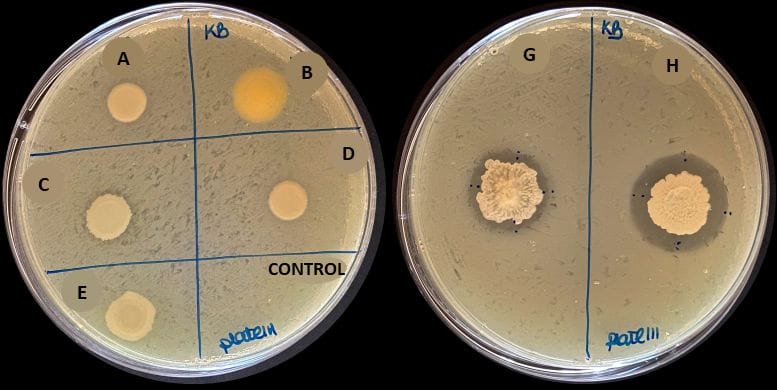
As part of its strategy for developing bio-inspired products, InnovPlantProtect (InPP) is building a library of microorganisms isolated from various environments, which are being identified by molecular characterization and evaluated for their biochemical properties, indicative of their potential role as Biological Control Agents (BCA). In parallel, InPP is building up a portfolio of phytopathogenic agents (bacteria and fungi), which will serve as a basis for evaluating the BCA. in vitro e in vivo the potential of isolated BCA. 

According to the Food and Agriculture Organization of the United Nations (FAO), around 40% of global agricultural production is lost every year due to pests and diseases, which translates into losses of more than 195 billion euros. For decades, phytopharmaceuticals have played a fundamental role in maintaining agricultural health, protecting crops against pests and diseases and ensuring food safety. However, their excessive and sometimes inappropriate use has a negative impact on soil, water and biodiversity, and can have harmful effects on the health of animals and humans.

As part of the “From Farm to Fork” strategy, one of the pillars of the European Green Deal, the European Commission has set targets for the sustainable use of phytopharmaceuticals, one of which is to reduce their use by 50% by 2030. In order to cope with the withdrawal of these products from the market, it is necessary to develop effective, sustainable, environmentally friendly and economical alternatives.

Bacterial growth inhibition test.

One of these alternatives is the use of BCA. These microorganisms are efficient at reducing the incidence or severity of diseases caused by phytopathogens, and some also act as biostimulants, i.e. they have the ability to increase the strength and speed of plant development.

There are several mechanisms through which BCAs carry out their functions, namely: inducing resistance mechanisms in the plant; competing with pathogens for space and nutrients; interacting through antibiosis mechanisms (in which one organism harms the development of the other); secreting antimicrobial or antifungal compounds; and invading and/or killing the cells of plant pathogens.

InPP investigates the fight against green leafhopper infestations in Alentejo vineyards

In the current context of climate change in the Alentejo region, the green leafhopper (or cicada) represents one of the biggest challenges in terms of pests faced by wine producers, with a significant impact on production. It was against this backdrop that a team from InnovPlantProtect (InPP) designed and carried out the experimental trial “Monitoring and Diagnosis of Green Leafhopper Infestations in Vineyards of the João Portugal Ramos”, work on which began in May 2021, on the Vila Santa estate in Estremoz.

The green leafhopper (species Jacobiasca lybicand Empoasca spp.), in this case, is a pest that sucks the leaves of the vine, altering their color and shape. The leaves lose their ability to photosynthesize, darken and, in the most serious cases, fall off. The grapes lose quality and quantity. The vineyard can also be weakened in the post-harvest period.

The main objectives of this trial, led by Pest and Disease Monitoring and Diagnosis Department of the InPP, were to characterize the damage caused by leafhoppers and to obtain information on the demographic parameters of these insects, which will serve as a basis for using remote sensing to predict the time and space of the pest's occurrence. 

In the first phase, traps were placed in 14 locations, in collaboration between technicians from João Portugal Ramos and the InPP. These traps were monitored weekly between May and August by an InPP team to count adult individuals of the green leafhopper. In June, field work intensified, with surveys being carried out to detect vines infested by green leafhoppers.

The surveys ran until the end of July and 58 vines were selected and marked for weekly monitoring. The selected vines were monitored between June and August, and the number of nymphs was counted, the instar of the nymphs observed (stage of metamorphosis between two moulting periods), as well as recording the severity of the symptoms observed.

All the information obtained was recorded using the app ODK Collect for Android, being immediately accessible through a WebGIS platform created with the software open source QGIS/Lizmap. Other tasks carried out included collecting specimens for identification in the laboratory and prospecting for the pest in potential natural hosts during the winter period.

InPP will soon be presenting some of the results of this trial, and the R&D plan for 2022 is currently being prepared.