News & Events

white plant

NEWS

InnovPlantProtect (InPP) is pleased to announce the publication of an international patent application (PCT) for a strain of Bacillus velezensis with application as a plant biostimulant. This innovation represents a significant milestone in our research, with a direct impact on sustainable agriculture and crop resilience in the face of climate and environmental challenges.

A natural and effective solution

The biostimulant developed by our team has been carefully studied and tested on different vegetable crops, such as tomatoes and lettuce, and on cereals, such as rice. The results obtained demonstrate the potential of this technology:

  • Greater development in the early stages of crops, This promotes more vigorous and healthy starts.
  • Increased productivity, This is evidenced by greater fresh biomass in lettuce and greater fruit production in tomatoes.
  • Proven molecular responses, with analyses confirming the activation of genes associated with plant responses to different types of abiotic stress.

These results reinforce the effectiveness of the Bacillus velezensis as a natural biostimulation tool, capable of boosting crop performance and contributing to more sustainable agriculture.

From the lab to the field

This patent is another step in InPP's commitment to developing innovative, sustainable biotechnological solutions with industrial applicability. The aim is clear: to support farmers and companies in the sector in meeting the challenges of crop productivity, quality and resilience, in an era when agriculture needs sustainable, high-impact responses.

We are looking for strategic partnerships

We are currently looking for new partnerships with companies and entities in the agricultural sector to take this technology from the laboratory to the field. We believe that collaboration is the key to turning scientific innovation into practical solutions that benefit the entire agricultural value chain.

If you're interested in learning more about this technology or exploring opportunities for collaboration, talk to us. Together we can drive a more productive, resilient and sustainable agriculture.

Innovate together. Protect better.

Image credits: InnovPlantProtect - Inês Ferreira (Photos from left to right: Sandra Caeiro and Rui Figueiras, researchers from the Specific Crop Protection Department and Inês Mexia, researcher from the Formulations and Process Development Department.

“We're here to listen to the sector's problems and find solutions together”. This was said by António Saraiva, executive director of InnovPlantProtect (InPP), who attended the eighth edition of the National Olive Oil Congress, held in Campo Maior and featured in the July edition of Voz do Campo magazine.

In the interview, António Saraiva highlighted the importance of olive growing, one of the most representative crops in the Mediterranean, and pointed out some of the major challenges currently facing the sector:

  • A growing shortage of phytosanitary solutions: many tools are disappearing and effective alternatives are not always emerging.
  • The long road between research and application in the field: the process of bringing a scientific solution to farmers can take around 10 years.
  • Impacts of climate change and emerging pests, which make farming even more difficult.

Faced with these challenges, InPP is committed to developing new innovative solutions that are environmentally friendly and sustainable for farmers. CoLAB is looking for agents such as active substances and microorganisms capable of controlling diseases and boosting biostimulants, as well as investing in digital technologies that allow producers to detect crop problems early and increase the effectiveness of interventions.

Another point highlighted by the executive director is the need to speed up the transfer of knowledge to the field, through partnerships and commercial agreements that ensure that innovations actually reach farmers.

“We're here to listen to the sector's problems and find solutions together. We want to be close to farmers, associations and companies, because that's the only way we can develop effective and sustainable tools,” António Saraiva stressed.

The full interview is available in the July issue of Voz do Campo magazine, on newsstands now, and in the image below.

It's called PROSPER and it's a new European project that aims to transform European agriculture through the valorization of “orphan” legumes - resistant crops, little exploited, but with great potential to face the challenges of climate and food in the future.

The consortium, with total funding of around 5 million euros, brings together 27 partners from 13 European countries and Tunisia, including universities, research centers, companies and non-profit organizations in the agricultural sector. Among them are countries from the Mediterranean (Italy, Spain, Greece, Portugal and France), Central Europe (Germany, Belgium, Poland, Bulgaria and Romania), Northern Europe (Denmark, Sweden and Finland).

The aim of PROSPER is to test and validate new agricultural diversification strategies, adapted to different climates and social and economic contexts, promoting more sustainable, innovative practices that are adjusted to the needs of different agricultural realities.

InPP, PROSPER's partner, will be responsible for analyzing:

  • Soil health and environmental impact
  • Energy efficiency and waste management
  • Nutritional quality of crops
  • Fair valuation along the production chain

To do this, the InPP team will use advanced technologies, such as real-time sensors and geospatial analysis, which will help study soil health, carbon sequestration captured by crops, water management and biodiversity, among others.

PROSPER is co-created with the main players in the agricultural sector, ensuring that the solutions developed do not remain on paper: they will be practical, useful and transformative.

The project starts in September 2025. We are ready to embark on this journey towards a greener, fairer and more resilient agriculture.

Stay tuned for more news!

EVENTS

O sistema alimentar global é um dos setores mais ameaçados pela emergência climática. Mas afinal quais poderão ser os contributos da ciência e da inovação para garantir uma alimentação variada, saudável e sustentável, no exigente contexto de alterações climáticas?

O tema do 20.⁰ Café de Ciência no Parlamento, organized by Ciência Viva, foi “Emergência climática: o carteiro não toca duas vezes” e teve lugar ontem, dia 19 de outubro, pelas 18h, na Assembleia da República. O diretor executivo do InnovPlantProtect (InPP), Pedro February, participou no encontro.

Pedro Fevereiro alertou que “nós estamos em mudança e temos que saber gerir a mudança e adaptarmo-nos a ela e não fixarmos os pés na terra e pensar que podemos continuar a ser como somos. Temos de ser outra coisa”. “E como é que compatibilizamos este desejo de nos ajustarmos, com a necessidade de sermos sustentáveis a diversos níveis?”, questionou o diretor executivo.

Vídeo da intervenção do Diretor executivo do InPP na iniciativa “Café de Ciência no Parlamento”

Esta iniciativa juntou cientistas, deputados e empresários para debater o impacto das alterações climáticas no sistema alimentar global e apresentar medidas concretas para travar o atual paradigma. Estiveram presentes Augusto Santos Silva, Presidente da Assembleia da República, Elvira Fortunato, Ministra da Ciência, Tecnologia e Ensino Superior, Alexandre Quintanilha, Presidente da Comissão Parlamentar de Educação e Ciência, Tiago Brandão Rodrigues, Presidente da Comissão Parlamentar de Ambiente e Energia e Rosalia Vargas, Presidente da Ciência Viva.

O encontro teve transmissão via streaming. Pode (re)ver o encontro na íntegra no canal de YouTube do Pavilhão do Conhecimento here.

Mas afinal quais são os principais obstáculos atuais à segurança alimentar? A nossa alimentação está segura? O que vai mudar nos próximos anos?

O diretor executivo do InnovPlantProtect, Pedro Fevereiro, foi um dos oradores convidados na mais recente reunião do Conselho de Segurança, um projeto promovido pelo Expresso e Continente, que decorreu no passado dia 10 de Outubro em Lisboa, e que serviu para discutir os principais desafios relacionados com a segurança alimentar, um tema central em tempos de inflação e de guerra.

O diretor executivo falou no painel sobre “Como garantir a segurança alimentar junto dos portugueses? O papel da ciência e o papel do negócio”, que contou também com a participação de Ondina Afonso, presidente do Clube de Produtores Continente e diretora da Qualidade & Investigação da Sonae MC.

O debate foi transmitido via Facebook. Pode (re)ver o debate na íntegra na página de Facebook do Jornal Expresso here.

Pedro Fevereiro e Ondina Afonso falaram sobre “Como garantir a segurança alimentar junto dos portugueses? O papel da ciência e o papel do negócio” © João Girão – Jornal Expresso

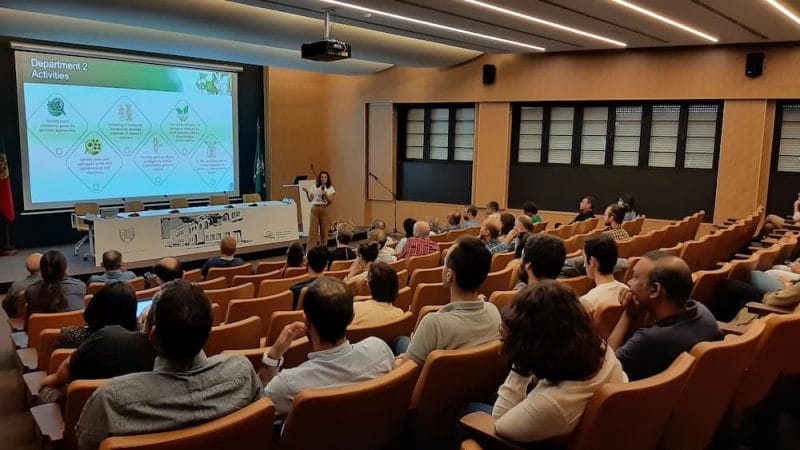
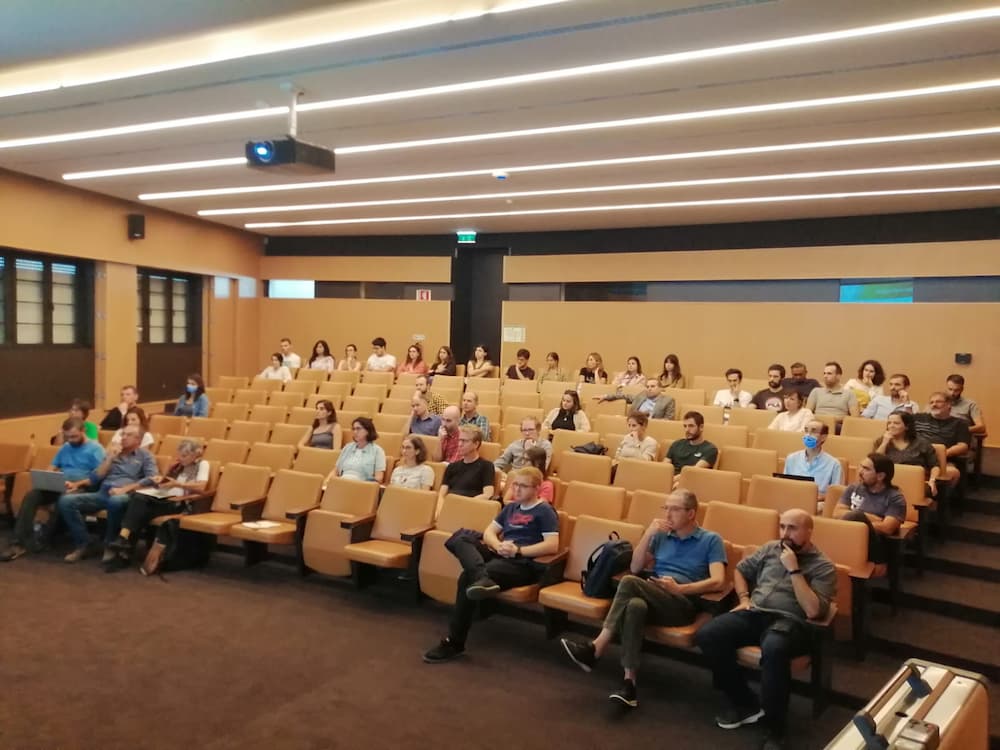
Na passada terça-feira, dia 11 de Outubro, o InnovPlantProtect (InPP) recebeu a visita do Prof. Sophien Kamoun e do Prof. Paul Christou do Conselho Consultivo da Unidade de Investigação GREEN-IT do Instituto de Tecnologia Química e Biológica António Xavier (ITQB NOVA) e de alguns dos seus investigadores.

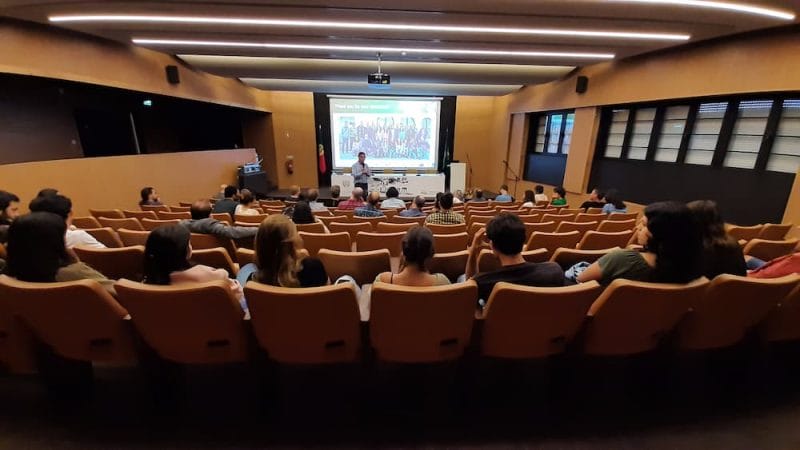
Durante a visita, o diretor executivo Pedro February e os diretores de departamento Cristina Azevedo, Sandra Correia, Ricardo Ramiro, Ilaria Marengo e David Learmonth apresentaram o InPP e as diferentes áreas de investigação que estão a ser exploradas pelos cinco departamentos do laboratório colaborativo (CoLAB). As apresentações foram seguidas por uma visita às novas instalações e laboratórios.

Esta visita pretendeu não só dar a conhecer as atividades do CoLAB, como também potenciar futuras oportunidades de parcerias e colaborações entre as duas instituições.

Um agradecimento especial à GREEN-IT pela visita.

Apresentações de Pedro Fevereiro, Cristina Azevedo, Sandra Correia, Ricardo Ramiro, iLaria Marengo e David Learmonth, membros da GREEN-IT (da esquerda para a direita e de cima para baixo)