News & Events

white plant

NEWS

In the March issue of Fruits, vegetables and flowers you will find the opinion article entitled “The role of InnovPlantProtect in Organic Farming: Paths to sustainable and efficient solutions”, in which the executive director of InnovPlantProtect (InPP), António Saraiva, reveals how our CoLAB is contributing to the success of organic farming.

“By boosting research, collaboration and knowledge sharing, InPP is helping to solve the central challenges of this practice [organic farming], allowing it to expand and enhancing the supply of agricultural products to consumers. The solutions developed by InPP make organic farming a more viable option for producers,” says the executive director.

Read the full article and find out how we are shaping the future of agriculture.

We thank Frutas, legumes e flores magazine for its recognition and reiterate our commitment to the agriculture of the future.
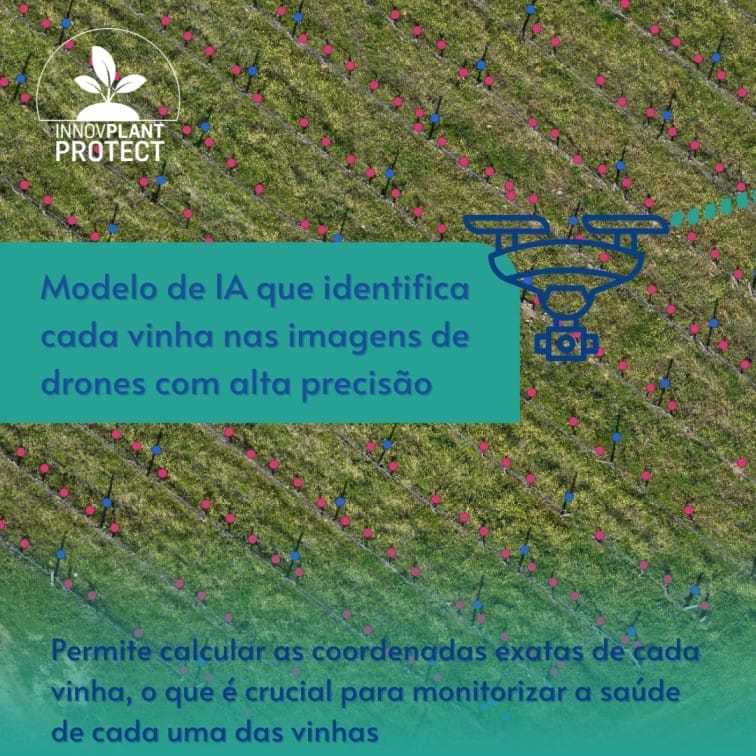
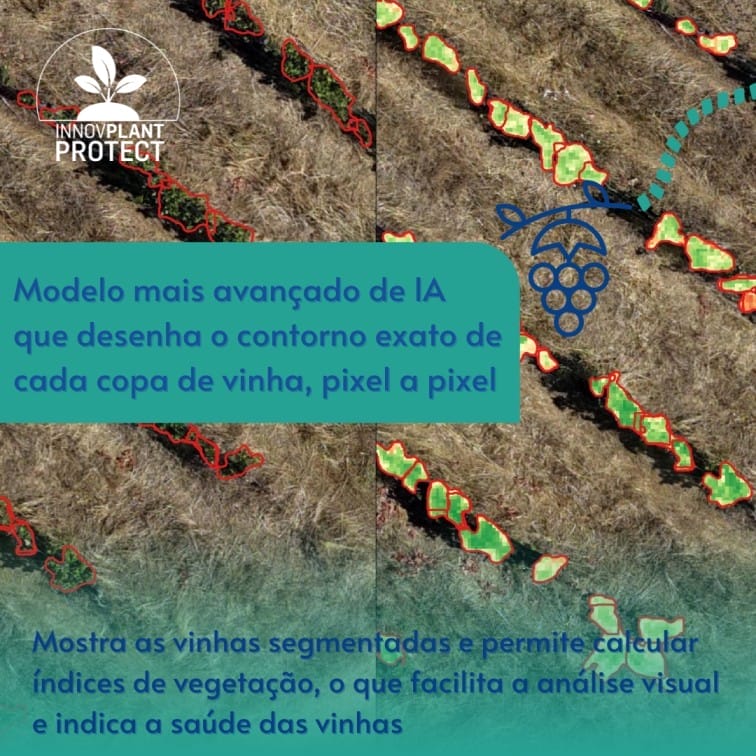
Imagine a future where drones and artificial intelligence work together to protect your vineyards. That's what the AI4Leafhopper project is making a reality!

Manisha Sirsat, a researcher on the AI4Leafhopper team, has developed two artificial intelligence models that analyze the aerial images captured by our latest generation drone... and these models make it possible:

  • geolocation of each vine
  • to know if there are vine failures
  • quickly identify “sick” vines”
  • optimize the application of treatments

The result? Growers can have a detailed view of the health of their vineyards, detect problems early and make more informed decisions.

Find out all about it here.

AI4Leafhopper is a project led by InPP and funded by the ICAERUS Horizon Europe program, which began in April 2024 and ended on April 30 with a final meeting involving the six European projects approved in the 1st edition of the ICAERUS program's PULL applications. The project team presented the AI-based models for detecting and monitoring the impact of the green leafhopper on vineyards.

The AI4Leafhopper project, InnovPlantProtect used a state-of-the-art drone to monitor the impact of the green leafhopper in the vineyards of our partners Reynolds Wine Growers and João Portugal Ramos. Although the results show that this advanced technology is more effective at detecting attacks at advanced stages, we are excited about the potential of this tool to provide valuable data for the management of this harmful insect.

We believe that with more research, we can refine our solution to detect early attacks and prevent significant damage to vineyards. Transforming the monitoring of this pest is where we want to go, always with the aim of protecting vineyards and guaranteeing the quality of production for winegrowers.

Over the next few days we'll be revealing everything that the AI4Leafhopper project is making a reality and how drones and artificial intelligence are working together to create a more sustainable future for viticulture. Stay tuned!

Find out all about it here.

AI4Leafhopper, funded by the ICAERUS Horizon Europe program, which began in April 2024, is now in its final stages. The development phase of the project, which took place in the field, is now over and the final stage is to present the solutions developed by our team on Portuguese soil to the market.

EVENTS

Wheat is a crop of great importance for human nutrition around the world. Due to climate change, the Puccinia striiformis tritici (Pst), the fungus that causes yellow rust on wheat, has developed the ability to overcome the plant's defenses. The spores of the fungus spread by aerial dispersal and can reach thousands of kilometers.

Consequently, the rust disease is transboundary and must therefore be dealt with internationally. Around the world, there are several institutions (CIMMYT, ICARDA, GRRC) and initiatives (RustWatch, RustTracker, Globalrust) committed to solving this problem by improving disease diagnostic tools, building new online research and communication infrastructures to share knowledge.

InPP's Crop Protection and Monitoring and Diagnostics Departments are working together, and in collaboration with RustWatch, to fill gaps in the data on the epidemiology of yellow rust, in order to understand the special dynamics of the disease and build an early warning system (EWS).

The Monitoring and Diagnostics Department has developed a form for a mobile application (ODK Collect), through which wheat growers can easily collect data in the field. This information will be fed in real time into a spatial database and a map of sampling sites, published from a webGIS service ad hoc.

To this end, we are also instructing producers on how to use the application and access the maps from the webGIS service. Paulo Velez, from Cersul - Agrupamento de Produtores de Cereais do Sul, was the first to receive the training. Thank you very much for your participation!

See one teaser of our tutorial for accessing app and forms here.

© 2021 InnovPlantProtect, All rights reserved

As part of the XfSTOP project, led by InnovPlantProtect's New Biopesticides Department, which aims to use biological control tools to manage the bacterium Xylella fastidiosa in olive groves, members of the team that makes up this department went on a field trip to Herdade de Reguengo, belonging to INIAV, in Elvas, on February 10th.

With the help of INIAV researchers Rocio Calderón-Arias and António Cordeiro, the InPP team collected olive tree samples of different varieties (Leccino, Cobrançosa and Arbequina), making it possible to optimize protocols for the isolation of symbiotic bacteria that live inside olive trees, the endophytes.

These endophytes, inhabitants of the same ecological niche as the Xylella, The endophyte will be used to produce our biopesticide, explains Cristina Azevedo, director of the Department. The idea is to reintroduce the endophyte into the olive tree, which represents a sustainable way of producing a growth inhibitor for Xylella.

© 2021 InnovPlantProtect, All rights reserved

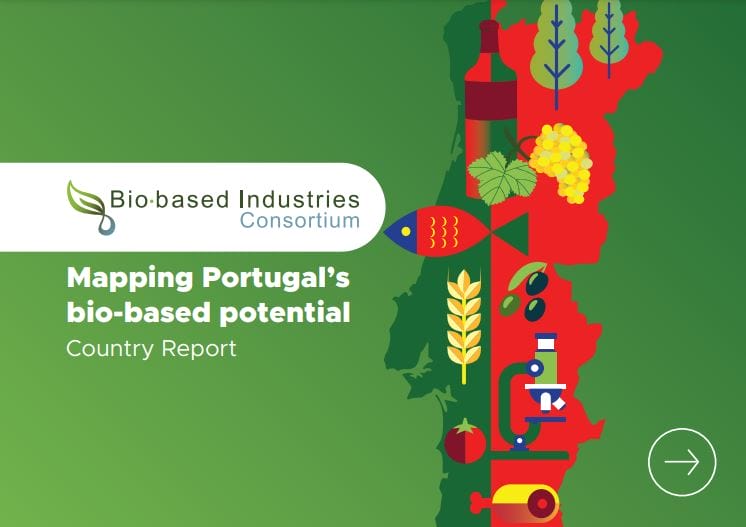
The Bio-based Industries Consortium has appointed InnovPlantProtect as the CoLab at the forefront of Portugal's bid to become a leader in the European Green Deal.

InnovPlantProtect is mentioned as a player to take into account in the latest Bio-based Industries Consortium (BIC) report on Portugal's bio-based potential. The document lists 14 collaborative laboratories, public-private entities “dedicated to developing market-oriented research” related to the bioeconomy.

Entitled Mapping Portugal's bio-based potential - Country Report, The report draws attention to the existence in Portugal of several research centers “well located in all regions” that support the bioeconomy and bio-based R&D and industrial activities. Among them is the InnovPlantProtect (InPP) collaborative laboratory (CoLab), based in Elvas, which is dedicated to developing innovative bio-based solutions for crop protection.

The BIC report on Portugal is available online.

The 61-page document, available in full online, reveals “all the potential that Portugal possesses to become one of the world's front-runners European Green Deal”. The study also underlines “the existence of a robust innovation ecosystem in Portugal and highlights the country's growing influence as a leader in the biotechnology sector”.

“The emerging bioeconomy sector in Portugal already contributes nearly 20 billion euros to the national economy and the BIC study shows that there are new opportunities to accelerate green economic growth in the country,” reads a PRESS RELEASE of the organization, which brings together more than 240 members and represents the private sector in the European Bio-based Industries Joint Undertaking.

© 2021 InnovPlantProtect, All rights reserved