The start of a new year also marks a new cycle for InnovPlantProtect. In 2026, InPP enters a phase of evolution and consolidation, with several new features that reinforce its position as a strategic partner for the intelligent transformation of agriculture.
Over the next few months, initiatives, content and tools will be presented that reflect the work carried out by our teams in the areas of applied research, biological solutions, specialized services and digital innovation.
The first step in this new phase will be presented in the next January 24th, InnovPlantProtect is celebrating the date 7 years in business at the service of the agricultural sector.
Until then, we continue to prepare a range of new products that reflect our mission to promote safer, more innovative and more productive agriculture.
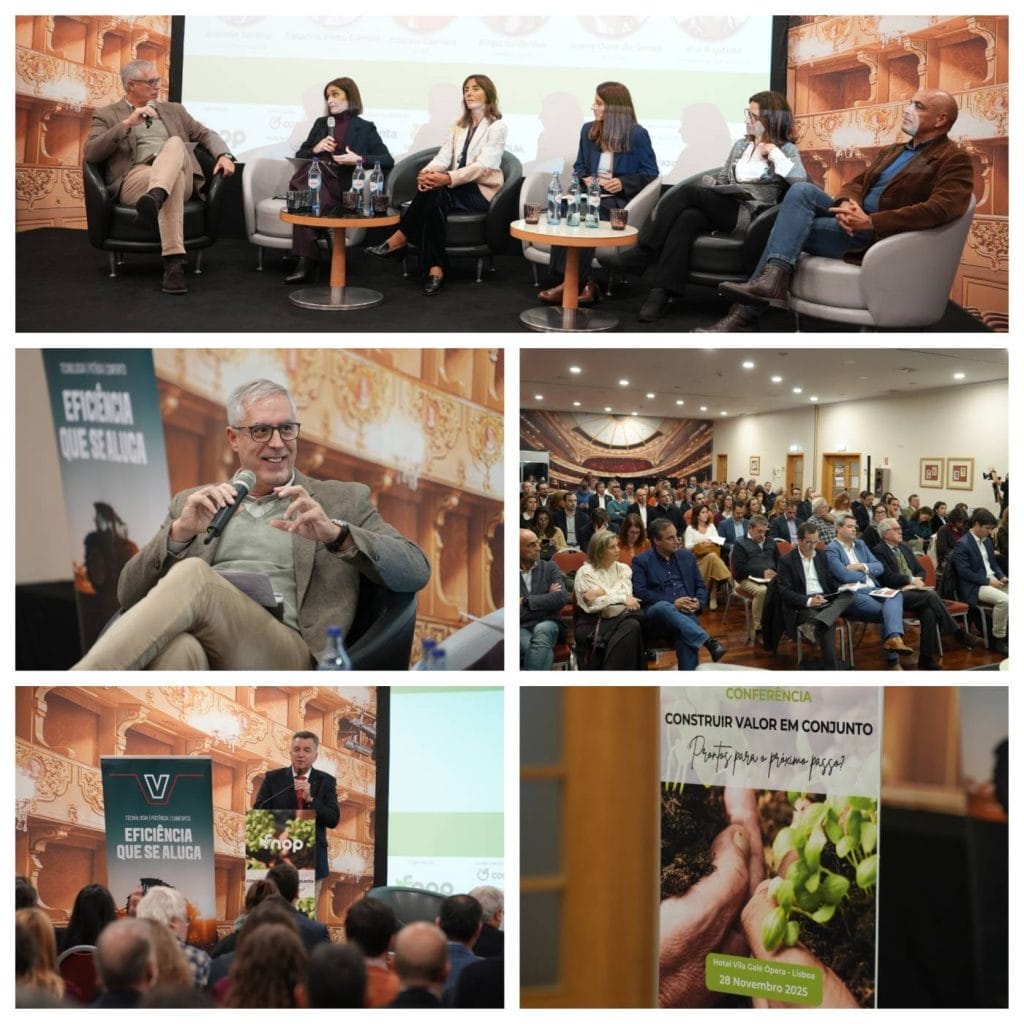
InnovPlantProtect (InPP) was present at the conference “Building value together”, organized by our associate FNOP - National Association of Fruit and Vegetable Producers' Organizations.
InPP's executive director, António Saraiva, moderated the panel “Sustainability that generates value: The role of ESG in the future of the sector”, which included interventions from Catarina Pinto Correia (VdA), Cristina Câmara (APED), Filipa Saldanha (Crédito Agrícola), Joana Oom de Sousa (Sovena) and Rui Veríssimo Baptista (Companhia das Lezírias).
The opening session was given by Domingos dos Santos, president of FNOP and a member of CoLAB's Board of Directors of our CoLAB.
The meeting brought together producer organizations, farmers, companies, experts and political decision-makers to discuss the current challenges and look to the future of the national fruit and vegetable sector.
With the participation of national and international experts, the conference was a privileged space for sharing experiences and strategic reflection, focusing on the organization of production and the role of public policies in promoting sustainable growth.
Congratulations to FNOP for the initiative and the ability to bring together a panel of excellent speakers, making this conference a relevant and topical milestone for the sector.
In viticulture, every little decision has an impact: on the soil, on the health of the plants and on the quality of the grapes that form the basis of the wine that reaches our table. The future of viticulture may depend on a single biosolution. Or a hundred. In VINNY, an ambitious European project of which InPP is a part, researchers from ten countries are looking for bioactives capable of curbing vine diseases - and, at the same time, reducing dependence on synthetic agrochemicals. What's at stake is not just science: it's the sustainability of this industry.
The aim of the VINNY project is simple but transformative: develop and implement effective, sustainable solutions and adaptable to the needs of winegrowers in various European countries, creating environmentally friendly biopesticides and biofertilizers, and advanced nano-encapsulation technologies, to reduce dependence on conventional chemicals and promote a healthier ecosystem and a better environment and a circular viticulture.
And at the heart of this mission is an essential cog in the wheel: the daily work of the researchers who search for answers invisible to the human eye - as is the case with Tiago Amaro, a researcher at InPP.
Image credits: VINNY Project
Searching for the Guardians of the Vine
The road to these new biosolutions begins in the field, with the vine. The initial work of Tiago Amaro, started in September 2024 and focuses on identifying and isolating microorganisms naturally present in the vines themselves, in samples received from partners in Portugal, Spain, Austria and Denmark.
From grapes, sticks or woody fragments, small microscopic worlds arrive in the laboratory that may contain the natural weapons needed to fighting three major threats to the vineyard, with a direct impact on farm profitability: - A gray mold (Botrytis cinerea) and blue mold (Penicillium expansum): Fungi that cause post-harvest diseases, In the case of wine grapes, this affects the quality of the wine and makes it completely impossible to sell table grapes. - The vine tumors: Caused by bacteria Allorhizobium vitis, This disease affects the plant in the field, causing leaf fall and reduced grape production.
Tiago Amaro, InnovPlantProtect researcher, identifying and isolating bacteria as part of the VINNY project. Image credits: InnovPlantProtect - Inês Ferreira
After isolating the microorganisms, Tiago dedicated himself to creating libraries of bacteria. What is a ‘Bacteria Library’? In the context of the investigation, a bacteria library is an organized and catalogued collection of bacteria isolated from different sources. It allows scientists to test each strain of bacteria against specific pathogens, constituting a vast catalog of potential biological ‘superheroes’ for plant protection.
This rigorous screening, which has already led to the analysis of more than 190 bacteria of this library is the first line of defense. The team selects the best candidates with the potential to be used as biological control agents against the diseases under study.
The Power of European Collaboration
What if the solution to protecting Portuguese vineyards is hidden in a Danish grape? Or in a bacterium isolated in Spain? One of the most exciting aspects of the project is its truly collaborative dimension, where researchers from ten countries are working in parallel, sharing answers, challenges and microorganisms in search of effective biosolutions for the whole of Europe.
“All the solutions found will be shared, all the solutions will be tested by all the partners and it will be possible to build a ‘library of solutions’ against the various vine diseases“ emphasizes researcher Tiago Amaro.
The sharing of bacteria and extracts from different ecosystems (Portugal, Spain, Denmark and Austria) is crucial. An effective bacterium in Denmark could be the key to protecting Portuguese vineyards, and vice versa. This exchange of biological solutions, one of the innovative pillars of the project, makes it possible to exploit the microbial biodiversity beyond national borders. InPP has the fundamental role of testing, in grapes, the solutions discovered by our team as well as by other national and European partners.
This diversity of tests is a bet on the future: microorganisms that don't prove effective against vine diseases could be the solution for pathologies in other crops.
Left photo: Tiago Amaro, InPP researcher, observing a grapevine leaf, the target crop of the VINNY project, Right photo: Potted grapevine plants in the InPP greenhouse, ready to test the solutions found by the various VINNY partners. Image credits: InnovPlantProtect - Inês Ferreira
The Real Test: From the Lab to the Field
After selection in the laboratory, the next step - the formulation of the most promising bacteria - will be carried out in Portugal and Spain, at the University of Minho and the Polytechnic University of Catalonia. But it is in the field-testing phase that the greatest challenge of plant protection science lies, because even brilliant results in the laboratory can fail in the field. Formulation is the process that turns a bacterium into a product - stable, applicable and compatible with the farmer's needs.
Tiago Amaro emphasizes necessary resilience:
Field Uncertainty: Often, promising solutions in the laboratory or greenhouse are not as effective when applied in the field, due to environmental variables (climate, soil, etc.).
The Time Factor: Diseases such as Allorhizobium vitis may take a long time to develop, or the infection may not be relevant in certain years, which makes it difficult to obtain robust conclusions.
The Agricultural Cycle: It is necessary to test the formulation in the field during three to five consecutive years, and recording all the variations observed. With only one harvest a year, this process requires patience and persistence.
In total, from the discovery of a promising bacterium to the creation of a formulated product, proven to be effective and ready for the market, it can take around 10 years - a real test of any scientist's resilience.
Customized solutions: the new requirement of modern agriculture
The final challenge is to ensure that the tests are relevant to the producer's reality. The current trend in the agricultural sector is the search for customized solutions, adapted to the specific conditions of the farms: “There has to be a solution for every field and every farmer”, says the researcher.
This personalized approach requires more science, more rigor and more local knowledge - exactly what VINNY seeks to build.
A Europe united by science and the vine
InPP is part of this consortium, made up of 19 partners from ten countries, The project is led by the University of Minho and funded by the Horizon Europe program.
Together, they seek to answer a question that could shape the future of European viticulture: Will it be possible to find effective biosolutions for all partner countries?
The answer is still being written - in laboratories, in experimental vineyards, in fields in different climates and geographies. And it's made up of small discoveries, many frustrations and a huge commitment to science.
Because protecting the vineyard of the future is not just a technical ambition. It is a cultural, economic and environmental commitment. And VINNY is helping to design that future - one microorganism at a time.
The software used to access and visualize the data sent by the Tree Talker sensors installed in chestnut trees in Sabugal has been improved and is now more intelligent and interactive, thanks to the use of data science tools. This development was carried out by the Monitoring and Diagnostics Department as part of the project “Educating to know, protect and monitor chestnut trees through IoT technology”, co-financed by the Environmental Fund and led by InnovPlantProtect (InPP) in collaboration with Sabugal Municipal Council (CMS).
The application of the technology known as “Internet of Things” (IoT, from the English Internet of Things) is the main novelty of this year. innovative environmental education program. By installing remote sensors on the trunks, the trees communicate their state of health, including parameters such as water consumption, biomass growth, stem humidity, absorbed solar radiation and the state of health of the leaves through light reflection.
Once collected by the TT Cloud concentrator (gateway), the raw data from the Tree Talkers is transmitted to a server via the Internet and converted into “readable” information, in the form of graphs, tables and fault alerts, among other things. With the new development, users can no longer view static graphs but can interact with dynamic graphs, which, for example, allow them to zoom in on a particular peak or curve to access a very specific and precise time period.
In addition to facilitating and improving the consultation and analysis of data on the variation in the voltage of the batteries that power the Tree Talkers, or on the temperature recorded, among many others, the new software automatically triggers email messages to pre-defined users in the event of an alert - for example, if a battery suddenly runs out of charge, in which case a trip to the site is necessary to replace the power supply device.
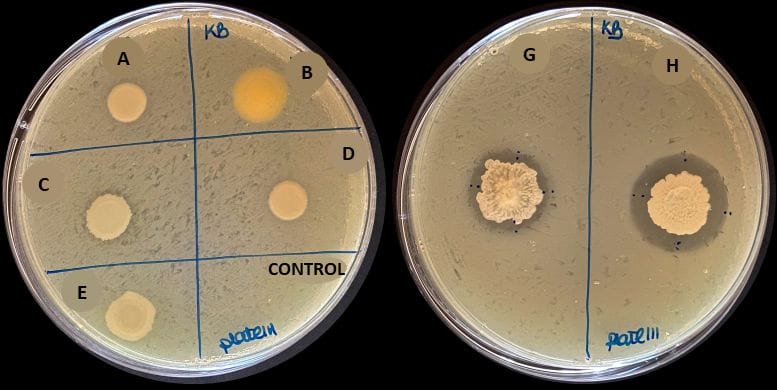
As part of its strategy for developing bio-inspired products, InnovPlantProtect (InPP) is building a library of microorganisms isolated from various environments, which are being identified by molecular characterization and evaluated for their biochemical properties, indicative of their potential role as Biological Control Agents (BCA). In parallel, InPP is building up a portfolio of phytopathogenic agents (bacteria and fungi), which will serve as a basis for evaluating the BCA. in vitro e in vivo the potential of isolated BCA.
Isolated fungi growing on plates in culture medium.
According to the Food and Agriculture Organization of the United Nations (FAO), around 40% of global agricultural production is lost every year due to pests and diseases, which translates into losses of more than 195 billion euros. For decades, phytopharmaceuticals have played a fundamental role in maintaining agricultural health, protecting crops against pests and diseases and ensuring food safety. However, their excessive and sometimes inappropriate use has a negative impact on soil, water and biodiversity, and can have harmful effects on the health of animals and humans.
As part of the “From Farm to Fork” strategy, one of the pillars of the European Green Deal, the European Commission has set targets for the sustainable use of phytopharmaceuticals, one of which is to reduce their use by 50% by 2030. In order to cope with the withdrawal of these products from the market, it is necessary to develop effective, sustainable, environmentally friendly and economical alternatives.
Bacterial growth inhibition test.
One of these alternatives is the use of BCA. These microorganisms are efficient at reducing the incidence or severity of diseases caused by phytopathogens, and some also act as biostimulants, i.e. they have the ability to increase the strength and speed of plant development.
There are several mechanisms through which BCAs carry out their functions, namely: inducing resistance mechanisms in the plant; competing with pathogens for space and nutrients; interacting through antibiosis mechanisms (in which one organism harms the development of the other); secreting antimicrobial or antifungal compounds; and invading and/or killing the cells of plant pathogens.
In the current context of climate change in the Alentejo region, the green leafhopper (or cicada) represents one of the biggest challenges in terms of pests faced by wine producers, with a significant impact on production. It was against this backdrop that a team from InnovPlantProtect (InPP) designed and carried out the experimental trial “Monitoring and Diagnosis of Green Leafhopper Infestations in Vineyards of the João Portugal Ramos”, work on which began in May 2021, on the Vila Santa estate in Estremoz.
The green leafhopper (species Jacobiasca lybicand Empoasca spp.), in this case, is a pest that sucks the leaves of the vine, altering their color and shape. The leaves lose their ability to photosynthesize, darken and, in the most serious cases, fall off. The grapes lose quality and quantity. The vineyard can also be weakened in the post-harvest period.
The main objectives of this trial, led by Pest and Disease Monitoring and Diagnosis Department of the InPP, were to characterize the damage caused by leafhoppers and to obtain information on the demographic parameters of these insects, which will serve as a basis for using remote sensing to predict the time and space of the pest's occurrence.
In the first phase, traps were placed in 14 locations, in collaboration between technicians from João Portugal Ramos and the InPP. These traps were monitored weekly between May and August by an InPP team to count adult individuals of the green leafhopper. In June, field work intensified, with surveys being carried out to detect vines infested by green leafhoppers.
The surveys ran until the end of July and 58 vines were selected and marked for weekly monitoring. The selected vines were monitored between June and August, and the number of nymphs was counted, the instar of the nymphs observed (stage of metamorphosis between two moulting periods), as well as recording the severity of the symptoms observed.
All the information obtained was recorded using the app ODK Collect for Android, being immediately accessible through a WebGIS platform created with the software open source QGIS/Lizmap. Other tasks carried out included collecting specimens for identification in the laboratory and prospecting for the pest in potential natural hosts during the winter period.
InPP will soon be presenting some of the results of this trial, and the R&D plan for 2022 is currently being prepared.





 Português
  English