News & Events

white plant

NEWS

There are days when science begins long before you enter the laboratory or the field. It starts at dawn, when the alarm clock goes off too early. When you mentally review the day's list: an experiment that can't be missed, a trip to the field that depends on the weather, an unfinished report, a meeting scheduled at the wrong time. In between, someone to wake up, someone to drop off, someone to call. And yet science moves forward.

At InnovPlantProtect, there are now 15 women who give a face to the science and innovation developed here. Women who represent commitment, demand, resilience, overcoming, quality, talent, excellence and creativity. But they are only part of a greater whole. There are many more - and each one brings with it a story that doesn't fit into a CV, a patent application or an article.

Today, February 11th, marks the International Day of Women and Girls in Science, a UNESCO initiative that underlines the importance of the female role in the production of scientific and technological knowledge and the need to continue promoting equal access to careers in science and innovation. Portugal has encouraging figures: women represent almost 50% researchers in the country. It's a relevant figure, reflecting decades of progress. But the figures don't show what happens between them.

Because science, for many women, is made up of fragile balances.

There are women with intense family lives, others with more solitary journeys, still others who build support networks outside traditional models, with effort and creativity. There are difficult choices and decisions, unexpected circumstances, forced breaks, changes of pace, different phases of life. All legitimate. Many are invisible when you only look at the end result of a project, an article or a biosolution developed. - but they all influence the paths of science.

One day, one of our researchers - let's just call her that - told us that she had finished a field trial close to sunset. The phone rang while she was putting away her materials. It was the school. A delay. Nothing extraordinary. It was business as usual. She came home exhausted, with dirt still on her boots, opened her computer after dinner and went back to her data, because the experiment couldn't wait.
“It wasn't a heroic day,” she said. “It was just a normal day.”

And perhaps that is what is most remarkable.

In the field of crop protection, the work is demanding, technical and often unpredictable. It takes place in the laboratory and in the field, between strict protocols and decisions made under real conditions. It requires persistence, adaptability, attention to detail and an integrated view of problems. Characteristics that so many women bring with them - not by nature, but by experience, by path, by everything they have learned to manage at the same time.

Each personal story profoundly shapes the way we do science. The doubts, the challenges, the forced breaks, the changes of pace, the new beginnings. None of this is left at the laboratory door. It all silently enters into the way we observe, question and build knowledge.

To celebrate the International Day of Women and Girls in Science is to recognise this reality as a whole. It is to honour the women who continue to do science despite the challenges — and often because of them. And it is to remember that innovation is also born from lives fully lived, shaped by imperfection, effort and courage.

Today we celebrate them. Not just for what they produce, but for all that they are. In science, in the field, in the laboratory - and in the life that happens in between.

O InnovPlantProtect (InPP), Collaborative Laboratory specializing in biological and digital solutions for crop protection, aligned with the emerging challenges of agriculture, will launch its new institutional website on January 24th, on a symbolic date marking 7 years working in the agricultural sector.

This launch is part of a phase of institutional evolution and consolidation InPP, reinforcing its strategy of proximity to the sector, clarity in the communication of its competencies and affirmation as a strategic partner for companies, producers, associations and public bodies.

An even clearer, more up-to-date and sector-oriented platform

With a renewed structure and a more intuitive browsing experience, the new website features:

  • an area of Services and Products completely reorganized, which facilitates access to specialized services, laboratory capabilities and biological and digital solutions developed by InPP, as well as to a updated catalog of services and biosolutions;
  • more complete institutional content that reinforces transparency, scientific rigor and CoLAB's mission;
  • a clearer presentation of scientific skills and research areas, highlighting the impact of the work carried out by InPP's multidisciplinary teams.

New image, same mission - but reinforced

The launch of the website is accompanied by the implementation of InnovPlantProtect's new visual identity, This reflects the maturity of CoLAB and its future ambitions.

The new image - accompanied by the slogan “Innovate together. Protect better.” - reflects InPP's ongoing commitment to:

  • Developing new generation biological and digital solutions;
  • Promoting safer, more innovative and more productive agriculture;
  • Strengthen collaboration and partnership with the agricultural sector and the innovation ecosystem.

A new phase for InPP

The digital and visual renovation is part of a broader strategy of maturity and consolidation, Through this initiative, InPP aims to strengthen its role as a scientific and technological partner for the agricultural sector in applied research and the development of crop protection solutions.

According to António Saraiva, InPP's executive director: “This new website isn't just a digital revamp - it's a reflection of the ambition we have for our future and how we want to communicate with the sector. We want every visitor to understand the purpose that drives us: to create innovative solutions that protect crops, boost productivity and contribute to more sustainable agricultural systems. InPP is entering a new phase, with a clearer, more accessible identity aligned with the real needs of agriculture and a renewed commitment to real impact on the ground.”

Available from January 24th

The new InnovPlantProtect website will be available from January 24th at: https://iplantprotect.pt/

The start of a new year also marks a new cycle for InnovPlantProtect. In 2026, InPP enters a phase of evolution and consolidation, with several new features that reinforce its position as a strategic partner for the intelligent transformation of agriculture.

Over the next few months, initiatives, content and tools will be presented that reflect the work carried out by our teams in the areas of applied research, biological solutions, specialized services and digital innovation.

The first step in this new phase will be presented in the next January 24th, InnovPlantProtect is celebrating the date 7 years in business at the service of the agricultural sector.

Until then, we continue to prepare a range of new products that reflect our mission to promote safer, more innovative and more productive agriculture.

Stay tuned. What's coming is just the beginning.

EVENTS

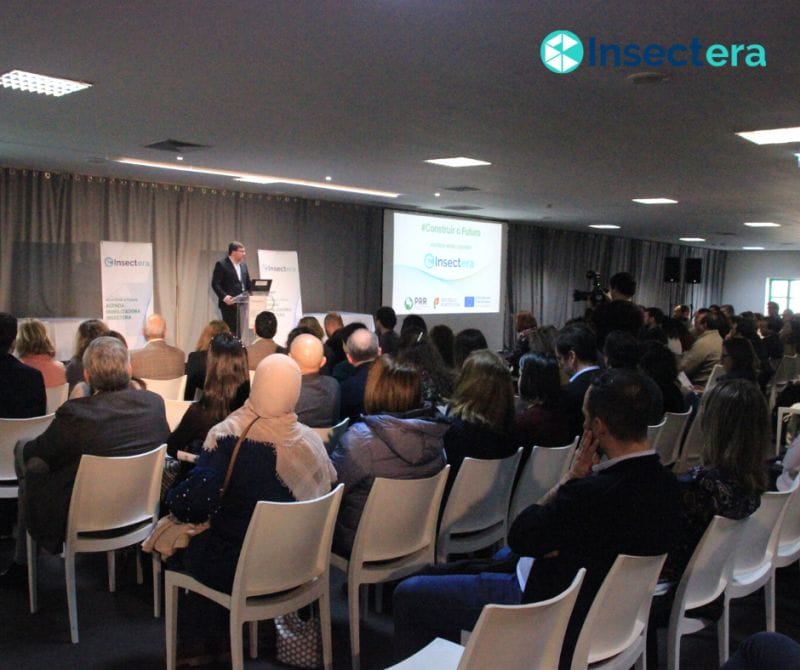
No passada terça-feira, dia 14 de Fevereiro, teve lugar a sessão de lançamento da Agenda Mobilizadora InsectERA – a ERA dos insetos, da qual o InnovPlantProtect (InPP) faz parte, no Centro de Exposições e Mercados Agrícolas, em Santarém.

A agenda InsectERA, um consórcio de 42 entidades nacionais, com produtores de insetos, uma consultora de inovação tecnológica, laboratórios colaborativos (CoLABs) e empresas, liderado pela empresa Ingredient Odyssey SA (responsável pela criação da marca ThenGreen®), a que equivale um investimento total de 43 milhões de euros, e que pretende fomentar a economia circular e alavancar o desenvolvimento de soluções tecnológicas inovadoras à base de insetos para o mercado.

A ideia é devolver subprodutos da agroindústria à cadeia de valor, sob a forma de soluções nutricionais para pessoas, animais e plantas, e de novas soluções industriais, da cosmética aos bioplásticos, bem como para o setor da biorremediação, através da criação de soluções de valorização de resíduos orgânicos.

Pedro Fevereiro, diretor executivo do InPP, esteve presente nesta sessão de lançamento, que juntou cerca de 120 pessoas e que contou com uma explicação sumária dos objetivos e estratégia de implementação do projeto, focando os desafios de tornar uma visão a longo prazo numa realidade até 2025, sendo, como explicado várias vezes, “uma maratona em sprint” na qual todos os parceiros irão acompanhar e contribuir para o sucesso.

A sessão de lançamento contou com a abertura por parte do Presidente da Câmara Municipal de Santarém, Ricardo Gonçalves, que referiu como a sua cidade se deverá tornar a capital do setor bioindustrial dos insetos, gerando-se um conjunto de ferramentas que contribuirão para que Santarém detenha um ecossistema que fomente o desenvolvimento deste setor alavancando-o de Portugal para o Mundo.

A Diretora Geral de Alimentação e Veterinária, Susana Pombo, encerrou a sessão focando os desafios atuais da sociedade que tornam esta Agenda Mobilizadora premente e uma enorme oportunidade de futuro para o nosso país, permitindo que desenvolvimentos técnicos e científicos sejam alavancados de forma acelerada e coordenada envolvendo de forma estreita a cooperação entre entidades legais, centros de I&D e empresas.

O consórcio envolve três produtores de insetos em Portugal (EntoGreen, Thunderfoods e The Cricket Farm Company), a consultora de inovação tecnológica INOVA+, os laboratórios colaborativos B2E CoLab, Colab4Food, FeedInov CoLab e InnovPlantProtect e as empresas Auchan, Mendes Gonçalves, Agromais, Silvex, Mesosystems, Sorga, Savinor, Nutrifarms, PetMaxi, Sensetest, Solfarcos, entre outras.

Saiba mais informações sobre a Agenda Mobilizadora here.

Pedro Fevereiro, diretor executivo do InPP, marcou presença na sessão de lançamento, entregando a placa comemorativa alusiva ao início deste projeto, no qual o InPP participa

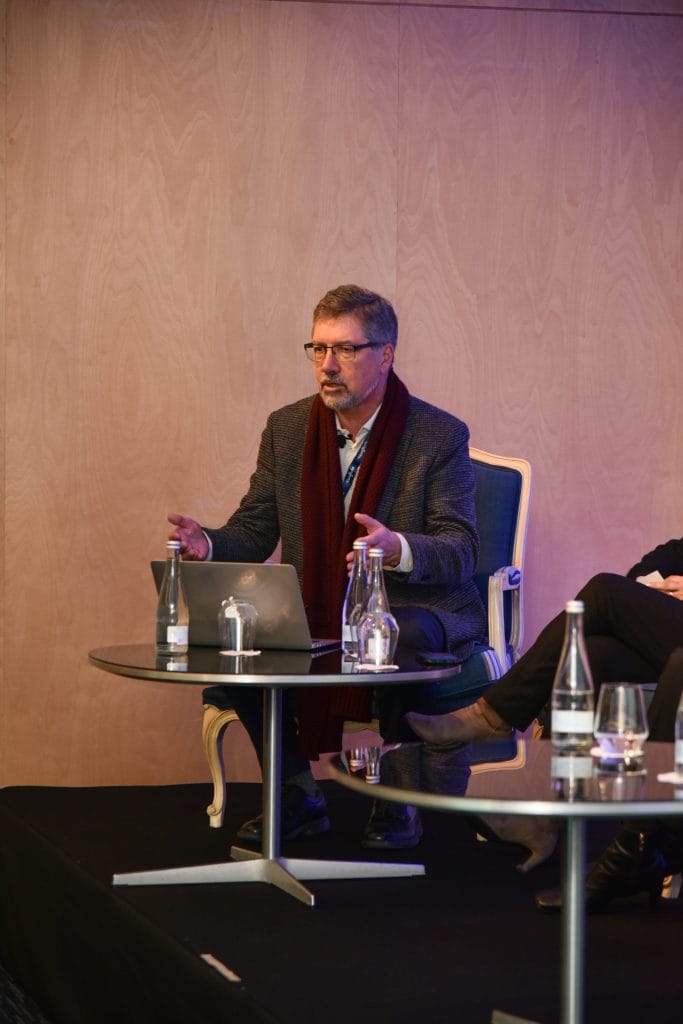
Pedro Fevereiro, diretor executivo do InnovPlantProtect (InPP), participou no Simpósio “Semente & Biotecnologia: da inovação à sustentabilidade”, promovido pelo Centro de Informação de Biotecnologia (CiB) e pela Anseme, que teve lugar no passado dia 27 de Janeiro, em Coimbra.

O diretor executivo moderou a mesa redonda “O papel das Novas Técnicas Genómicas (NTG) no melhoramento de plantas”, que contou com a participação de Paula Cruz Garcia da Direção-Geral de Alimentação e Veterinária (DGAV), Priscila Jacobitz da CropLife Europe, Ana Barradas da Fertiprado e António Sevinate Pinto da Anseme.

O evento pretendeu alertar para a importância do setor das sementes e das NTG, ainda não regulamentadas na União Europeia, bem como discutir aspetos relacionados com a dependência alimentar e as relações de concorrência com outras regiões do globo em que estas tecnologias são já uma realidade.

Este foi mais um passo para a inovação e sustentabilidade na área da biotecnologia.

Na passada quinta-feira, dia 26 de Janeiro, os investigadores do InnovPlantProtect (InPP) estiveram na Elvas School of Agriculture of Polytechnic Institute of Portalegre para realizar o workshop “Agricultura, Biodiversidade, Economia Circular” que pretendeu fazer a ponte entre a investigação e a comunidade escolar.

O workshop, que teve como público-alvo os alunos do Ensino Secundário da Escola D. Sancho II, em Elvas, e do Ensino Superior da Escola Superior Agrária de Elvas, e professores, pretendeu despertar os alunos para a importância da biodiversidade e da economia circular na agricultura e para os vários fatores que podem contribuir de forma positiva para a agricultura, tornando-a uma atividade cada vez mais sustentável, com consequências ao nível da produção e do seu impacto no ecossistema.

No workshop decorreram três palestras que tiveram como oradores investigadores do InPP. A diretora de departamento iLaria Marengo e a investigadora Maysa Toledo foram as oradoras da primeira palestra que teve como tema “Pode a biodiversidade e a economia circular tornar a agricultura mais sustentável”.

A segunda palestra “Insectos: Bons, maus e como identificá-los” teve como oradores os investigadores Nuno Faria e Hadi Sheikhnejad. Ricardo Ramiro, diretor de departamento, ficou responsável pela terceira palestra que teve como tema “Microbioma: o que é e para que serve na agricultura”. A moderação do workshop esteve a cargo de Ana Cordeiro, professora da Escola Superior Agrária de Elvas, e de Paula Grilo, professora da Escola Secundária D. Sancho II.

“Este workshop permitiu-nos perceber o que é a agricultura e tocou em vários assuntos que interessam aos futuros agronómos. Para muitos hoje em dia, a ideia de estudar agricultura é ‘cavar a terra’ e, num cenário de alterações climáticas, a grande missão dos agrónomos é assegurar alimento para a população, e o workshop está feito de uma forma fantástica que aborda a parte dos insetos, das pragas agrícolas e permite perceber as soluções biológicas que podemos ter na agricultura para assegurar alimento e proteger os ecossistemas”, afirmou Henrique Canha, aluno da Escola Superior Agrária de Elvas.

“Este é um tema que está na ordem do dia e como vimos tivemos um feedback extremamente positivo por parte dos alunos”, destacou Ana Cordeiro, professora da Escola Superior Agrária de Elvas. “A parceria com o InPP é fundamental. Iniciamos esta parceria com o estágio de uma aluna e já iremos ter mais dois alunos a colaborar no CoLAB e está a ser fantástico. (…) É de facto uma excelente simbiose”, sublinhou.

Programa do workshop “Agricultura, Biodiversidade, Economia Circular”, que decorreu no dia 26 de janeiro, pelas 14 h, na Escola Superior Agrária de Elvas