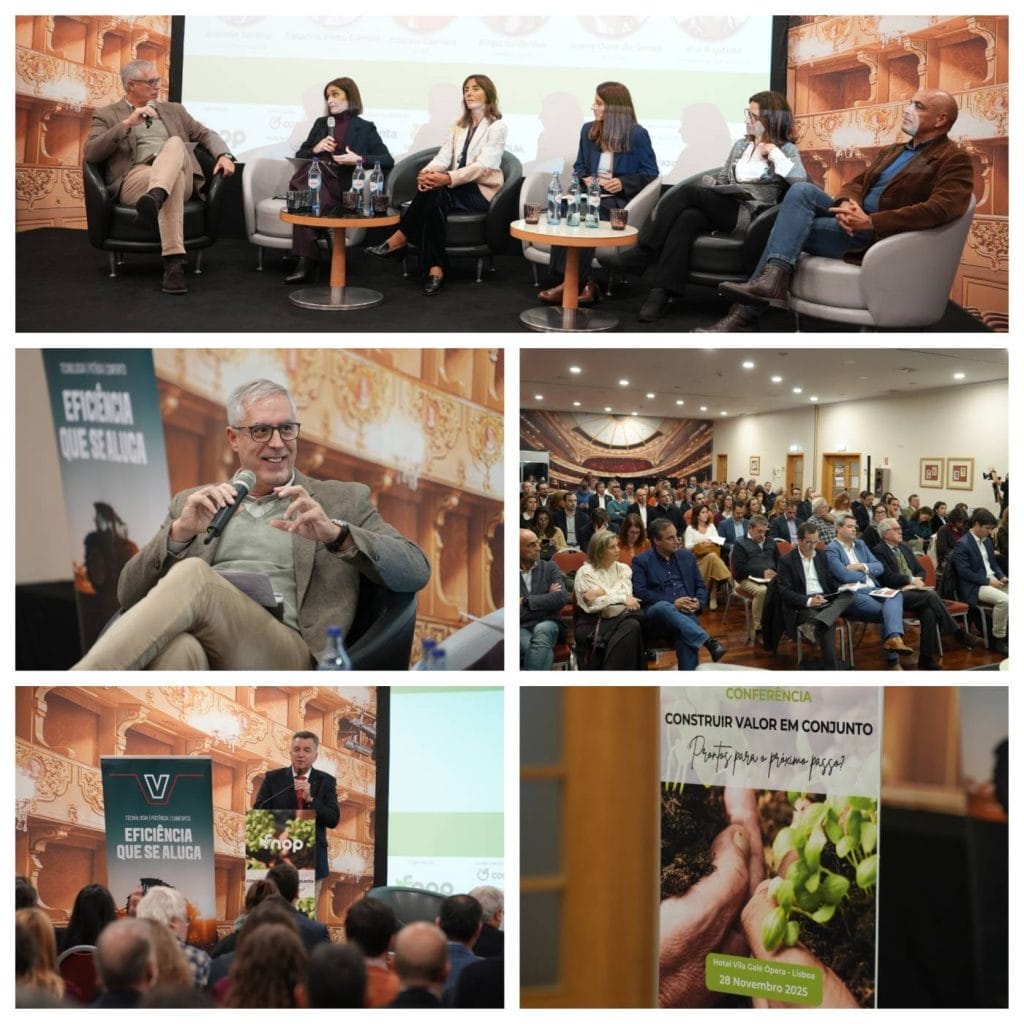
“We're here to listen to the sector's problems and find solutions together”. This was said by António Saraiva, executive director of InnovPlantProtect (InPP), who attended the eighth edition of the National Olive Oil Congress, held in Campo Maior and featured in the July edition of Voz do Campo magazine.
In the interview, António Saraiva highlighted the importance of olive growing, one of the most representative crops in the Mediterranean, and pointed out some of the major challenges currently facing the sector:
A growing shortage of phytosanitary solutions: many tools are disappearing and effective alternatives are not always emerging.
The long road between research and application in the field: the process of bringing a scientific solution to farmers can take around 10 years.
Impacts of climate change and emerging pests, which make farming even more difficult.
Faced with these challenges, InPP is committed to developing new innovative solutions that are environmentally friendly and sustainable for farmers. CoLAB is looking for agents such as active substances and microorganisms capable of controlling diseases and boosting biostimulants, as well as investing in digital technologies that allow producers to detect crop problems early and increase the effectiveness of interventions.
Another point highlighted by the executive director is the need to speed up the transfer of knowledge to the field, through partnerships and commercial agreements that ensure that innovations actually reach farmers.
“We're here to listen to the sector's problems and find solutions together. We want to be close to farmers, associations and companies, because that's the only way we can develop effective and sustainable tools,” António Saraiva stressed.
The full interview is available in the July issue of Voz do Campo magazine, on newsstands now, and in the image below.
It's called PROSPER and it's a new European project that aims to transform European agriculture through the valorization of “orphan” legumes - resistant crops, little exploited, but with great potential to face the challenges of climate and food in the future.
The consortium, with total funding of around 5 million euros, brings together 27 partners from 13 European countries and Tunisia, including universities, research centers, companies and non-profit organizations in the agricultural sector. Among them are countries from the Mediterranean (Italy, Spain, Greece, Portugal and France), Central Europe (Germany, Belgium, Poland, Bulgaria and Romania), Northern Europe (Denmark, Sweden and Finland).
The aim of PROSPER is to test and validate new agricultural diversification strategies, adapted to different climates and social and economic contexts, promoting more sustainable, innovative practices that are adjusted to the needs of different agricultural realities.
InPP, PROSPER's partner, will be responsible for analyzing:
Soil health and environmental impact
Energy efficiency and waste management
Nutritional quality of crops
Fair valuation along the production chain
To do this, the InPP team will use advanced technologies, such as real-time sensors and geospatial analysis, which will help study soil health, carbon sequestration captured by crops, water management and biodiversity, among others.
PROSPER is co-created with the main players in the agricultural sector, ensuring that the solutions developed do not remain on paper: they will be practical, useful and transformative.
The project starts in September 2025. We are ready to embark on this journey towards a greener, fairer and more resilient agriculture.
InnovPlantProtect (InPP) was present at the Science 2025 Meeting in Lisbon, at the Nova SBE Campus, to take part in the parallel session “Crop Protection for One Health, and Food and Environmental Sustainability”.
The Encontro Ciência took place from July 9 to 11 at the NOVA SBE Campus in Carcavelos, with the motto “Science, Innovation and Society”. Portugal's largest science and technology meeting was the stage for promoting and discussing the scientific, social, cultural and economic impact of research in Portugal, exploring the intersection between science, innovation and society, to inspire new ideas and foster transformative collaborations.
The director of the Data Management and Risk Analysis Department, Ricardo Ramiro, and the director of the New Biopesticides Department, Cristina Azevedo, presented some of the results of their work in this session co-moderated by the executive director, António Saraiva.
During the session, two important solutions for the agricultural sector, developed by our team, were presented:
iCountPests - an innovative app that uses AI to detect and count pests accurately and quickly in photos of chromotropic traps.
InPP 2 - a broad-spectrum biofungicide capable of fighting Botrytis cinerea, the fungus responsible for gray rot in tomatoes.
CoLAB MORE Colab - Collaborative Mountain Research Laboratory and Sfcolab - Collaborative Laboratory for Digital Innovation in Agriculture, were also present at the parallel session, as well as GREEN-IT, to discuss how science and innovation can tackle the challenges of climate change and promote more sustainable agricultural systems.
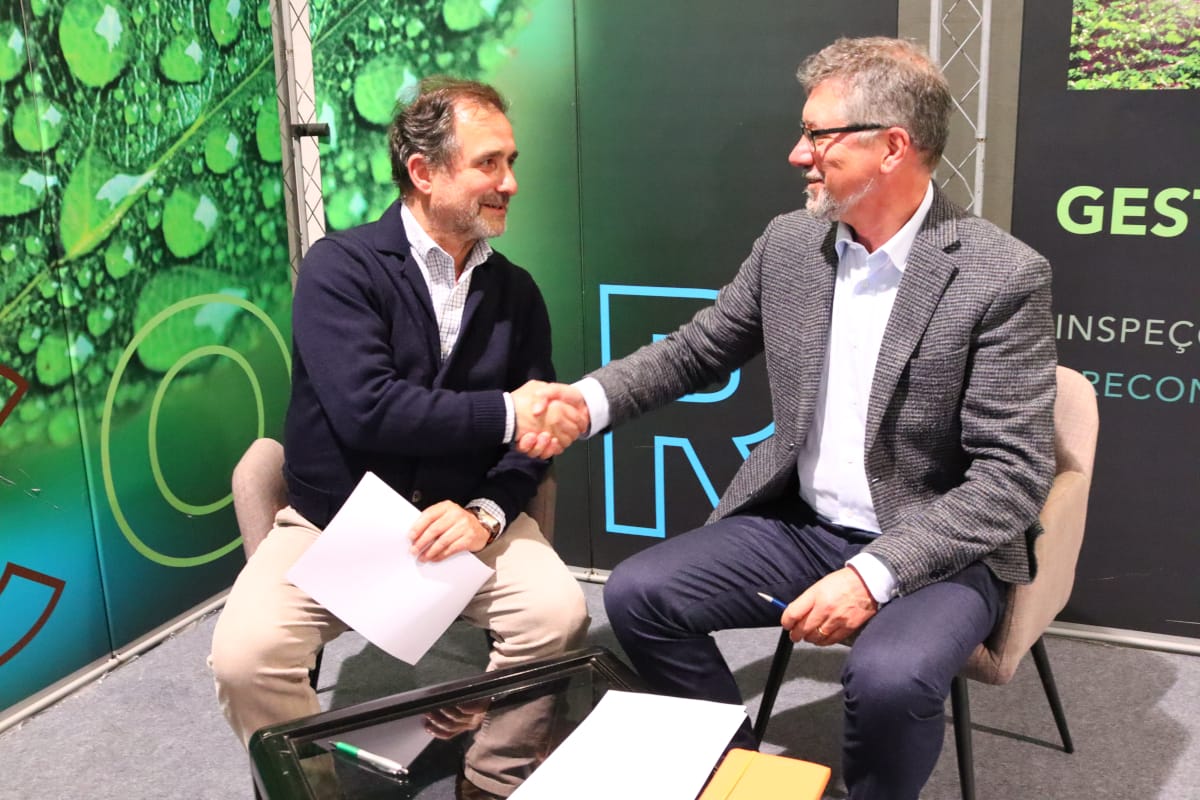
InnovPlantProtect (InPP) celebrated during the 38th Ovibeja two partnership protocols, with the Centro Operativo e de Tecnologia de Regadio (COTR) and with the Portugal Nuts - Dried Fruit Promotion Association.
Within the scope of the partnership with COTR, InPP proposes to develop, together with the competence center for national irrigation and its members, strategies to solve the challenges posed to agricultural production by pests and diseases, as well as providing services to the organization's member partners. The COTR, for its part, is willing to provide support in mapping the main challenges facing its members in terms of pests and diseases, and to make them aware of the InPP and its capabilities.
Gonçalo Morais Tristão, chairman of the board of COTR, and Pedro Fevereiro, executive director of InPP
The protocol with Portugal Nuts aims to collaborate on projects on the challenges facing nuts, including the development of new sustainable products and analytical and digital services for crop protection against pests and diseases, particularly for nut crops. Portugal Nuts, for its part, aims to put its members in touch with the InPP, introduce them to the services provided by CoLAB and support the InPP in identifying producers who meet the conditions for carrying out pilot projects and field trials.
João Roseiro, member of the board of Portugal Nuts, representing SLM Partners, and Pedro Fevereiro, executive director of InPP
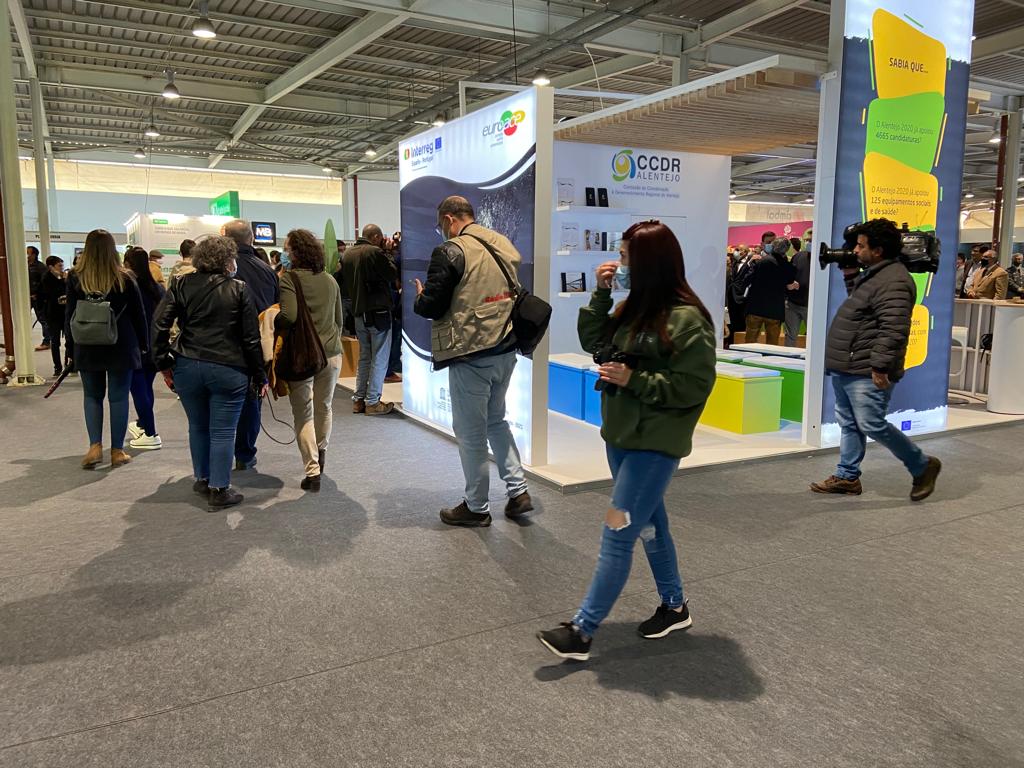
The collaborative laboratory (CoLAB) InnovPlantProtect (InPP) was present at the Ovibeja 2022, no stand 64 of Institutional Pavilion, The event will take place at the Manuel de Castro e Brito Fair and Exhibition Park, in Beja, between April 21 and 25, 2022.
At the stand, it was possible to find out more about InPP's activity in the field of developing bio-inspired solutions for protecting crops against pests and diseases, including specific services and products that CoLAB is already prepared to offer to different sectors.
Part of the 33-strong team of researchers was on site throughout the five days of the fair to demonstrate InPP's various capabilities to visitors.
The Department of New Biopesticides, for example, showed biological control agents (BCA) - fungi and bacteria in Petri dishes - as well as healthy rice plants infected with the fungus Magnaportheoryzae, which causes rice pyriculariosis, and some BCA which inhibit the M. oryzae. The Department of Formulations and Process Development took samples demonstrating the encapsulation of active biocontrol agents (pre- and post-processing), allowing visitors to produce alginate “balls” (small capsules) with their own hands.
Researchers from the Department of Data Management and Risk Analysis talked about microbiome analysis and the development of risk models, and demonstrated the dashboard of a weather calculator developed at InPP. In terms of Protection of Specific Crops, It was also possible to learn more about the laboratory services we offer, namely molecular identification and diagnosis, as well as how biocontrol tests work. in vitro, and monitor the work carried out on the wheat disease yellow rust, among many others.
Videos, photos and presentations were always available on a monitor, so that visitors could virtually “enter” our house, laboratories, fieldwork, events and other initiatives, as well as chat with the team present to welcome them.
Within the Saturday, April 23rd at 3pm, In the ACOS Auditorium, the InPP organized a colloquium on the subject of “Protecting crops to feed the world: from soil microorganisms to pest and disease monitoring techniques”.
The executive director of InPP took part in this conference, Pedro February, who presented CoLAB, iLaria Marengo, director of the Monitoring and Diagnostics department, who spoke about remote sensing applied to crop protection, and Ricardo Ramiro, director of the Data Management and Risk Analysis department, who addressed the topic of the soil microbiome.
Pedro Fevereiro also took part in the seminar ACOS - The Southern Farmers' Association organized on the 23rd at 10:30 a.m., entitled “How to feed the planet?”, the theme of Ovibeja 2022, at the ACOS Auditorium, and at the colloquium “The European Green Agenda. Agricultural sustainability and food sovereignty”, which took place at the Friday, April 22nd at 4pm, at the Expobeja Auditorium.
OTHER ACTIVITIES
“Consultório das Plantas” was the name of the activity aimed at the youngest that InPP held on Saturday 23rd, at around 4pm, as part of the programming of the Alentejo Agricultural and Agri-Food Biotechnology Center (Centro de Biotecnologia Agricola e Agro-Alimentar do Alentejo) (CEBAL) at the 38th Ovibeja.
To demonstrate the importance of treating diseased plants with environmentally sustainable solutions, InPP researcher Tânia Pinto took samples of olive trees infected with peacock's eye, a disease caused by the fungus Spilocaea oleaginea, and Petri dishes with fungi, to explain the importance of analyzing the pathogen in search of a solution.
Dr. Tânia sprayed the diseased sample with a “biomedicine” spray and showed examples of healthy olive trees so that the young visitors could see the difference.
Within the sunday late morning, The executive director of InPP, Pedro Fevereiro, will be with CEBAL for an informal chat with visitors.
PARTNERSHIP PROTOCOLS
At Ovibeja, InPP signed two partnership protocols with COTR - Centro Operativo e de Tecnologia de Regadio and Portugal Nuts - Associação Promoção Frutos Secos, with a view to collaborating in the development of solutions to protect crops against pests and diseases. Read more.
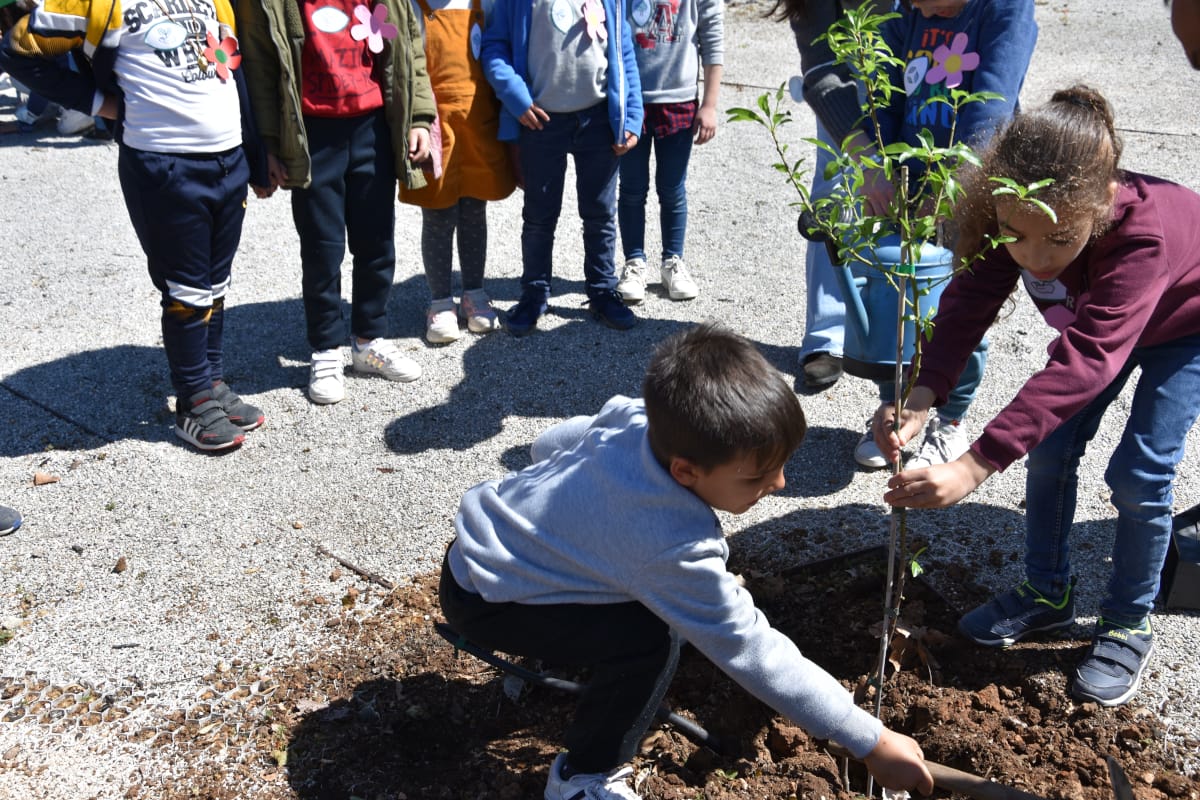
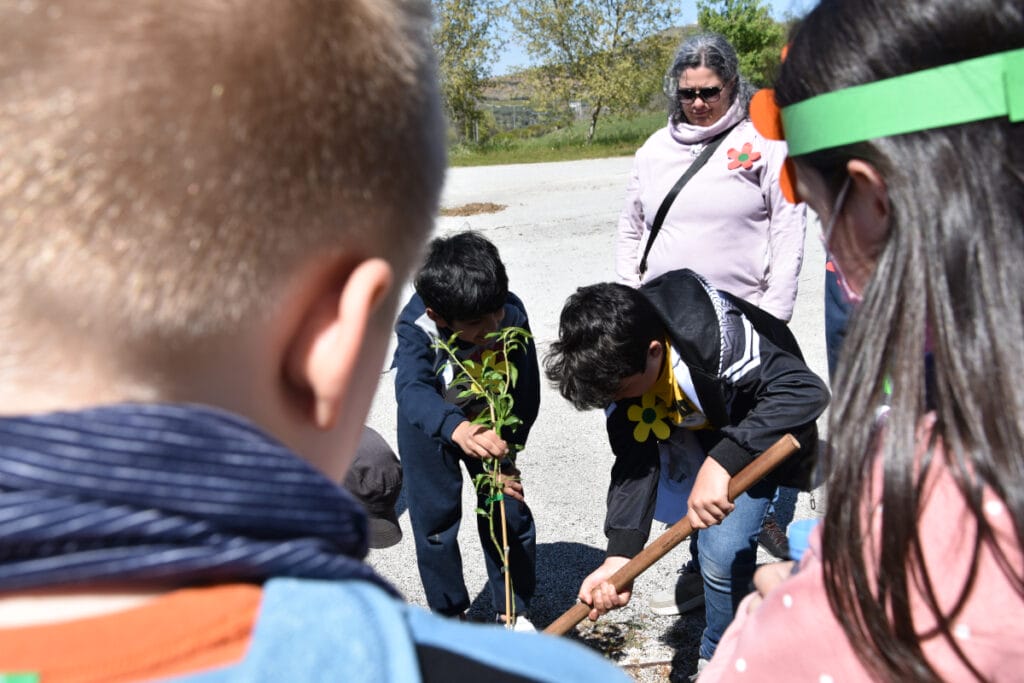
Today, three classes from Alcáçova Primary School planted nearly two dozen trees next to the Amoreira Aqueduct in Elvas, in an initiative that brought together the school, the InnovPlantProtect sustainability team, the Elven municipality and Bolschare.
It was with tiny hands and feet, but a lot of gumption and willpower, that around 50 students from the 2nd, 3rd and 4th years of school from the Alcáçova Primary School, In Elvas, they took shovels, hoes, watering cans, buckets and 19 one-meter-high almond trees to plant them in the area around the so-called “Amoreira arches” in Rossio de São Francisco, next to the historic Elven aqueduct.
They had the help of the teachers, the technicians from SOF Jardins and the researchers from the sustainability team of the InnovPlantProtect (InPP), InPP Greeners, which launched this action, Cláudia Almeida Silva, Cátia Patrício, Cristina Azevedo e Joana Castro. And the weather: after initially being planned to mark World Tree Day 2022, on March 21, the activity took place this afternoon, April 6, with the sun shining.
The area where the planting took place belongs to the Elvas City Council (CME) and the almond trees were donated by Bolschare. With this action, InPP Greeners sought to make elementary school students aware of the importance of trees for life. The almond trees were chosen because not only are they part of the work being carried out by InPP, but they are also of great economic interest to the region and are very beautiful landscape trees.
The CME immediately embraced this initiative “for obvious reasons”, says Councillor Hermenegildo Rodrigues, who was on the ground today accompanying the activities. “As decision-makers, we have to value changes in habits and attitudes when it comes to the ecological footprint and, above all, involve those who will be the future decision-makers,” said the councillor.
Simão, aged 7, was one of those who tried his hand at eating an almond - there are already mature almond trees there; he was surprised when InPP department director and Greeners member Cristina Azevedo showed the children the drupe's epicarp, with its characteristic green color. For Simão, “if there weren't trees, the world wouldn't have trees”, which are also very important “because they give us apples and pears”.
This was “a very rich initiative, because the students need this kind of activity, which involves them, associates them with the city and gives them the ‘power to do’”, observed Ana Teresa Babinha, a 2nd grade teacher. “And there was an opportunity for everyone to do it, to try their hand at planting,” said the teacher, who praised the action for getting the children to actually “get their hands dirty”.
Ana Teresa Babinha also highlighted the fact that the students will now be responsible for looking after these almond trees, in a system yet to be defined by the school. What's more, it's an activity “that will come to life in the classroom”, because it's an opportunity to approach the topic of the importance of trees in a new way in the context of formal learning.
The InPP Greeners are InnovPlantProtect's (InPP) sustainability team, created at the end of 2021 to share knowledge and good practices that lead to the creation of more sustainable laboratories and institutions, as well as promoting the adoption of more sustainable behaviors by all citizens. Follow them on Twitter at @InPPGreeners or contact them by email at inpp.greeners@iplantprotect.pt.