News & Events

white plant

NEWS

InnovPlantProtect (InPP) is pleased to announce the publication of an international patent application (PCT) for a strain of Bacillus velezensis with application as a plant biostimulant. This innovation represents a significant milestone in our research, with a direct impact on sustainable agriculture and crop resilience in the face of climate and environmental challenges.

A natural and effective solution

The biostimulant developed by our team has been carefully studied and tested on different vegetable crops, such as tomatoes and lettuce, and on cereals, such as rice. The results obtained demonstrate the potential of this technology:

  • Greater development in the early stages of crops, This promotes more vigorous and healthy starts.
  • Increased productivity, This is evidenced by greater fresh biomass in lettuce and greater fruit production in tomatoes.
  • Proven molecular responses, with analyses confirming the activation of genes associated with plant responses to different types of abiotic stress.

These results reinforce the effectiveness of the Bacillus velezensis as a natural biostimulation tool, capable of boosting crop performance and contributing to more sustainable agriculture.

From the lab to the field

This patent is another step in InPP's commitment to developing innovative, sustainable biotechnological solutions with industrial applicability. The aim is clear: to support farmers and companies in the sector in meeting the challenges of crop productivity, quality and resilience, in an era when agriculture needs sustainable, high-impact responses.

We are looking for strategic partnerships

We are currently looking for new partnerships with companies and entities in the agricultural sector to take this technology from the laboratory to the field. We believe that collaboration is the key to turning scientific innovation into practical solutions that benefit the entire agricultural value chain.

If you're interested in learning more about this technology or exploring opportunities for collaboration, talk to us. Together we can drive a more productive, resilient and sustainable agriculture.

Innovate together. Protect better.

Image credits: InnovPlantProtect - Inês Ferreira (Photos from left to right: Sandra Caeiro and Rui Figueiras, researchers from the Specific Crop Protection Department and Inês Mexia, researcher from the Formulations and Process Development Department.

“We're here to listen to the sector's problems and find solutions together”. This was said by António Saraiva, executive director of InnovPlantProtect (InPP), who attended the eighth edition of the National Olive Oil Congress, held in Campo Maior and featured in the July edition of Voz do Campo magazine.

In the interview, António Saraiva highlighted the importance of olive growing, one of the most representative crops in the Mediterranean, and pointed out some of the major challenges currently facing the sector:

  • A growing shortage of phytosanitary solutions: many tools are disappearing and effective alternatives are not always emerging.
  • The long road between research and application in the field: the process of bringing a scientific solution to farmers can take around 10 years.
  • Impacts of climate change and emerging pests, which make farming even more difficult.

Faced with these challenges, InPP is committed to developing new innovative solutions that are environmentally friendly and sustainable for farmers. CoLAB is looking for agents such as active substances and microorganisms capable of controlling diseases and boosting biostimulants, as well as investing in digital technologies that allow producers to detect crop problems early and increase the effectiveness of interventions.

Another point highlighted by the executive director is the need to speed up the transfer of knowledge to the field, through partnerships and commercial agreements that ensure that innovations actually reach farmers.

“We're here to listen to the sector's problems and find solutions together. We want to be close to farmers, associations and companies, because that's the only way we can develop effective and sustainable tools,” António Saraiva stressed.

The full interview is available in the July issue of Voz do Campo magazine, on newsstands now, and in the image below.

It's called PROSPER and it's a new European project that aims to transform European agriculture through the valorization of “orphan” legumes - resistant crops, little exploited, but with great potential to face the challenges of climate and food in the future.

The consortium, with total funding of around 5 million euros, brings together 27 partners from 13 European countries and Tunisia, including universities, research centers, companies and non-profit organizations in the agricultural sector. Among them are countries from the Mediterranean (Italy, Spain, Greece, Portugal and France), Central Europe (Germany, Belgium, Poland, Bulgaria and Romania), Northern Europe (Denmark, Sweden and Finland).

The aim of PROSPER is to test and validate new agricultural diversification strategies, adapted to different climates and social and economic contexts, promoting more sustainable, innovative practices that are adjusted to the needs of different agricultural realities.

InPP, PROSPER's partner, will be responsible for analyzing:

  • Soil health and environmental impact
  • Energy efficiency and waste management
  • Nutritional quality of crops
  • Fair valuation along the production chain

To do this, the InPP team will use advanced technologies, such as real-time sensors and geospatial analysis, which will help study soil health, carbon sequestration captured by crops, water management and biodiversity, among others.

PROSPER is co-created with the main players in the agricultural sector, ensuring that the solutions developed do not remain on paper: they will be practical, useful and transformative.

The project starts in September 2025. We are ready to embark on this journey towards a greener, fairer and more resilient agriculture.

Stay tuned for more news!

EVENTS

O InnovPlantProtect (InPP) participou no workshop “PREPSOIL Regional Soil Needs” que teve lugar no dia 13 de abril de 2023, em Finca La Cocosa, em Badajoz, Espanha. Este workshop visou debater sobre o estado de saúde do solo no Montado ou Dehesa e os laboratórios vivos como ferramentas para o futuro.

O workshop teve como principal objetivo envolver a comunidade local e compreender qual a sua perspetiva em relação às principais necessidades do solo dos sistemas agroflorestais da região espanhola.

Os diretores de departamento do InPP, iLaria Marengo e Ricardo Ramiro, e a investigadora Manisha Sirsat participaram na iniciativa, que teve como público-alvo o setor privado, a academia, investigadores e políticos, e na qual se explorou os seguintes temas: desafios na saúde do solo do montado/dehesa, relação entre a captura de carbono e a saúde do solo e laboratórios vivos como ferramenta para a saúde futura do solo destes sistemas agroflorestais.

O wokshop foi organizado no âmbito do projeto “PREPSOIL – Preparing for the Soil Deal for Europe Mission”, cofinanciado pelo programa Horizonte Europa, que pretende aumentar a consciencialização e o conhecimento sobre a saúde do solo através da interação, partilha de conhecimento e co-aprendizagem sobre o papel dos solos saudáveis para a sociedade. Impulsionado por um consórcio de 19 parceiros na vanguarda das iniciativas europeias e nacionais do solo, o projeto arrancou a 1 de julho de 2022 com o objetivo de apoiar a Missão da UE para a Saúde do Solo.

Cartaz de divulgação do workshop “PREPSOIL Regional Soil Needs”, que decorreu no passado dia 13 de abril, em Badajoz.

O InnovPlantProtect (InPP) participou no evento “Agendas Mobilizadoras no Alentejo”, um seminário de apresentação e debate de Agendas Mobilizadoras no âmbito do Plano de Recuperação e Resiliência (PRR) com investimentos na região do Alentejo, organizado pelo Parque do Alentejo de Ciência e Tecnologia (PACT) e pela Comissão de Coordenação e Desenvolvimento Regional do Alentejo (CCDR Alentejo), e que decorreu no passado dia 4 de abril, no auditório do PACT, em Évora.

A sessão teve como objetivo fazer um ponto de situação das várias agendas e contou com a participação de representantes do Governo, do Professor Pedro Dominguinhos, Presidente da Comissão Nacional de Acompanhamento do PRR, bem como com a presença de vários representantes de empresas líderes de agenda e entidades copromotoras de agendas, representantes de municípios da região, entre outros, e uma breve intervenção de Isabel Ferreira, Secretária de Estado do Desenvolvimento Regional.

No seminário, que contou com mais de 100 participantes, foram apresentadas 17 das 32 agendas mobilizadoras com investimentos na região, das quais o InPP faz parte de duas – a InsectERA e o Pacto de Bioeconomia Azul -, às quais se seguiu um momento de discussão, moderado por Tiago Teotónio Pereira, Vogal Executivo na CCDR Alentejo, com Pedro Dominguinhos, e António Oliveira das Neves, consultor para a EREI 2030 do Alentejo.

Nesta iniciativa existiu ainda um momento de networking e coffee break, durante o qual foi também possível analisar os 32 posters em exposição que davam conta das diferentes dimensões de cada agenda.

De acordo com os dados disponibilizados no site do IAPMEI – Agência para a Competitividade e Inovação, na globalidade, estas 32 agendas mobilizadoras representam um valor total de aproximadamente 5 936 562 795,22 €, dos quais 770 168 093,18 € estão alocados ao Alentejo. Esta aposta na região provém de cerca de 110 entidades copromotoras de agendas que declararam em candidatura efetuar investimentos na região, no âmbito do PRR.

Esta iniciativa é ímpar a nível regional e está alinhada com a responsabilidade do PACT, enquanto líder do Sistema Regional de Transferência de Tecnologia (SRTT) e entidade agregadora, tendo em vista a coordenação de atividades de desenvolvimento regional, bem como a apresentação à comunidade do impacto que os investimentos do PRR estão a ter na região.

O PACT planeia realizar uma nova sessão no final do ano de 2023, na qual pretende fazer um novo ponto de situação e análise de resultados, em conjunto com as entidades que a nível nacional tutelam a gestão destas Agendas: o IAPMEI e o Ministério da Economia e do Mar.

Créditos de imagem: PACT

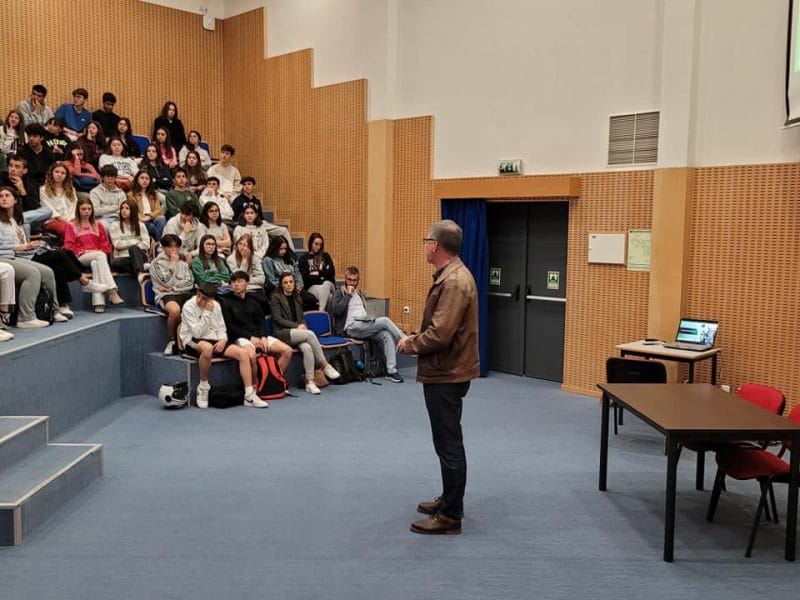
Na passada terça-feira, dia 28 de março, o InnovPlantProtect (InPP) esteve no Clube de Ciência do Agrupamento de Escolas n.° 3 de Elvas (Clube de Ciência AE3Elvas). Na iniciativa marcaram presença Pedro Fevereiro, diretor executivo do InPP, e Sandra Correia e Ricardo Ramiro, diretores de departamento.

O Pedro Fevereiro deu a conhecer o laboratório colaborativo e o trabalho de investigação e de inovação que tem sido desenvolvido por terras elvenses. Sandra Correia abordou o tema o que são biopesticidas, como se fazem, quais as vantagens e desvantagens destes em comparação com os pesticidas de síntese química, bem como os tipos de biopesticidas existentes. Ricardo Ramiro apresentou o conceito de microbioma aos alunos e explicou para que serve na agricultura.

A iniciativa realizou-se a convite do Clube de Ciência AE3Elvas, no âmbito dos “Dias Abertos do Agrupamento de Escolas n.° 3 de Elvas”.

Créditos de imagem: ©️Clube de Ciência AE3Elvas