News & Events

white plant

NEWS

InnovPlantProtect (InPP) recently received approval for an application submitted to COMPETE2030-2024-6 - Collective Actions - Transfer of scientific and technological knowledge - BioLivingLABS - Bioeconomy at the service of the sustainability of inland territories, led by MORE CoLAB - Laboratório Colaborativo Montanhas de Investigação, Associação, in partnership with the Polytechnic Institute of Bragança (IPB), the Polytechnic Institute of Castelo Branco (IPCB) and AQUAVALOR.

BioLivingLABS aims to promote the economic valorization of research and development (R&D) results obtained by various institutions in the North, Center and Alentejo. To this end, it will create an experimental demonstration network, the so-called Living Labs, The project will be held in the innovation hubs of Mirandela, Douro, Covilhã and Elvas. In addition, demonstration actions, workshops, an inland innovation catalog and training on intellectual property protection will be developed with the aim of encouraging the incorporation of innovative solutions in the business sectors of these regions.

Scheduled to begin in October and lasting 24 months, the project has a total eligible investment of over 740,000 euros, financed by COMPETE2030 - Thematic Program for Innovation and Digital Transition. For InPP, this project is a strategic opportunity to strengthen its mission as a center for technology development and transfer, boosting the practical application of scientific knowledge to promote sustainable development.

This initiative confirms InPP's commitment to open and sustainable innovation, integrating science, technology and regional development to respond to the challenges and potential of the interior of the country.

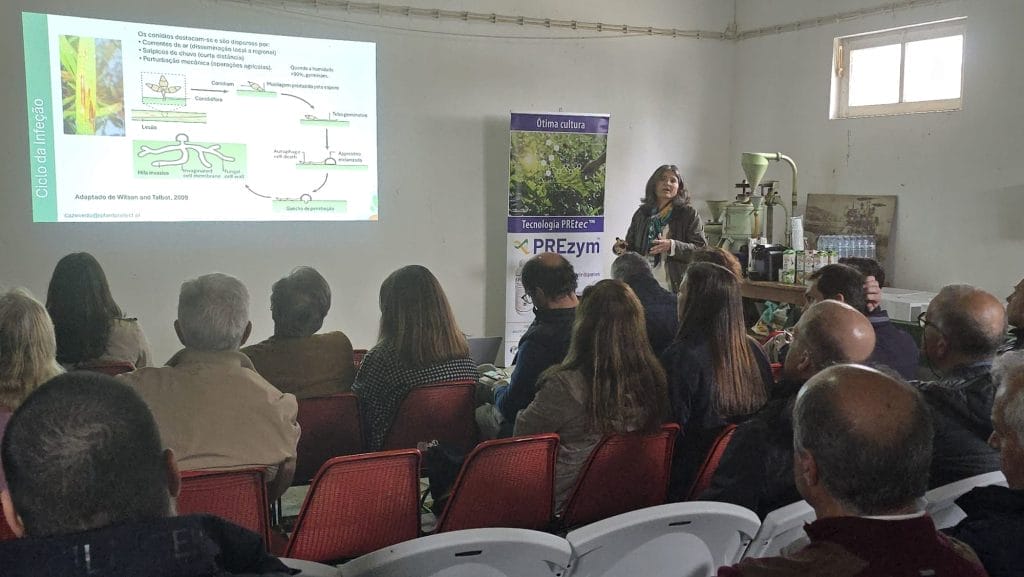
On September 18, the executive director of InnovPlantProtect (InPP), António Saraiva, the director of the New Biopesticides Department, Cristina Azevedo, and researcher Luís Grilo attended the Open Day “The Cereals of Baixo Mondego”, promoted by the Centro Regional Coordination and Development Commission (CCDR Centro), at the Bico da Barca Experimental Unit in Montemor-o-Velho.

The event highlighted the latest innovations from the Coimbra Innovation Hub, from new technologies applied to maize and rice, to fertilization strategies, protection and the use of biostimulants on these key crops in the Baixo Mondego region.

Our team also monitored trials with biofungicides, including the product I21, developed with our collaborative laboratory to combat pyriculariosis in two rice varieties, which is being patented.

In an interview with Voice of the Countryside, Cristina Azevedo shared the work we have been doing in the area of biosolutions.

(Re)watch the interview here.

Image credits: InnovPlantProtect and Voz do Campo magazine

Maize continues to be the Portugal's most important arable crop, The sector has a significant impact on food safety and the national agri-food industry. Involving thousands of producers and generating tens of millions of euros a year, the sector is currently facing increasingly complex phytosanitary challenges.

Among already known pests and emerging diseases, there are risks ranging from cartridge caterpillar until Maize Rugose Dwarfism Virus (MRDV), The presence of this virus is increasing in Portugal. This virus, transmitted by the corn leafhopper, can seriously compromise production and is found in the climate change increasingly favorable conditions for its spread.

However, it's not just MRDV that's worrying. There are new threats that require vigilance, such as the coleopter Diabrotica virgifera or the MDMV virus (Maize Dwarf Mosaic Virus), already detected in neighboring countries, and also toxic weeds, such as the winter fig (Datura stramonium), which in addition to impacting productivity pose public health risks.

Faced with this reality, the answer is integrated and sustainable strategies, matching:

  • crop rotation and good agricultural practices;
  • careful use of insecticides to avoid resistance and environmental impacts;
  • resistant or tolerant varieties, where available;
  • research and technological innovation, including new digital tools for early detection.

As the InnovPlantProtect researcher points out, Nuno Faria, in the article entitled “The main emerging pests and diseases of the maize crop in Portugal”, available in the August edition of Voz do Campo magazine: “The phytosanitary panorama of maize in Portugal requires continuous vigilance, investment in research and the application of integrated and sustainable strategies capable of responding to an increasingly dynamic and unpredictable reality.”

To find out more about the main current risks and mitigation measures, read the full article published in the August issue of Voz do Campo magazine (pages 88-89), available on newsstands and online.

EVENTS

Wheat is a crop of great importance for human nutrition around the world. Due to climate change, the Puccinia striiformis tritici (Pst), the fungus that causes yellow rust on wheat, has developed the ability to overcome the plant's defenses. The spores of the fungus spread by aerial dispersal and can reach thousands of kilometers.

Consequently, the rust disease is transboundary and must therefore be dealt with internationally. Around the world, there are several institutions (CIMMYT, ICARDA, GRRC) and initiatives (RustWatch, RustTracker, Globalrust) committed to solving this problem by improving disease diagnostic tools, building new online research and communication infrastructures to share knowledge.

InPP's Crop Protection and Monitoring and Diagnostics Departments are working together, and in collaboration with RustWatch, to fill gaps in the data on the epidemiology of yellow rust, in order to understand the special dynamics of the disease and build an early warning system (EWS).

The Monitoring and Diagnostics Department has developed a form for a mobile application (ODK Collect), through which wheat growers can easily collect data in the field. This information will be fed in real time into a spatial database and a map of sampling sites, published from a webGIS service ad hoc.

To this end, we are also instructing producers on how to use the application and access the maps from the webGIS service. Paulo Velez, from Cersul - Agrupamento de Produtores de Cereais do Sul, was the first to receive the training. Thank you very much for your participation!

See one teaser of our tutorial for accessing app and forms here.

© 2021 InnovPlantProtect, All rights reserved

As part of the XfSTOP project, led by InnovPlantProtect's New Biopesticides Department, which aims to use biological control tools to manage the bacterium Xylella fastidiosa in olive groves, members of the team that makes up this department went on a field trip to Herdade de Reguengo, belonging to INIAV, in Elvas, on February 10th.

With the help of INIAV researchers Rocio Calderón-Arias and António Cordeiro, the InPP team collected olive tree samples of different varieties (Leccino, Cobrançosa and Arbequina), making it possible to optimize protocols for the isolation of symbiotic bacteria that live inside olive trees, the endophytes.

These endophytes, inhabitants of the same ecological niche as the Xylella, The endophyte will be used to produce our biopesticide, explains Cristina Azevedo, director of the Department. The idea is to reintroduce the endophyte into the olive tree, which represents a sustainable way of producing a growth inhibitor for Xylella.

© 2021 InnovPlantProtect, All rights reserved

The Bio-based Industries Consortium has appointed InnovPlantProtect as the CoLab at the forefront of Portugal's bid to become a leader in the European Green Deal.

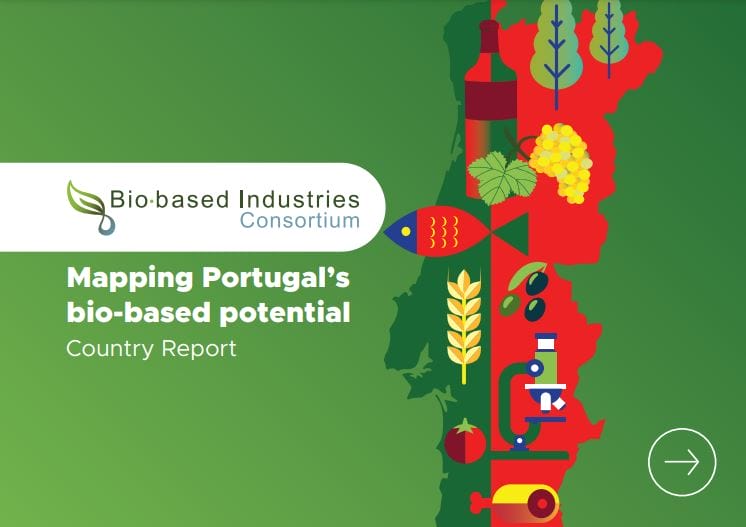
InnovPlantProtect is mentioned as a player to take into account in the latest Bio-based Industries Consortium (BIC) report on Portugal's bio-based potential. The document lists 14 collaborative laboratories, public-private entities “dedicated to developing market-oriented research” related to the bioeconomy.

Entitled Mapping Portugal's bio-based potential - Country Report, The report draws attention to the existence in Portugal of several research centers “well located in all regions” that support the bioeconomy and bio-based R&D and industrial activities. Among them is the InnovPlantProtect (InPP) collaborative laboratory (CoLab), based in Elvas, which is dedicated to developing innovative bio-based solutions for crop protection.

The BIC report on Portugal is available online.

The 61-page document, available in full online, reveals “all the potential that Portugal possesses to become one of the world's front-runners European Green Deal”. The study also underlines “the existence of a robust innovation ecosystem in Portugal and highlights the country's growing influence as a leader in the biotechnology sector”.

“The emerging bioeconomy sector in Portugal already contributes nearly 20 billion euros to the national economy and the BIC study shows that there are new opportunities to accelerate green economic growth in the country,” reads a PRESS RELEASE of the organization, which brings together more than 240 members and represents the private sector in the European Bio-based Industries Joint Undertaking.

© 2021 InnovPlantProtect, All rights reserved