O InPP participou no Fórum Nacional de Clubes Ciência Viva na Escola, que teve lugar no dia 27 de março, integrando a Mostra de Ciência e Tecnologia com um stand dedicado à proteção das plantas.
Neste espaço, foram apresentados diversos materiais demonstrativos, incluindo placas de Petri com fungos e bactérias, plantas, algas e exemplos de produtos formulados, com o objetivo de despertar o interesse e a curiosidade dos visitantes para a importância da saúde das plantas e da investigação científica nesta área.
Ao longo do dia, a Gestora de Comunicação, Inês Ferreira, e o Gestor de Inovação, Paulo Madeira, dinamizaram o contacto com o público visitante, explicando de que forma a investigação em proteção das plantas contribui para melhorar a proteção das culturas e promover uma agricultura mais resiliente e sustentável.
O Fórum Nacional de Clubes Ciência Viva na Escola decorreu no CNEMA, em Santarém, reunindo escolas, centros Ciência Viva, universidades, centros de investigação e diversas outras entidades, num encontro dedicado à ciência, tecnologia e inovação.
O InPP agradece a todos os visitantes que passaram pelo seu stand, destacando a importância destes momentos de partilha para promover o conhecimento científico junto da comunidade.
No dia 26 de março, o InPP participou numa sessão promovida pela Agência Nacional de Inovação (ANI), em Lisboa, que contou com a presença de uma comitiva da República Checa ligada ao setor das biotecnologias.
Em representação do InPP estiveram Cristina Azevedo, Diretora de Biosoluções, e Paulo Madeira, Gestor de Inovação, que apresentou a instituição e as suas principais áreas de atuação e competências.
A iniciativa teve como principal objetivo identificar oportunidades de cooperação entre entidades portuguesas e checas, nomeadamente nas áreas de transferência de tecnologia, codesenvolvimento, ensaios pré-clínicos e diagnósticos, coinvestimento e internacionalização da inovação.
A sessão contou com a participação de representantes de entidades relevantes da República Checa, incluindo Petra Kinzlova, CEO da Prague.bio, Katarina Psenakova, Head of Biology da PharmTheon, bem como representantes da Embaixada da República Checa e da Academia das Ciências da República Checa.
Este encontro contribuiu para reforçar o posicionamento do InPP na promoção de parcerias internacionais e no desenvolvimento de soluções inovadoras, evidenciando o compromisso contínuo da instituição em fortalecer redes de colaboração científica e tecnológica e em contribuir para o crescimento e internacionalização da inovação.
O InPP marcou presença no Encontro com orizicultores e técnicos(as) em Portugal, promovido pela EDAF, que decorreu no dia 5 de março, no Pólo de Inovação de Salvaterra de Magos, em Santarém.
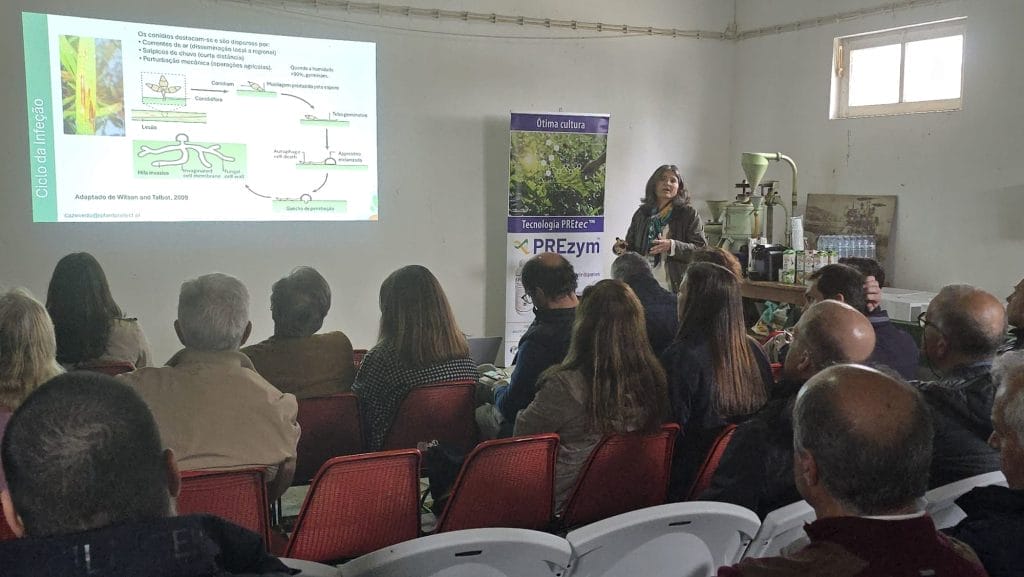
A Diretora de Biosoluções do InPP, Cristina Azevedo, integrou o painel de oradores convidados, tendo apresentado a comunicação intitulada “A problemática da Pyricularia na cultura do arroz”. A apresentação incidiu sobre os principais desafios fitossanitários associados a esta doença, que continua a constituir uma das maiores ameaças à produção de arroz a nível mundial e também em Portugal.
O encontro reuniu produtores, técnicos e especialistas da fileira do arroz, proporcionando um espaço de partilha de conhecimento e debate sobre soluções atuais e em desenvolvimento para o controlo da piriculariose. Foram igualmente abordados outros temas relevantes para a sustentabilidade e produtividade da cultura, nomeadamente a gestão da fertilização.
A participação do InPP neste tipo de iniciativas reforça o compromisso da instituição com a inovação, a transferência de conhecimento e o desenvolvimento de soluções sustentáveis para a agricultura nacional.
O InPP agradece à EDAF e ao COTArroz o convite e a organização deste importante encontro, esperando que esta colaboração continue a fortalecer-se no futuro.
O pedipaper, The event, which is aimed at three 10th grade classes from the D. Sancho II School, takes place between 8.30am and 1pm. In the afternoon, the drawing meeting promoted by AIAR will take place, starting at 6pm. The aim of the pedipaper is to allow the students, who are studying biodiversity this year, to explore, identify and marvel at the different trees in the Garden - the largest green space in the city - and their differentiating characteristics.
As a result of this activity, InPP, Escola Secundária D. Sancho II, AIAR and CME intend to continue collaborating with a view to developing a physical identification system for the Garden's trees based on a QR code that will allow mobile access to a “digital brochure” with more information.
Plant Fascination Day is an initiative of the European Plant Science Organization (EPSO), which takes place every two years on May 18th. It is coordinated at national level by the Portuguese Society of Plant Physiology and by the ITQB NOVA, with events across the country.
What is natural about the plants we eat? If it weren't for man's intervention in nature, would we have the variability we have today? Would bananas, avocados, carrots and grapes have anything to eat or were they just seeds? These and many other questions will be answered in the debate “Do the plants we eat really come from nature?”, which will take place online on May 18 at 6pm to celebrate Plant Fascination Day.
“Do the plants we eat really come from nature?” is the theme of the online debate that ITQB NOVA, CiB, Anseme, iBET, GREEN-IT e InnovPlantProtect will take place on May 18, International Day for the Fascination of Plants, at 6 p.m.
Whether they're edible, ornamental or have medicinal properties, plants are always fascinating. But have the plants we know always been like this? Or has our intervention in nature led to the diversity we have today? And, after all, do we have more or less biodiversity to celebrate today?
The truth is that the plants we eat are a positive construction of the human species. If the plants that nature has given us hadn't been actively manipulated by man over the millennia, they wouldn't be enough to feed us. Instead of ears full of corn kernels, we'd have teosinto. Instead of full-bodied orange carrots rich in beta-carotenes, we'd have thin, whitish roots. Watermelons, bananas, grapes and avocados would have more seeds than pulp. And the tomato wouldn't have the variability of colors, flavors and properties that it has today. It was the activity of the human species that led to what we eat today. And we did so in order to develop plant varieties that would produce seeds or fruit suitable for our diet and that would guarantee us food security and diversity.
With the aim of uncovering what is, after all, “natural” about the plants we eat, the event will feature an initial presentation by plant biology researcher Pedro Fevereiro, which will include comparative images of ‘Before’ & ’Now’ plants, followed by a debate moderated by Luís Ribeiro, a journalist from the magazine Vision specializing in the environment and sustainability, with the participation of Pedro Fevereiro, farmer Gabriela Cruz, nutritionist Conceição Calhau, and chef and gastronome José Maria Moreira.
Anyone who wants to celebrate the fascinating world of the plants we eat should join the live event, from 6pm (GMT+1). No prior registration is required.
Fascination of Plants Day takes place every two years on May 18th. In addition to this event, there are other activitiesAn online workshop, a virtual exhibition and a guided tour are some of the activities to celebrate the fascinating world of plants.
The Fascination of Plants Day is an initiative coordinated at national level by the Portuguese Society of Plant Physiology and ITQB NOVA, with activities taking place throughout the country
It was on a beautiful sunny Thursday that a team from the New Biopesticides Department, involved in the XfSTOP project, went to Herdade do Álamo de Cima, belonging to the Eugénio de Almeida Foundation, near Évora, and returned with a car full of olive and almond branches.
And it wasn't, of course, for the pleasure of pruning trees. The aim was to collect samples of two crops that are very important to the local agricultural economy, and which are targets of the nefarious bacterium Xylella fastidiosa, for which InnovPlantProtect intends to develop a new biopesticide.
The researchers collected samples from four varieties of olive tree - Cobrançosa, Arbequina, Galega and Picual - and four varieties of almond tree - Solena, Guara, Belona and Avijor. This work will make it possible to isolate bacterial endophytes common to olive and almond trees.
The following day, Friday, the team processed the samples. They began by cutting branches about 15-20 cm long, removing the bark, disinfecting the outside of the branch to eliminate epiphytic microorganisms and macerating the xylem vessels with a buffer solution. This solution is then filtered through special bags, diluted, plated on culture medium and placed in an incubator at 30 ºC for around 15 days. Throughout this period, the appearance of colonies is monitored.
From the almond grove (and the olive grove)... to the laboratory.




 Português
  English