News & Events

white plant

NEWS

InnovPlantProtect (InPP) recently received approval for an application submitted to COMPETE2030-2024-6 - Collective Actions - Transfer of scientific and technological knowledge - BioLivingLABS - Bioeconomy at the service of the sustainability of inland territories, led by MORE CoLAB - Laboratório Colaborativo Montanhas de Investigação, Associação, in partnership with the Polytechnic Institute of Bragança (IPB), the Polytechnic Institute of Castelo Branco (IPCB) and AQUAVALOR.

BioLivingLABS aims to promote the economic valorization of research and development (R&D) results obtained by various institutions in the North, Center and Alentejo. To this end, it will create an experimental demonstration network, the so-called Living Labs, The project will be held in the innovation hubs of Mirandela, Douro, Covilhã and Elvas. In addition, demonstration actions, workshops, an inland innovation catalog and training on intellectual property protection will be developed with the aim of encouraging the incorporation of innovative solutions in the business sectors of these regions.

Scheduled to begin in October and lasting 24 months, the project has a total eligible investment of over 740,000 euros, financed by COMPETE2030 - Thematic Program for Innovation and Digital Transition. For InPP, this project is a strategic opportunity to strengthen its mission as a center for technology development and transfer, boosting the practical application of scientific knowledge to promote sustainable development.

This initiative confirms InPP's commitment to open and sustainable innovation, integrating science, technology and regional development to respond to the challenges and potential of the interior of the country.

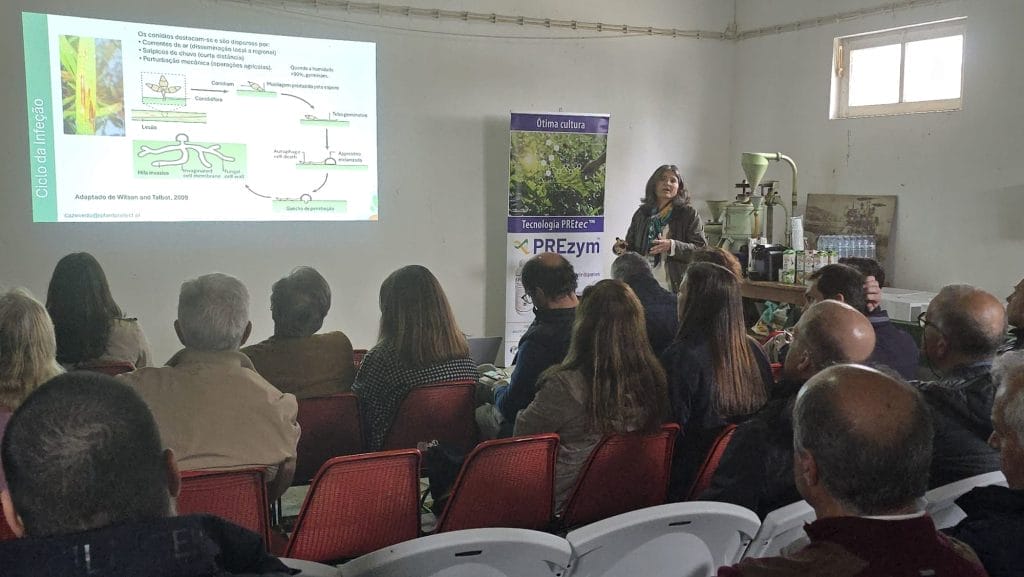
On September 18, the executive director of InnovPlantProtect (InPP), António Saraiva, the director of the New Biopesticides Department, Cristina Azevedo, and researcher Luís Grilo attended the Open Day “The Cereals of Baixo Mondego”, promoted by the Centro Regional Coordination and Development Commission (CCDR Centro), at the Bico da Barca Experimental Unit in Montemor-o-Velho.

The event highlighted the latest innovations from the Coimbra Innovation Hub, from new technologies applied to maize and rice, to fertilization strategies, protection and the use of biostimulants on these key crops in the Baixo Mondego region.

Our team also monitored trials with biofungicides, including the product I21, developed with our collaborative laboratory to combat pyriculariosis in two rice varieties, which is being patented.

In an interview with Voice of the Countryside, Cristina Azevedo shared the work we have been doing in the area of biosolutions.

(Re)watch the interview here.

Image credits: InnovPlantProtect and Voz do Campo magazine

Maize continues to be the Portugal's most important arable crop, The sector has a significant impact on food safety and the national agri-food industry. Involving thousands of producers and generating tens of millions of euros a year, the sector is currently facing increasingly complex phytosanitary challenges.

Among already known pests and emerging diseases, there are risks ranging from cartridge caterpillar until Maize Rugose Dwarfism Virus (MRDV), The presence of this virus is increasing in Portugal. This virus, transmitted by the corn leafhopper, can seriously compromise production and is found in the climate change increasingly favorable conditions for its spread.

However, it's not just MRDV that's worrying. There are new threats that require vigilance, such as the coleopter Diabrotica virgifera or the MDMV virus (Maize Dwarf Mosaic Virus), already detected in neighboring countries, and also toxic weeds, such as the winter fig (Datura stramonium), which in addition to impacting productivity pose public health risks.

Faced with this reality, the answer is integrated and sustainable strategies, matching:

  • crop rotation and good agricultural practices;
  • careful use of insecticides to avoid resistance and environmental impacts;
  • resistant or tolerant varieties, where available;
  • research and technological innovation, including new digital tools for early detection.

As the InnovPlantProtect researcher points out, Nuno Faria, in the article entitled “The main emerging pests and diseases of the maize crop in Portugal”, available in the August edition of Voz do Campo magazine: “The phytosanitary panorama of maize in Portugal requires continuous vigilance, investment in research and the application of integrated and sustainable strategies capable of responding to an increasingly dynamic and unpredictable reality.”

To find out more about the main current risks and mitigation measures, read the full article published in the August issue of Voz do Campo magazine (pages 88-89), available on newsstands and online.

EVENTS

O sistema alimentar global é um dos setores mais ameaçados pela emergência climática. Mas afinal quais poderão ser os contributos da ciência e da inovação para garantir uma alimentação variada, saudável e sustentável, no exigente contexto de alterações climáticas?

O tema do 20.⁰ Café de Ciência no Parlamento, organized by Ciência Viva, foi “Emergência climática: o carteiro não toca duas vezes” e teve lugar ontem, dia 19 de outubro, pelas 18h, na Assembleia da República. O diretor executivo do InnovPlantProtect (InPP), Pedro February, participou no encontro.

Pedro Fevereiro alertou que “nós estamos em mudança e temos que saber gerir a mudança e adaptarmo-nos a ela e não fixarmos os pés na terra e pensar que podemos continuar a ser como somos. Temos de ser outra coisa”. “E como é que compatibilizamos este desejo de nos ajustarmos, com a necessidade de sermos sustentáveis a diversos níveis?”, questionou o diretor executivo.

Vídeo da intervenção do Diretor executivo do InPP na iniciativa “Café de Ciência no Parlamento”

Esta iniciativa juntou cientistas, deputados e empresários para debater o impacto das alterações climáticas no sistema alimentar global e apresentar medidas concretas para travar o atual paradigma. Estiveram presentes Augusto Santos Silva, Presidente da Assembleia da República, Elvira Fortunato, Ministra da Ciência, Tecnologia e Ensino Superior, Alexandre Quintanilha, Presidente da Comissão Parlamentar de Educação e Ciência, Tiago Brandão Rodrigues, Presidente da Comissão Parlamentar de Ambiente e Energia e Rosalia Vargas, Presidente da Ciência Viva.

O encontro teve transmissão via streaming. Pode (re)ver o encontro na íntegra no canal de YouTube do Pavilhão do Conhecimento here.

Mas afinal quais são os principais obstáculos atuais à segurança alimentar? A nossa alimentação está segura? O que vai mudar nos próximos anos?

O diretor executivo do InnovPlantProtect, Pedro Fevereiro, foi um dos oradores convidados na mais recente reunião do Conselho de Segurança, um projeto promovido pelo Expresso e Continente, que decorreu no passado dia 10 de Outubro em Lisboa, e que serviu para discutir os principais desafios relacionados com a segurança alimentar, um tema central em tempos de inflação e de guerra.

O diretor executivo falou no painel sobre “Como garantir a segurança alimentar junto dos portugueses? O papel da ciência e o papel do negócio”, que contou também com a participação de Ondina Afonso, presidente do Clube de Produtores Continente e diretora da Qualidade & Investigação da Sonae MC.

O debate foi transmitido via Facebook. Pode (re)ver o debate na íntegra na página de Facebook do Jornal Expresso here.

Pedro Fevereiro e Ondina Afonso falaram sobre “Como garantir a segurança alimentar junto dos portugueses? O papel da ciência e o papel do negócio” © João Girão – Jornal Expresso

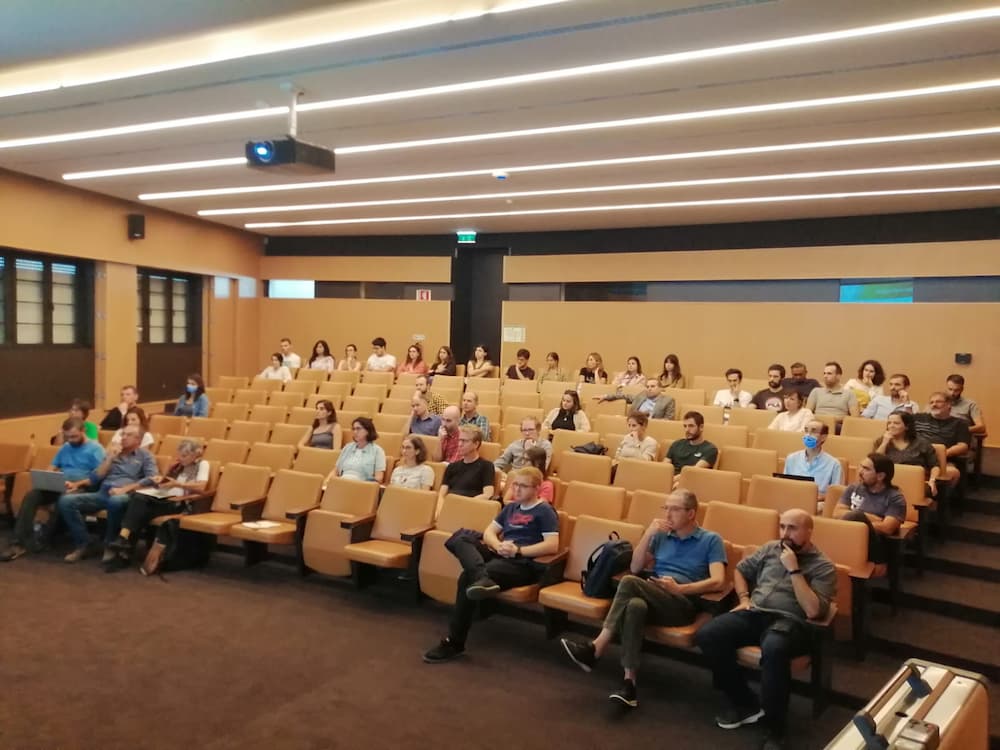
Na passada terça-feira, dia 11 de Outubro, o InnovPlantProtect (InPP) recebeu a visita do Prof. Sophien Kamoun e do Prof. Paul Christou do Conselho Consultivo da Unidade de Investigação GREEN-IT do Instituto de Tecnologia Química e Biológica António Xavier (ITQB NOVA) e de alguns dos seus investigadores.

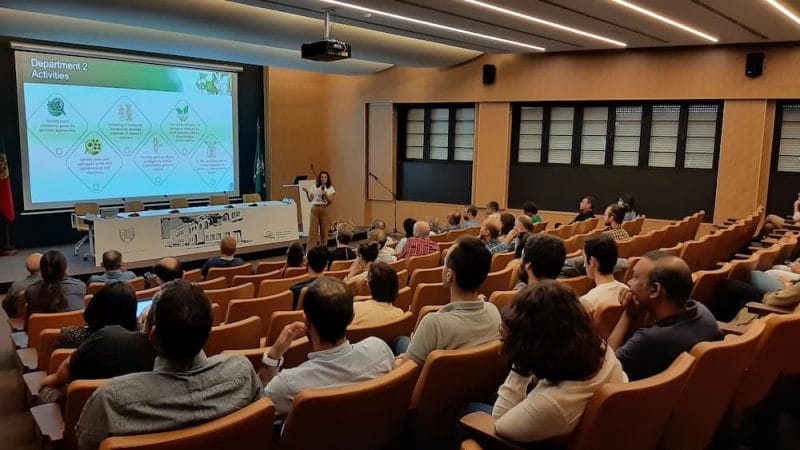
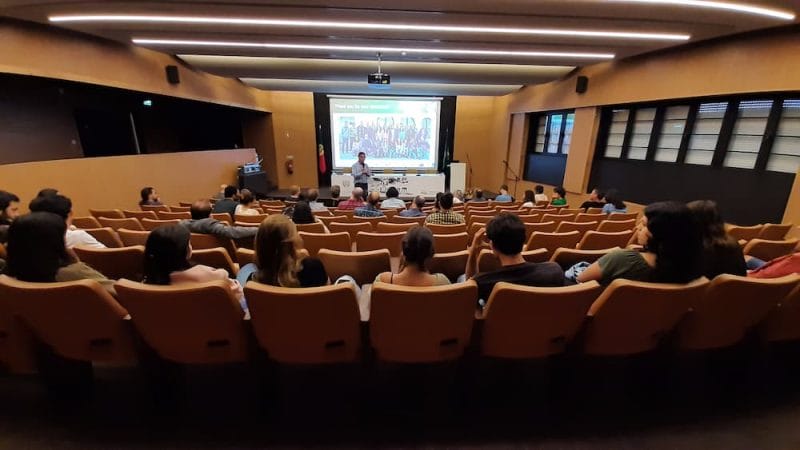
Durante a visita, o diretor executivo Pedro February e os diretores de departamento Cristina Azevedo, Sandra Correia, Ricardo Ramiro, Ilaria Marengo e David Learmonth apresentaram o InPP e as diferentes áreas de investigação que estão a ser exploradas pelos cinco departamentos do laboratório colaborativo (CoLAB). As apresentações foram seguidas por uma visita às novas instalações e laboratórios.

Esta visita pretendeu não só dar a conhecer as atividades do CoLAB, como também potenciar futuras oportunidades de parcerias e colaborações entre as duas instituições.

Um agradecimento especial à GREEN-IT pela visita.

Apresentações de Pedro Fevereiro, Cristina Azevedo, Sandra Correia, Ricardo Ramiro, iLaria Marengo e David Learmonth, membros da GREEN-IT (da esquerda para a direita e de cima para baixo)