No dia 26 de março, o InPP participou numa sessão promovida pela Agência Nacional de Inovação (ANI), em Lisboa, que contou com a presença de uma comitiva da República Checa ligada ao setor das biotecnologias.
Em representação do InPP estiveram Cristina Azevedo, Diretora de Biosoluções, e Paulo Madeira, Gestor de Inovação, que apresentou a instituição e as suas principais áreas de atuação e competências.
A iniciativa teve como principal objetivo identificar oportunidades de cooperação entre entidades portuguesas e checas, nomeadamente nas áreas de transferência de tecnologia, codesenvolvimento, ensaios pré-clínicos e diagnósticos, coinvestimento e internacionalização da inovação.
A sessão contou com a participação de representantes de entidades relevantes da República Checa, incluindo Petra Kinzlova, CEO da Prague.bio, Katarina Psenakova, Head of Biology da PharmTheon, bem como representantes da Embaixada da República Checa e da Academia das Ciências da República Checa.
Este encontro contribuiu para reforçar o posicionamento do InPP na promoção de parcerias internacionais e no desenvolvimento de soluções inovadoras, evidenciando o compromisso contínuo da instituição em fortalecer redes de colaboração científica e tecnológica e em contribuir para o crescimento e internacionalização da inovação.
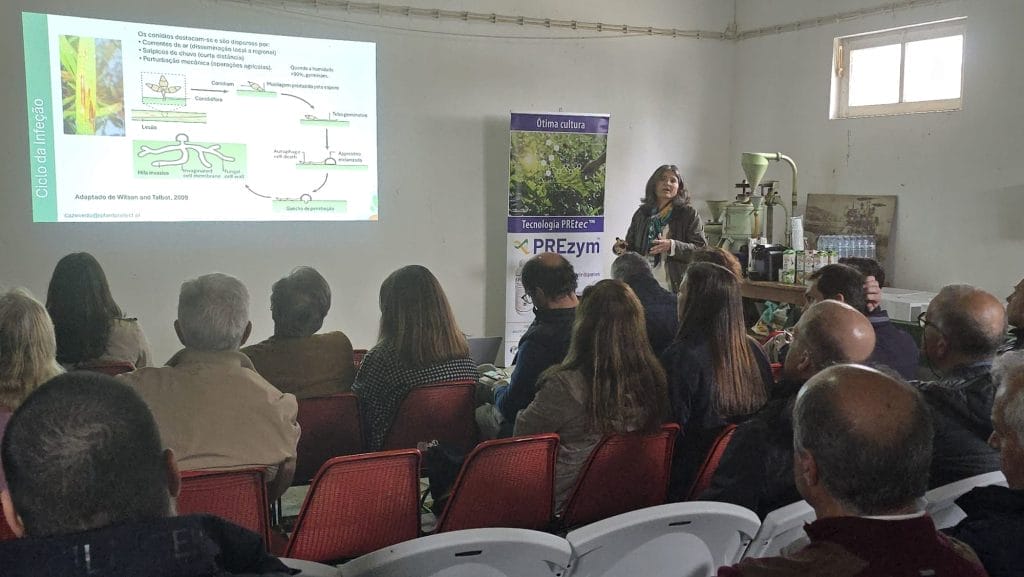
O InPP marcou presença no Encontro com orizicultores e técnicos(as) em Portugal, promovido pela EDAF, que decorreu no dia 5 de março, no Pólo de Inovação de Salvaterra de Magos, em Santarém.
A Diretora de Biosoluções do InPP, Cristina Azevedo, integrou o painel de oradores convidados, tendo apresentado a comunicação intitulada “A problemática da Pyricularia na cultura do arroz”. A apresentação incidiu sobre os principais desafios fitossanitários associados a esta doença, que continua a constituir uma das maiores ameaças à produção de arroz a nível mundial e também em Portugal.
O encontro reuniu produtores, técnicos e especialistas da fileira do arroz, proporcionando um espaço de partilha de conhecimento e debate sobre soluções atuais e em desenvolvimento para o controlo da piriculariose. Foram igualmente abordados outros temas relevantes para a sustentabilidade e produtividade da cultura, nomeadamente a gestão da fertilização.
A participação do InPP neste tipo de iniciativas reforça o compromisso da instituição com a inovação, a transferência de conhecimento e o desenvolvimento de soluções sustentáveis para a agricultura nacional.
O InPP agradece à EDAF e ao COTArroz o convite e a organização deste importante encontro, esperando que esta colaboração continue a fortalecer-se no futuro.
The project TomaBioTec started in January with the aim of developing and validating innovative solutions that contribute to a more sustainable and efficient production of tomatoes in the industry, in line with the current challenges of the agri-food sector, by integrating biotechnology and digital technologies.
The initiative aims to evaluate, under real field conditions, the effectiveness and efficiency of a biosolution with bioprotective and/or biostimulant properties, developed by InnovPlantProtect (InPP), This could help improve the quality and productivity of industrial tomato crops.
The rehearsals take place at Alentejo and Spanish Extremadura and combine traditional agronomic methods with advanced technologies, such as drones, multispectral sensors and artificial intelligence models. This approach allows detailed monitoring of the health of the crop, the presence of pests and diseases and the impact of the bioproduct throughout the production cycle.
The project “TomaBioTec: New biological and digital solutions for tomato crop protection and fertilization” is led by the InPP, in collaboration with the Centro Tecnológico Nacional Agroalimentario Extremadura (CTAEX) and Cordeiro Group, and was selected as one of the winners of the 7th edition of the Promove Program, The prize was awarded by the “la Caixa” Foundation, in partnership with Banco BPI and the Foundation for Science and Technology (FCT), in the category of innovative pilot projects.
This project reinforces the commitment to biological and digital solutions as drivers of more sustainable, competitive agriculture based on scientific evidence, with a direct impact on producers and industry.
O InnovPlantProtect (InPP) estará presente na terceira edição do Encontro Anual de Laboratórios Colaborativos (CoLAB), organizada pela National Innovation Agency (ANI), cujo objetivo é promover e monitorizar as atividades e a evolução progressiva dos 41 CoLABs atualmente reconhecidos, assim como o seu desenvolvimento no contexto de estratégias de investigação e inovação regionais, nacionais e europeias, e que vai decorrer na Universidade do Algarve, no Campus da Penha, entre os dias 6 e 7 de dezembro.
O 3.º Encontro Anual de Laboratórios Colaborativos pretende debater a evolução das atividades dos CoLAB e a sua integração na dinâmica dos ecossistemas regionais, durante a transição para um novo ciclo de financiamento de base, no âmbito da Missão Interface e do Plano Nacional de Recuperação e Resiliência (PRR). Este evento contará com a apresentação dos principais resultados obtidos durante 2022 e os highlights da rede nacional de CoLAB.
O evento contará com a presença de Joana Mendonça, Presidente da ANI, Madalena Alves, Presidente da Fundação para a Ciência e Tecnologia (FCT), João Mendes Borga, Membro da Direção da ANI, e Paulo Águas, reitor da Universidade do Algarve. Nesta edição participaram ainda empresas, decisores políticos e peritos nacionais e internacionais.
Neste evento serão debatidos diversos temas de grande impacto como os desafios da população cada vez mais envelhecida, a transformação digital, a crise energética, a economia circular com novos modelos de negócio para um futuro sustentável, as perspetivas portuguesas dos CoLAB e a plataforma da Missão de Interface, entre outros.
Todas as sessões vão decorrer exclusivamente em inglês e serão transmitidas em direto, através do canal de Youtube da ANI here.
A ANI é a entidade que acompanha a implementação da agenda de investigação e inovação de todos os CoLAB. O processo de reconhecimento dos Laboratórios Colaborativos é assegurado pela FCT.
Gafa, or anthracnose, is a disease of the olive grove caused by several species of fungus of the genus Colletotrichum, such as Colletotrichum accutatum, C. nymphaeae or C. godetiae [1,2]. Symptoms typically appear on ripening olives and include: brownish/black spots with depression, dehydration and early fall. In extreme cases, defoliation and branch death can occur [3]. The presence of diseased olives also has a negative influence on olive oil quality, increasing acidity and lowering the oil's oxidative stability [4].
Olive with gafa/anthracnose. Source: Olive Times
Gafa is considered the main disease in olive groves in Portugal and is one of the diseases that will be monitored in the AlViGen project. In order to be able to monitor the strains of Colletotrichum present in the olive grove and derive useful information from this monitoring, we need to have an association between the genome and the phenotype of these strains. That way, when we apply genomic surveillance to Colletotrichum If we identify a particular genotype, we can also identify its phenotypic characteristics. For example, its virulence or pattern of resistance to fungicides.
In order to have this association between genetics and the phenotype of the Colletotrichum, We are working with Rosário Félix's group, a professor at the University of Évora, on the isolation and characterization of strains of Colletotrichum isolated throughout the country. As such, we are asking for the community's help in sending us olive samples so that we can characterize the Colletotrichum present in your olive grove!
The process is very simple:
1. Put 10 olives in a bag (of a single variety) at the time of the color change (with or without symptoms).
2. Fill in the questionnaire to characterize the sample, using your cell phone (see below).
3. Write the sample code on the bag (code generated when filling in the form)
4. Put the bag in a box or padded envelope and send it to: Maria do Rosário Félix Plant Virology Laboratory, room 108, Santos Júnior Building Mitra Center, University of Évora 7000-083 Évora
Cell phone data collection form
So that we can collect data about the sampling site and the type of farm, we ask those who send us samples to also fill in a questionnaire via cell phone.
Once the application is installed, you can access the form with the QR code below using two methods: click on “Configure with QR code” and use the camera to add the QR code below. Alternatively, download the QR code and after clicking on “Configure with QR code”, click on the three dots (top right) and click on “Import QR Code”. From here you will have uploaded the QR code and simply click on “Blank Form” to start adding your sample data.
References
1. Materatski, P., Varanda, C., Carvalho, T., Dias, A. B., Campos, M. D., Rei, F., & Félix, M. D. R. (2018). Diversity of Colletotrichum species associated with olive anthracnose and new perspectives on controlling the disease in Portugal. Agronomy, 8(12), 301.
2. Talhinhas, P., Mota-Capitão, C., Martins, S., Ramos, A. P., Neves-Martins, J., Guerra-Guimarães, L., ... & Oliveira, H. (2011). Epidemiology, histopathology and aetiology of olive anthracnose caused by Colletotrichum acutatum and C. gloeosporioides in Portugal. Plant Pathology, 60(3), 483-495.
3. Talhinhas, P., Sreenivasaprasad, S., Neves-Martins, J., & Oliveira, H. (2005). Molecular and phenotypic analyses reveal association of diverse Colletotrichum acutatum groups and a low level of C. gloeosporioides with olive anthracnose. Applied and Environmental Microbiology, 71(6), 2987-2998.
4. Carvalho, M. T., Simões-Lopes, P., & Monteiro da Silva, M. J. (2008). Influence of different olive infection rates of Colletotrichum acutatum on some important olive oil chemical parameters. In V International Symposium on Olive Growing 791 (pp. 555-558).
Nos dias 16 e 17 de novembro, o InnovPlantProtect (InPP) participou no Seminário de Lançamento do Programa de Cooperação Transfronteiriça Interreg Espanha-Portugal – POCTEP 2021-2027, que decorreu entre os dias 16 e 17 de novembro, no Centro de Exposições e Congressos na cidade Ayamonte, em Espanha.
Pedro February, diretor executivo do InPP, iLaria Marengo, Diretora de Departamento, Manisha Sirsat, investigadora do InPP, e Bruno Orrico, gestor de projeto, marcaram presença no seminário do POCTEP2127, o maior programa transfronteiriço da União Europeia (UE) aprovado pela Comissão Europeia, que pretendeu dar a conhecer todas as novidades deste novo ciclo de financiamento (com um orçamento de mais de 320 milhões de euros) e destacar a importância dos projetos transfronteiriços para alcançar territórios mais globais, tecnológicos, inclusivos e sustentáveis.
Com um programa diversificado, que contou com a participação da Secretária de Estado do Desenvolvimento Regional, Isabel Ferreira, e do Diretor da Unidade de Política Regional, Rui Inácio, e com espaços para networking, a iniciativa foi uma excelente ocasião para a troca de experiências e esclarecimento de dúvidas.








 Português
  English